
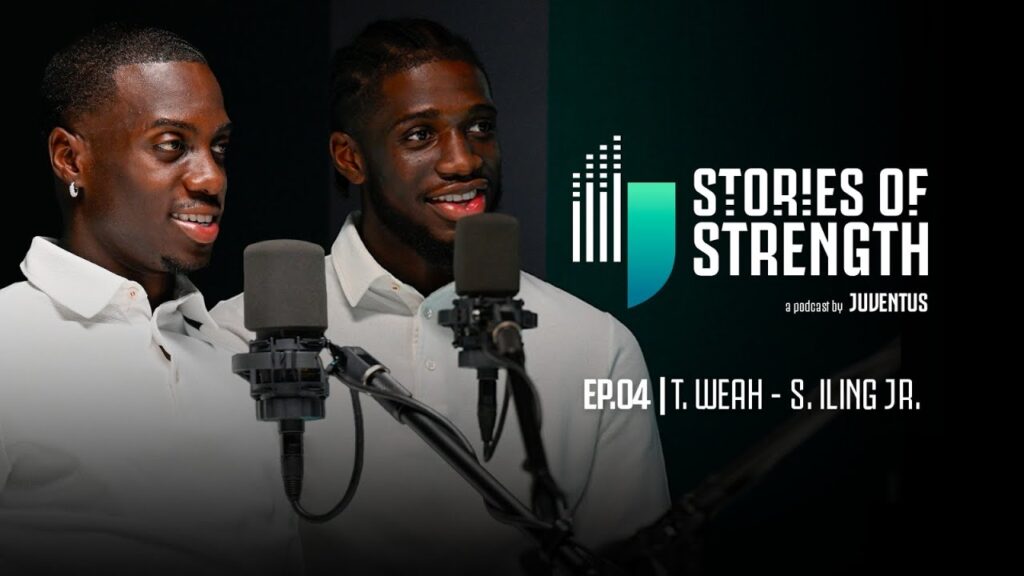
In this episode of ‘Stories of Strength,’ Samuel Iling-Junior and Timothy Weah discuss the crucial role of mental health in youth sports. From navigating early relocations to fostering resilience on the football field, they share personal stories that highlight the importance of family support and a positive mindset. Tune in to hear a compelling conversation on the power of purpose, self-belief and checking on friends’ well-being.
Subscribe to Juventus: https://juve.it/Subscribe 🏃♂️
📲 Follow us for more cool content
📸 Instagram: https://www.instagram.com/juventus/
👾TikTok: https://www.tiktok.com/@juventus
🎮 Twitch: https://www.twitch.tv/juventus/
🐤Twitter: https://twitter.com/juventusfcen
💻 Web: https://www.juventus.com/en
🧢 MERCH: https://store.juventus.com/en/ 👕
#Juve #Soccer #Weah #IlingJr #Podcast #mentalhealth
15 Comments
sarebbe più carino se mettessero anche il doppiaggio in italiano. Leggere i sottotitoli per 20 e passa minuti mi risulta pesante
❤
JUVENTUS🤍🖤
forza juve
Teenagers may spend a significant amount of money to enhance their strength or capabilities in video games for various reasons. One primary motivator is the competitive nature of gaming culture. Many video games, especially those in the esports genre, emphasize skill and strategy, creating an environment where players strive to outperform one another. In this context, spending money on in-game items, upgrades, or cosmetic enhancements can be perceived as a means to gain a competitive edge or stand out among peers.
Moreover, the social aspect of gaming plays a crucial role. Video games have evolved into a communal activity, with players often forming online communities or joining multiplayer teams. In this social landscape, the desire to fit in or be respected by peers can drive teenagers to invest in improving their in-game capabilities. Purchasing virtual items or upgrades can contribute to a player's status within their gaming community, fostering a sense of belonging and accomplishment.
The gaming industry also employs various psychological mechanisms to encourage spending. Microtransactions, loot boxes, and in-game purchases are designed to provide a sense of instant gratification, offering virtual rewards that can enhance the gaming experience. For teenagers, who may be more susceptible to impulsive decisions, these mechanisms can lead to increased spending as they seek the immediate satisfaction associated with in-game purchases.
Furthermore, the influence of gaming influencers and content creators cannot be underestimated. Many teenagers look up to and seek to emulate their favorite gamers, who often showcase premium in-game items or characters. This influencer culture can create a desire among teenagers to replicate the gaming experiences they admire, driving them to spend money on virtual assets that align with the content they consume.
The concept of virtual economies within games also contributes to spending behavior. In-game currencies and marketplaces create a sense of value within the gaming environment. Teenagers may view spending money on virtual goods as a way to invest in their in-game identity or progression, similar to how one might invest time and money in a hobby or sport.
Additionally, the blurring of lines between the virtual and real worlds can impact spending habits. Some teenagers may perceive in-game purchases as an extension of their real-world identity, leading them to allocate funds to enhance their virtual persona. The gamification of achievements and rewards can make spending money on video games a way to validate personal accomplishments within the gaming sphere.
In conclusion, the reasons why teenagers spend substantial amounts of money to enhance their strength in video games are multifaceted. From the competitive nature of gaming culture to social dynamics, psychological mechanisms, influencer influence, virtual economies, and the blurring of virtual and real identities, a combination of factors contributes to the willingness of teenagers to invest in their gaming experiences. Understanding these factors is essential for parents, educators, and policymakers to engage in meaningful discussions about responsible gaming and financial literacy.
Fate giocare a Sam. E mi rivolgo a te Allegri
Come sono i rapporti tra le nostre tifoserie?
Oh finalmente avete capito che per un intervista in Inglese, sul sito della Juventus, i sottotitoli vanno messi in Italiano e non in Inglese. Grazie.
Forza la Juventus
I enjoyed it alot thank you for sharing.
🖤🤍
It’s the way I’m always interested in Tim’s interview and whatnot
This man is so calm, speaks well and intelligent
Love you Tim❤❤❤
Ma perché in inglese… ?????
dearest psychotherapist interviewer KATI MORTON, I have been analyzing for some time how she works, how she poses and what questions she asks the JUVENTUS players, in this video column of hers: "STORIES OF STRENGTH". I have already identified several points in which you absolutely need to improve, due to the contribution of therapeutic experience that you can give to the players of the team in terms of psychological strengthening during your interviews. Best regards. FRANCESCO RAMPA.
Enjoyed this. Excellent interview Sam & Tim. Your humanity is evident. Loved and appreciated hearing great advice in the closing thoughts from Timothy on mental health, particularly checking on friends. Your poise, grace, inner strength, humility and authenticity shines through. Proud. Inspired. 🤍🖤