
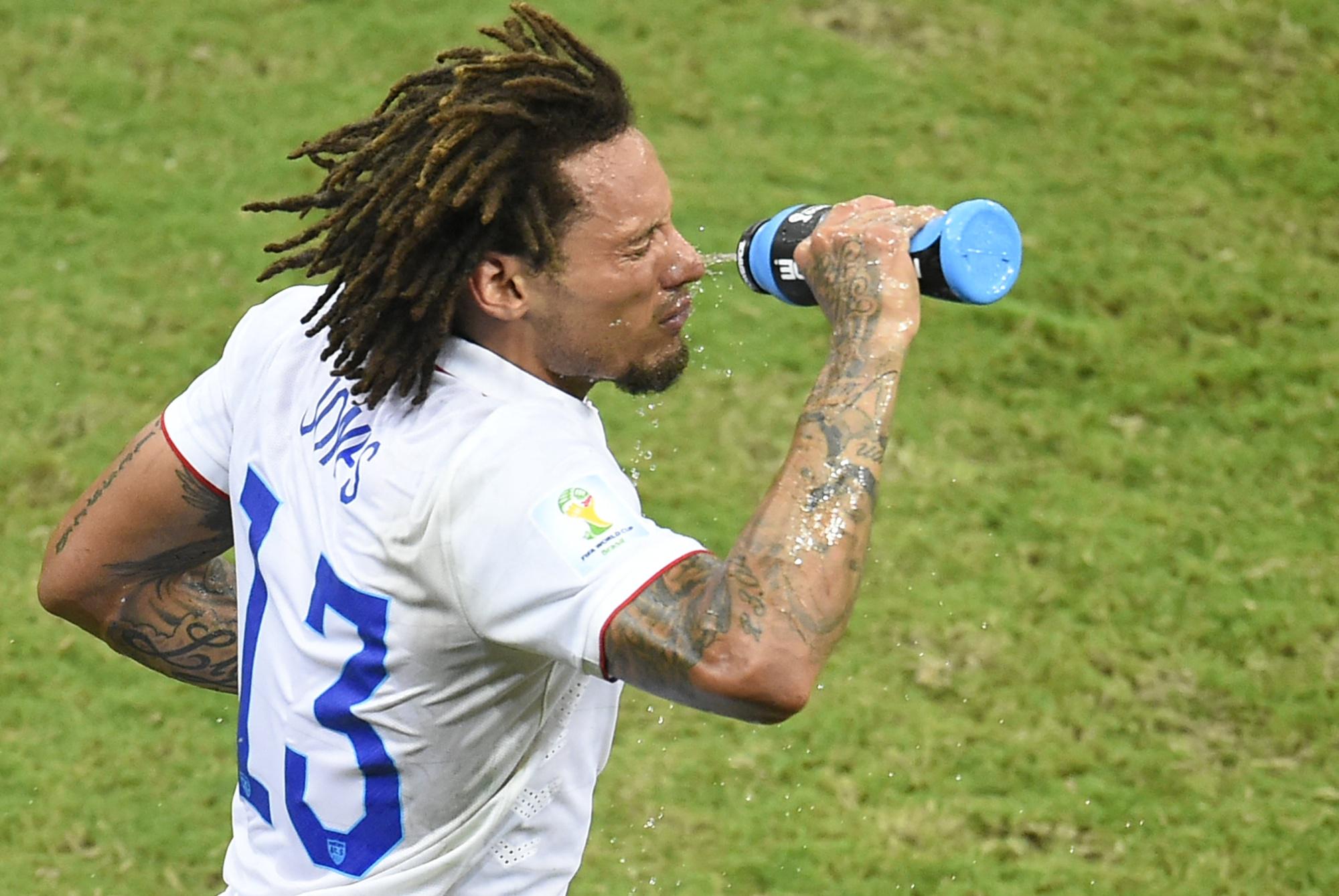
Almost a quarter of matches will take place in potentially punishing conditions, creating an uneven playing field before a ball is kicked.
—
bloomberg
Almost a quarter of matches will take place in potentially punishing conditions, creating an uneven playing field before a ball is kicked.
—
bloomberg
2 Comments
*Emma Court, Elena Mejía, David Ingold and Joe Wertz for Bloomberg News*
Heat may prove to be one of the most formidable opponents at the 2026 World Cup.
It will rise off the pitch in Miami, settle over the stadium in Philadelphia and creep into tired legs in Kansas City. It will evolve between cities and kickoffs, and test each of the 48 World Cup teams in different ways.
Tunisia’s 26-player team is set to face the hottest schedule. “Their players may be more adapted to the heat than certain other countries, like here in Europe,” says Donal Mullan, a senior lecturer at Queen’s University Belfast in Northern Ireland who co-authored a 2025 study about the World Cup schedule’s heat risks.
But even well-adapted teams will “almost definitely” take a hit as the 39-day tournament drags on, Mullan said. “That heat loop builds up over time, that fatigue.”
Bloomberg’s analysis is based on estimated wet-bulb globe temperatures (WBGT), which are widely used to assess heat stress because they account for the combined effects of temperature and humidity on the body. Wet-bulb extremes are becoming increasingly common as the planet’s average temperature continues to warm as a result of rising greenhouse gas emissions. The estimates for the World Cup incorporate stadium locations, scheduled kickoff times, weather conditions over the past decade and factors like air conditioning.
The disparity extends beyond just how hot it could get. Some teams could experience sharp fluctuations between games, forcing players to adapt to dramatically different conditions. The Netherlands could face swings of up to 23F WBGT between matches, while Uzbekistan’s may vary by only 2F.
Concerns about heat stress have led FIFA to mandate water breaks during games and prompted FIFPRO — the global union for professional football players — to recommend postponing play if WBGT levels climb above roughly 82F. (FIFA said in a statement that it’s also taking additional measures, including providing drinks, cold towels and shade to meet teams’ needs on match days.)
[You can view all the maps and data charts here.](https://www.bloomberg.com/graphics/2026-fifa-world-cup-games-weather/?accessToken=eyJhbGciOiJIUzI1NiIsInR5cCI6IkpXVCJ9.eyJzb3VyY2UiOiJTdWJzY3JpYmVyR2lmdGVkQXJ0aWNsZSIsImlhdCI6MTc4MDc0NjY1OCwiZXhwIjoxNzgxMzUxNDU4LCJhcnRpY2xlSWQiOiJURzVJQ1lLSVAzSVMwMCIsImJjb25uZWN0SWQiOiJEMzU0MUJFQjhBQUY0QkUwQkFBOUQzNkI3QjlCRjI4OCJ9.NKix5TmI-rn7pXzDSMf6eC57TBT4NRFtm6n9SPQdd-U)
82 is the cutoff? It’s gonna hit that early morning in some of these cities, and the humidity is going to make it so much worse.