
Had a look at the pass networks from the 2-1 at the Etihad.
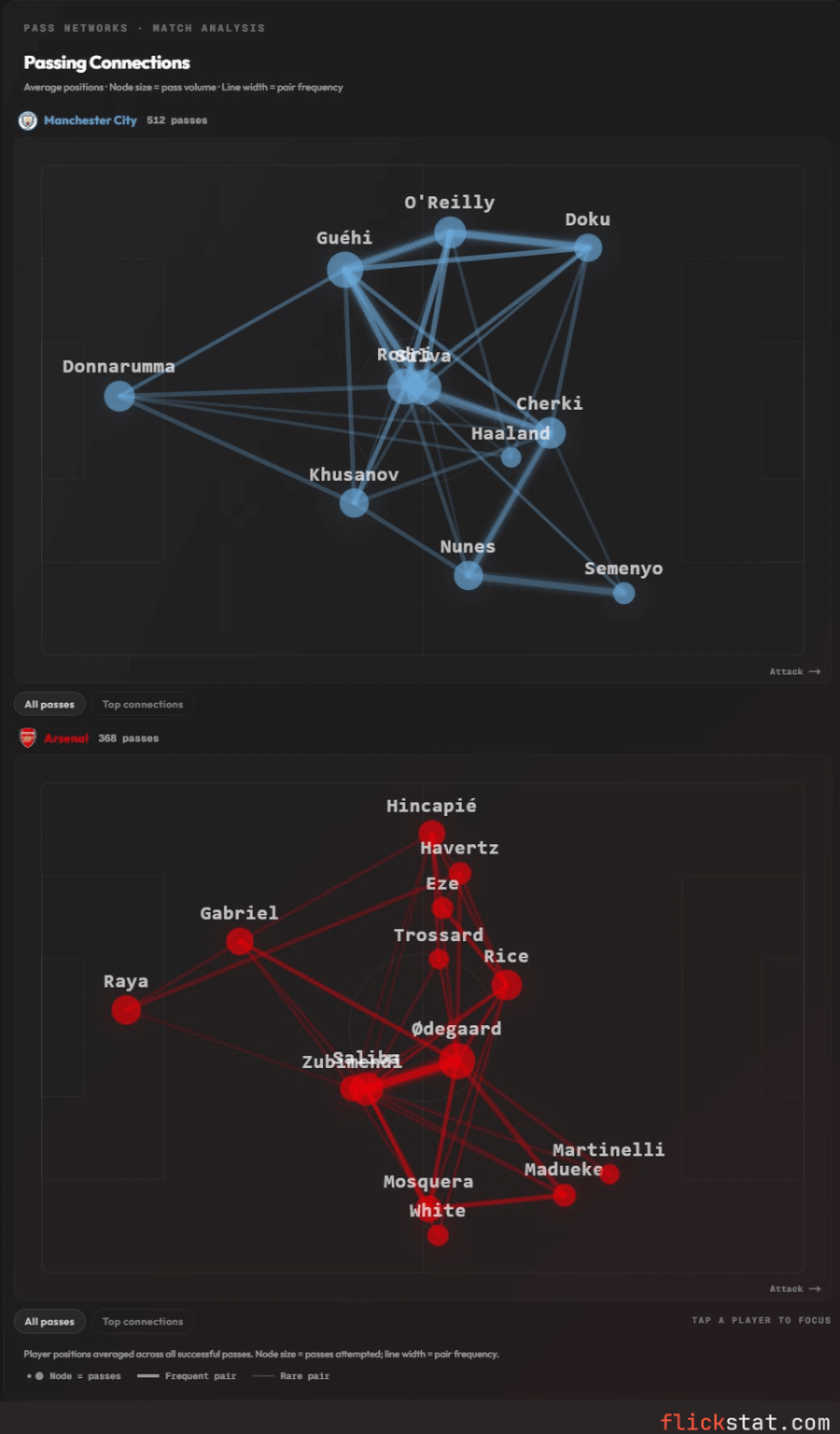
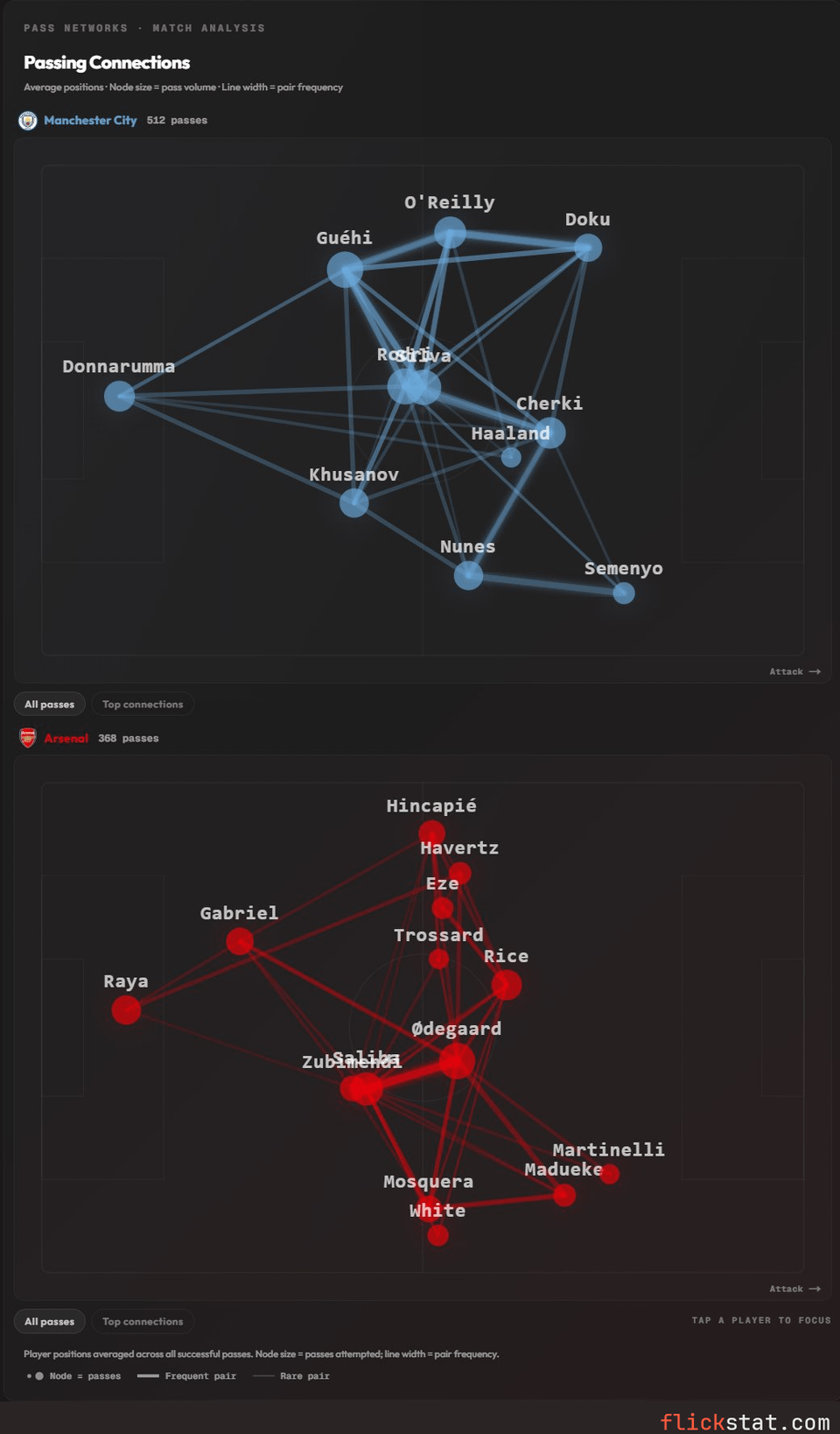
City's network is tight and central — Rodri and Silva as twin pivots, Cherki and Haaland getting involved deep. The left (O'Reilly/Doku) and right (Nunes/Semenyo) are both connected, but the real density is through the middle.
Arsenal's network is stretched vertically and leans right. Ødegaard, Saliba and Zubimendi form the spine, but notice where Eze sits — tucked centrally behind Havertz rather than wide on the left. Martinelli and Madueke are floating out on the right flank, and the left side is comparatively empty.
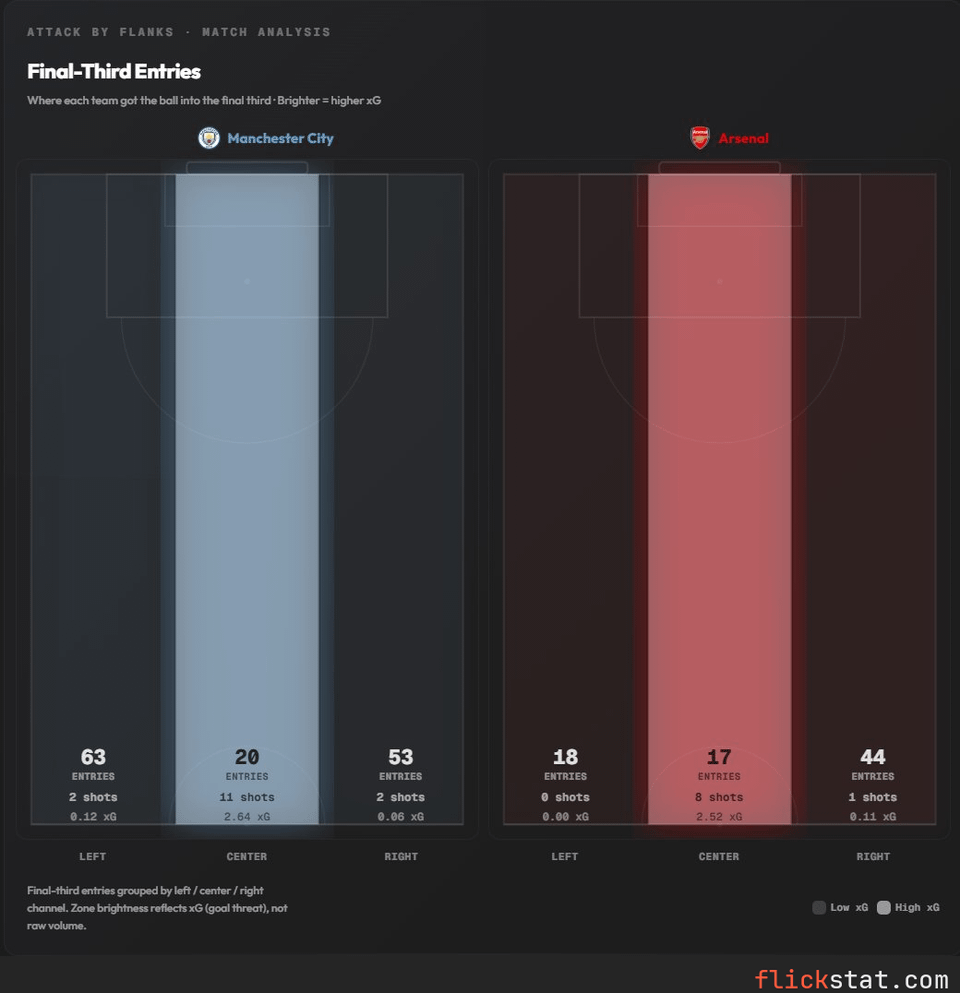
Final-third entries back this up: Arsenal had 18 entries through the left channel for 0 shots and 0.00 xG. The right channel had 44 entries but only 1 shot and 0.11 xG. Almost all the threat came through the center.
Both teams scored from center-channel attacks. Both teams' flanks produced very little. But City had functional width on both sides in the network, Arsenal didn't on the left.
Curious what people think — is this Arteta's choice (Eze as a false winger drifting in) or a shape that broke down under City's press? And did Arsenal lose the match because of this, or was it always going to come down to City's finishing edge?
by AltruisticActuator58
5 Comments
The tactical innovation of having 3 left wingers (or players with plenty of experience playing left wing) on the pitch (Martinelli, Trossard and Eze) and having nobody on the left wing…
As a United fan watching Arsenal, they cant attack.
I feel bad for Gabriel and Saliba, they have hard carried this Arsenal team, but at some point the others have to pick up the pieces and stop relying on them. If Arsenal had anyone competent in attack they would have won ages ago.
Rodrisilva makes a heck of a midfielder.
Rice run away from buildup responsility lmaooo 😭😭😭
Zero progression from Arsenal FBs kills them. Waste of space in the final third.