
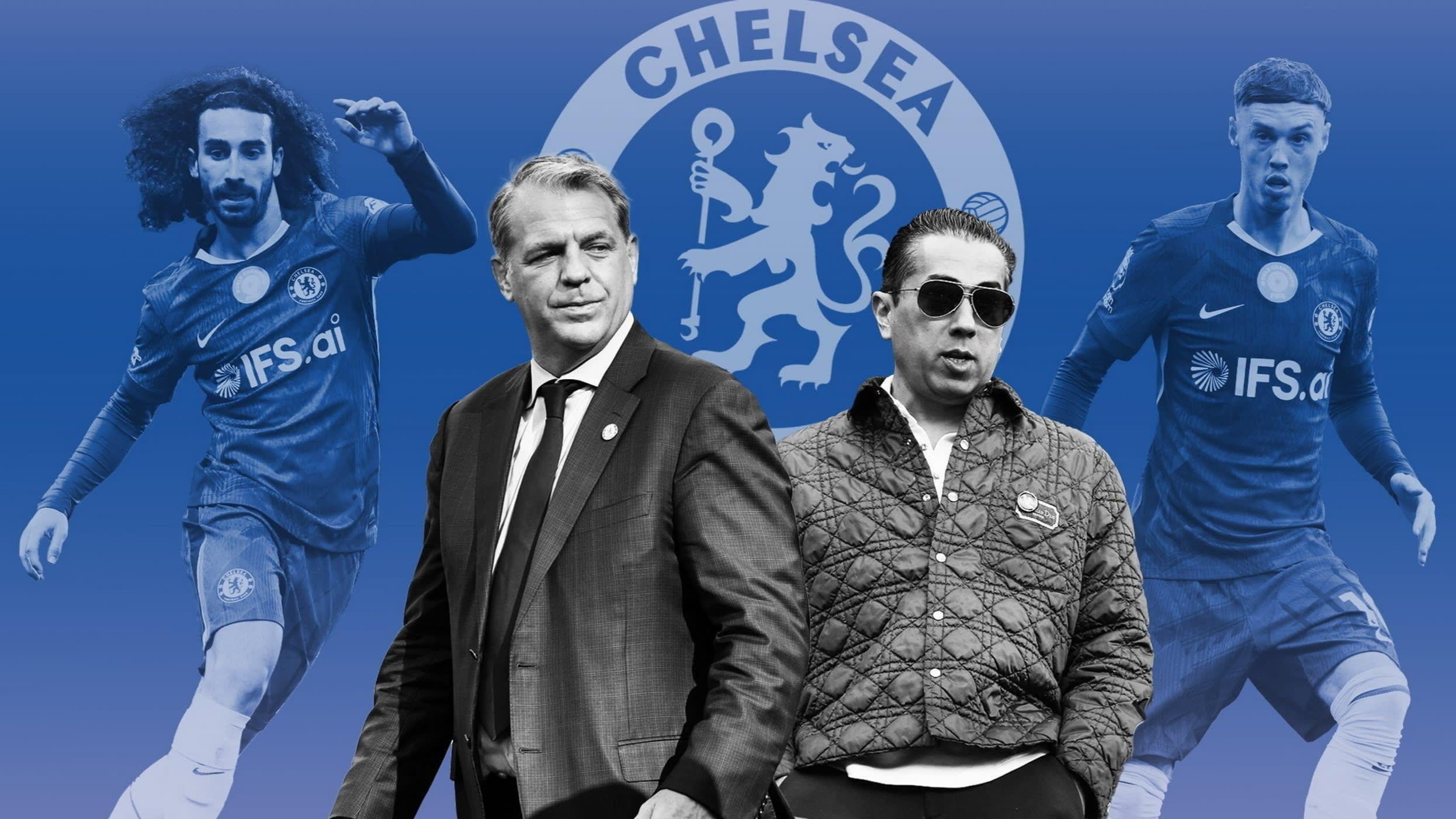
[FT] A person close to the club said that Chelsea’s owners, who committed to invest £1.75bn into the club at the outset, still have £1.3bn on hand.
by pride_of_artaxias
![[FT] A person close to the club said that Chelsea’s owners, who committed to invest £1.75bn into the club at the outset, still have £1.3bn on hand.](https://www.eucup.com/wp-content/uploads/2026/04/TZTYfuPeTyeD_L9EJarQfdcTeFGSeQQJONtvyK-bYoI-1536x864.jpeg "[FT] A person close to the club said that Chelsea’s owners, who committed to invest £1.75bn into the club at the outset, still have £1.3bn on hand.")
[FT] A person close to the club said that Chelsea’s owners, who committed to invest £1.75bn into the club at the outset, still have £1.3bn on hand.
by pride_of_artaxias
16 Comments
1 Michel Olise please
That’s their bonusses for the next couple of years taken care of then.
* Under Roman Abramovich, Chelsea Football Club consistently ran losses of about £1mn per week for nearly two decades, yet the scale of losses under current ownership has surpassed that period.
* The club reported a record £262mn pre-tax loss for the 2024–25 season, highlighting the financial strain as Clearlake Capital and Todd Boehly attempt to transition away from Abramovich’s funding model.
* When Clearlake and Boehly acquired Chelsea for £2.5bn, there was an expectation of disciplined, data-driven financial management, but spending has instead been aggressive and unconventional.
* Since the takeover, roughly £1.5bn has been spent on player transfers, four head coaches have been dismissed, and no final decision has been made on a key revenue issue: stadium redevelopment versus relocation.
* Missing out on UEFA Champions League qualification poses a major financial risk, as participation is a crucial income source and Chelsea currently sit outside the top five.
* Clearlake, which owns over 60% of the club, is new to football ownership, with Behdad Eghbali emerging as a leading decision-maker shaping strategy.
* Boehly’s background includes successful US sports investments, notably involvement with the Los Angeles Dodgers, reinforcing the belief that European football clubs are undervalued relative to US franchises.
* The owners initially aimed to grow Chelsea’s revenues to £1bn, reflecting a long-term commercial expansion strategy rather than short-term profitability.
* The takeover deal included withholding £150mn to cover potential liabilities linked to the Abramovich era, and introduced complex financing structures.
* A central element is a $500mn payment-in-kind (PIK) loan from Ares Management, where interest (over 11%) compounds into the principal, increasing total debt over time.
* Additional loans of roughly £794mn sit elsewhere in the ownership structure, though the owners still reportedly retain about £1.3bn in committed but unused investment funds.
* Revenue rose modestly (4.8%) to £490.9mn, but could reach around £700mn, boosted by success in the FIFA Club World Cup and improved operational performance.
* The club is now said to be profitable at the operating level, though overall losses remain high due to financing costs, past liabilities, and accounting factors.
* A key strategy is to profit from player trading: Chelsea have spent about €1.75bn on young talent while recouping €921mn in sales, aiming to build a self-sustaining model.
* This approach treats players like financial assets, prioritising youth with resale potential, but has resulted in a squad lacking experienced, elite-level players.
Eghbali acknowledged this weakness, stating the club plans to “add more ready made players” to balance the squad.
* Long-term contracts (often seven years or more) are used to spread transfer costs over time and comply with financial regulations, though critics argue they risk reducing player motivation or trapping players on outdated wages.
* Some transfers have succeeded (e.g. Cole Palmer), while others—such as Mykhailo Mudryk’s £62mn deal and subsequent suspension—highlight the risks of the strategy.
* Analysts describe the transfer model as “novel” but potentially dangerous if not carefully managed, due to its reliance on future player value growth.
* Club insiders argue contracts are heavily performance-based and that shorter deals risk losing players for free, defending the long-contract approach.
* Current financial losses are partly attributed to legacy costs from the Abramovich era, including legal issues and player write-downs.
* Instability extends beyond finances: frequent managerial changes have caused internal concern, with players like Marc Cucurella criticising decisions and linking them to instability.
* Fan sentiment is increasingly negative; a survey showed over half of respondents were “very unconfident” in the club’s long-term direction.
* Despite Abramovich’s chaotic tenure, the club won 17 major trophies, whereas the current ownership has only secured the Club World Cup so far.
* The Chelsea Supporters’ Trust criticised the “relentlessupheaval” and lack of a clear plan, questioning how success and identity will be maintained.
Ownership tensions have surfaced, with reports that Boehly and Clearlake considered buying each other out, though insiders claim relations remain professional.
* A major unresolved issue is the stadium: Stamford Bridge’s 40,000 capacity generates far less matchday revenue (£86.7mn) than larger rivals like Manchester United.
* Options include redeveloping Stamford Bridge or relocating (e.g. Earl’s Court), but both face logistical, planning, and financial challenges.
* Delays in making a stadium decision risk Chelsea falling behind competitors commercially, as larger venues significantly boost long-term revenue potential.
Shit, we can buy half of Brazil’s school kids with that.
Time to buy 7-8 new first team players.
We can buy Arsenals stadium then rent it out to them

Yes, the private equity way keep taking loans out and put the club in even more debt and never pay it off then sell the club when the debt becomes too high to maintain
So what is the 1.3bn on hand referring to?
I’m sure the CPO won’t let those vultures move out stadium and rightly so. Can’t trust them.
And Cities owners have a couple trillion on hand…
I might be wrong here, but I think there’s some kind of rules that limit spending? PPI or something?
So why don’t they pay the debt off 🤔, maybe it’s like they are lying.
Quite clearly a PR lie
lol the news on the day of the protest.
pr is desperate
This summer we should sign.
1.Go for camavinga or tchouameni
2. Militao
3. Osimhen
4. Daniel Munoz
5. Ruben Diaz
6. Bring back Jackson
7. Dani Olmo
will estimate the total cost to be 350M incl salary over the years.
Sell
1. Enzo (if he is not commited)
2. Garnacho
3. Lavia
4. Badiashille
5. Tosin
6. Delap
7. Guiu
8. Jörgensen
9. Disasi
We could easily get 250 M. Net would be —100 M.
I I firmly believe we could be title contenders with the new signings
damn, they can sign easily at least 30 more 18yo south american kids.
But building inflation in London has been so insane, it’ll cost £2 billion to do the stadium.
We can’t be competitive medium and longer term with match day revenue much lower than our rivals… Without an owner prepared to lose £100m+ a year, which private equity certainly won’t…
No doubt they’re trying to figure out how to square the circle with interest rates still high and the private credit bust ongoing…