
![[El Periódico] Interview with Juanjo Brau (Barça’s former head physio): "When Leo was on my table, other players would only calm down when I said he'd be ready for Sunday."](https://www.eucup.com/wp-content/uploads/2026/04/A0yu7cg7WChFqRnKCZJ-0lBpbAohi53vYIpMvXiq_08-1024x576.jpeg "[El Periódico] Interview with Juanjo Brau (Barça’s former head physio): “When Leo was on my table, other players would only calm down when I said he’d be ready for Sunday.”")
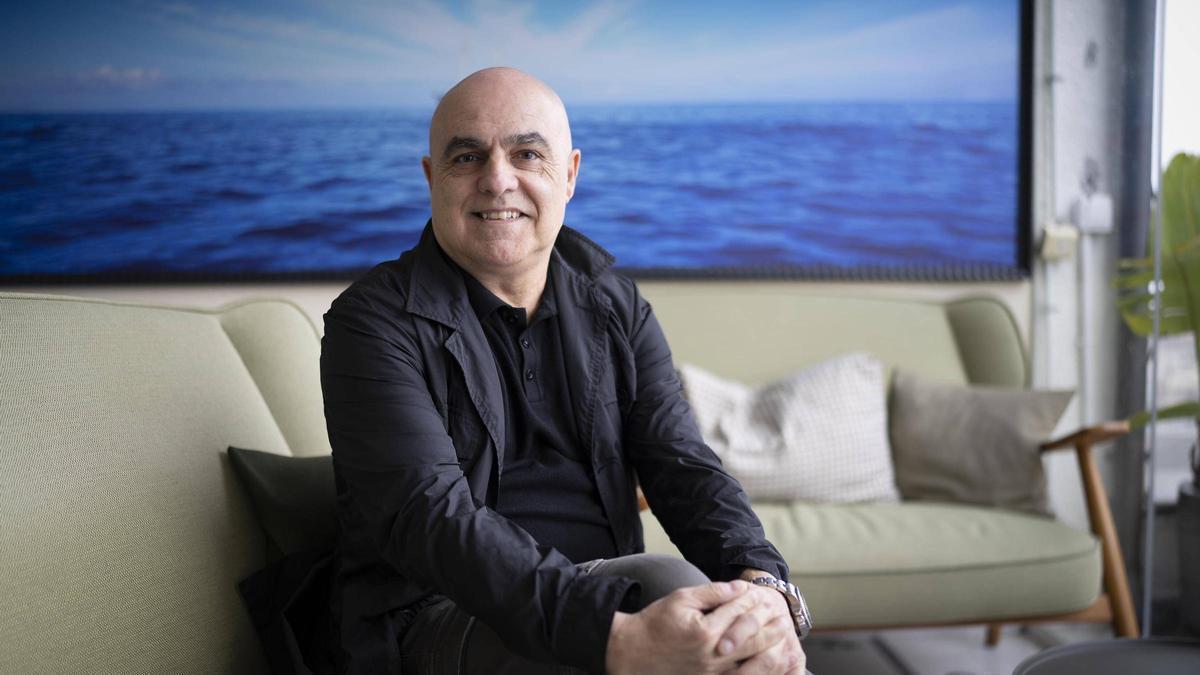
I’ve translated an incredibly deep interview with Juanjo Brau from El Periódico. He spent 25 years at the club (18 with the first team) and was basically Messi’s shadow until 2013. He’s just released his book "What Football Doesn't See."
Here are the most striking takeaways:
• The Messi Aura: Brau reveals that the entire locker room's anxiety depended on Leo's health. Players would only calm down before a game if the physio confirmed Leo was "ready for Sunday."
• The Xavi Critique: He’s very blunt about staff continuity. He believes medical staff should be club fixtures (like in the Guardiola era) rather than being replaced every time a new manager arrives. He claims Xavi’s overhaul "did more harm than good."
• Toxic Entourages: He highlights a major modern problem: players hiring personal physios who promise faster recovery times than the club doctors. This "kills" the player's recovery because they’ll always listen to the person promising a quicker return, even if it’s wrong.
• Mental Health as an Injury Risk: He warns that the "emotional bill" for players like Lamine Yamal is real. High emotional load is a direct factor in physical injuries, and clubs aren't doing enough to manage it.
***Full interview translation:
Juanjo Brau spent 25 years at Barcelona, seven of which as head of physiotherapy. He published a book "What Football Doesn't See" – an honest collection of anecdotes and reflections about how injury management works in elite sports.
**ON SAYING "NO" TO MESSI:**
Q: You write that you need to choose words carefully when communicating with an injured player. Was it difficult to say "no" to Messi?
A: Messi is a figure of completely special magnitude. We always needed Leo, so we had to be extremely vigilant managing every situation. When he was on my table, other players would walk by asking: "He'll be ready by Sunday, right?" Only when I said "yes" would they calm down. His presence alone created a certain atmosphere – having him on the field was insurance, it relieved the collective tension. It's hard to say "no" to players like that. You can only do it when the risk is truly unavoidable, and you can't be rash – you need to know how to prepare that "no." Anyone can say yes.
**ON WORKING WITH ARGENTINA:**
Q: For some time you traveled with Argentina's national team. You describe feeling like a tightrope walker there.
A: They looked at me almost like a prosecutor. I had to be inside the process without intruding and without becoming an enemy in their eyes. We wanted to control the situation because Leo was our "franchise player," our asset. Without him we wouldn't have won half of what we won. He needed to be protected.
**ON STOPPING DIRECT WORK WITH MESSI:**
Q: At the end of 2013 you stopped working directly with Messi. Did that affect you?
A: No, on the contrary. It brought relief. I think it benefited everyone, because there comes a moment when everything gets too compressed and the price for your personal life becomes too high. When you see the situation won't improve and personal costs are growing, you just need to be able to say "enough."
**ON HANDLING CRITICISM:**
Q: When injuries increase – and in a club like Barça this happens often – criticism of the staff becomes regular. How did you handle that for 18 years with the first team?
A: I got used to it because I understood it's an inherent part of my work. What I really didn't like was that information was often presented in a distorted way. There's always someone's interest behind such leaks. They harm those inside but benefit someone else.
**ON INJURY SPIKES:**
Q: You note that nobody knows for sure why a player DOESN'T get injured. But can you explain why a team has a spike in injuries all at once?
A: It must have an explanation. Injuries depend on many factors, but if they repeat regularly, you need to analyze the causes. The worst thing that can happen to a team is constant staff turnover, because everyone comes with their own method. At Barça I always advocated for a club structure, so medical staff and fitness coaches would be club employees who grew up through the youth teams. That's how it was during Guardiola's glorious era. When Xavi arrived, he broke that line and replaced all of us with his own structure, which changed again after his dismissal. This makes no sense and does more harm than good.
**ON WHY CONTINUITY MATTERS:**
Q: Why?
A: Because, as we see now, Barça consists of many academy products. La Masia has a training structure that breaks when transitioning to the first team if there's no continuity. In a club like ours, with very specific philosophy and homegrown players, there must be a consistent line. You can bring any coach with their staff, but you can't change the physical training structure of players every year or two.
**ON THE 2004 ACL CRISIS:**
Q: You joined the first team in 2004 when four players tore their ACLs (Motta, Gabri, Edmílson, Larsson).
A: They tore their ACLs almost one after another within five or six weeks. The first team needed staff reinforcement. There was a meeting with Txiki Begiristain, and the players themselves asked for me and my colleague, who were working in youth football, to move up to help. That's how we stayed there.
**ON MANAGEMENT BEING THE HARDEST PART:**
Q: You say the hardest thing for an elite physio is management.
A: Absolutely, and I'm more convinced of this every time. Some footballers' entourages are toxic for them. When a player is injured, he's very vulnerable and, above all, rushing. If he gets different signals from different people, he'll latch onto the one he likes most, even if it's not good for him.
**ON PERSONAL PHYSIOS:**
Q: Many players have their own personal physios.
A: That's something I always thought should help the player, but sometimes it hurts – especially when there's no proper communication. An injured player should get a unified message. As soon as he has two different opinions, you "kill" him, because he doesn't have the competence to choose the best one. If I tell him recovery will take three weeks and his personal physio says two, he'll grab onto the two-week option even if it's methodologically wrong.
**ON LAMINE YAMAL:**
Q: You write that if an 18-year-old is carrying the whole team, it eventually presents him with a bill. Should Barça fans worry about Lamine Yamal?
A: I always wanted to emphasize the emotional component. Clubs don't have structures to reduce emotional burden on players, yet it's fundamental. We don't pay proper attention to mental health. Now Morata and Araújo talk about it… but thousands of others go through it silently. There are moments when a session with a psychologist would be more useful for a player than training, because high emotional load is also a risk factor for injuries. Today's player is extremely exposed to the world, they read everything written about them. Whoever says they don't is lying.
**ON NEEDING A PSYCHOLOGIST HIMSELF:**
Q: You admit you needed a psychologist yourself in your last two years at the club.
A: Yes, I needed help to finish that stage in the best condition. It was a difficult period – Barcelona was in chaos during the last Bartomeu era, with very difficult surroundings and things I couldn't control that wore me down. Inside the locker room I had to take on more responsibility than I should have, and it affected me. The club started taking my health, and at that point I wasn't willing to make such sacrifices anymore. I decided my stage was over, also because Xavi decided to bring people he personally trusted.
Source: [El Periódico Article](https://amp.elperiodico.com/es/deportes/20260324/juanjo-brau-exfisioterapeuta-barca-entornos-toxicos-futbolistas-127703489)
The 'personal physio' vs 'club doctor' conflict is eye-opening. Should Barça follow the example of some top clubs and strictly ban outside entourages to protect players from themselves? Any thoughts?
by GoodFellaInk
2 Comments
It looks like OP posted an AMP link. These should load faster, but AMP is controversial because of [concerns over privacy and the Open Web](https://www.reddit.com/r/AmputatorBot/comments/ehrq3z/why_did_i_build_amputatorbot).
Maybe check out **the canonical page** instead: **[https://www.elperiodico.com/es/deportes/20260324/juanjo-brau-exfisioterapeuta-barca-entornos-toxicos-futbolistas-127703489](https://www.elperiodico.com/es/deportes/20260324/juanjo-brau-exfisioterapeuta-barca-entornos-toxicos-futbolistas-127703489)**
*****
^(I’m a bot | )[^(Why & About)](https://www.reddit.com/r/AmputatorBot/comments/ehrq3z/why_did_i_build_amputatorbot)^( | )[^(Summon: u/AmputatorBot)](https://www.reddit.com/r/AmputatorBot/comments/cchly3/you_can_now_summon_amputatorbot/)
Off topic, anyone have a rec on learning català. Sé que el artículo es castellano – but I’m interested
Also anyone read his book?