
Click here to join the free masterclass from the Mobility & Flexibility Toolkit:
https://www.matthewismith.com/mftk-masterclass-opt-yto
For Toolkits, coaching & contact:
https://www.matthewismith.com/
For more regular content updates:
https://www.instagram.com/matthewismith/
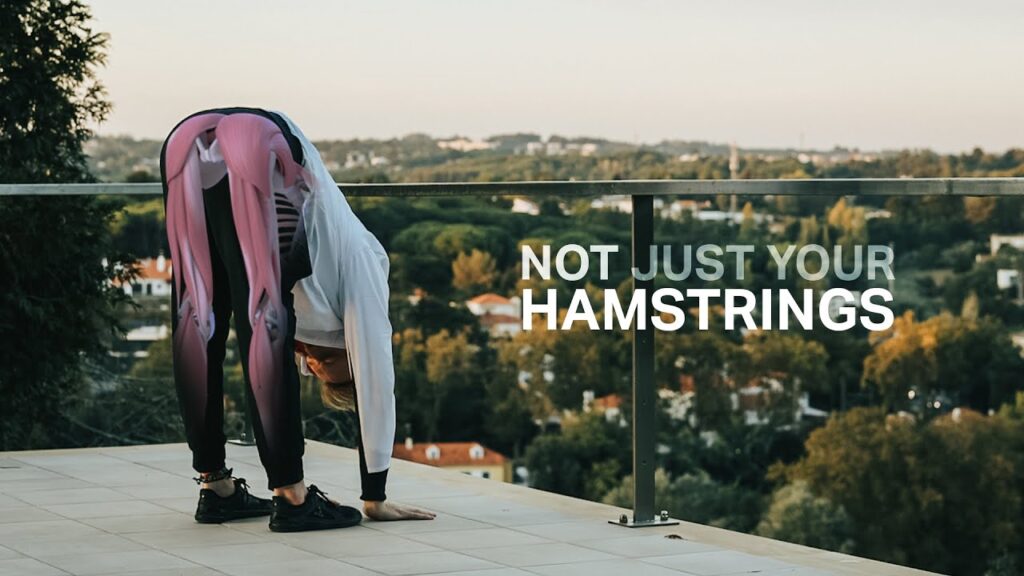
Touching your toes (with your hands or head) requires more than just flexible hamstrings.
In the “Mechanics of Touching Your Toes” we break this skill of pike & head to toe down into its fundamental components and look at how your nervous system interacts with each piece.
You will learn:
– How your brain limits your flexibility (stretch tolerance)
– The optimal forward fold technique
– the passive to active spectrum / assisted to resisted spectrum
– Which muscles get stretched
– How to stretch muscles like your hamstrings
– The muscles that need to be strong
– About the sciatic nerve
And more…
The 3D anatomy & educational graphics are custom-made by our in-house graphics team. The media, video and FlexView anatomy are copyrighted. It’s not for distribution or re-use without prior written permission from matthewismith.
Enjoy the video!
Feel free to get in touch if you have any questions 🤙
45 Comments
Bro is just flex on people when he tied his shoes, lol
p.s I love your videos.
Beyond proud of this one good job team
wonder how we can upgrade it next👀
This is an incredible resource! Thank you so much for creating this
Finally ❤🎉new video yay… Bring us some more until Christmas eve please 😂
what's the matter brother ,Finally your new video is here.I am from India. I learned splits by watching your video, only 15 days🎉🎉🎉❤❤ thanks 🙏
oh shit the guy from youtube who taught me the split is back
One hour ago? Wow, only 376 views
The best quality video on the topic, informative for those who watch, transformative for those who will also practice 🙏
Beautiful visual !
Another master piece!! Your work is stellar my friend. Thank you! -Gabo
Thank you 🙂
There seems to be a missing element of stretching. Since when does a person start from a "cold start" to determine what their stretch capacity / limit is? There is a certain process one should follow before determining where one actually is at in their flexibility spectrum. After a minimum to extended warm-up period to test different threshold limits, like a slow and controlled first, second and third move & hold attempt (there's nothing wrong with adding as many additional warm-up attempts as you please), a foundation is now established to obtain a true and accurate reading on where a person's flexibility spectrum lies. I'm just saying…
We eatin good tonight boys
But isnt a jefferson curl resisted in the stretch when you are going back up?
This is the kind of stuff I really need
Damn the quality is amazing! Super informative video! Awesome job 🔥
Hello again :")
This is pure gold!!!!
I have a question: I can get my palms flat on the floor but only when I warm up. Would you still consider that a "available range"?
As a ballerina, you just blew my mind with some of these tips! You are AMAZING. This is your gift, thank you for sharing with us! So much work was put into this, THANK YOU!!
have to give you the flowers on this one💐 Nice work
You didn't explain: what's the point of the 20:38 sciatica test? how are you meant to use that to diagnose sciatic issues?
so basically, if I lie supine on the ground and rise one of my legs, I remove gravity from the equation and level my hip unbalance. Very inspiring. Thank you!
I’m about 5 inches away from the side split and I’m kind of stalled In progress , my active and passive or very similar what do you suggest?
Appreciate it. Thanks.
As a physio therapy student it baffles me how I just learned more about flexibility, watching your "mechanics" videos and masterclass, than from the "flexibility/movement classes" that was spread out over 3 semesters, with a lot of the classes taught by teachers who definitely don't practise what they preach. So actually no, im not surprised.
These videos put a lot of thoughts together, that I couldn't quite piece together, even though i have trained ATG style for 5 years, researching, trained my way to palms to floor, almost front split, etc.
Crazy value! Would also enjoy lower production quality / unedited, long form content.
As a strength/flexibility/mobility coach for badminton players, it would be great to see/hear your coaching ques, trouble shooting, programming procedures, etc, live.
Will definitely join the Toolkit! Thanks a lot!
Amazing information and video!! Your work is very much appreciated 🙏
Excellent content, thank you so much for sharing!
As a toolkit student myself I can safely say no other online fitness course I've ever bought comes remotely close. Incredible video brother thanks for the work you do
"As an adult" is key here. You're never too old to get better!!
Go yoga class, youll get all this.
This is exactly what I've been looking for, thank you for this great info.
Best flexibility video.(There's a lot!!! Out there.)Also simplified but not watered down either. Thanks, for the effort.
So happy to see this addition! I will jump in to the Toolkit tomorrow – quick question, if you are checking here, my limiting factor has been keeping my back as straight and long as I would like to, is that addressed in 3.0? I’m like a kid at Christmas, I can’t wait to find out 😂😊 Thank you, Matthew!
What a gem of a video! Thanks! 😊
Wow, huge comeback😎
One of the best explanations I have heard. Thank you 🙏🏽
Stunningly brilliant. Such intricate detail. Well explained. Good to see the gang of helpers joining in. I am excited to get back home to start testing my flexibility again.
I would like to see some older folks stretching in your videos. Can people over fifty increase their flexibility? The answer is yes, and the follow up question is how.
Phenomenal
Extraordinary
Thank you!
Really appreciate this video – let me give you something back. When Glute weaknesses are seriously corrected (I am sure there are other ancilliary things happening as well), Anterior Pelvic Tilt corrects, Femurs rotate outwards – Over Pronation of Foot corrects. Over-Pronation of the Foot is a Glute issue. I am sure this can't just me me – maybe not everybody but this is coming from someone with the flatest feet you ever saw – I gave up on orthotics in my forties (which I tried since the age of 8 years old) because no matter what they were made from – I crushed them. Accidently discovered. It looks like that study you mentioned is at the cutting edge of research in Pelvic Tilt/Femur Rotation – but I observed this years ago – AND took it further.
Acrobat here – the measured approach in the mobility & flexibility toolkit has been a game changer.
Knowing the theory behind stretching made all the difference in my practice sessions – going from 'trying to feel a stretch' to objectively make progress is what got me to my first oversplits, even though I didn't have any gymnastics or flexibility-based background in my youth!
Thank you for making this educational content, Matt!
What program is used to edit this video?
wow amazing! Pure quality content. Instant subscription, thanks for sharing your wisdom, it makes so much sense after you explained it this coherently!
Wow beautifully explained. Im glad i stayed with this explanation to fully grasp what all your graphic demonstrations where leading up to.. very thoughtful and thoroughly shared in detail.. Now if I would just get moving to implement what I’ve learned.
I'm speechless. What an awesome job, even better than the side splits video. Congrats!