
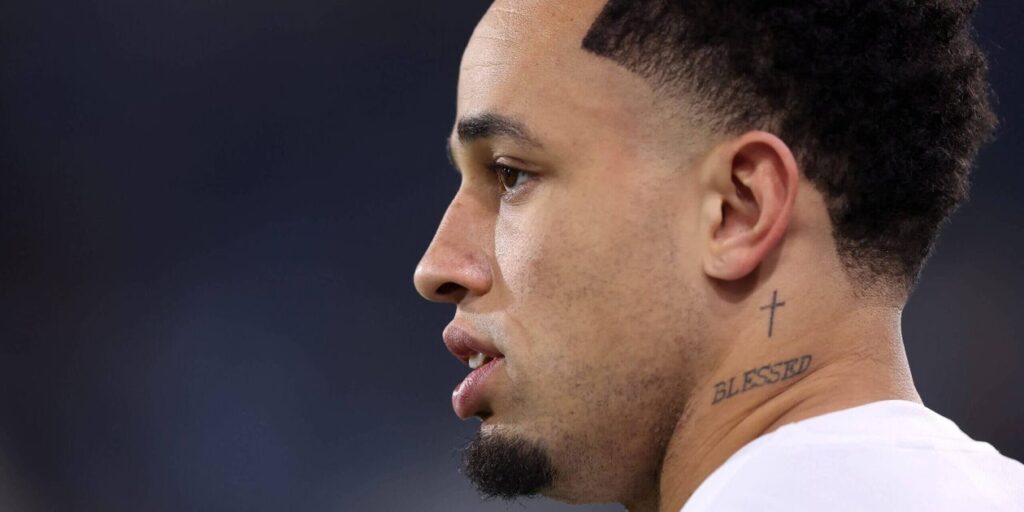
Speed and Noah Okafor go hand in hand.
If a Leeds United supporter had to name the winger’s defining attribute, it would probably be his pace. He has never liked doing anything especially slowly.
His father, Christian, has a glint in his eye as he recalls a story from his son’s youth.
It would take Okafor’s parents 15 to 20 minutes in the car to get him to training at FC Basel’s academy. Sessions often started at 5pm, so it was a tight turnaround for them with their jobs and his schooling.
Christian’s voice rises as he tells his frantic tale.
“There was a day she (mother Nicole) came,” Christian tells The Athletic. “She picked Noah up. Noah was the one hurrying her: ‘Drive! Drive! I don’t want to be late, I don’t want to be late!’ He’s so passionate.
“Then she ran into a speed camera. There were so many times we ran into speed cameras. He didn’t want to miss training or anything. He was so passionate.”
As his professional career has proven, Okafor’s passion and drive have not dimmed with time. He has, though, had to take a more patient, methodical approach to his training. That has come with maturing and the priceless, ruthless, honest feedback of his inner circle. When he was a child, however, the speed of his progression was hard to ignore.
This is his story.
Okafor was born in Binningen, a town on the outskirts of Basel, close to Switzerland’s borders with France and Germany.
In March 2007, when Okafor was six, the family moved to Arisdorf, a village nine miles south-east of Basel where there was a football club. He would turn up at FC Arisdorf, looking to get involved. Except at that time he did not have any boots or shin pads.
Markus Schweizer, one of the coaches there, had to send him away to secure the right gear.
Within an hour, he was back in front of Schweizer, fully kitted out. Okafor had raced home to find his father, begged him for the equipment he needed, gone to the shop and returned, ready to play. Christian says his son scored all three goals for Arisdorf in his first friendly appearance for them.
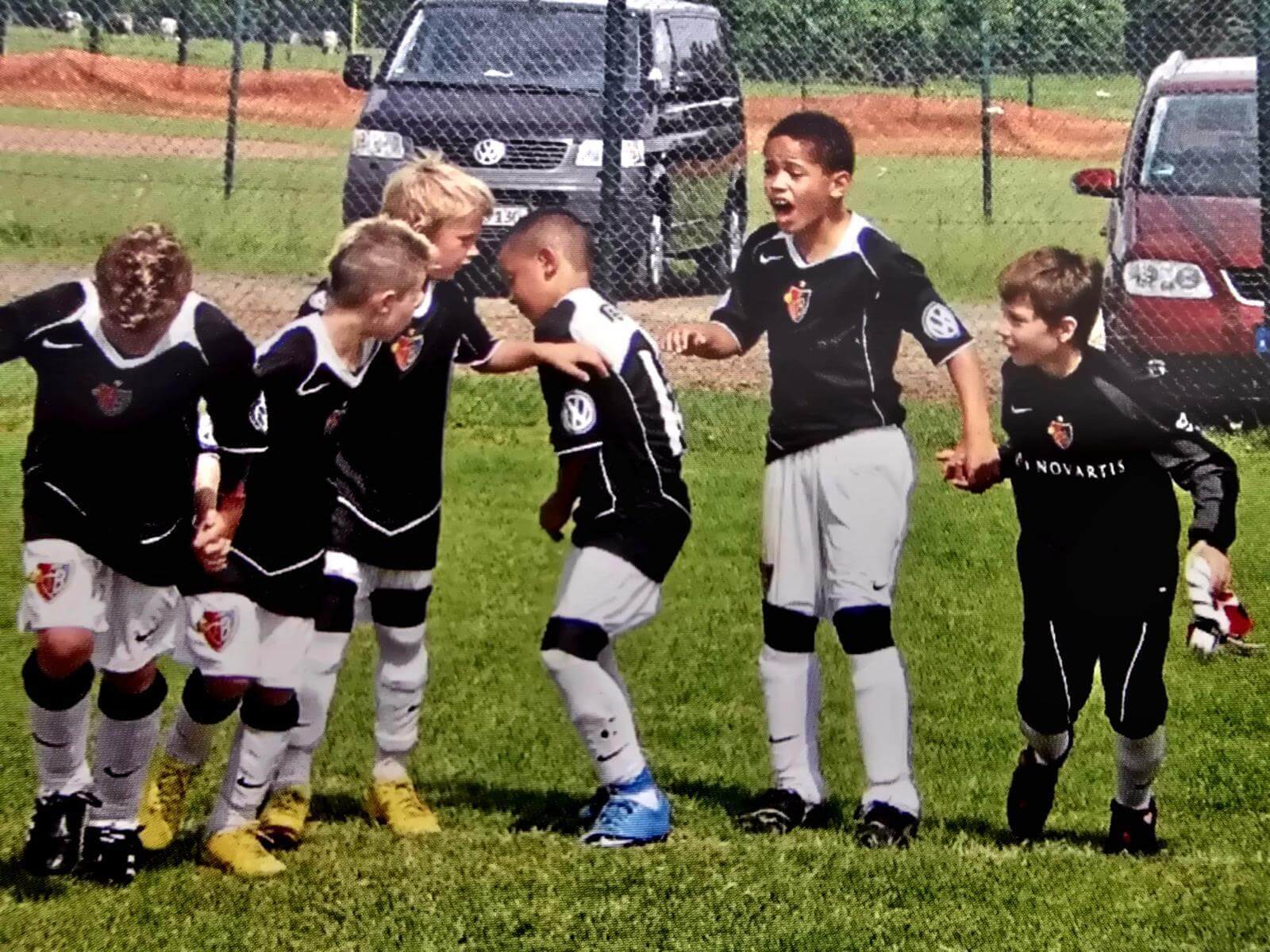
A young Noah Okafor, second right, celebrates with his team-mates during a youth game (Christian Okafor)
Christian felt immediately that he could see something different in his son compared with the other players.
“When he was growing up, when I saw him kick the football the first time, he did it like a miniature professional,” he says. “You can quickly see he’s going to go far.”
Others saw it too.
Schweizer was convinced enough after that single match that he recommended FC Basel, the local pro side, take a look at Okafor. The now 21-time Swiss champions were supposed to scout Okafor for three matches. They were convinced after only one.
“He (Noah) was really serious,” says Christian. “I believe he is made for the game. You can see that quite early, at the age of six, seven, eight. I had my doubts until they had a match on a Saturday. But when I went there (to watch), my perception changed. I saw what he could do with the ball. I was then encouraged to push and support him.”
Life did not suddenly become easier once Okafor was in Basel’s youth system.
Both Christian and Noah’s younger brother, Isaiah, admit the boys’ childhoods were difficult at times.
Christian had left Nigeria in 1992, aged 18. He came to Europe looking for a new life and new opportunities, in fairer and safer societies for any future family he had. He passed through Austria and Germany before settling in Switzerland.
The family were not wealthy. Both parents were working full-time. They had five children. Noah needed to be driven into Basel twice a week, and had matches on weekends.
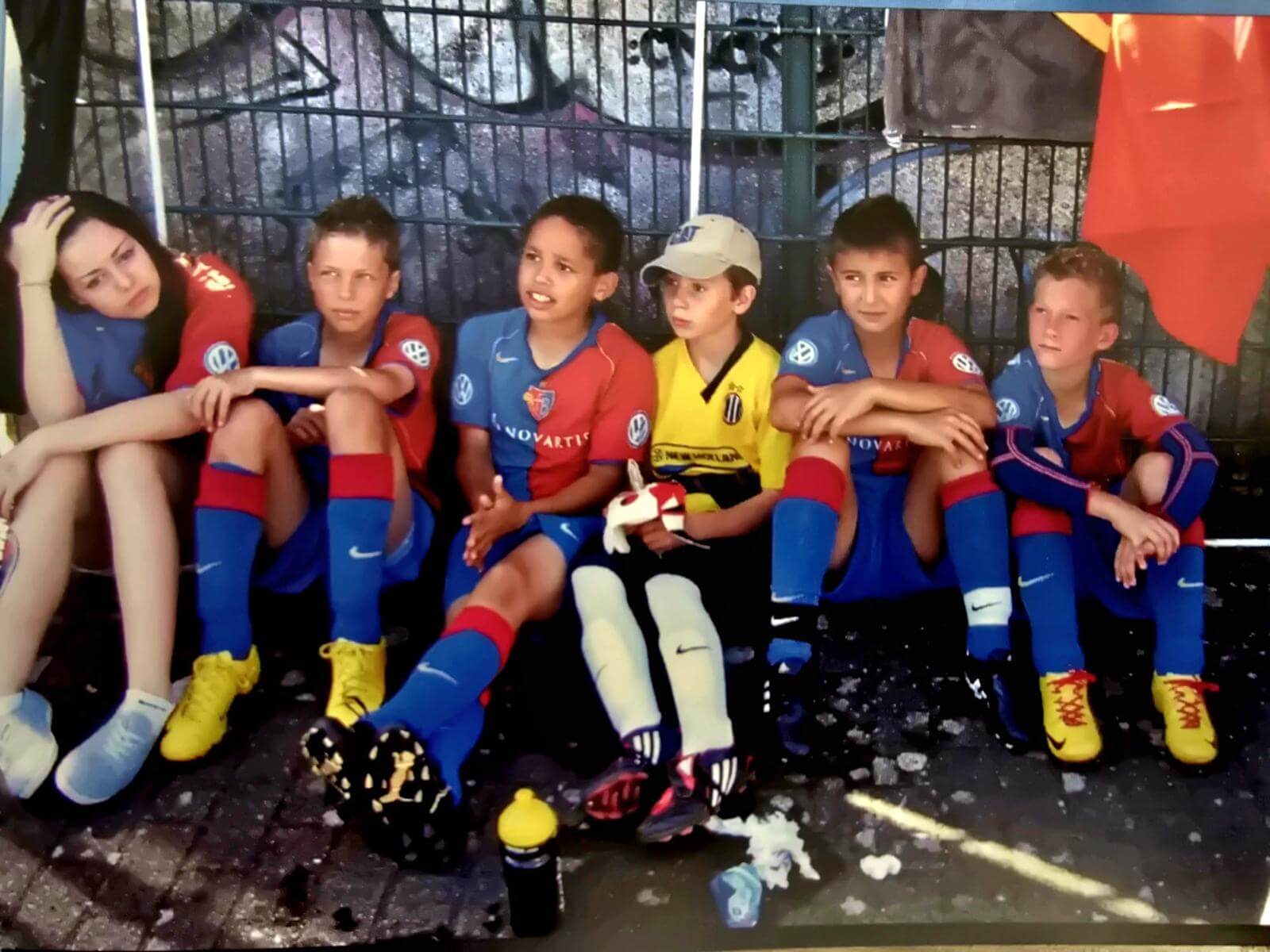
Noah Okafor, in the middle next to the goalkeeper, with the FC Basel youth team (Christian Okafor)
As he got older, supporting his budding career became more intense. There would be tournaments to travel to in Germany, Austria, Italy, France, Denmark or England. It was hard spinning all those plates, but Christian is proud of what Noah has made from his family’s sacrifices through those formative years.
“Very proud, because there was no guarantee when he started, but I believe because of his passion — that’s why he made it through,” says Christian. “He’s very passionate. Nobody forced him.
“I knew very early, quite well, when he was 15, he was going to make it, because I was going around with him. I watched all his matches. I knew when he improved, and so I saw everything. I was like, ‘Cool down, let both of your feet stay on the ground and work hard. I know you’ve got the talent. Talent is good, but talent without hard work goes nowhere’.”
Family is at the cornerstone of Okafor’s story. Not only is there the hardship his father overcame, but the love of his mother and the tight-knit bond she fostered between their five kids.
Sister Sona and brother Joel are living lives outside football, but Elijah and Isaiah, Noah’s younger brothers, are also players. They have not reached the level he has yet, so look up to him.
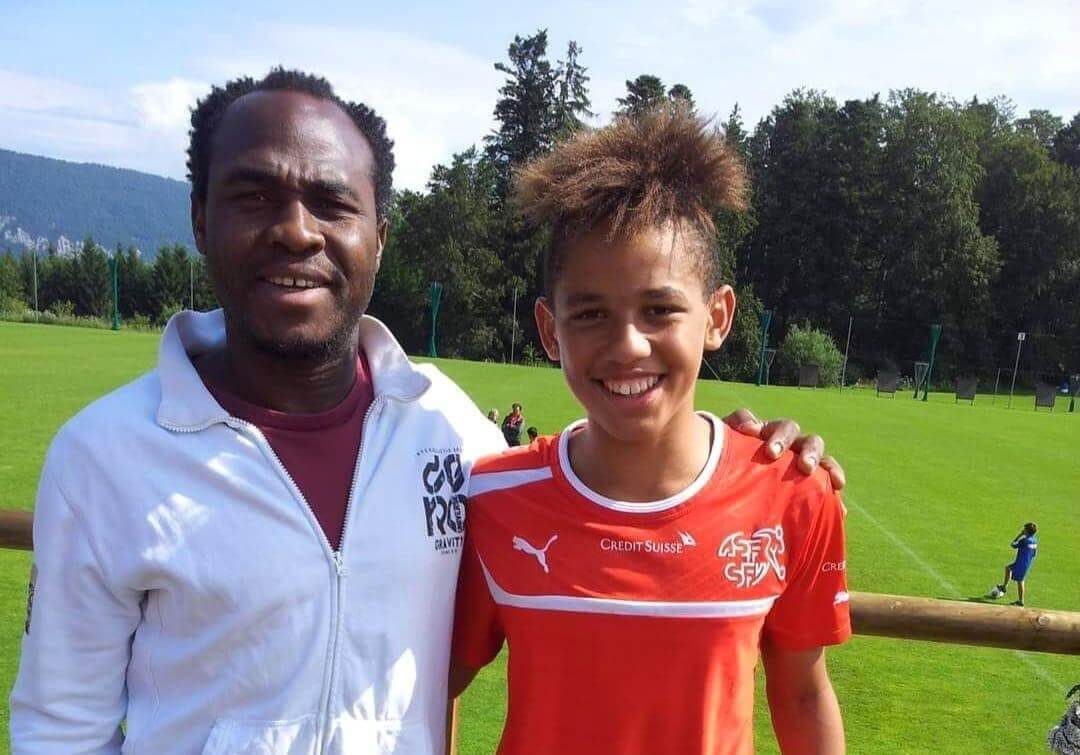
Proud dad Christian and a young Noah Okafor (Christian Okafor)
Eight years on from his professional debut with Basel, Noah’s success has made him a role model for his siblings.
As an outsider who has grown close to the family, fitness coach Rolf Fongue has witnessed that dynamic first-hand.
“He’s one of the nicest and most generous people I know,” he tells The Athletic. “He’s not opening his heart for everybody. Sometimes, with new people, he keeps himself to a distance, but when he lets you in the circle, he really does everything for you. He really wants you to be well.
“That’s also his role in the family. He takes care of his brothers. He takes care of his family. He takes care of whoever is close to him. That’s his responsibility, for him, because it was his responsibility when he was young. From the three brothers, he’s the guy who made it in football — so far.”
That link to his loved ones is central to the improvements Okafor has made to his game.
The three footballing brothers are brutally honest with one another. They review each other’s performances on the pitch and leave nothing unsaid. Isaiah recalls Liverpool’s visit to Elland Road in December. Ao Tanaka memorably scored in added time to secure a 3-3 draw with the reigning Premier League champions, but Okafor had been substituted in the 65th minute with Leeds 2-0 down.
“I wasn’t happy with his performance. He could have done much better,” Isaiah tells The Athletic. “He also recognised that. And then we have to be critical. Then, maybe, the (post-game video) call is not always laughing. Then he’s p****d with me because I’m saying it straight to the face. But that’s what real love is — not talking always (about) the good. Straight in the face.
“He appreciates that also, because that’s what makes him better.”
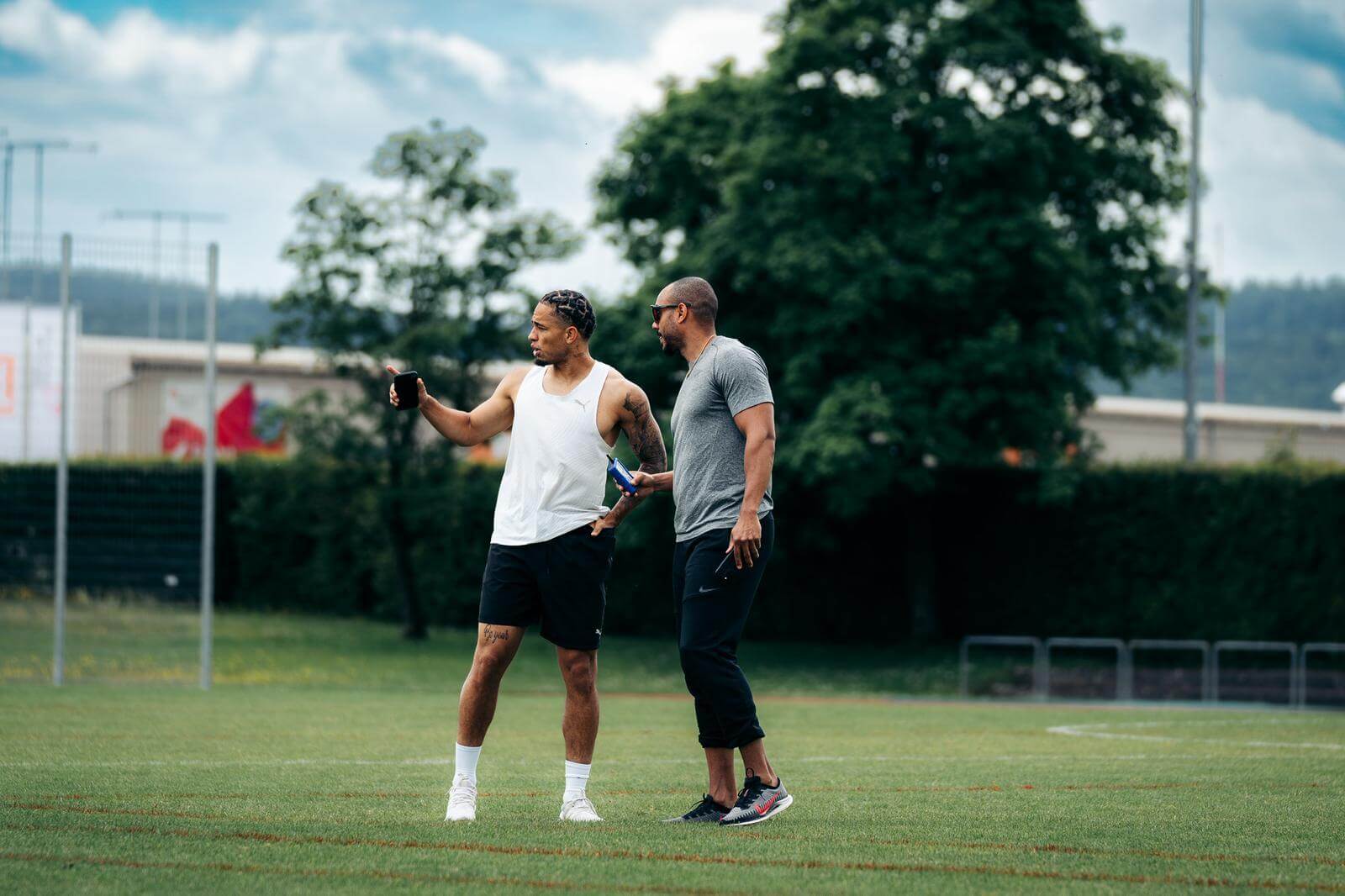
Rolf Fongue, right, works as a fitness trainer with Noah Okafor (Rolf Fongue)
Fongue began working with Okafor when he was on loan from Italian giants Milan to fellow Serie A side Napoli last season. Their connection has only grown. As Okafor’s fitness coach, Fongue has also come to deliver some stinging home truths this season when the winger wasn’t playing at his best.
“He had 10 or 12 games with no attacking returns (either side of Christmas),” says Fongue. “He had good performance training with me, but he wasn’t performing well on the pitch.
“I told him, and also his brothers told him, ‘You’re not the guy you can be on the pitch. You have to bring the intensity. There’s always something missing. You only give 80 per cent. You’re not showing on the pitch what you’re showing me in training. You have to change your mindset’.
“It was maybe a little insecurity there to really be himself on the pitch, because Noah is what he’s showing now. Noah is this guy with lots of intensity. I understood who he was when we played padel in Naples. I saw his joy for competition. He’s that fun, playful guy. I said, ‘Why are you not the guy you show me when we are playing padel?’ I saw in him that he understood what I meant.”
What was it Fongue and the brothers felt was missing?
“It was just general body-language,” says the trainer. “He wasn’t playing against the ball. He wasn’t really defending. He was going towards the man, but then he stopped.
“I didn’t see that hunger to win. That was annoying me, because when we play padel, he does everything to win. I said, ‘Why are you not showing up? That’s your job. You’re doing it when we play this stupid game, but when you’re on the pitch, why are you not showing me that?’”

Noah Okafor was not himself against Liverpool earlier this season (Carl Recine/Getty Images)
Fongue, a former international sprinter for Switzerland, had first worked with Isaiah, who quickly put him in touch with his big brother. Okafor left the coach in no doubt that he was all-in to improve.
It was easier to keep their training load high after that winter-window loan to Napoli, where Okafor was not playing much (just four substitute appearances totalling 36 minutes). But since August’s £18million ($24.3m at that time) move to Leeds, he has had to strike a balance.
Fongue says the priority has been improving his availability. Injuries have been a problem for Okafor in the past, but since coming to Leeds he’s only been absent from five Premier League matchday squads. Being transparent with the club has been critical, Fongue adds. They are fully aware of everything Okafor is doing, and when he’s doing it.
“Noah has huge talent, but in the Premier League, the intensity cannot compare with any league,” says brother Isaiah. “Noah is really fast, an athletic player, really strong one against one, but in the Premier League, he couldn’t show it. In training, at first, he couldn’t show it.”
Fongue says Okafor wants to break the Premier League’s top-speed record, currently held by Tottenham Hotspur defender Micky van de Ven, who clocked 37.4 kilometres per hour (23.2mph) in January 2024. Fongue is trying to get Okafor’s top speed closer to 39 or 40kph.
Whether or not he catches Van de Ven, his pace is certainly catching the eye.
The graph below surfaced earlier in the year, showing that Okafor is hitting higher speeds, and doing so far more frequently, than any other forward in the division.
It’s no surprise when you look at this chart. Šeško is one of the fastest strikers in the Premier League this season. https://t.co/0E2QaDqD5j pic.twitter.com/zEJfLLhGX6
— DevilsClub (@Devils__Club) February 24, 2026
Fongue estimates Okafor would be able to run the 100 metres in 10.9 or 11 seconds. His speed, then, is not in doubt — but application and temperament have not always been quite so forthcoming from him, according to his inner circle.
Two or three months ago, Fongue says, Okafor was struggling. He was confused about why he was labouring to hit the heights he expects of himself, or why Leeds’ manager Daniel Farke might withdraw him at half-time of games he started or leave him on the bench in others.
“He was disappointed in himself because he wasn’t always starting — for good reasons,” said Fongue. “We, as a team, also told him, ‘How (can) you want to start if you bring that performance? I wouldn’t even let you play 60 minutes. I would take you off after the first half. You didn’t show anything’.
“He had to be honest with himself. If you ask him now, he can give you a direct answer on what it was. I think he was a little bit confused about why these things were happening, but he sees it clearly now, what he needs to bring. He’s now an important asset for the team. They don’t want to be without him.
“When he’s the Noah he’s showing now, you see a big difference when he’s on the pitch or when he’s off the pitch. He’s become such an important figure and such an important player for the team. He’s in great spirits. Every day when I call him, I see a smile. Two or three months ago, it wasn’t like that. When he’s in that spirit, great things are going to happen.”
Fongue, who spends one week per month in Leeds working with Okafor, puts a lot of the improvement down to doing the dirty work. His camp all see him doing more off the ball, pressing defenders, putting tackles in and helping his team out.
The attacking part of the game has always come naturally.
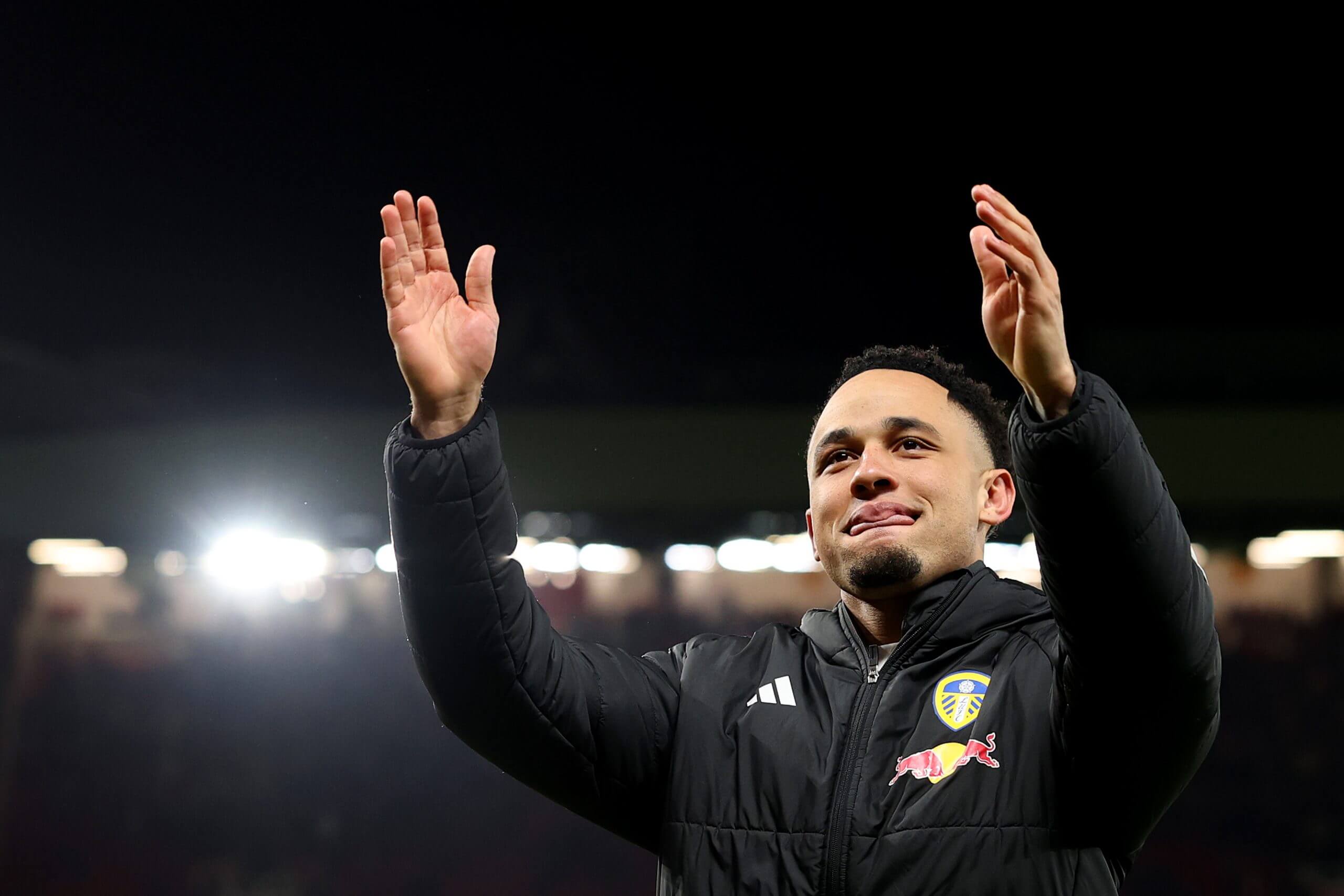
Noah Okafor approaches the away fans at Old Trafford after Leeds United’s win over Manchester United (Michael Regan/Getty Images)
Farke and Leeds could not have asked for a better time to see the best of Okafor.
As they close in on Premier League safety in the relegation battle and travel to Wembley to face Chelsea today (Sunday) in Leeds’ first FA Cup semi-final for 39 years, he has five goals and three assists in his last eight appearances across both competitions. He was inches away from another goal at Bournemouth on Wednesday, when a chipped finish bounced agonisingly away off a post.
This hot streak followed that run of 17 league and cup outings from early October without any goal involvements at all.
Isaiah talks up the impact the other residents of Leeds’ dressing room have had on his brother.
“He needed adaptation time,” he says. “The team helped him a lot, the coach helped him a lot, gave him a lot of confidence. He told me, for example, Ethan Ampadu or Dominic (Calvert-Lewin) helped him a lot to develop; to adapt. This is huge for a player. It’s really important to feel comfortable, and that gains a lot of trust.”
The high point up to now was Okafor’s brace in the 2-1 away win against old foes Manchester United two weeks ago. Whatever he goes on to achieve with his current club or elsewhere in his career, that was a big moment in Leeds’ history. The Switzerland international will always be the player credited with ending their 45-year wait for a league victory at Old Trafford.
“I watched the game and, three minutes later, the phone rang (with his brother on the other end),” says Isaiah. “It was amazing. He was laughing. I cannot put that into words because, even me, I was screaming.
“It was unbelievable, and then seeing him like that, of course, it’s a huge moment. But five days later, his next game is a really important game against Wolverhampton (Wanderers, who were also fighting relegation at the time). So you don’t have a lot of time to let it sink in. He went home, and the work continued the next day.
“As a footballer, it helps the process, because then you are happier to go the extra mile.”
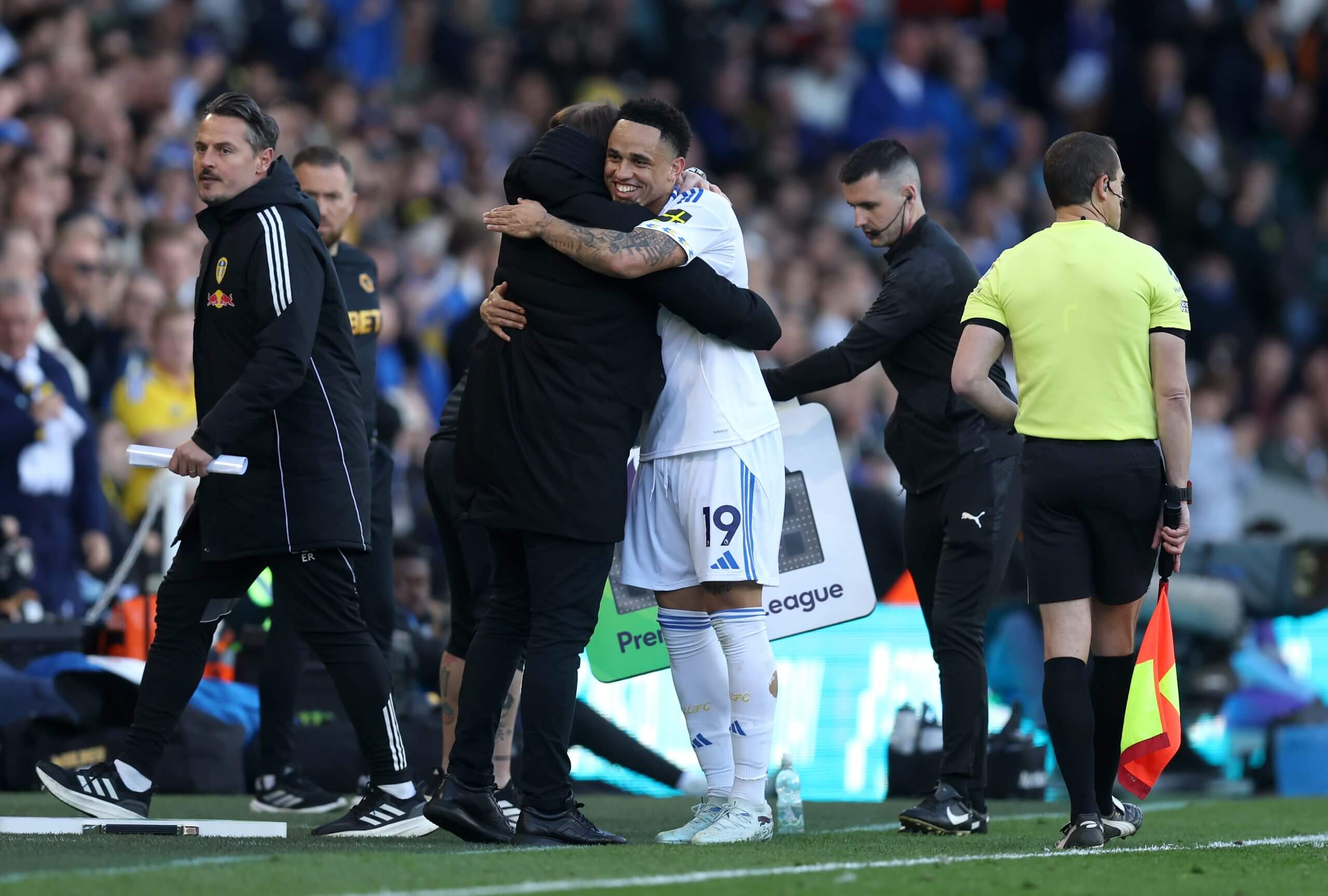
Noah Okafor has settled and adapted to life in the Premier League with Leeds (George Wood/Getty Images)
Okafor will now play at Wembley for the first time. His loved ones will be there in the stands, cheering him on. Christian says their extended family back in Nigeria continue to marvel at what his son is doing, too.
If his son plays a part in taking Leeds to their first FA Cup final since 1973, that would surpass even what was achieved at Old Trafford. Should he follow the habit of his lifetime, and get it done quickly, a hopeful sea of white shirts will thank him gladly.