
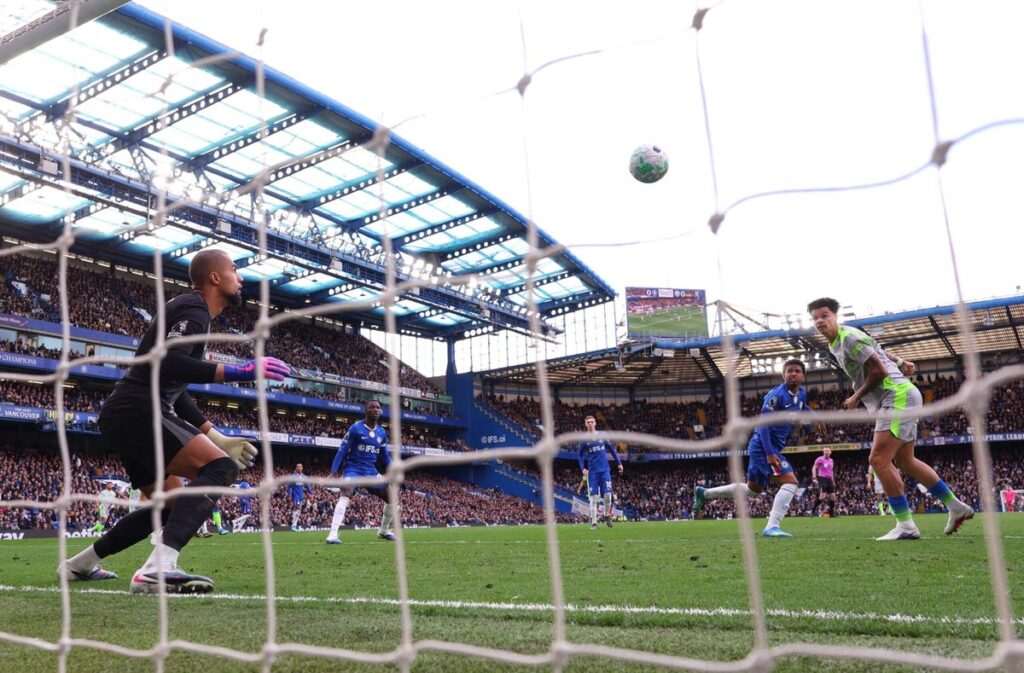
This is the first in a weekly column where Jon Mackenzie notices something from one of the weekend fixtures in the Premier League.
When it comes to Nico O’Reilly, the task of noticing has been made incredibly easy in recent weeks.
Not only did we get a pair of goals in the Carabao Cup final as Manchester City defeated Arsenal at Wembley, but he also scored twice against Newcastle United in a narrow win a couple of weeks ago, putting City on course for one of their unlikeliest title challenges.
Fast forward to last weekend and, once again, City found themselves relying on their left-back for a deadlock-breaking goal, this time against Chelsea.
I say “left-back”… it doesn’t take a UEFA Pro Licence coaching badge to notice that O’Reilly’s role this season has seen him taking up positions that are a far cry from the sorts of positions you might expect a classic full-back to adopt.
Liam Rosenior does have a Pro Licence and he clearly noticed the impact O’Reilly had been having. Against City, the Chelsea head coach tweaked his tactics to try to contain the England international. In the end, it didn’t work, but his attempt to keep O’Reilly quiet tells an interesting story of how the game unfolded.
‘Inverting’ your full-back is nothing new. It’s been happening for years, and in its modern iteration, can be traced back to Pep Guardiola’s decision to bring Philipp Lahm and David Alaba inside in his first season at Bayern Munich (although the historical precedents emerge much earlier than this). But where these initial experiments with full-back inversion were focused around using the full-back as a pivot player — helping their team in deep build-up and offering defensive cover so that midfielders could push higher up the pitch — more recent usage has seen them push higher up the pitch into the spaces where you might expect to see an attack-minded midfielder or even a centre-forward.
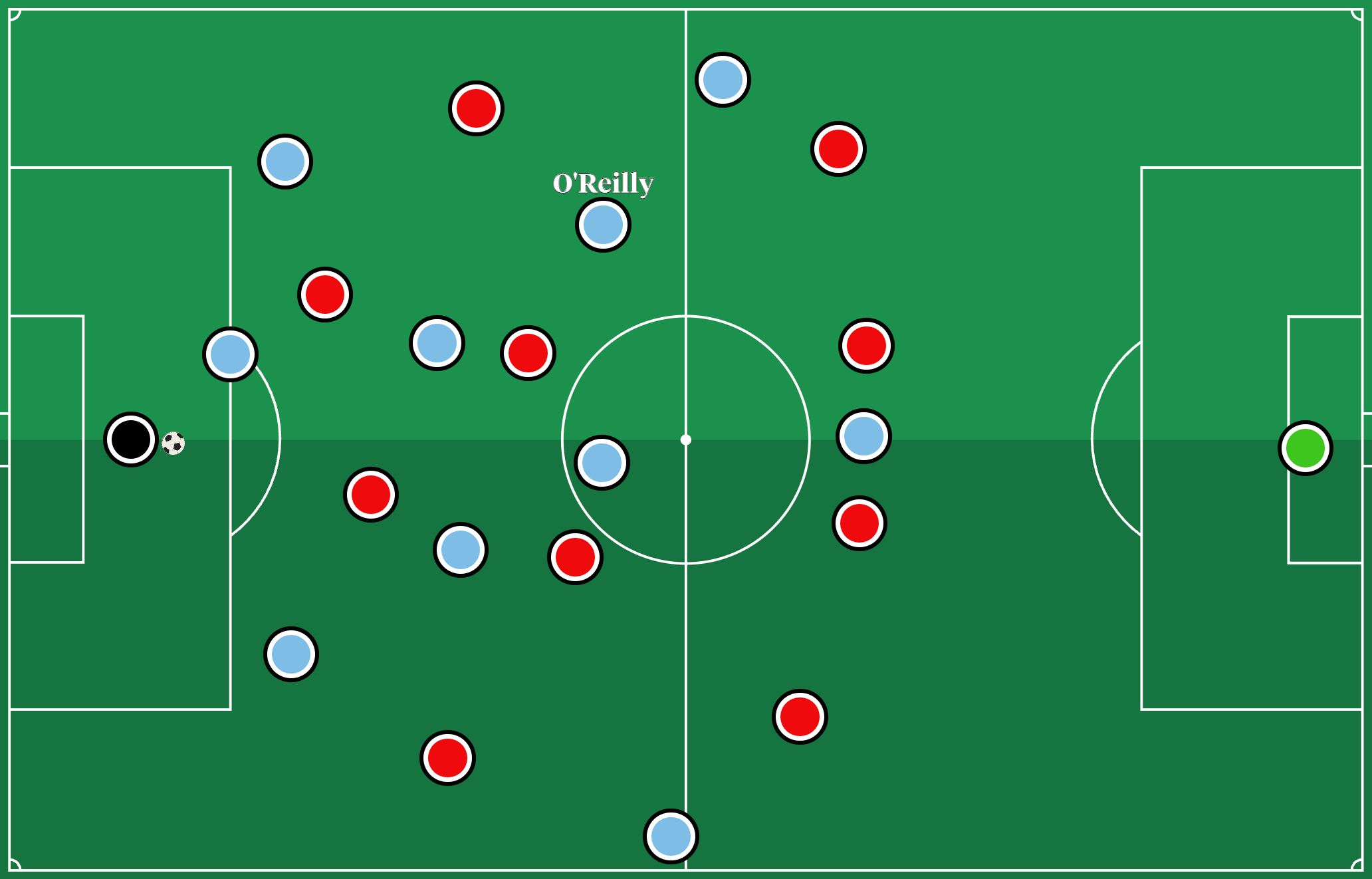
This is precisely how O’Reilly has been used. With Matheus Nunes holding a deeper position at right-back, it’s not unusual to see O’Reilly foray forwards, even when City are in the early stages of build-up (below).
In many respects, O’Reilly taking up attacking positions should hardly be surprising. He spent much of his academy career playing in midfield or as a ‘No 10’, so he inhabits these spaces very naturally.
Not only is he comfortable receiving the ball between the lines and carrying it at speed — something that can help City generate chances once they break an opponent’s high press — he is also a dangerous crasher of the box, with his 6ft 4in (193cm) frame troubling opposition defences. It is not difficult to see why Guardiola might want him central and higher up the field.
There is an alternative tactical aspect to his role, too — and it’s all to do with Jeremy Doku.
As a left-back, O’Reilly is playing on the same side of the pitch as Doku, one of the best dribblers in the world. Doku particularly thrives in static situations when an opposition full-back fronts him up. To mitigate this threat, opponents will often double up, asking their winger to drop in and help the full-back.
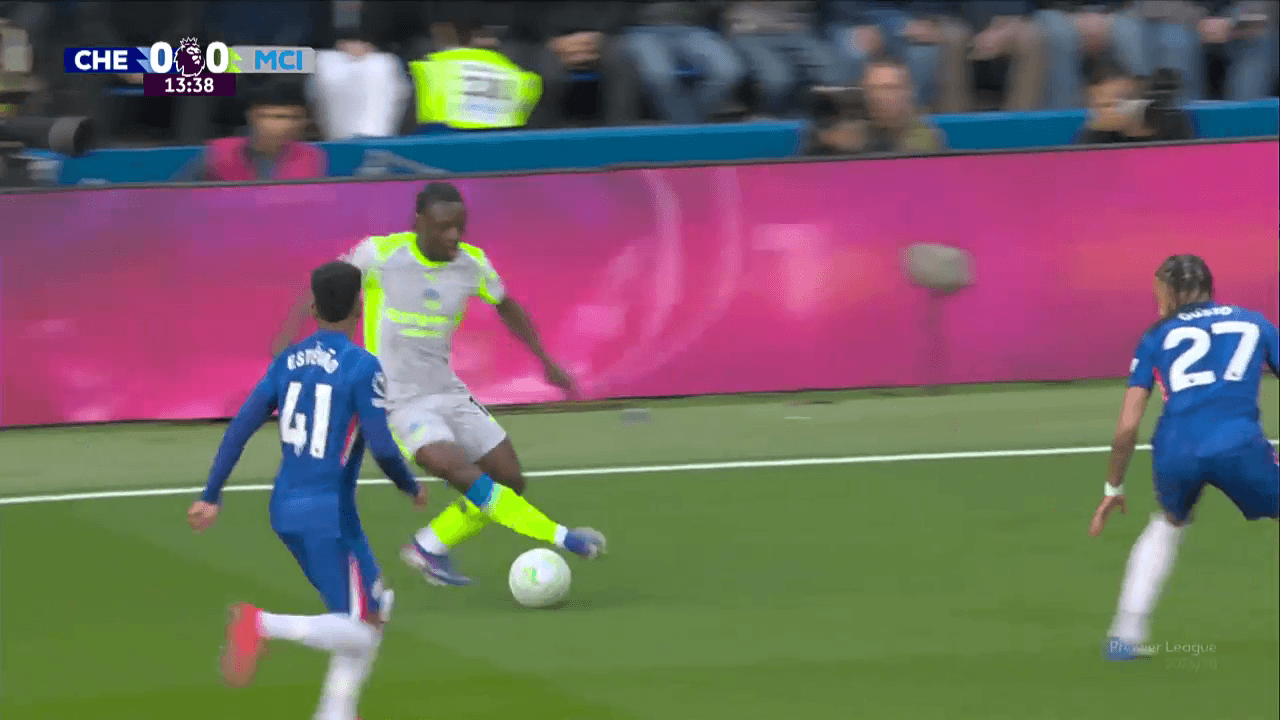
This decision has a knock-on effect because the winger would usually be tracking the opposition full-back on that side: in this case, O’Reilly. So the decision to double up on Doku simultaneously risks leaving O’Reilly unmarked.
The question then becomes: who picks him up? There are a couple of options here, both of which come with downsides. On the one hand, you could use your central midfielder to track O’Reilly when he comes inside (below).
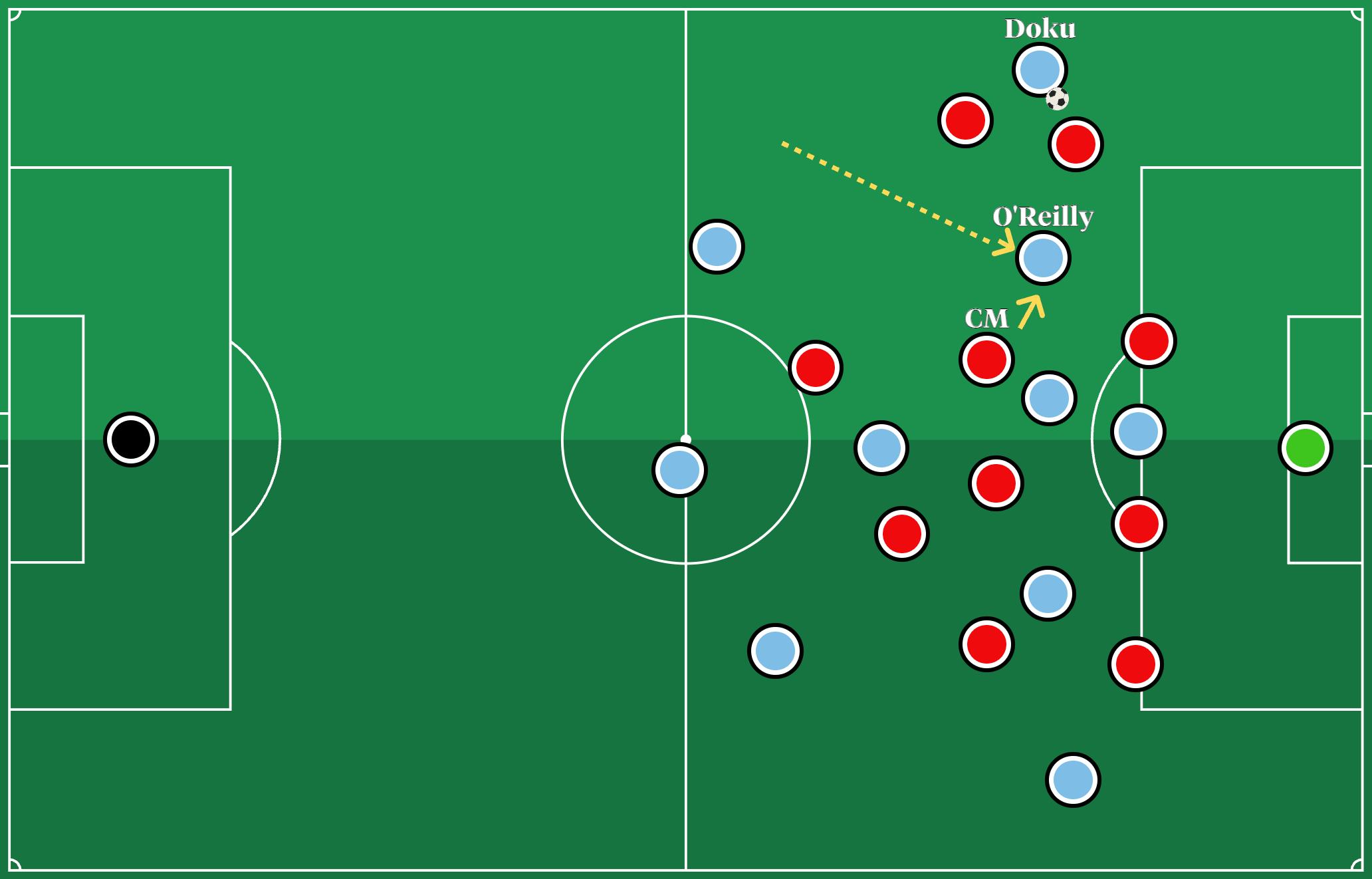
This is the solution most teams use, and it looks functional enough set out on a tactics board. However, it is important to appreciate the dynamics here.
While O’Reilly may look to inhabit the pocket of space that opens out between the lines of the opponent’s defence and midfield, there is the possibility that he might make a ‘seam run’ between the full-back and centre-back. If he does, the midfielder tracking him might be at a dynamic disadvantage, with O’Reilly getting a step ahead of him and receiving the ball in the space behind the opponent’s defensive line.
In this example from City’s 3-2 win over Leeds United in November, we can see Doku receiving the ball wide and two Leeds players moving out to cover him. O’Reilly is inside, ready to exploit the space that this opens.
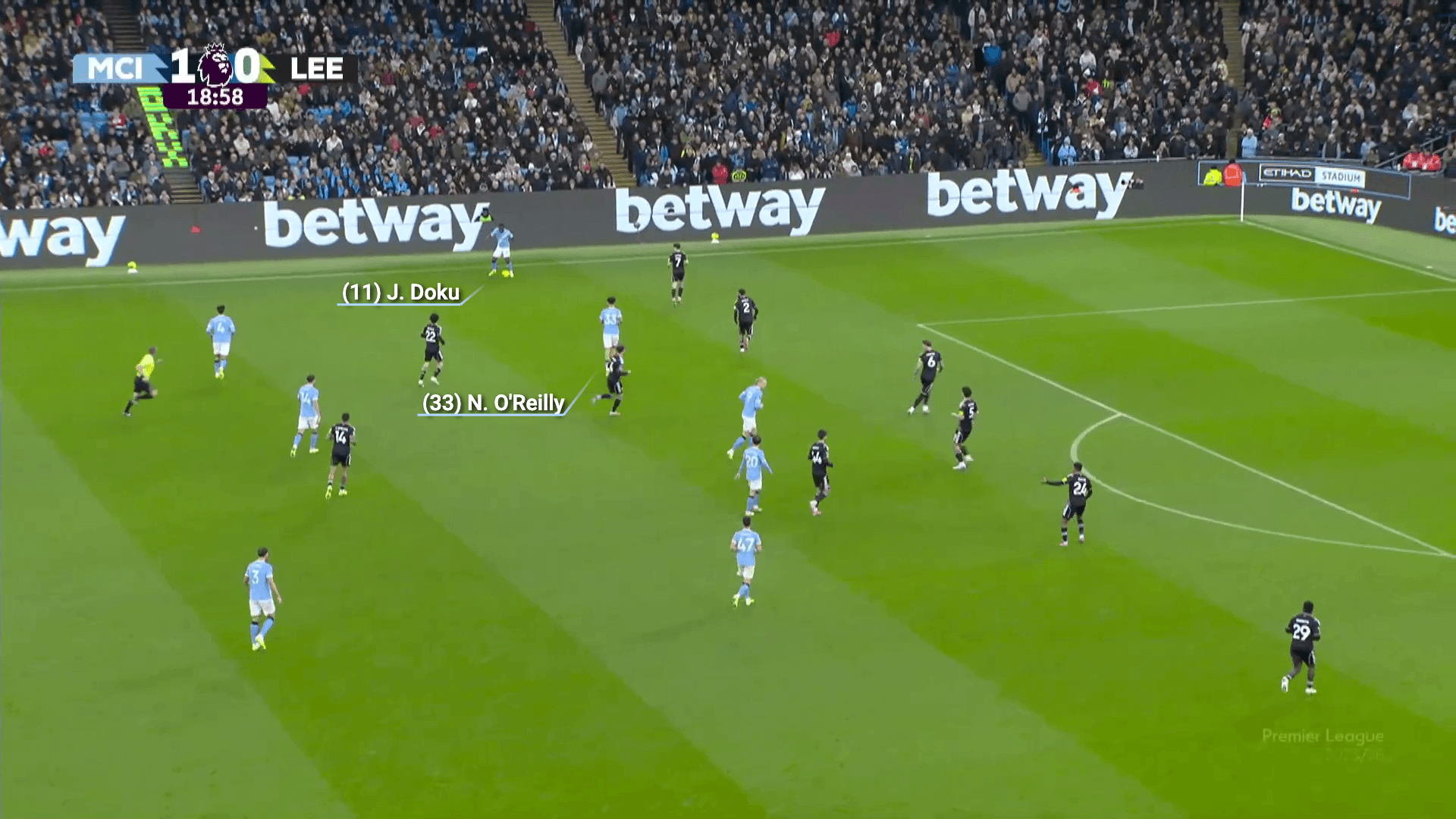
With O’Reilly starting from a deeper starting position, he’s able to get a run on Jayden Bogle, breaking through the Leeds defensive line to receive Doku’s pass…
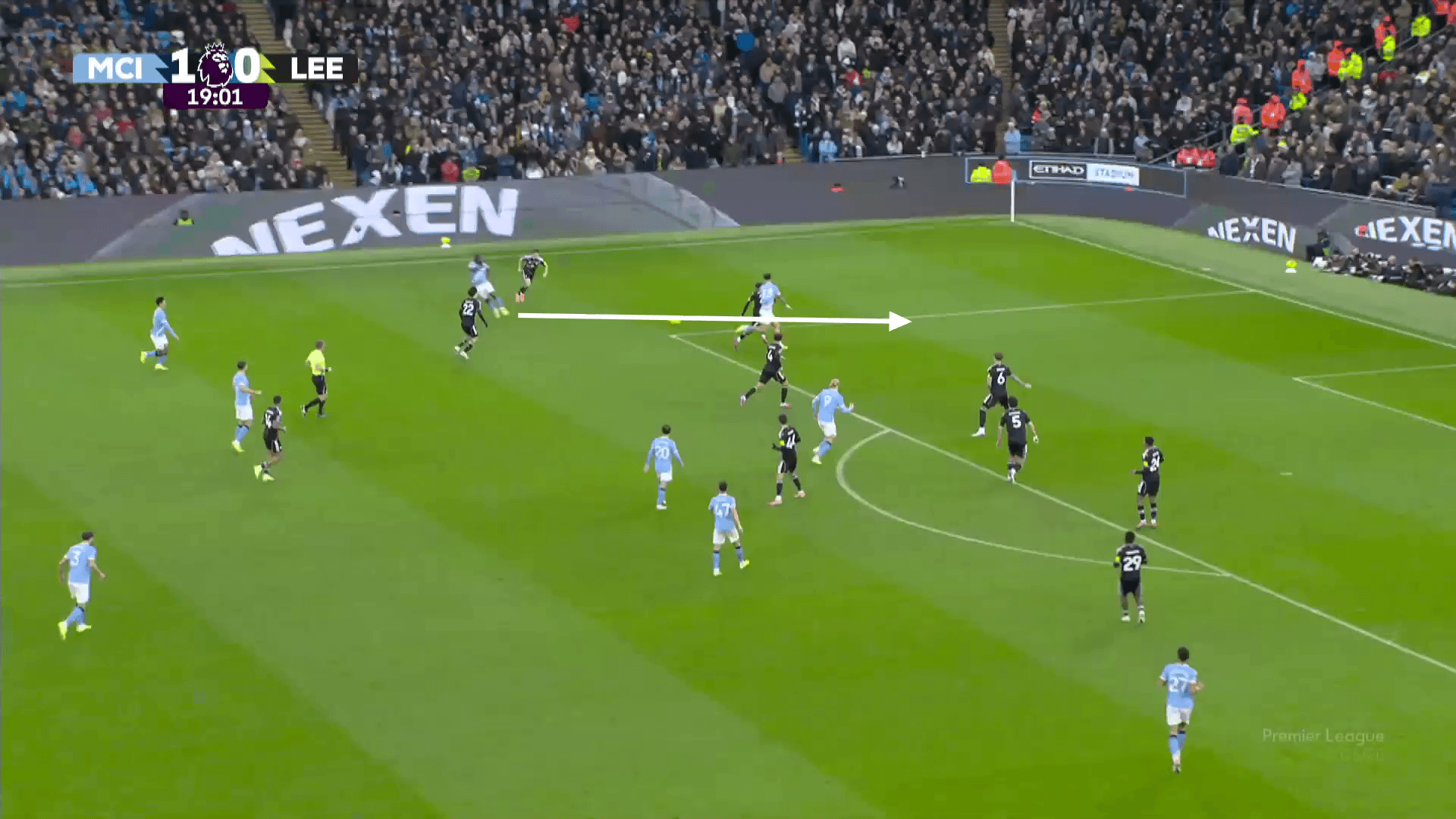
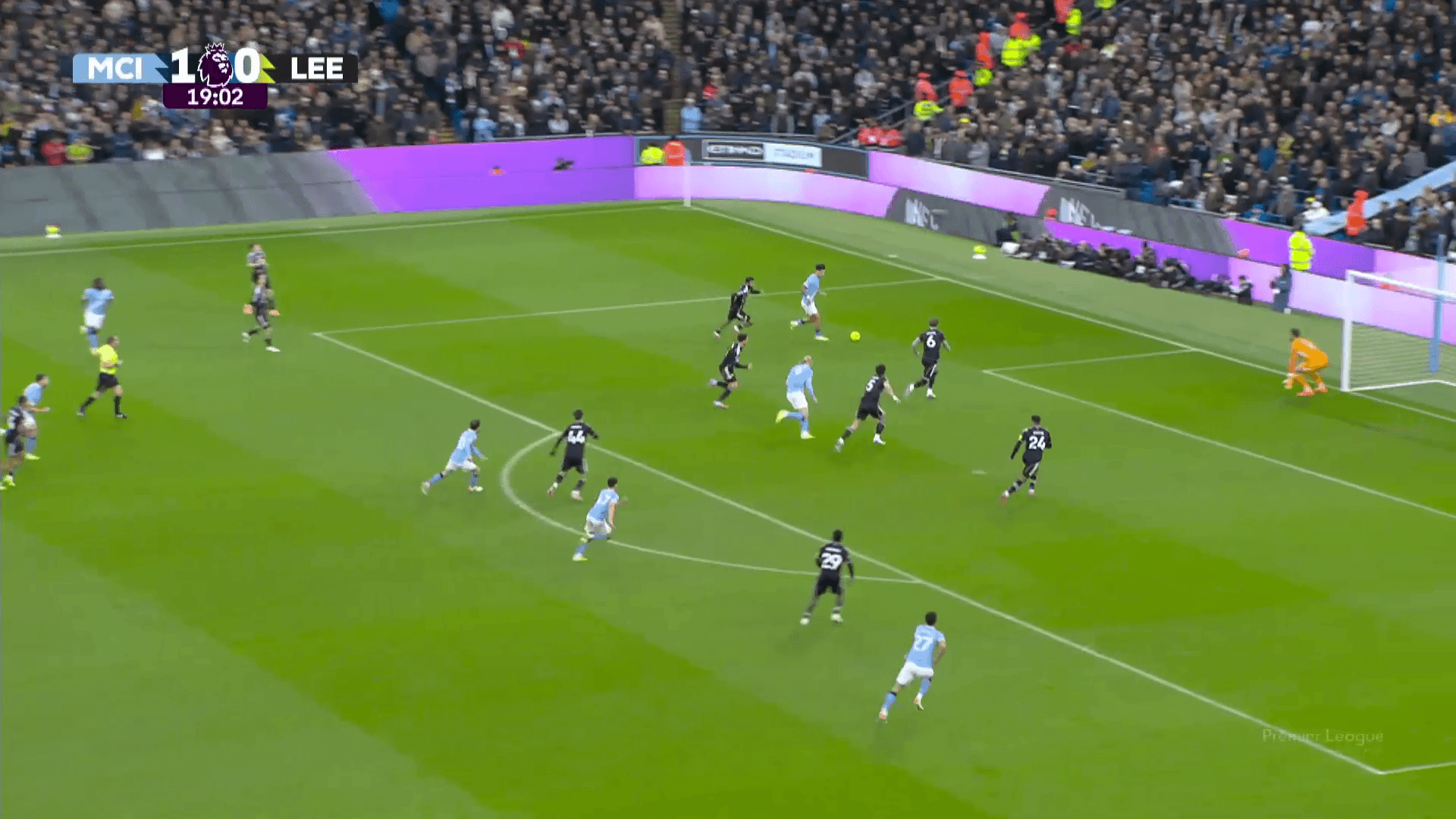
And in the end, City generate a couple of chances from O’Reilly’s cutback…
The alternative would be to have the centre-back on that side step out to meet O’Reilly. This would partially solve the dynamic problem because the centre-back engages O’Reilly rather than the midfielder chasing him, although it doesn’t completely mitigate the issue of running in behind.
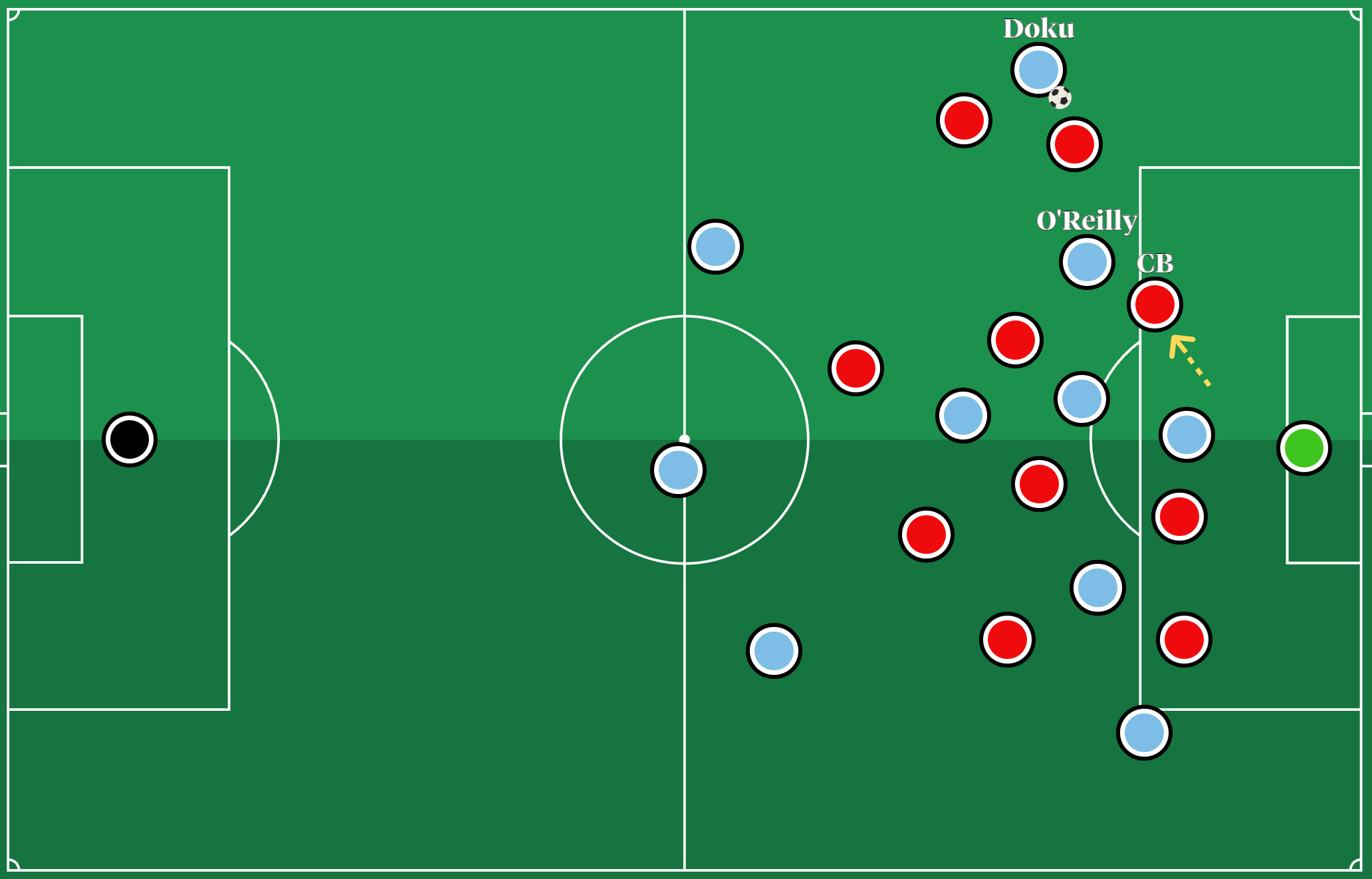
But again, a tactics board can miss the riskiness of this approach. With the centre-back moving out of position, the defending team are now leaving the other centre-back one-vs-one in the box with Erling Haaland, who now has no one covering the space in front of him — clearly a recipe for disaster.
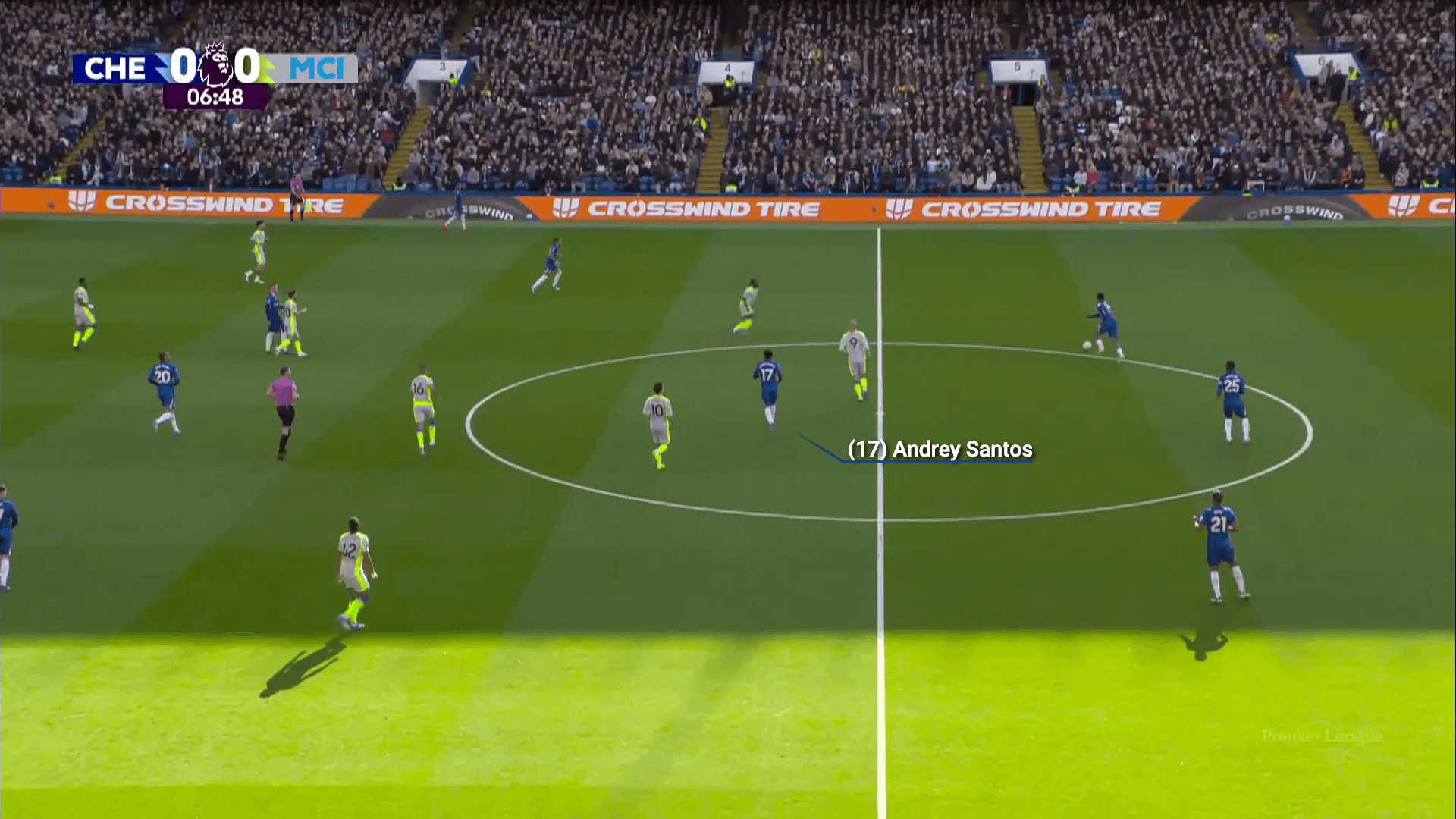
With all this in mind, Rosenior’s attempted solution makes some sense. In many respects, he way trying to get the best of both worlds — preventing City from holding a dynamic advantage without compromising the team’s defensive structure. Rosenior used Andrey Santos as a midfielder in possession, but as soon as Chelsea lost the ball, the Brazilian dropped into the back line, effectively playing as an outside centre-back on O’Reilly’s side.
Here, with Chelsea on the ball, you can see Santos taking up the sort of position you’d expect a midfielder to take…
But when Chelsea don’t have the ball, we can see him covering the central space that O’Reilly can drift into…
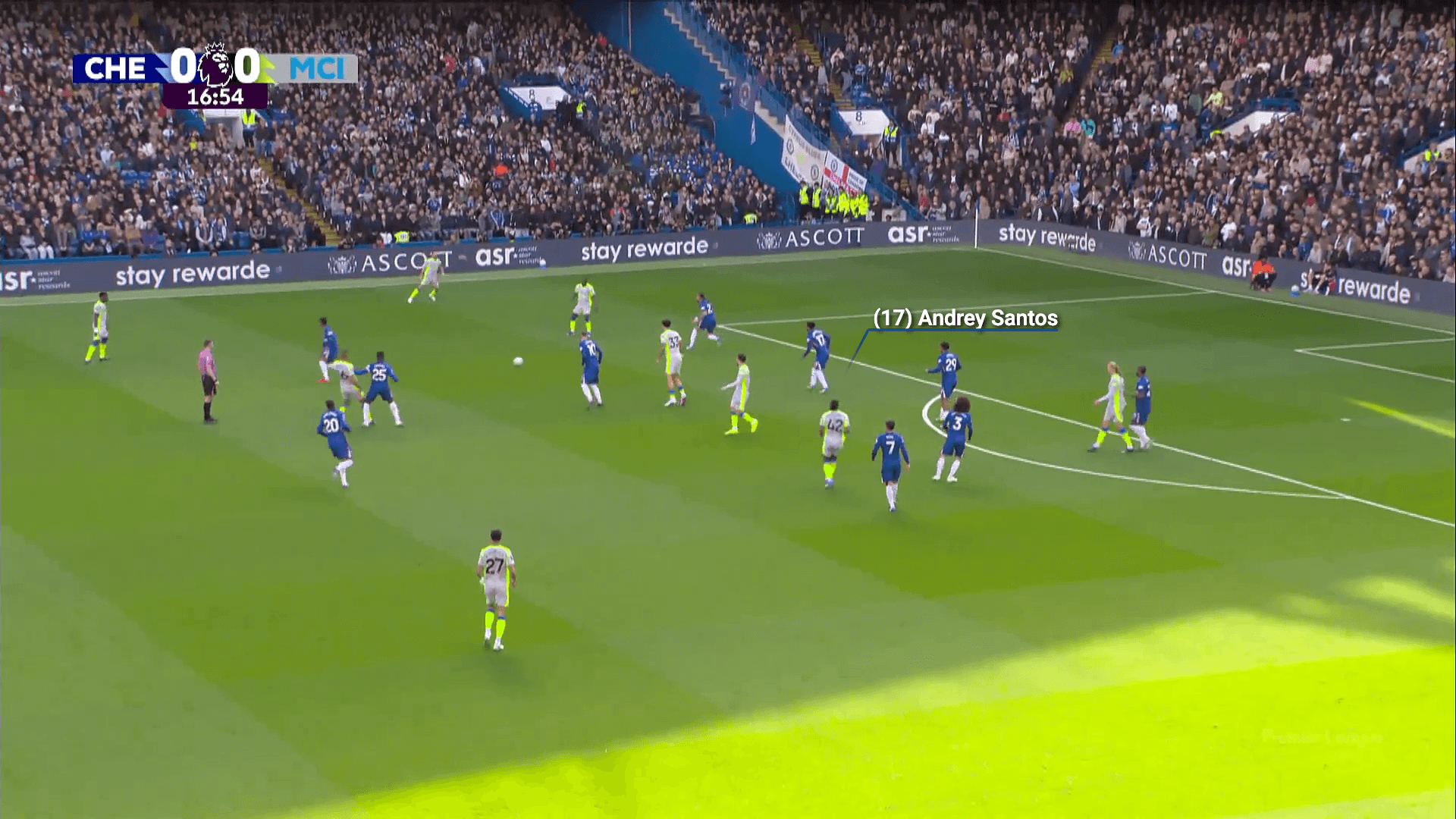
This allows Chelsea a degree of freedom in dealing with the O’Reilly problem. If he comes inside and holds a position between the lines of Chelsea’s midfield and defence, Santos can step out to meet him to prevent him from receiving the ball unopposed. Equally, if O’Reilly makes a run between the full-back and centre-back, Santos is positioned to deal with him.
However, even with this solution in place, City can generate the dynamic advantage required to get O’Reilly in behind. If we run this sequence of play on, we can see that O’Reilly runs at Santos and receives the ball in the space behind him.
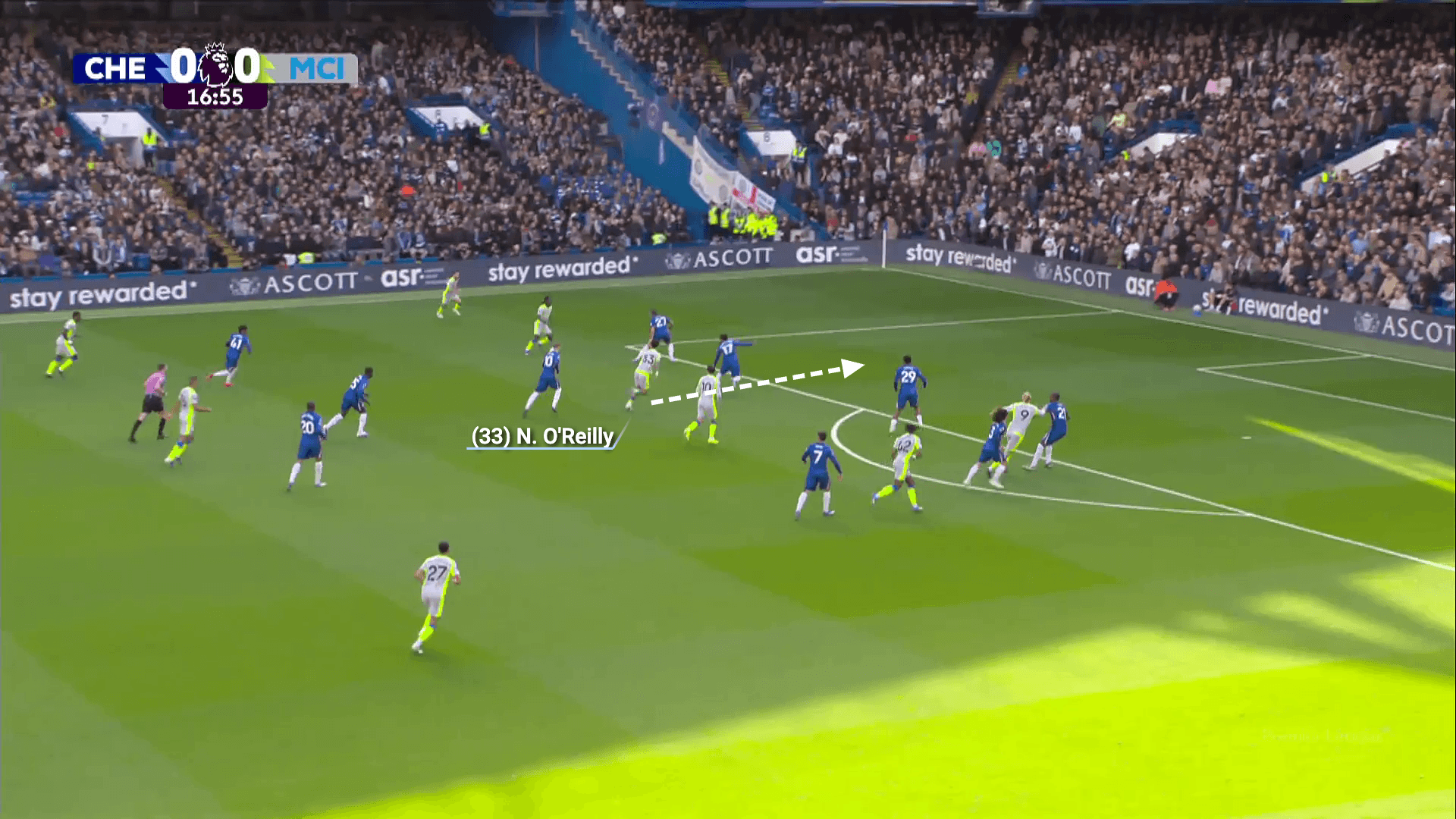
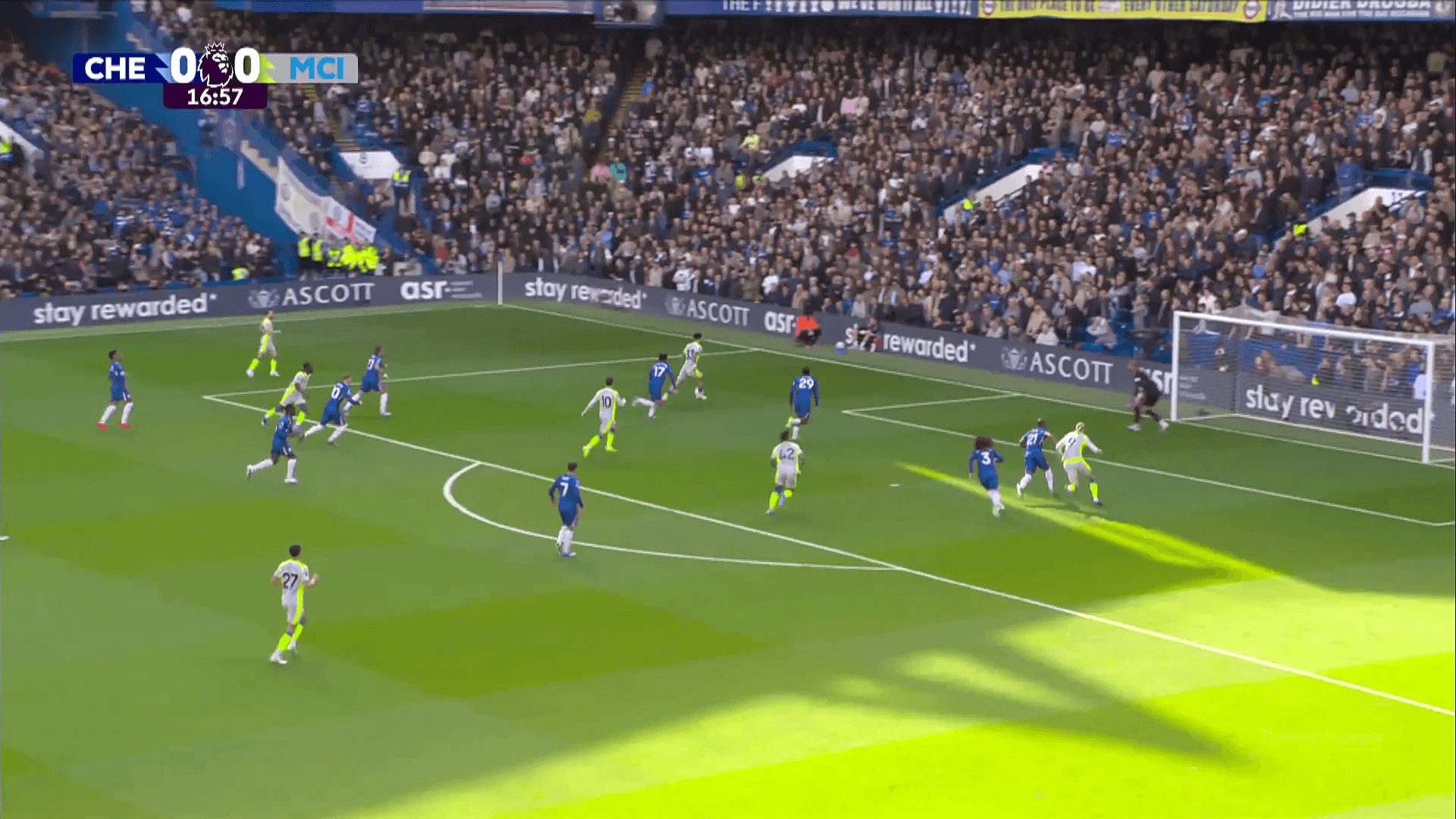
But because of Santos’s role as almost a ‘free’ centre-back starting from a deeper position, he can retreat to make the block.
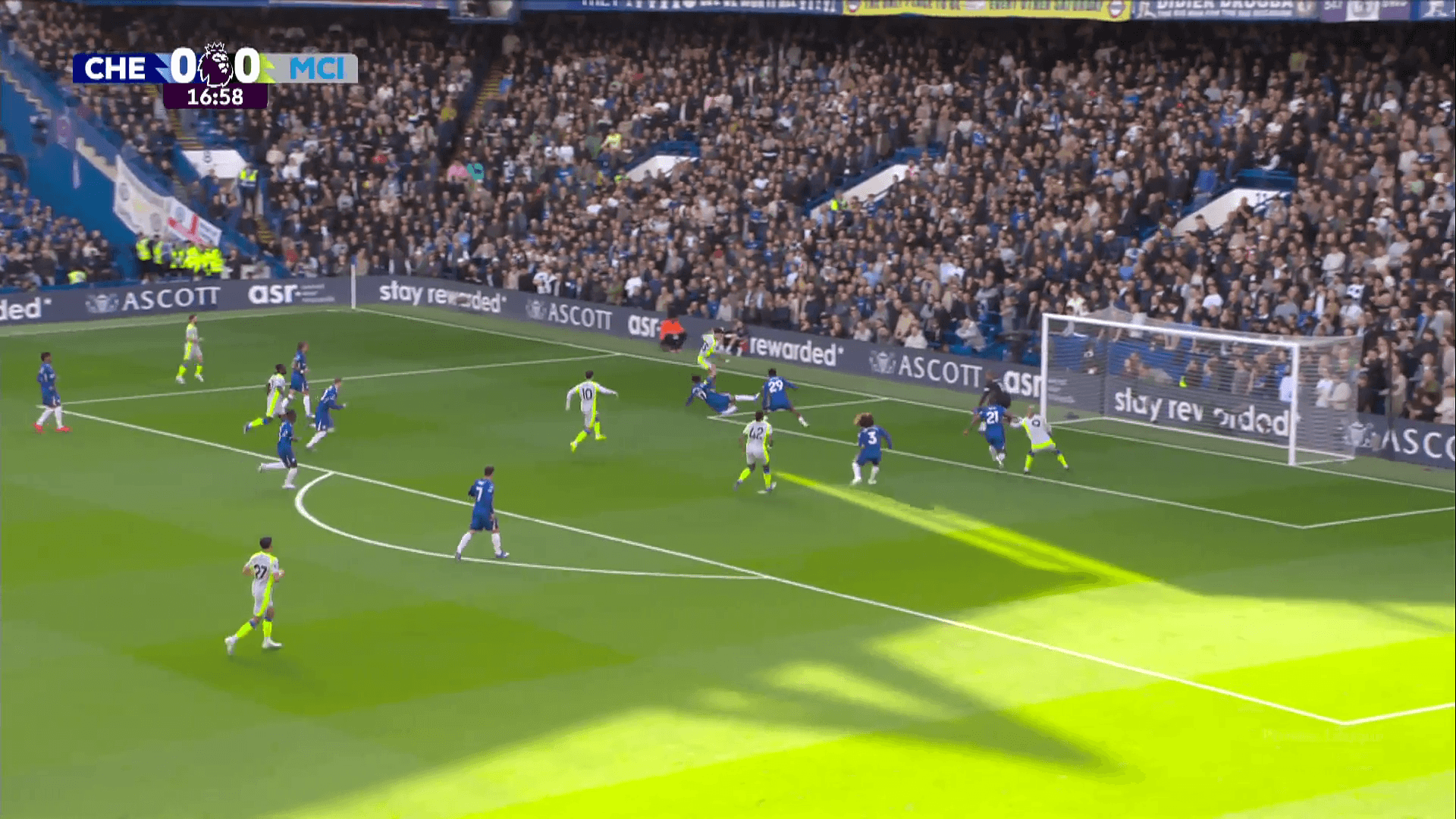
Beyond that instance, Chelsea’s plan largely worked. With Santos covering the seam between centre-back and full-back, and stepping out to cover City players who entered the ‘Nico O’Reilly Inversion Zone’ (it wasn’t always O’Reilly who inhabited the space), City could not break down Chelsea’s defensive structure using Doku as a point of gravity.
When the half-time whistle blew, it looked very much like this had been a tactical masterclass from Rosenior.
But as we’ve already said, O’Reilly’s abilities as an inverting full-back in an advanced role aren’t limited to operating as a midfield facilitator and byline runner. He’s also a box-crasher. And in the second half, it was clear that City slightly abandoned their attempts to break down Chelsea’s structure around Doku and focused more on working the ball down the other side of the pitch and finding O’Reilly in the box.
In his post-match interview on Sky Sports, Doku explained that Guardiola told the players to focus on attacking through the right-hand side after the break. With the ball on that side of the pitch, there was more scope for O’Reilly to adopt a box-focused role. He would often look to push up alongside Haaland, almost like a second striker.
This is where the Rosenior plan started to fall apart. Where it might be a positive move to use Santos as a floating option between the full-back and the centre-backs, his usefulness as a foil to O’Reilly largely evaporates when he is expected to defend him in the box.
City exploited the clear physical advantage between the two when creating the opening goal. With the ball on City’s right, O’Reilly found himself isolated against Santos in the box.
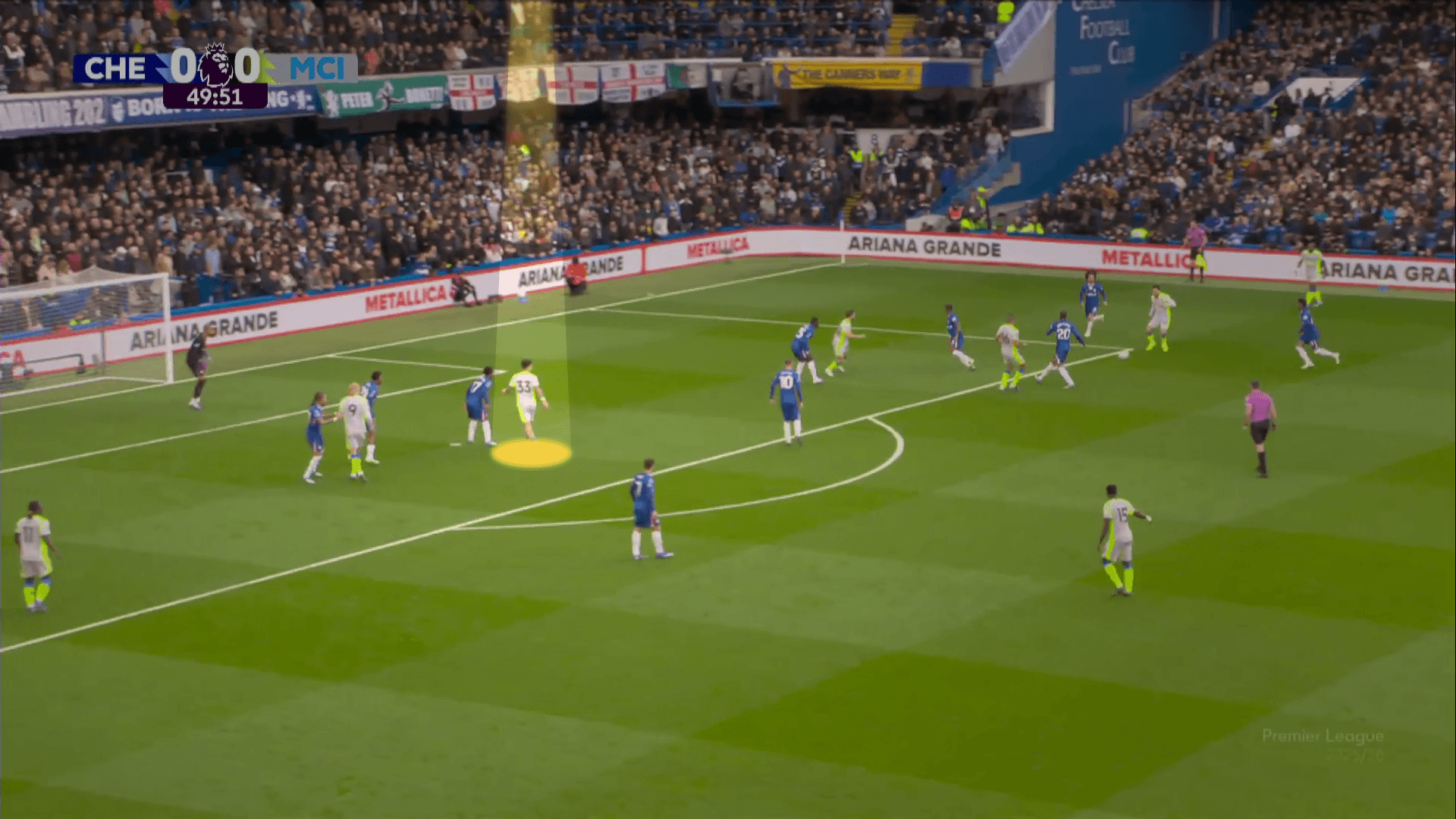
At this point, the physical advantage is obvious (below), but this doesn’t just come down to a height advantage. When the two players are tussling in the box, O’Reilly uses his longer arms to prevent Santos from establishing any meaningful contact with him.
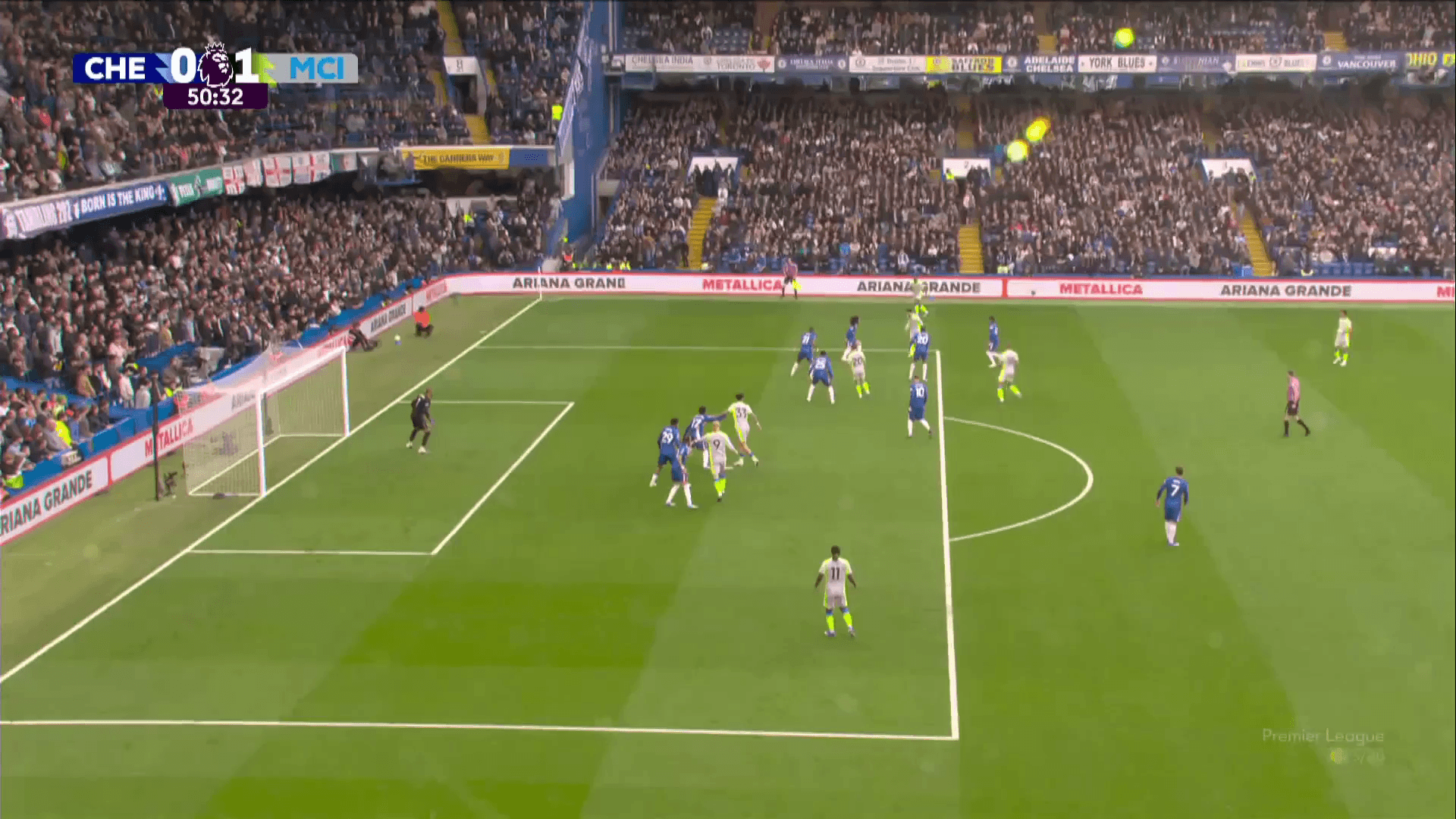
When the ball comes in, O’Reilly can roll away, generating enough space to have a relatively free header on goal.
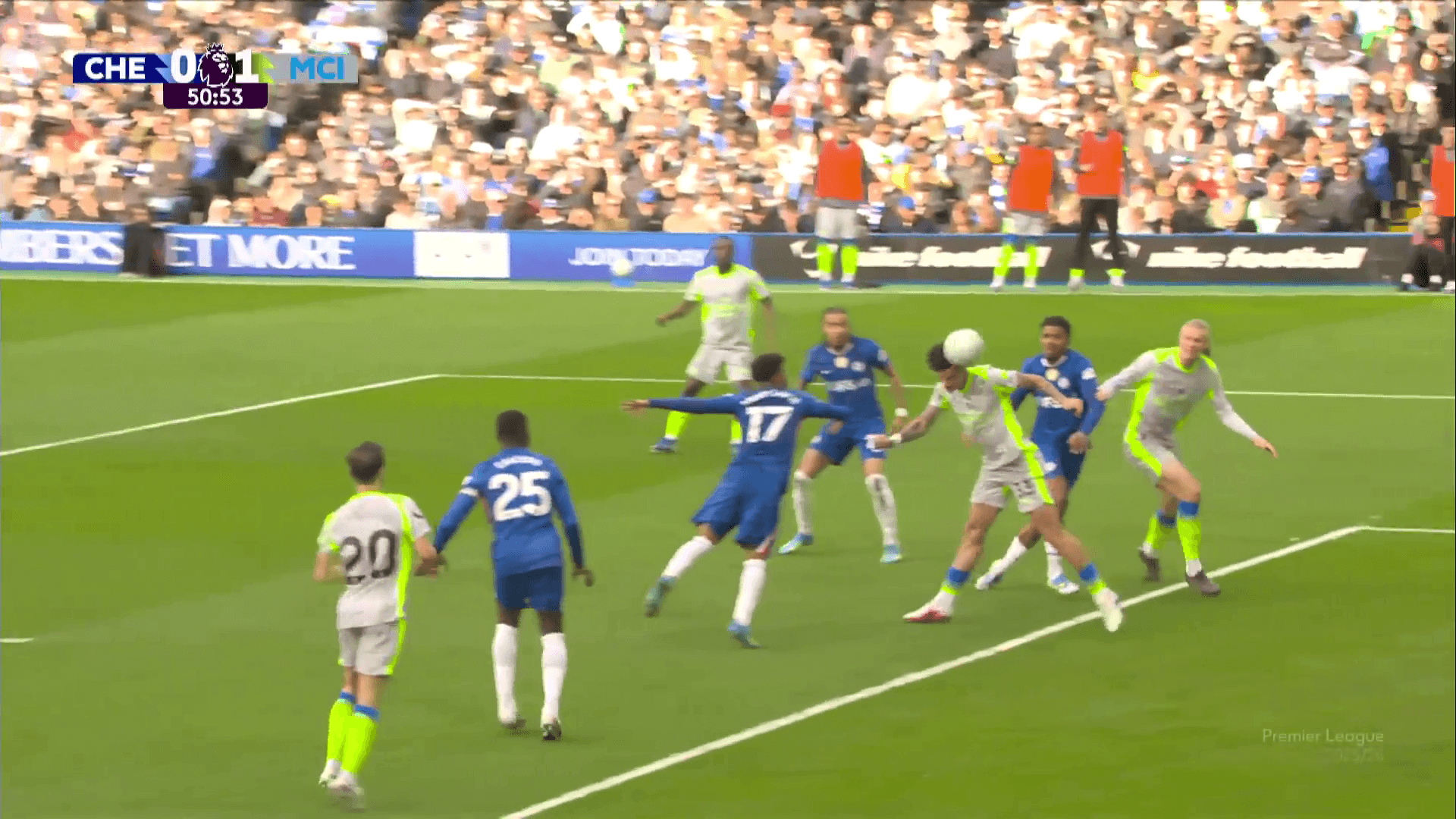
With the deadlock broken, O’Reilly had provided City with the platform they needed to go on and put the game out of sight for Chelsea, winning 3-0.
Almost every tactical decision comes with a tradeoff. While Rosenior’s choice to use Santos in this fairly unusual role prevented City from enjoying the same level of success they have on their left side, it also created a potentially disadvantageous tactical matchup in the box when O’Reilly managed to isolate himself against a smaller opponent.
Guardiola’s ability to recognise these tactical trade-offs led to City turning the game around in the second half, setting up a box-office game against an Arsenal team next week. That title showdown is made even more intriguing by the fact that, in recent weeks, Arsenal have given very little indication that they can get these sorts of tactical trade-offs working in their favour. Advantage City?