
The Royal Society for the Protection of Birds (RSPB) announced the results of the 2026 survey on Friday, April 10, with more than 650,000 people across the UK counting more than nine million birds.
In Dorset alone, 9,500 people took part.
Beccy Speight, CEO of the RSPB, said: “Feeding birds is something millions of us love and value, but the science shows us that birds such as Greenfinches have been affected by the spread of disease at feeders.”
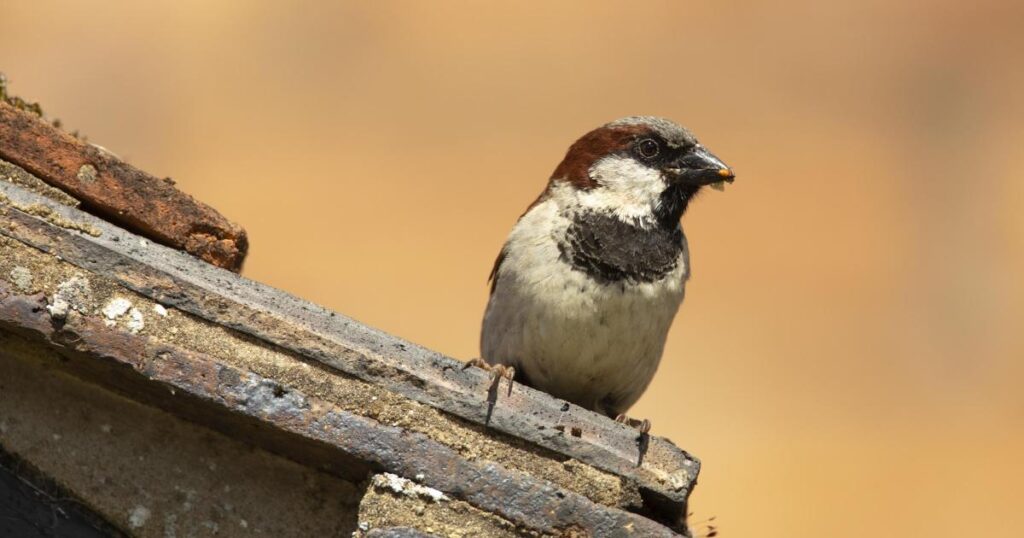
House sparrow Passer domesticus, adult male perched on old farmhouse with food in its beak for young in nest, Gloucestershire, July. The house sparrow came first in the Big Garden Birdwatch results. (Image: Ben Andrew)
The survey provides a valuable snapshot of how common garden birds are faring across the UK.
In Dorset, house sparrows were the most frequently spotted, followed by blue tits and starlings.
However, the decline of some species continues to raise concerns.
Greenfinches, listed 18th in this year’s results, have declined by 67 per cent since the survey began in 1979.
Disease is a key factor in this decline, particularly trichomonosis, which can spread rapidly in environments where birds congregate, such as feeders.
The RSPB is now advising the public to make seasonal changes to feeding routines to help protect bird health.
From May 1 to October 31, people are urged to pause filling feeders with seeds and peanuts to reduce the risk of disease spread during higher-risk months.
Small amounts of mealworms, fat balls, or suet can still be provided year-round.
Weekly cleaning of feeders and moving them regularly is also recommended, along with daily changes of water to prevent contamination.
The RSPB is also advising people to retire flat-surfaced feeders and bird tables, as these can harbour infectious material.
Starling Sturnus vulgaris, London, December. The starling came second in the Big Garden Birdwatch results. (Image: Ben Andrew)
Ms Speight said: “We’re not asking people to stop feeding, just to feed in a way that protects birds’ long-term health.
“By making small changes together, we can ensure garden feeding continues to be a positive force for nature.”
The charity also encourages bird-friendly planting, such as sunflowers, teasels and ivy, to offer birds natural food sources and attract insects.
The Big Garden Birdwatch began in 1979 and asks participants to record the highest number of each bird species seen at one time during a single hour on the last weekend of January.
More information and the full Birdwatch results can be found at the RSPB website.
Did you know you can make the Bournemouth Echo your preferred source of Bournemouth, Christchurch and Poole news in Google?
This means more breaking news and the latest must-read stories from your area.
Here’s what it means for you and how you can do it.
https://www.bournemouthecho.co.uk/news/26003805.local-newsquest-title-preferred-source/