
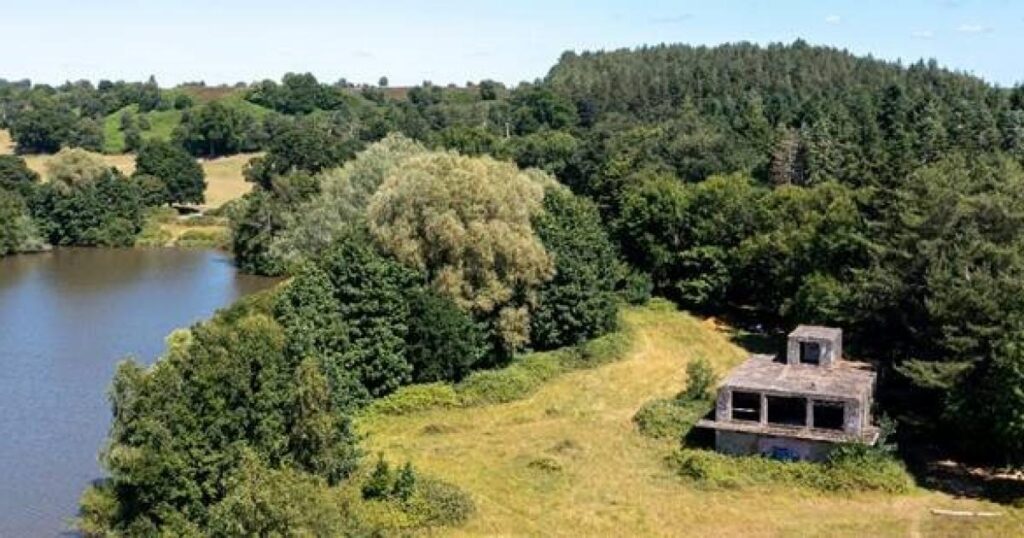
Approval granted for restoration of former RAF watch office (Image: Landmark Trust)
It’s been confirmed that New Forest District Council has approved the Landmark Trust’s planning application to complete vital repairs on the former RAF watch office at Ibsley- also known as Ibsley control tower.
Natural England’s decision to withdraw its objection following extensive ecology reviews, paved the way for planning approval and for work to start on site at Ibsley later this year.
It’s said that the former airfield at Ibsley sits within one of the UK’s most important natural habitats, the Avon Valley Special Protection Area and Avon Valley Ramsar site.
Additionally, several species of bats use the building and their roosts need to be protected as well as the flight route between the watch office and the adjacent woodland.
Approval granted for restoration of former RAF watch office (Image: Landmark Trust)
Between 1941 and 1944 Ibsley saw active service for both the Royal Air Force and United States Army Air Force.
A spokesperson for the Landmark Trust said: “From its runways airmen flew out into hostile skies to defend Britain with great courage and at huge personal cost, many never to return.
“It was here that Leslie Howard and David Niven made the seminal war film The First of the Few.
“Today the Watch Office is a unique survivor of its 518/40 design, which included innovative use of structural concrete, and in its retention, just, of a slender concrete viewing balcony.”
For years, the building has stood locked and unsafe on a private estate, with no public access at all.
‘Energetic’ local efforts to save the building had come to nothing, and the intervention of the Landmark Trust was the watch office’s only hope of being saved, as a specialist charity of last resort able to unlock charitable funds and manage complex restoration projects.
Landmark is a historic buildings charity that rescues buildings at risk and generates the income to maintain them through self-catering holidays.
Landmark’s restoration will see the watch office adapted for up to eight holidaying guests.
The income will pay for its future maintenance, preserving the building and the memories it holds for future generations.
It’s said that the restored building will combine accessibility with environmental sustainability, with the 1940s layout and wartime decorative schemes still being respected.
Special events, offering free public access, will be offered, alongside online interpretation, to share the story of the watch office and its history.