
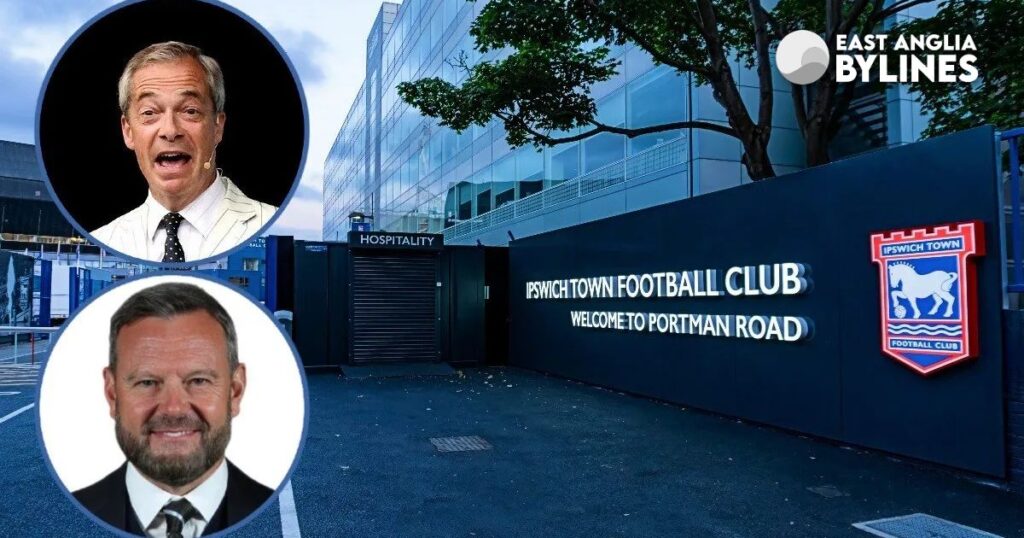
New remarks from Nigel Farage this week have sharpened, rather than settled, the row over his visit to Ipswich Town. What began as a backlash over a controversial appearance at Portman Road has become something more troubling for the club: a series of explanations that have shifted as new details have emerged.
Farage has blamed “hard left lunatics” for forcing Ipswich Town to make a humiliating apology for hosting him, describing his critics as “deeply intolerant”. Speaking at a rally at the Norfolk Showground, he said his visit to Ipswich had “caused a stir in East Anglia” and suggested every Premier League and Championship club should want to meet him.
How the story broke
That version of events sits uneasily alongside what actually triggered the reaction. There was no prior announcement of the visit. It only became public when images and video appeared online showing Farage touring the stadium, standing pitch-side and holding Ipswich shirts printed with “Farage 10”.
Those posts did not come from a personal account or a journalist. The material was not shared incidentally – it was distributed through Reform UK’s official party channels.
That detail matters.
A shifting account
In the days that followed, the explanation of how the visit came about has shifted. Early reporting suggested Farage’s team had booked a standard tour without identifying him, and that the shirt had been purchased. That account has since been overtaken.
A different picture has emerged: that Farage was invited by chairman Mark Ashton, attended a pre-arranged private lunch with senior figures at the club, and that the shirts were produced and gifted internally. Reports have also suggested the meeting itself was treated as private, with a notice allegedly pinned to the door to not be disturbed.
Farage has since added a further layer, saying he went to Ipswich to discuss Reform’s opposition to the government’s new Independent Football Regulator. That detail did not appear in the club’s original statement. Its absence is significant, because it changes the nature of the visit from general engagement to a discussion about a live political issue.
A question of access and intent
That, in turn, raises a further question. If the purpose of the meeting was to discuss football regulation, Ipswich Town already has a direct line to government through its local MP, Jack Abbott, who is part of the ministerial team at the department responsible for sport. That route offers a clear and immediate channel into the legislative process.
Farage, by contrast, leads a party with a small number of MPs and no realistic prospect of forming a government in the near term. The independent football regulator is already well advanced. By the time any future political change were to occur, its framework would be firmly established.
Set against that, the choice of meeting – and the way it was handled – becomes harder to explain. If this was about influencing policy, there were more obvious and more effective routes available to Ashton.
From meeting to campaign content
Even taken together, these explanations leave key elements of the visit unexplained. Farage was able to film content for social media inside the ground and use club facilities as a backdrop for material that was then distributed through official party channels.
The visit also took place during an active political campaign, with local elections just weeks away, and with Farage in Ipswich for a campaign rally the same day.
The shirts themselves add another layer. The “Farage 10” branding is not simply a squad number; it is widely understood as a reference to 10 Downing Street, reinforced by the way the video content was presented. Multiple shirts were displayed in the dressing room for filming, replacing players’ shirts for the shoot. This required access and coordination beyond a standard visit.
The personal nature of the visit is also evident elsewhere. Video from the day shows Farage signing an Ipswich shirt with the message “To Mark”. That sits uneasily with the description of the visit as routine engagement.
The club’s response
For many supporters, that combination is difficult to reconcile with the club’s insistence that it remains apolitical. Ipswich Town’s initial statement emphasised that it “does not support or endorse any individual or party” and would continue to engage with representatives across the political spectrum. It also reaffirmed its commitment to being an inclusive and welcoming organisation.
What the statement did not do was explain how the visit was organised, who authorised filming inside the stadium, or whether staff were aware that the content would be used in a political context. Those omissions have become central to the controversy.
A later interview saw Ashton acknowledge the impact more directly, saying the episode had caused “harm and distress” to staff, supporters and the wider community, and offering an apology. However, he has not apologised for inviting Farage, instead referring to “mistakes” in general terms. For many fans, already angered by the visit itself, that distinction has deepened frustration.
Reaction beyond Ipswich
The reaction has not been confined to Ipswich. Supporters of Norwich City, the club’s fiercest rivals, openly revelled in the backlash, while some of Farage’s supporters, many with no connection to Ipswich, have dismissed the criticism as overblown, arguing that “it was only a visit”.
That argument depends on accepting that the visit was routine engagement. The available evidence points to something more than that. Football clubs do meet politicians. What is unusual here is the extent to which the visit became public-facing, the way it was presented and the context in which it was shared.
It is also, inevitably, about politics. Farage is one of the most divisive figures in British public life, associated with positions that many supporters will strongly oppose. In a club whose squad reflects the international nature of modern football, that tension cannot simply be set aside. It is central to why this has resonated as it has.
The unanswered questions
Several basic questions remain unanswered. Who approved the filming inside Portman Road? Were club staff aware that the content would be used in party messaging? Why were personalised shirts produced and given to Farage? And how did a private meeting develop into a piece of campaign content released by a political party?
Until those questions are addressed clearly, the issue is unlikely to settle. What might have been explained as a straightforward meeting has instead become a story about how it was handled – and why the club’s account has changed.
More from East Anglia Bylines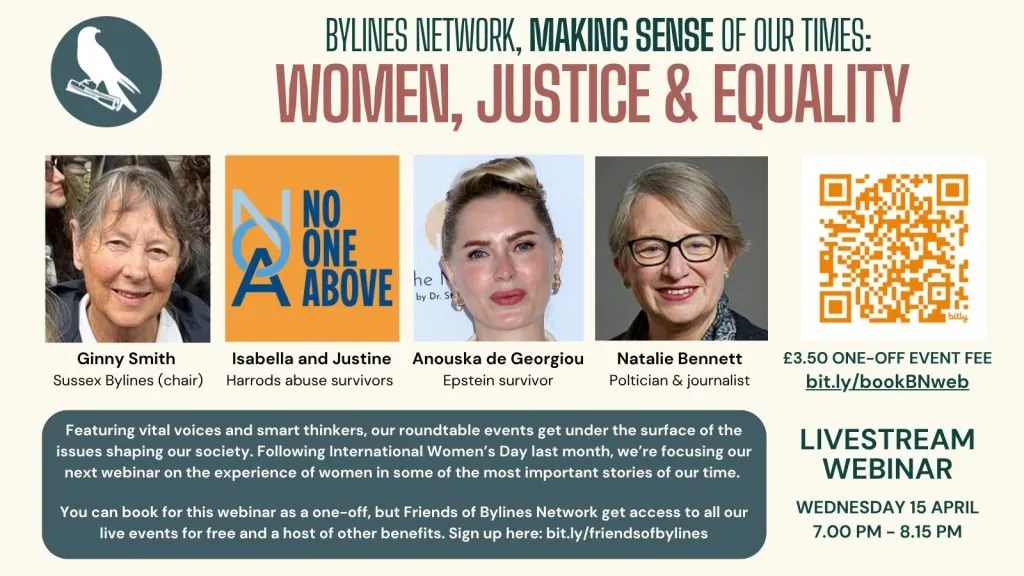
Featuring vital voices and smart thinkers, our roundtable events get under the surface of the big stories shaping our society. Livestreamed first and free to Friends of Bylines Network, Substack subscribers, and regular donors.
Join the conversation and put your questions to the panel.
To submit a question in advance, email: [email protected]
Not a Friend of Bylines Network yet?