
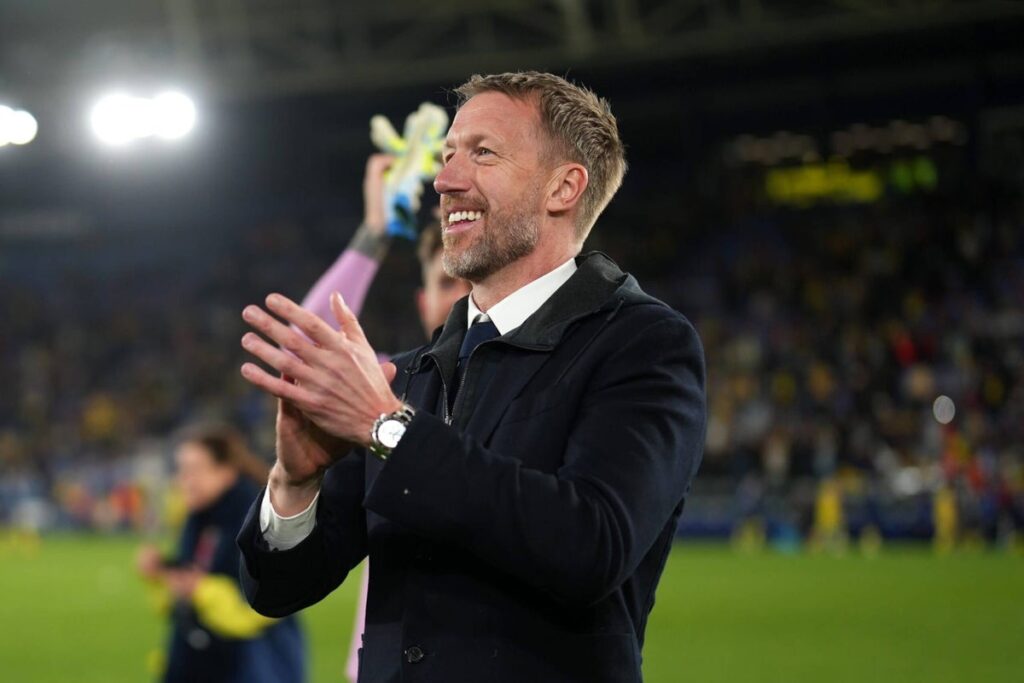
For much of his coaching career, Graham Potter has been regarded as an England manager in waiting.
As he turned Brighton & Hove Albion from Premier League relegation candidates into a top-10 team across his three full seasons at the Amex Stadium, he was seen as an ideal candidate to succeed Gareth Southgate.
Lasting less than seven months and 31 games in his next job at Chelsea damaged his reputation without dismantling it. Potter was still the bookies’ favourite to take over when Southgate resigned two days after England’s 2-1 defeat by Spain in the final at the 2024 European Championship. Instead, Thomas Tuchel, his predecessor at Chelsea, was appointed.
Now Potter, following another ill-fated move to West Ham, where he lasted just over eight months but was in charge for six fewer matches as his reign included the off-season last summer, stands on the cusp of joining Tuchel at the World Cup in June — as manager of Sweden, his adopted country.
Victory over Poland in Stockholm on Tuesday in the final of their four-team European play-offs bracket will see all of Potter’s labours bearing fruit at the age of 50, via a circuitous route in an 18-year career in coaching that began in the 10th tier of English football with Leeds Carnegie in the Northern Counties East League.
They have a different view of Potter in Sweden than the many Brighton fans who have never forgiven him for leaving early in the 2022-23 season, Chelsea supporters who watched their team lose 11 of his 31 games before he was sacked in April 2023 and the West Ham followers who only had six wins to cheer (and 14 defeats to cope with) between his appointment in January 2025 and the axe falling in the September, with their side in the relegation zone.
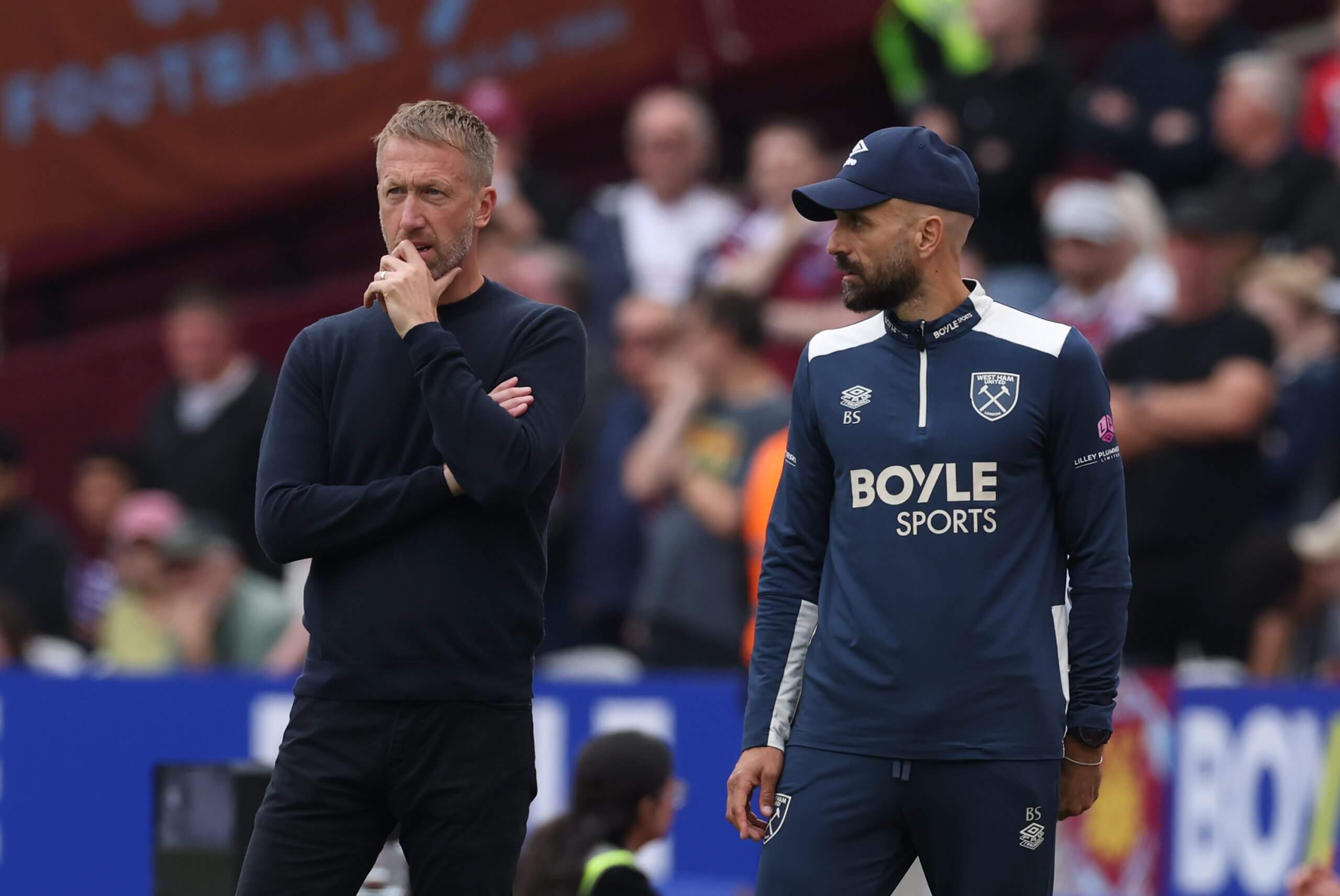
Potter endured a tough spell as the head coach of West Ham United (Richard Pelham/Getty Images)
Potter had the goodwill of a nation on his side when he was appointed Sweden’s interim head coach less than a month later, after a disastrous start to World Cup qualifying under Jon Dahl Tomasson.
They remember the then 35-year-old who uprooted his family in 2010 to move over from the UK and transform Ostersund, a ski town in the centre of the Scandinavian nation and its, at the time, fourth-tier football club.
During seven and a half years under Potter, Ostersunds FK were promoted three times to reach the top tier and also won the Swedish Cup to qualify for the 2017-18 Europa League. There, they beat Galatasaray 3-1 on aggregate in the qualifying stages, finished level on points with Spain’s Athletic Club in their group and advanced to the last 32 before losing 4-2 on aggregate to Arsenal, going down swinging with a 2-1 second leg victory at the Emirates Stadium.
“When he took over, there was a feeling that he had reached these levels of jobs on merit, worked his way there,” said Noa Bachner, who covers the Swedish national team for daily newspaper Expressen. “There was an element that (former Milan and Denmark midfielder) Tomasson was an ex-player given these opportunities quite early in his career. So, there is huge respect for him (Potter) in Swedish football. People thought he wasn’t attainable for this job.”
Potter inherited a squad that was packed with Premier League talent — Viktor Gyokeres (Arsenal), Alexander Isak (Liverpool), Dejan Kulusevski and Lucas Bergvall (Tottenham Hotspur), Anthony Elanga (Newcastle) and Yasin Ayari (Brighton & Hove Albion) are all members of a very strong generation — but performing dismally.
But a draw and three defeats to begin World Cup qualifying in a group also containing Switzerland, Kosovo and Slovenia left Sweden bottom of the table and dependent on the lifeline of a place in the play-offs, which was earned by winning their section down in the third tier of the 2024-25 UEFA Nations League (opposition: Slovakia, Estonia and Azerbaijan).
Potter, game by game, has resurrected their fortunes with the same combination of style underpinned by substance that worked so effectively at Ostersund.
He was part of the wave of coaches inspired by Pep Guardiola’s possession-based way of playing, but it was mixed with pragmatism. During those Europa League exploits nine years ago, for example, Ostersund travelled to Istanbul for the second leg with Galatasaray holding a 2-0 lead and dug out a 1-1 draw with intensive defending in a low block (the home side had 18 attempts in that match to their two).
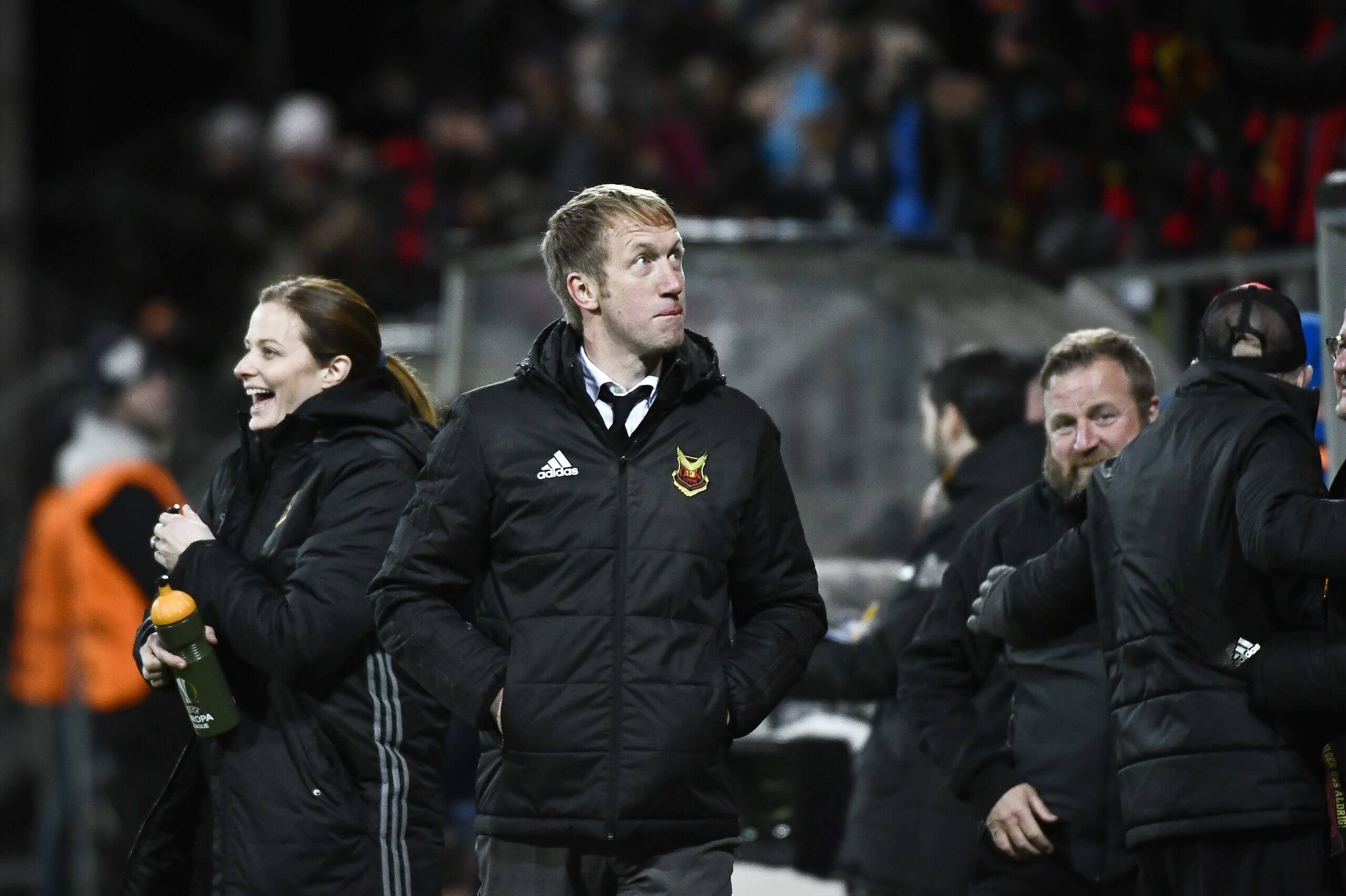
Potter in charge of Ostersund in 2017 (Robert Henriksson/AFP via Getty Images)
The poor run of World Cup results continued in Potter’s first fixture in charge of Sweden, a 4-1 defeat in Switzerland last November. Together with a 1-1 home draw with Slovenia three days later, the two dead rubbers — in the context of World Cup group qualification — amounted to opportunities for Potter to get his feet under the table and see what needed to change.
Goals were being leaked when playing with a back four and confidence was low. The process of switching to a back five, more familiar to the squad’s central defenders from their club football, started that night against Slovenia.
Evidence of a feel-good factor returning, although not reflected by those opening two results under Potter, was illustrated by a four-year contract extension until 2030 in the build-up to last Thursday’s single-leg play-off semi-final against Ukraine (he initially agreed a short-term deal with the Swedish FA).
Potter had two days to work with the squad on preparation for the match, which was played on neutral soil in the Spanish city of Valencia due to Russia’s ongoing invasion of Ukraine, who were the home team in the tie. The focus was on being compact and difficult to break down, with a lot of attention paid to set plays (the backroom staff includes Andreas Georgson, a specialist in that area of the game who has worked in the Premier League with Manchester United and Arsenal, and at both Brentford and Tottenham under Thomas Frank).
The result without injured attacking stars Isak and Kulusevski? A 3-1 Swedish victory despite having only 32 per cent possession, a hat-trick for Gyokeres, and only a 90th-minute consolation denying them a first clean sheet in eight games.
“The idea was to form a really well-organised low block with three central defenders,” Bachner said. “(Serhiy) Rebrov, Ukraine’s coach, came out after the game and said it was incredibly difficult to play against. It’s a complete turnaround. Tomasson was expansive, risky. This is risk-minimising, but it is also alluding to the idea that has dominated the Swedish national team for the last 30 or 40 years, where a collective defensive effort is the basis of everything.”
Potter is carrying the players with him in the renewed wave of yellow and blue optimism.
Midfielder Ayari, who wasn’t signed by Brighton until after Potter left for Chelsea, told The Athletic: “When he got the (Sweden) job, I spoke with players who had him and just asked how he is.
“Everyone said that, first of all, he is a great person before a great coach. That is the main thing that stands out for me, that he is a lovely guy, gets everyone in the group together, feeling comfortable. We didn’t have a good qualification. When he came in, he made everyone feel together again.”
Potter is, above all, a process coach who works best when he has time to build.
“The slight question mark was that he is a very training-based coach — trains a lot with the players,” says Bachner. “His playing style is often complex to implement. They need time. Was that going to be enough in this environment? But the strength he has is to articulate logically how to get from step A to step B.”
Potter is taking steps quickly with Sweden.
He has not always made good decisions in his coaching career. That return with West Ham after 21 months out of the game — insulated by a hefty pay-off from Chelsea — felt like a strange choice, swapping one club prone to managerial volatility for another.
This, though, feels different.
After years being touted for England, moving onto the international stage with Sweden could be the right job for Potter at the right time.