
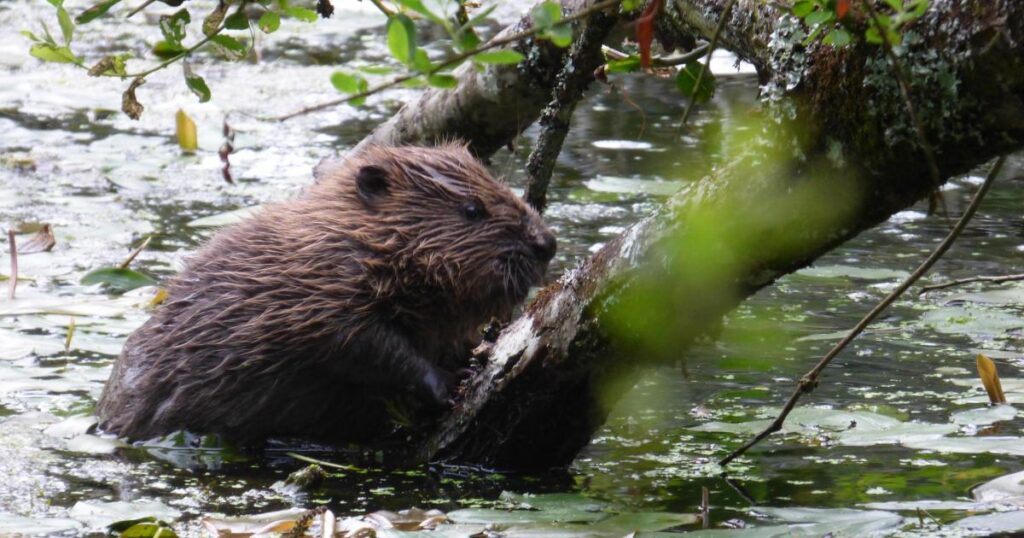
Released in March 2025 at Little Sea lake in Studland, this pair of beavers are part of a National Trust project under the first wild release licence granted by Natural England.
In just 12 months, the beavers’ instinctive activity has driven a cascading series of environmental benefits, with their 35‑metre dam creating a deep pond that now supports thriving wetland ecosystems and improved water management.
READ MORE: Dozens of ‘filthy’ dogs rescued from one home
Beaver kit at the Dorset Beaver Project site (Image: Steve Oliver)
Through natural tree‑felling and coppicing, these beavers have also opened up the woodland canopy which allows sunlight to reach the forest floor.
This has encouraged the growth of wetland plants and provided new habitat for insects, amphibians, birds and bats.
Otters and barn owls have been filmed by trail cameras making use of the pond, in addition to reported sightings of species such as redpoll and water rail.
Ben McCarthy, head of nature conservation at the National Trust, said: “The transformation already underway is remarkable and demonstrates the vital role nature can play in addressing the environmental pressures we face.
“This project shows how positive action can lead to rapid ecological recovery.”
The Natural Trust said the impact of the beavers hard work has slowed the flow of a small stream and has created new wetland habitat, supporting a wide variety of wildlife.
The damn is also believed to be helping reduce flood risk by slowing water flow near a nearby road.
SEE MORE: Bournemouth protestors claim Barclays bank is supporting animal cruelty
Beaver at Dorset Beaver Project site. (Image: James Burland)
In February, hidden trail cameras captured rare footage of the two beavers mating, suggesting baby beavers (kits) could be born this summer.
This is not the first pair to settle at Little Sea, another pair, already present before the 2025 introduction, have successfully raised three kits and built two substantial lodges, one on each side of the 33-hectare lake.
National Trust experts say the whole project highlights the beavers’ ability to improve climate resilience.
By holding back water during floods and droughts and filtering sediment to improve water quality, the beavers are supporting both wildlife and the surrounding community as they respond to environmental change.
The success of the Studland project has prompted plans for further beaver releases.
The next introduction is expected to take place in autumn 2026, on the Purbeck Heaths National Nature Reserve, though the final location is still being confirmed.