>#FC Bayern vs. 50+1: What are Hainer, Hoeneß and the DFL planning?
>FC Bayern, the DFL and the 50+1 rule: German football is at a crossroads. Bayern president Hainer and honorary president Hoeneß play a key role, taking a position that is controversial among members.
>The year is 2045. The 83rd season of the Crypto3000 Bundesliga kicks off in Riyadh with a spectacular opening match: FC NeuralNet Bayern vs. WettBetCasino Frankfurt.
>Bayern have just gone through a turbulent summer: former majority shareholder Oleg Oligarchovitch sold his stake in a real-time NFT auction for about €14 billion to Anglo-French AI corporation NeuralNet.
>What sounds like satire about the future could actually be the result of current decisions in German football. Once again, it’s about 50+1. FC Bayern plays a key role here, though so far behind closed doors. Miasanrot takes a closer look.
>#Federal Cartel Office vs. DFL on 50+1
>In June, the Federal Cartel Office issued another statement on the 50+1 rule: nothing new from Bonn. As before, the authority considers the rule to be fundamentally compatible with European competition law and the case law of the European Court of Justice.
>However, current exceptions are not deemed compatible. While Leverkusen and Wolfsburg belong to the corporations Bayer and VW as factory clubs, RB Leipzig is closely intertwined with Red Bull and has strongly limited member participation. TSG Hoffenheim has long been under the decisive influence of Dietmar Hopp, even if he formally no longer holds a majority.
>The Cartel Office’s view was predictable and consistent with its previous line. What matters now: the DFL and German professional football face a major decision.
>#Three options for German football
>#Option 1: Enforce 50+1 strictly and without exceptions
>The rule is applied consistently, exceptions abolished. A clear interpretation. Football is essentially club sport. The ECJ acknowledges this special role. This path would likely lead to lawsuits, but lawsuits that would bring final legal certainty.
>Such strict enforcement would not mean the exclusion of clubs like Bayer Leverkusen and RB Leipzig. Transitional periods would apply so that these clubs could adapt their structures. Sporting impact would only be felt in the medium to long term.
>#Option 2: A new compromise attempt
>Another effort to satisfy all sides. Difficult to implement, as previous compromises have not been sufficient. Any compromise would leave legal uncertainty.
What speaks for it: politically, within the 36 professional clubs of the DFL, this would probably be the most convenient and easiest solution.
>#Option 3: Abolish 50+1
>The other consistent and legally simplest path. A complete abolition of the 50+1 rule to avoid legal disputes with the Cartel Office. Long-term consequences for German football would be profound.
>#The future of German football will be decided in autumn 2025
German football is at a fork in the road. Will 50+1 and thus member participation remain? Or will the door open to investors, patrons and corporations whose influence would be not only financial but also structural?
>Unlike sponsorship deals, TV rights, kickoff times or shirt designs, ownership structures are permanent. Once given up, they are rarely regained.
>There is no simple right or wrong with 50+1. But it is a decision of historic significance and long-term impact. It is not just a legal or economic matter but also a social and democratic one.
>#FC Bayern’s key role between the chairs
>FC Bayern is central to the future of 50+1. It is by far the most powerful club in German football. A fundamental decision against Bayern’s will would be almost impossible. No one else in German football has comparable reach. If Bayern want to set a media agenda, they succeed.
>What makes Bayern’s role tricky are its close ties to several “50+1 exceptions”: VW, through Audi, holds shares in FC Bayern München AG. Audi CEO Dr. Gernot Döllner sits on Bayern’s supervisory board. Bayern Basketball play at the SAP Garden, which belongs to Red Bull GmbH. SAP is also a Bayern gold partner, and Bayern’s leaders maintain close ties to Dietmar Hopp.
>For itself, Bayern strictly adheres to 50+1 and enshrined it in § 3 of its statutes: “The Club is majority shareholder of FC BAYERN MÜNCHEN AG. Its share may not fall below half of all shares plus one.” Any sale below this threshold requires member approval.
>#Hainer and Hoeneß against 50+1…
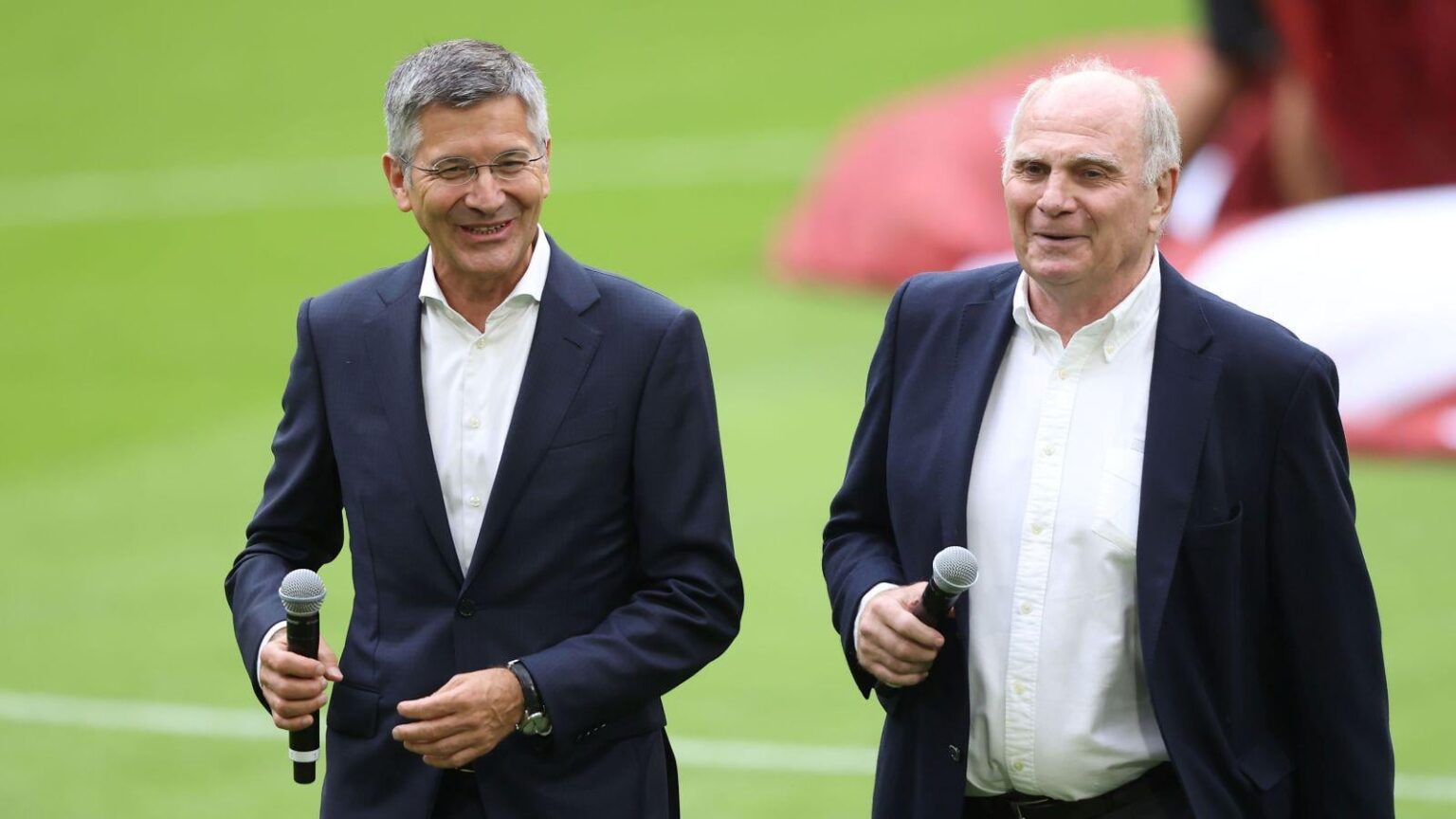
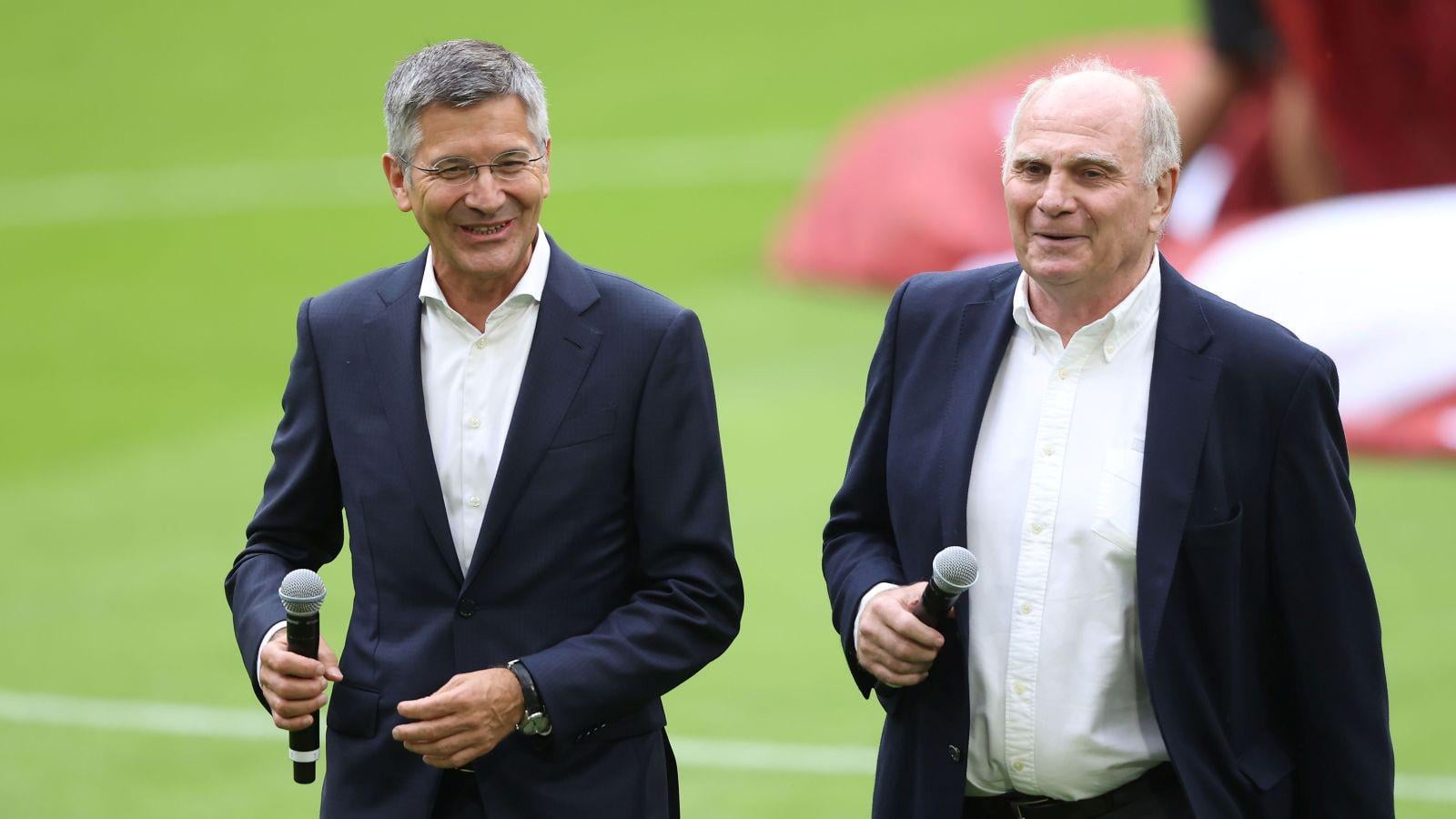
>At the same time, president Herbert Hainer and honorary president Uli Hoeneß have repeatedly called for abolishing 50+1:
>Hainer in 2020 on ZDF: “We at FC Bayern München have set in our statutes that we can sell a maximum of 30 percent. That means: the rule we imposed on ourselves is even stricter than 50+1. I think that can be left to the responsibility of each club.”
>Hoeneß in 2023 on Sky: “We at Bayern München would be totally in favor of abolishing 50+1, because we are falling behind internationally. […] I think each club should decide for itself.”
>The framing of self-responsibility sounds liberal and sovereign. Emphasizing that Bayern itself sticks to 50+1 reassures supporters. The international competitiveness argument is also always present.
>The communication strategy is clever but misses the core. Responsibility for a fundamental decision is shifted to other clubs and their members. Yet if 50+1 is no longer mandatory, the barriers will gradually fall. Financial distress here, a stadium project there, sporting struggles elsewhere. The arguments for selling to investors will always be ready.
>#…but currently silent on the matter
>What stands out: Hainer and Hoeneß, usually outspoken, have been silent on this topic for months.
>No public statement on the Cartel Office’s decision. No reaction to fan demands. No answers to repeated Miasanrot inquiries before and after the statement.
>Bayern remain silent on a fundamental and defining issue that could reshape German professional football.
>#Do the DFL and FC Bayern want to abolish 50+1?
>The DFL is currently preparing its official response to the Cartel Office. According to Miasanrot sources, a strict enforcement of 50+1 is hardly under consideration. Behind the scenes, advocates of a compromise favoring the exceptions seem to dominate.
>If that remains the case, the question is whether such a compromise would satisfy the Cartel Office, whether it would reflect the spirit of sport, or whether it would be structured to almost inevitably be struck down in court—leading to the end of 50+1.
>#FC Bayern should involve its members
>So far, Bayern’s fans and members have not had a seat at the table. Yet the club, as a registered association, explicitly anchored 50+1 in its statutes, while its president and honorary president advocate its abolition.
>There may be good reasons to end 50+1. If so, it is up to the board to convince the members. Among Bayern’s 400,000 members, opinions may differ. But the active fan scene has been clear:
>“For us, 50+1 is a fundamental characteristic of German football that must be protected at all costs. […] Our expectations are clear: enforce and preserve 50+1!”
If Bayern act with the DFL against strict 50+1 without member approval, it could undermine trust in club leadership.
Bayern should take a position on 50+1 that is legitimized by its members. Formal distinctions between e.V. and AG must not be used as excuses.
>#Conclusion
>For now, the Crypto3000 Bundesliga remains fiction. But a scenario in which German professional clubs are majority-owned by investors is realistic. Members would lose their influence and become mere consumers. The decisive course will be set in the coming months.
>The debate about 50+1 does not belong in backrooms but in public. It affects the core of German football and deserves transparency, participation and debate at eye level.
>If Bayern do not involve their members, the members may make themselves heard—in the stadium and especially at the general assembly. And that is exactly where Bayern have been longing for more calm.
flyingpanda5693 on
The opening few paragraphs of this are so absurdly inflammatory. I’d have to guess whoever wrote this really really REALLY doesn’t like RB Liepzig, but to think they’re the example of how things are actually run, or if football teams are named after sponsors like they are in cycling or racing is just rage baiting an audience to try and prove your (the author’s) point.

2 Comments
Translation:
>#FC Bayern vs. 50+1: What are Hainer, Hoeneß and the DFL planning?
>FC Bayern, the DFL and the 50+1 rule: German football is at a crossroads. Bayern president Hainer and honorary president Hoeneß play a key role, taking a position that is controversial among members.
>The year is 2045. The 83rd season of the Crypto3000 Bundesliga kicks off in Riyadh with a spectacular opening match: FC NeuralNet Bayern vs. WettBetCasino Frankfurt.
>Bayern have just gone through a turbulent summer: former majority shareholder Oleg Oligarchovitch sold his stake in a real-time NFT auction for about €14 billion to Anglo-French AI corporation NeuralNet.
>What sounds like satire about the future could actually be the result of current decisions in German football. Once again, it’s about 50+1. FC Bayern plays a key role here, though so far behind closed doors. Miasanrot takes a closer look.
>#Federal Cartel Office vs. DFL on 50+1
>In June, the Federal Cartel Office issued another statement on the 50+1 rule: nothing new from Bonn. As before, the authority considers the rule to be fundamentally compatible with European competition law and the case law of the European Court of Justice.
>However, current exceptions are not deemed compatible. While Leverkusen and Wolfsburg belong to the corporations Bayer and VW as factory clubs, RB Leipzig is closely intertwined with Red Bull and has strongly limited member participation. TSG Hoffenheim has long been under the decisive influence of Dietmar Hopp, even if he formally no longer holds a majority.
>The Cartel Office’s view was predictable and consistent with its previous line. What matters now: the DFL and German professional football face a major decision.
>#Three options for German football
>#Option 1: Enforce 50+1 strictly and without exceptions
>The rule is applied consistently, exceptions abolished. A clear interpretation. Football is essentially club sport. The ECJ acknowledges this special role. This path would likely lead to lawsuits, but lawsuits that would bring final legal certainty.
>Such strict enforcement would not mean the exclusion of clubs like Bayer Leverkusen and RB Leipzig. Transitional periods would apply so that these clubs could adapt their structures. Sporting impact would only be felt in the medium to long term.
>#Option 2: A new compromise attempt
>Another effort to satisfy all sides. Difficult to implement, as previous compromises have not been sufficient. Any compromise would leave legal uncertainty.
What speaks for it: politically, within the 36 professional clubs of the DFL, this would probably be the most convenient and easiest solution.
>#Option 3: Abolish 50+1
>The other consistent and legally simplest path. A complete abolition of the 50+1 rule to avoid legal disputes with the Cartel Office. Long-term consequences for German football would be profound.
>#The future of German football will be decided in autumn 2025
German football is at a fork in the road. Will 50+1 and thus member participation remain? Or will the door open to investors, patrons and corporations whose influence would be not only financial but also structural?
>Unlike sponsorship deals, TV rights, kickoff times or shirt designs, ownership structures are permanent. Once given up, they are rarely regained.
>There is no simple right or wrong with 50+1. But it is a decision of historic significance and long-term impact. It is not just a legal or economic matter but also a social and democratic one.
>#FC Bayern’s key role between the chairs
>FC Bayern is central to the future of 50+1. It is by far the most powerful club in German football. A fundamental decision against Bayern’s will would be almost impossible. No one else in German football has comparable reach. If Bayern want to set a media agenda, they succeed.
>What makes Bayern’s role tricky are its close ties to several “50+1 exceptions”: VW, through Audi, holds shares in FC Bayern München AG. Audi CEO Dr. Gernot Döllner sits on Bayern’s supervisory board. Bayern Basketball play at the SAP Garden, which belongs to Red Bull GmbH. SAP is also a Bayern gold partner, and Bayern’s leaders maintain close ties to Dietmar Hopp.
>For itself, Bayern strictly adheres to 50+1 and enshrined it in § 3 of its statutes: “The Club is majority shareholder of FC BAYERN MÜNCHEN AG. Its share may not fall below half of all shares plus one.” Any sale below this threshold requires member approval.
>#Hainer and Hoeneß against 50+1…
>At the same time, president Herbert Hainer and honorary president Uli Hoeneß have repeatedly called for abolishing 50+1:
>Hainer in 2020 on ZDF: “We at FC Bayern München have set in our statutes that we can sell a maximum of 30 percent. That means: the rule we imposed on ourselves is even stricter than 50+1. I think that can be left to the responsibility of each club.”
>Hoeneß in 2023 on Sky: “We at Bayern München would be totally in favor of abolishing 50+1, because we are falling behind internationally. […] I think each club should decide for itself.”
>The framing of self-responsibility sounds liberal and sovereign. Emphasizing that Bayern itself sticks to 50+1 reassures supporters. The international competitiveness argument is also always present.
>The communication strategy is clever but misses the core. Responsibility for a fundamental decision is shifted to other clubs and their members. Yet if 50+1 is no longer mandatory, the barriers will gradually fall. Financial distress here, a stadium project there, sporting struggles elsewhere. The arguments for selling to investors will always be ready.
>#…but currently silent on the matter
>What stands out: Hainer and Hoeneß, usually outspoken, have been silent on this topic for months.
>No public statement on the Cartel Office’s decision. No reaction to fan demands. No answers to repeated Miasanrot inquiries before and after the statement.
>Bayern remain silent on a fundamental and defining issue that could reshape German professional football.
>#Do the DFL and FC Bayern want to abolish 50+1?
>The DFL is currently preparing its official response to the Cartel Office. According to Miasanrot sources, a strict enforcement of 50+1 is hardly under consideration. Behind the scenes, advocates of a compromise favoring the exceptions seem to dominate.
>If that remains the case, the question is whether such a compromise would satisfy the Cartel Office, whether it would reflect the spirit of sport, or whether it would be structured to almost inevitably be struck down in court—leading to the end of 50+1.
>#FC Bayern should involve its members
>So far, Bayern’s fans and members have not had a seat at the table. Yet the club, as a registered association, explicitly anchored 50+1 in its statutes, while its president and honorary president advocate its abolition.
>There may be good reasons to end 50+1. If so, it is up to the board to convince the members. Among Bayern’s 400,000 members, opinions may differ. But the active fan scene has been clear:
>“For us, 50+1 is a fundamental characteristic of German football that must be protected at all costs. […] Our expectations are clear: enforce and preserve 50+1!”
If Bayern act with the DFL against strict 50+1 without member approval, it could undermine trust in club leadership.
Bayern should take a position on 50+1 that is legitimized by its members. Formal distinctions between e.V. and AG must not be used as excuses.
>#Conclusion
>For now, the Crypto3000 Bundesliga remains fiction. But a scenario in which German professional clubs are majority-owned by investors is realistic. Members would lose their influence and become mere consumers. The decisive course will be set in the coming months.
>The debate about 50+1 does not belong in backrooms but in public. It affects the core of German football and deserves transparency, participation and debate at eye level.
>If Bayern do not involve their members, the members may make themselves heard—in the stadium and especially at the general assembly. And that is exactly where Bayern have been longing for more calm.
The opening few paragraphs of this are so absurdly inflammatory. I’d have to guess whoever wrote this really really REALLY doesn’t like RB Liepzig, but to think they’re the example of how things are actually run, or if football teams are named after sponsors like they are in cycling or racing is just rage baiting an audience to try and prove your (the author’s) point.