

Alexander Isak looked like Alexander Isak.
For the first time in a long time the Sweden striker, clutching the man-of-the-match trophy after his team’s 5-1 victory over Tunisia, could reflect on a job well done. He had performed like an elite striker.
One goal and two assists across 90 minutes is the type of output Liverpool and their supporters had been expecting when the then Premier League champions spent a club record £125million ($168m) to secure his services last September. Approaching 12 months later, after a season when everything seemed to go wrong for Isak, the hope is that he can find form at the World Cup and carry that into pre-season and beyond.
This was a good starting point.
It is important to point out that no one is suggesting the 26-year-old is “back” after making a positive impression against a poor Tunisia side, but the outlook looks much more positive than if Isak had toiled.
The striker was substituted on 90 minutes, but it was the first time he had reached that stage of a match since October when he played for Sweden against Kosovo.
Isak had scored an impressive goal in a warm-up game against Norway and his strike against Tunisia, below, was similar in its execution.
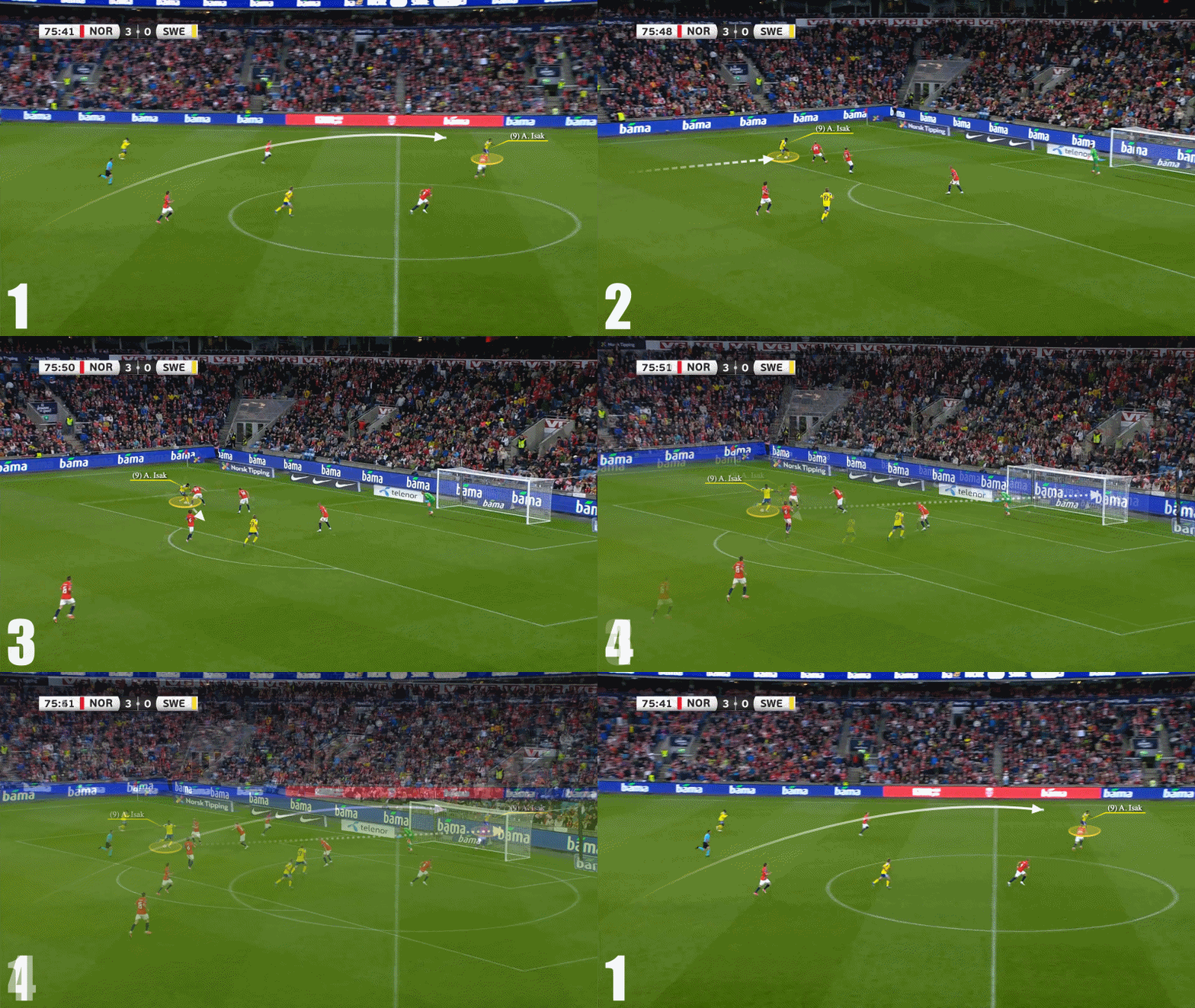
Once again it was a counter-attack, where Isak was released into the left channel, drove towards the opposition box and then arrowed a shot into the far corner.
Goalkeeper Mouhib Chamakh should have done better, but Isak deserves credit for taking the strike on early before he was set.

It is the type of situation where Isak thrives, but was one he barely found himself in when playing for Liverpool.
Arne Slot’s side often came up against low blocks which restricted that space. They struggled to counter-attack opponents because of the lack of pace and dynamism in the side, and their build-up play was slow and methodical so, when the ball did get to the final third, they found that part of the pitch crowded.
Crucially, Isak was involved throughout against the Tunisians. He had 34 touches, something he did not manage at any point last season for Liverpool where, too often, he was peripheral.
That is understandable given he was restricted to cameos off the bench and, when he did start, fitness issues meant he did not complete a full 90 minutes. The closest he came was his 31 touches in the 2-1 defeat to Chelsea in October — a game where he registered his only league assist — in 74 minutes.
In his 22 club appearances, 13 of which were starts, he only recorded more than 20 touches in three games — and one of those was on debut against Atletico Madrid. That brought frustration because, when he was on the pitch, his lack of link-up play with his team-mates was clear. It contrasted markedly with fellow summer signing Hugo Ekitike, who was much more active in open play.
Possibly helped by playing in a front two with Arsenal’s Viktor Gyokeres against Tunisia, Isak was happy to drop into pockets of space to help advance the ball forward…

…or offer an outlet to help get his team up the pitch.

It is not the only way a striker can influence the game. His lack of consistent availability meant he struggled to build relationships and an understanding with his club-mates — but his involvement in the opening goal on Sunday, despite not touching the ball, is another element of his game that was rarely used on Merseyside.
Liverpool did little to stretch the opposition back line vertically, but Isak did just that when Victor Lindelof tried to play him in behind. His run caused chaos and resulted in Yasin Ayari putting Sweden in front.

His two second-half assists were different, but the first would have pleased his new head coach Andoni Iroala because he forced a high turnover and then fed the ball to Gyokeres.
Liverpool’s pressing from their forward line was a glaring weakness last season and no doubt will be a point of emphasis when Iraola begins working with the squad.
Isak did benefit from Ellyes Skhiri being lackadaisical in possession, but he was in the right place at the right time to capitalise.

More aggression will be needed from Liverpool’s front three, and there was further evidence of that from Isak in the final moments of the first half.
He sensed the opportunity to press Hannibal Mejbri, disrupting his pass back to his team-mate Mohamed Ben Hmida. He followed his initial press and forced the defender to cede possession with an inaccurate long pass.

There was more fortune to his second assist as he managed to get his toe on a poor free kick. The ball fell perfectly for Mattias Svanberg to sweep home Sweden’s fourth.

He should have added a second goal of his own late on and, as he builds up his sharpness, the chance below is more likely to hit the back of the net. Encouragingly, his energy levels late in the game were still good enough to get into that goalscoring position.

It ended what had been a positive day for a number of Liverpool’s seven representatives at the tournament.
Ryan Gravenberch assisted Virgil van Dijk, who headed in the opener for the Netherlands to become only the second Liverpool combination to link up for a goal at a World Cup after Ian Callaghan and Roger Hunt for England in 1966. Gravenberch assisted his side’s second for Crysencio Summerville, while Florian Wirtz provided one assist in Germany’s 7-1 victory over Curacao.
There will be tougher challenges to come for Sweden and Isak. They are in the same group as Liverpool’s Netherlands contingent and he will be up against Van Dijk in their next group game.
If Isak can come out on top against a defence packed with a number of Premier League defenders, then you would forgive some for beginning to get excited about what next season could hold for Liverpool’s No 9 — but there’s a long way to go before that.