

If you have ever caught yourself scrolling on Instagram Reels or TikTok, chances are you have come across a retired forward “building” their perfect Premier League striker.
In almost every category, the options are plentiful and debate-worthy. Wayne Rooney chose Cristiano Ronaldo for heading and finishing, and Pierre-Emerick Aubameyang for speed. Alan Shearer opted for Duncan Ferguson for heading and Andy Cole for finishing, though he would be an appropriate pick for both. There are almost zero undisputed masters of one skill across all Premier League strikers, but when it comes to first touch, there is only ever one answer: Dimitar Berbatov.
Berbatov scored 94 Premier League goals across spells at Tottenham Hotspur, Manchester United and Fulham, and is a two-time Premier League and League Cup winner, yet his deft control became his trademark. Having retired in 2018, the 45-year-old regularly posts videos on social media of himself practising his touch at home in his native Bulgaria, and describes it as his best skill.
On May 31, he will display that feather touch on English soil again when he features for the World XI in Soccer Aid.
He has played twice previously in the charity game run by UNICEF, scoring twice in the 2016 edition and playing primarily in defence in 2022. In a much deeper role than he’s used to, he bossed the game from centre-back in that second run-out, completing 37 of his 38 passes (97 per cent), according to FotMob, Soccer Aid’s official data partner.

Dimitar Berbatov is playing at Soccer Aid for UNICEF 2026 (Immy Thompson-Bland)
This year, Soccer Aid returns to the London Stadium, home of West Ham United, who are currently in a tense relegation battle with Spurs, the club where Berbatov made his name in England. He arrived in north London in 2006 and helped win the 2008 League Cup before leaving for Manchester United a few months later.
A crucial 2-1 victory on Sunday against Aston Villa lifted Tottenham out of the bottom three, one point ahead of West Ham in 18th, and Berbatov is confident they have enough to beat the drop.
“I want them to stay in the Premier League. I can’t even imagine them going down,” Berbatov, who scored 27 league goals for Spurs across two seasons, tells The Athletic. “They’re in a tough spot, and I’ve been there, actually, with my former team Bayer Leverkusen (in Germany), so I know how nerve-racking it can be to be near the bottom and fighting for survival.
“Even to associate this type of sentence with Spurs, survival in the Premier League and Spurs — I never thought that I would ever talk about something like this.
“When you’re in a position like this, the pressure is too much sometimes. I hope the boys can stay strong in the head. They have the quality. They have good players, they just need concentration and to stay strong in the head.”
Roberto De Zerbi’s side impressed without the ball at Villa Park, led by midfield trio Joao Palhinha, Rodrigo Bentancur and Conor Gallagher. This high-intensity style may be the Italian’s best route to success in the final three matches of the Premier League season, after inheriting the ongoing injury saga that started under Ange Postecoglou last season and continued in the current one under Thomas Frank and Igor Tudor. De Zerbi will be without Dejan Kulusevski, Mohammed Kudus, Cristian Romero and Xavi Simons for the remainder of the season.
“They do have the qualities, but the injury to Xavi Simons is a big blow,” says Berbatov, referencing how the Dutch forward ruptured the anterior cruciate ligament in his right knee in the 1-0 win against Wolverhampton Wanderers last week. “He was just starting to show how big a talent he is. I like him a lot. This is how cruel football can be.
“The list of injured players can show you a deeper issue going on. It’s about how the players take care of themselves before, during and after the games, how they relax and take care of their bodies. Then comes the medical department, the physios, the doctors and how they’re caring for injured players. It’s all connected. And sometimes, if there are many injuries, you need to check this over. Also, the training methods: are they training when they’re a bit injured? Sometimes players should rest, and training can cause muscle stress. It’s been a problem for Spurs for quite some time.”
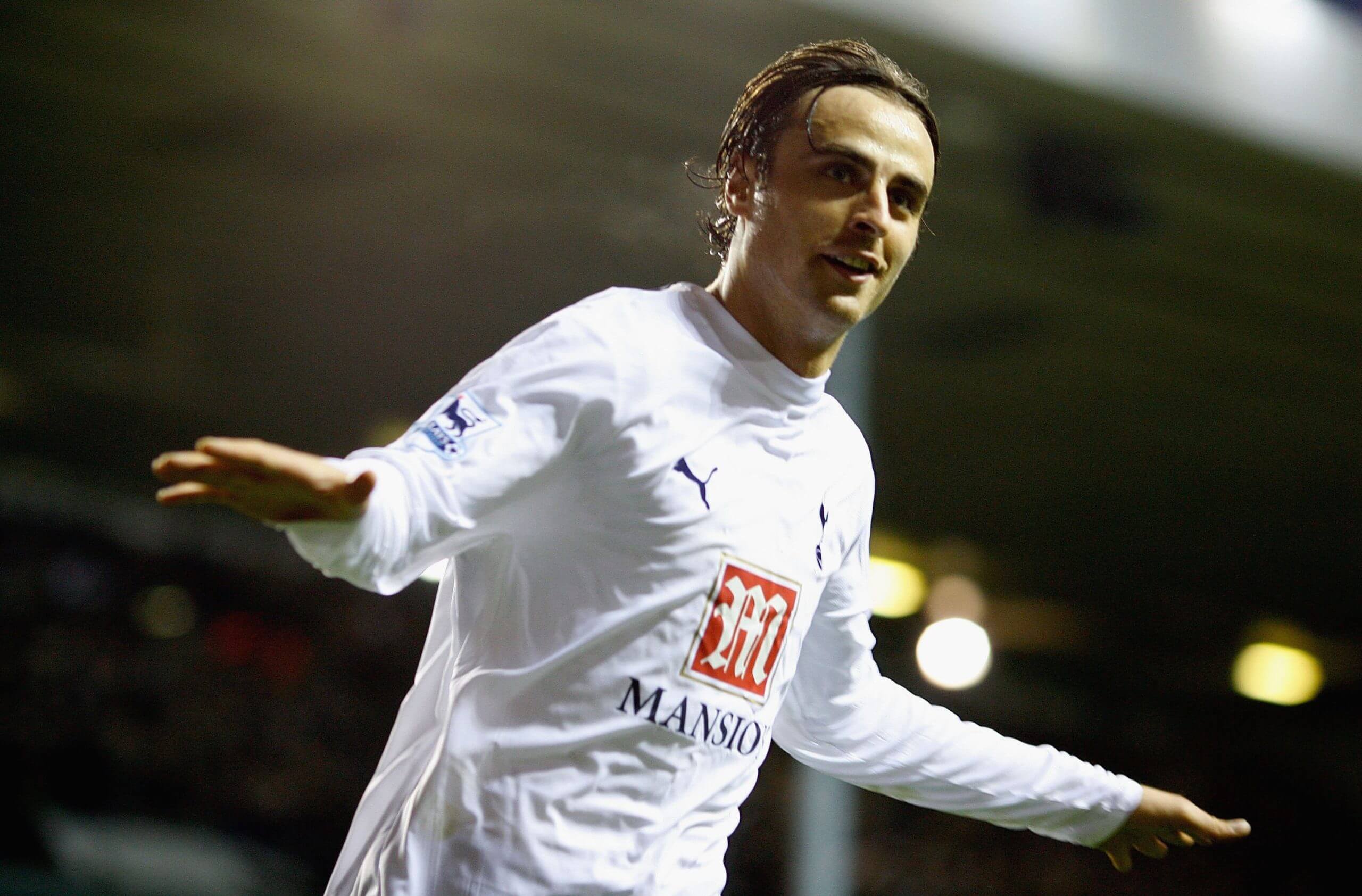
Dimitar Berbatov scored 46 goals in 102 games across all competitions for Spurs between 2006 and 2008 (Clive Mason/Getty Images)
Tottenham’s injury woes may be the main reason for their alarming slide from perennial European-qualification contenders to relegation candidates over the past two seasons. But there have also been frequent changes in the dugout, with seven managers since Mauricio Pochettino was sacked in November 2019, and a major change in the boardroom, with the Lewis family removing Daniel Levy from his role as executive chairman last September.
Levy had been chairman since 2001, and Berbatov became well aware of his infamously tough negotiation style, waiting until the final day of the summer 2008 transfer window to sanction his move to Old Trafford.
In Berbatov’s view, a lack of continuity leads to instability within a club, which eventually seeps into the dressing room.
“If there’s no stability in the football club, it’s going to affect everybody down the chain,” says Berbatov. “In the case of Daniel Levy, who I obviously had a working relationship with back in the day, he was always there to support the team and put it first. The stadium, the training ground, state-of-the-art facilities… he knows how to do business and make money with the team, and then invest it into the team and into the new stadium and training facility.
“When that time is gone, and a new chairman steps in, it can raise questions. It can lead to instability within the team, especially when you’re losing games. So that can altogether bring a stressful situation for the players. And it can lead to losing games, as simple as that. Are Levy leaving and Spurs’ current position interconnected? Would they be in this position if Levy were still there? They’re relevant questions, but I don’t know the answer.”
But for the Bulgarian, there’s no doubt about what decision Manchester United’s board should take on his former team-mate Michael Carrick. Since replacing the fired Ruben Amorim on an interim basis in January, Carrick has won 10 of his 14 matches in charge, including beating Manchester City, Arsenal, Aston Villa and Liverpool. In Berbatov’s view, that makes him a no-brainer permanent appointment come the summer.

Dimitar Berbatov and Michael Carrick were Manchester United team-mates for four years (Alex Livesey/Getty Images)
“United were in a bad situation before, now we are third, and qualified for the Champions League,” he says. “So if that’s not Michael Carrick and his team doing the right job, I don’t know what it is. So I truly hope that whoever needs to decide their next coach says, ‘Michael, you’ve done a terrific job, pulled us out of a difficult situation, and you deserve to continue’. I mean, that’s logical thinking. But sometimes in football, logic is not present.”
Carrick immediately switched away from the rigid 3-4-3 formation used under Amorim and implemented a 4-2-3-1 shape, restoring many of United’s best players, notably Bruno Fernandes, to their most comfortable roles. They are also playing more passes, focusing possession through the middle of the pitch, and not committing to such a high press.
“The players are the same from Amorim, but you can see the clear difference in how the team is playing,” Berbatov says. “Sometimes it’s not even about tactics; it’s about the manager’s ability to communicate with the players. When you’re talking about big teams, it usually means big players with big egos, so you need to know how to speak with them. You need to know how to put your message into them so they can put it onto the pitch.
“Sometimes, these players just need to know that you believe in them and give them the freedom to do what they need to do on the pitch. You know this is also about conversation, dialogues between each other. Casemiro has won five Champions Leagues — he knows how to boss a midfield. Just go out there and do your job.
“You have managers who understand man-management, how to speak with you differently, because everybody is different. That’s exactly what United needed, and Michael has produced it.”