

 Add as preferred source on Google
Yes, West Ham’s London Stadium rent is low but the club have hamstrung themselves by limiting their revenue at a home ground that they do not own, says football finance expert Kieran Maguire.
Speaking exclusively to Hammers News, the University of Liverpool academic and Price of Football podcast host was reacting to the news that Karim Virani has returned to the club as interim CEO, replacing the outgoing Karen Brady after 16 years in East London.
Previously, Virani has worked for West Ham as head of their commercial department, a one-year stint which was the culmination of four previous years of experience with the club in more junior roles. In the intervening period, Virani has helped in the C-suite at Rangers and Hashtag United, among other positions.
Clearly, the Irons have more pressing concerns than the value of sponsorships or the takings at the club shop. But regardless of how this season’s Premier League relegation scrap finishes, there are underlying questions about where the club finds itself commercially and the knock-on effect on the playing budget.
If West Ham are relegated, just how worried are you about our finances?
The club has lost HUNDREDS OF MILLIONS over the last two seasons…
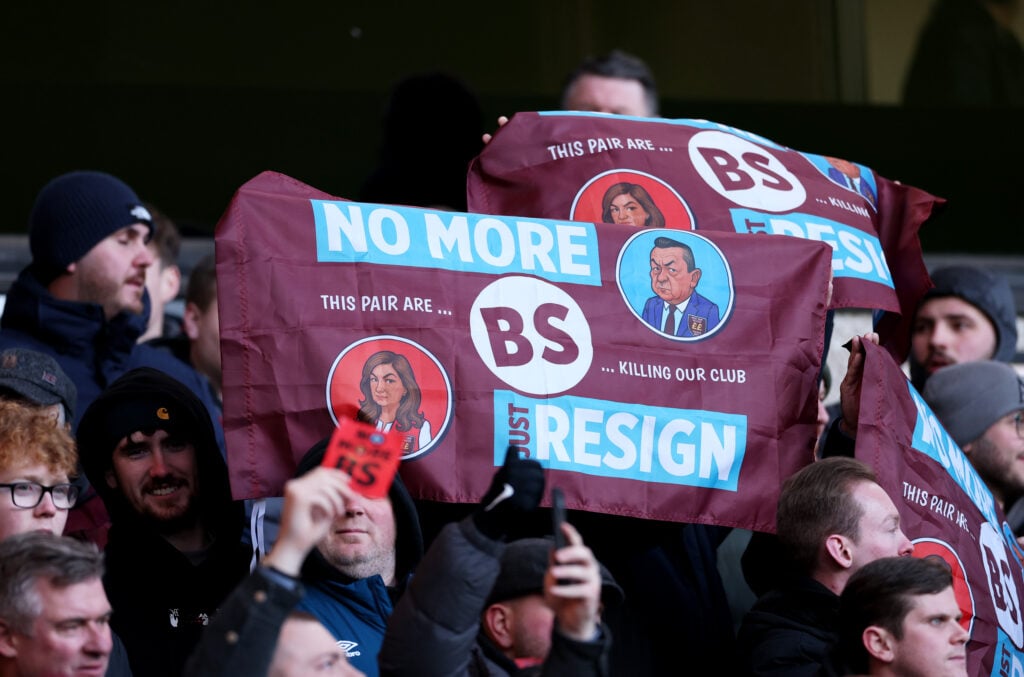 Photo by Michael Regan/Getty Images
For that reason, Virani’s commercial background is interesting.
Karim Virani may have work cut out trying to best rivals in the financial stakes – and it’s all because of the London Stadium
When West Ham moved to the London Stadium in 2016, it was sold to supporters as a beachhead for the kind of commercial opportunities that would help the club challenge the ‘Big Six’ orthodoxy.
And while the Hammers biggest problems lie not in how much money is spent but rather how it is spent, the club is still arguably not where it should be commercially. As explained by Maguire, much of that is due to the inherent limitations of playing in a rented stadium.
“One of the things West Ham said to justify the move was that the London Stadium would help commercial income,” he told Hammers News.
“Now, commercial income has doubled since leaving Upton Park. Their commercial income as a best-of-the-rest club is good. They have, however, inflated the commercial income at the expense of their matchday income because the accounts include hospitality as commercial, not matchday.
“Combined commercial and matchday is £95m at West Ham, which is maybe a more useful metric. For context, Aston Villa are on £102m, Newcastle on £174m, Chelsea on £288m. If you say their peer group is more along the lines of Nottingham Forest, Brighton and Fulham, they are doing okay – but that wasn’t how the move to the London Stadium was pitched to them. If you want to be competitive, all of the Big Six exceed £400m.
“The downside of the move is that the ability to monetise the London Stadium on non-matchdays is non-existent. Yes, they have the benefit of a rent that is below commercial levels. Do the owners deserve some credit? Well, they were in such a strong negotiating position with the council that it’s difficult to say.
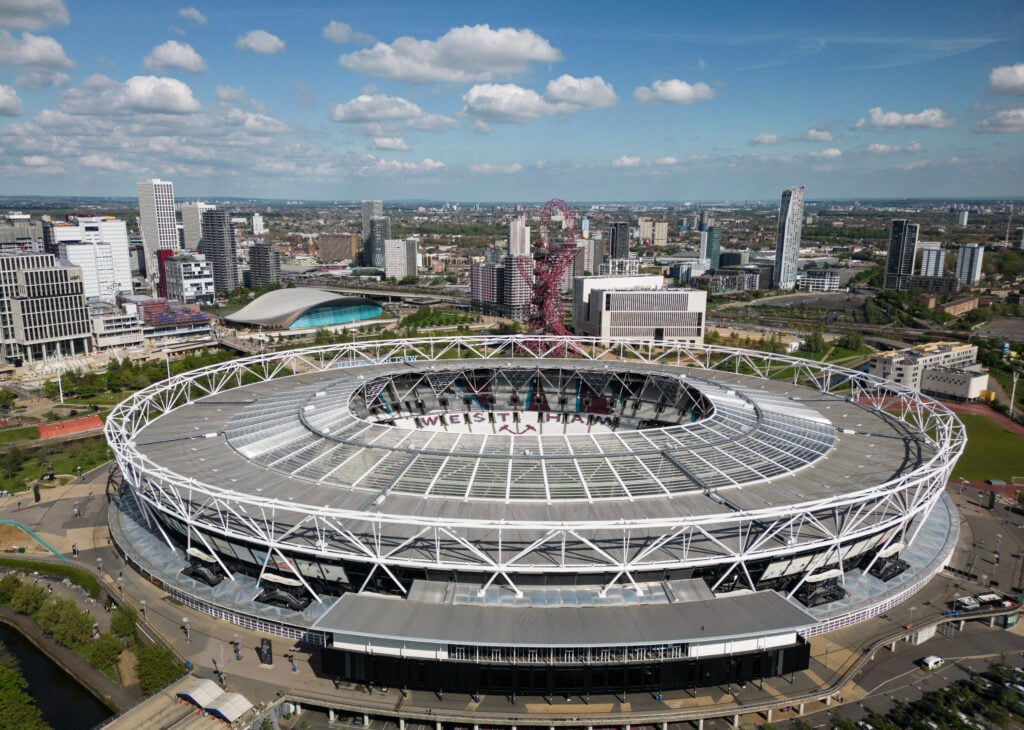 Photo by Ryan Pierse/Getty Images
“Ultimately, they chose short-term gain for long-term commercial pain.”
Among a raft of other commercial opportunities, West Ham’s landlords have explored naming rights deals for the wider Olympic Park. Under the terms of the lease, the club would be only entitled to 50 per cent of the revenue from any such deal after the first £4m.
Then, as Maguire highlights, there is the missed opportunity to host concerts and other sports at a stadium of their own. At present, all of the money from these kinds of events at the London Stadium goes to the landlords.
Similarly, the club is limited in terms of expanding the stadium, fine-tuning the hospitality facilities or using the arena as a commercial hub on non-matchdays.
So, while West Ham’s peppercorn rent in E20 is undoubtedly far lower than the annual interest costs paid by the likes of Everton and Tottenham at their new builds, their revenue upside is also significantly more limited.
It is difficult to escape the conclusion, therefore, that Brady, David Sullivan and the rest of the top brass made a short-term decision when they chose to move away from Upton Park. And as a result, any new CEO, even one with an excellent commercial background like Virani, will be inherently constricted in what they can achieve financially while the club remain tenants, not owners.
Join Our Newsletter
Receive a digest of our best West Ham content each week direct to your mailbox