
Several problems have flared in recent games – and need addressing if Everton are to make the most of the opportunity they have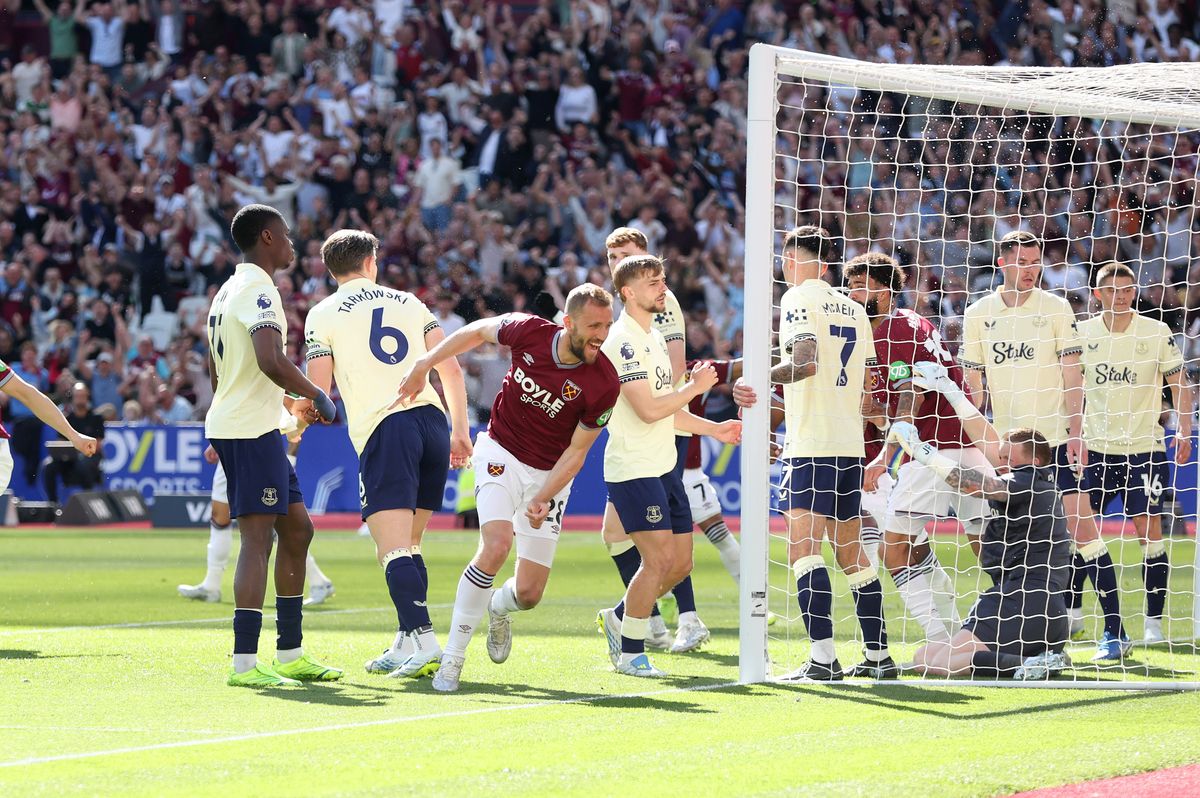
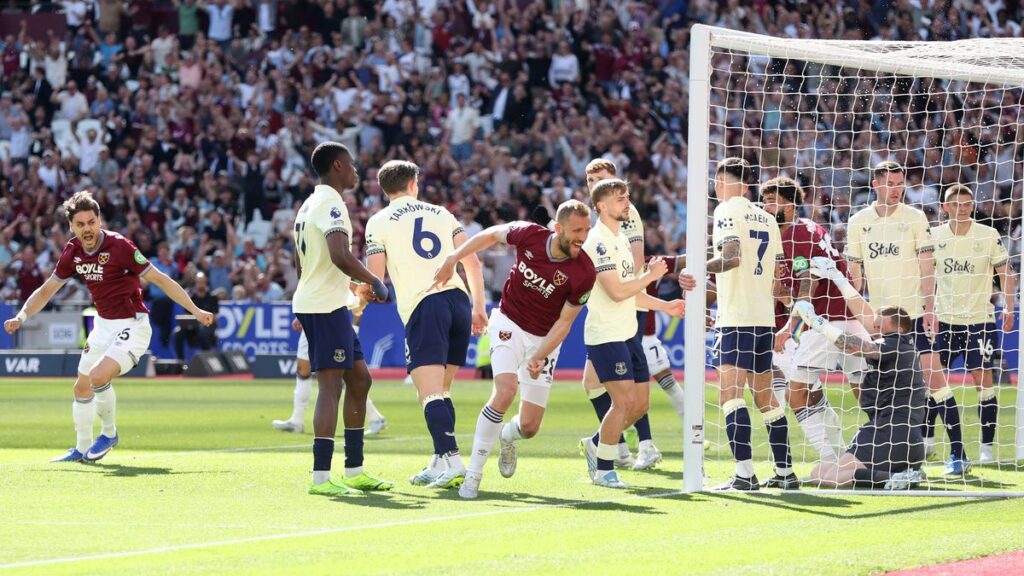
West Ham’s Tomas Soucek celebrates scoring his side’s first goal against Everton (Photo by Rob Newell – CameraSport via Getty Images)
Everton will enter the last four games of the season in the chasing pack for Europe.
When the dust settled on that heady win over Chelsea last month, the club appeared primed to lead the race from the front. The long break that followed has, as David Moyes feared, led to a loss of momentum and after one point from three games, the Blues now have work to do.
There are several reasons for this and some, like injuries and the frustration over decision-making that will lead Everton to raise concerns with the Professional Game Match Officials Limited (PGMOL), are beyond their direct control. To stand a chance, they also need to address some key issues they can influence.
FOLLOW OUR EVERTON FC FACEBOOK PAGE! Latest EFC news and analysis from via the Liverpool Echo’s dedicated FB page
Set piece goals
Set pieces have been a big part of this season across the Premier League and there have been games, the home defeats to Newcastle United and Tottenham Hotspur in particular, where vulnerabilities have been exposed.
Everton appeared to have solved that problem – helped by the return to the first XI of Jarrad Branthwaite from injury and Beto through form – but suddenly most balls into the box are a source of terror.
They are proving costly, too. Moyes conceded of Tomas Soucek’s opener on Saturday and Virgil van Dijk’s stoppage time winner in the Merseyside derby six days earlier that “the two goals were too similar for my liking.”
One factor beyond his control was the loss of the imposing Branthwaite and Beto, who often protects the front of the box when Everton are defending corners, through injury. Both went off before van Dijk’s goal and were still unavailable at the London Stadium.
Beto should return from his concussion but Branthwaite will miss the rest of the season and Everton must find a way to deal with their new-found set piece frailty.
They have already started but, as Saturday showed, work clearly needs to be done. The players are aware of that – Kiernan Dewsbury-Hall saying this after the game: “For large parts of the season, we’ve been really resolute and defensively strong. For one reason or another, the last two games, the four goals we’ve conceded have just been so bad.
“Teams aren’t having to do an awful lot to score. The set-piece ones especially, they’re so big in the game these days, it’s giving teams an edge on us going into the games.
“We’ve worked on it, but we’ve obviously not worked on it enough because teams are looking at us like we’ve got a weak link on set-pieces at the moment. It’s something we need to look at next week and work harder on because they’re killing us at the moment.
“Of course it’s been mentioned in the dressing room. Everyone should know that, everyone needs to take accountability and everyone has got a job.”
Starts to the second half
Soucek’s thumping header came minutes into a second half that had looked like an opportunity for Everton. The away side had been comfortable during a surprisingly tame first half given the plight of West Ham. It felt as though the game could be there for the taking – only for the Hammers to grab a game-defining goal in the minutes after the restart.
The slow beginning to the second half was similar to how Everton started poorly after the break against Liverpool. While they scored early in the second period during the derby, Beto’s goal came out of the blue rather than from a sustained period of momentum.
At Brentford, a low-intensity restart led to Moyes making attacking changes as the game appeared to be drifting.
Everton have won none of those three games and, while they have typically started games well – and while they have had plenty of good second halves this season – right now they are struggling to come out of the dressing room with intensity and it is holding them back. Moyes acknowledged that was the case on Saturday – he could do with finding a way to address it.
Impact from the bench
Everton’s wider second half performances have featured acts of resilience and left them close to more points than they have ultimately earned. At Brentford, Dewsbury-Hall levelled in stoppage time. Against Liverpool the equaliser came much sooner and the two teams cancelled each other out until stoppage time. At West Ham, Everton laboured but did get back into the match before again losing in stoppage time.
There are positives to take – all three showed resilience and an ability to fight their way back into games. But all three were missed opportunities. In each match it felt as though Everton were shaped by the game, rather than working to shape it to their own favour.
Moyes moved first at Brentford and his introduction of Tyrique George did cause the Bees problems. While the Chelsea loanee struggled from the bench against Liverpool he was again useful in east London, as was Tim Iroegbunam.
There are several players who are not being used, however, despite having provided useful contributions earlier in the season. In Tyler Dibling, Merlin Rohl, Harrison Armstrong and Nathan Patterson, Everton have several players who could add fresh legs and inspiration as some of the first XI fade as the game goes on. Their lack of inclusion is a concern and the lack of minutes also makes it tougher for them to have an impact when they are eventually introduced. Some have now gone months without a kick.
Controlling emotions
Everton have been on the wrong end of some big decisions in recent weeks. As well as legitimate frustration over the tenor of Chris Kavanagh’s approach to Liverpool in the derby, and the decision not to award a penalty when Curtis Jones collided with Dewsbury-Hall, the conclusion that Mateus Fernandes’ handball on Saturday did not warrant a spot kick was baffling.
There is frustration with such calls in the dressing room, among the management and much higher up the club – hence CEO Angus Kinnear’s planned intervention.
As infuriating as those calls may be, the team cannot let that anger shape their attitude for the rest of the campaign. Some of those calls have been influential but the team has also been complicit in the recent bad run of results – as highlighted above, there are areas that are within Everton’s control to fix and the club needs to start with them and hope it helps their luck to turn.