
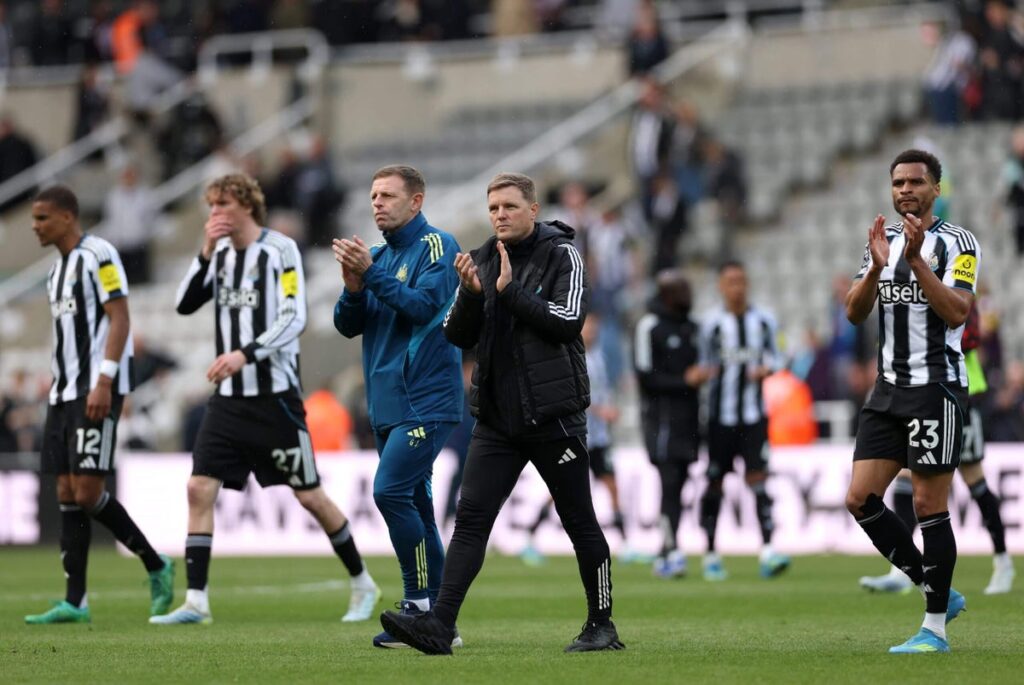
Twelve months ago, there was no let-up. Fresh from winning Newcastle United’s first domestic trophy for seven decades, Eddie Howe and his players were ensconced as club legends and tearing towards Champions League qualification. At board level, directors were bullish. They would be “crazy” to sell star striker Alexander Isak, said chief executive Darren Eales.
A year on, and there is no letting up of a different kind. Isak is a bitter memory after a summer transfer to Liverpool. Newcastle have lost eight of their past 11 Premier League matches and are 14th in the table with a month of the season to go. Howe’s position feels vulnerable, big clubs are circling around the team’s best players, and there has been a tremor of uncertainty regarding the ownership.
Were things ever quite as good as they felt last April? Are things really so bad now? Is this a blip? Is it terminal decline? The Athletic’s Newcastle writers Chris Waugh and George Caulkin discuss what has gone wrong at St James’ Park — and what comes next.
Ownership
Chris Waugh: Ultimately, uncertainty filters down from the very top. And news of the Saudi Arabian state Public Investment Fund (PIF), Newcastle’s majority owner, pulling back from LIV Golf — and selling its stake in Saudi Pro League side Al Hilal — only raised further doubts about their commitment to the club.
George Caulkin: Does this have a knock-on effect for Newcastle? ‘Emphatically not’, was the message from the top of the club. While PIF is not the most proactive communicator, its guidance was the same. Where LIV Golf is a cash-gobbler, Newcastle are seen as a long-term investment that will eventually earn the Saudis money. But saying and doing are two different things.
Waugh: Misgivings about PIF’s apparent interest are not new. The Saudis are not especially visible owners — Yasir Al-Rumayyan, the club chairman, comes to only a game or two per season — and, while PIF officials are in daily contact with the hierarchy, they do not have a presence on the ground on Tyneside. And fans have not been alone in raising queries about how engaged PIF is, have they?
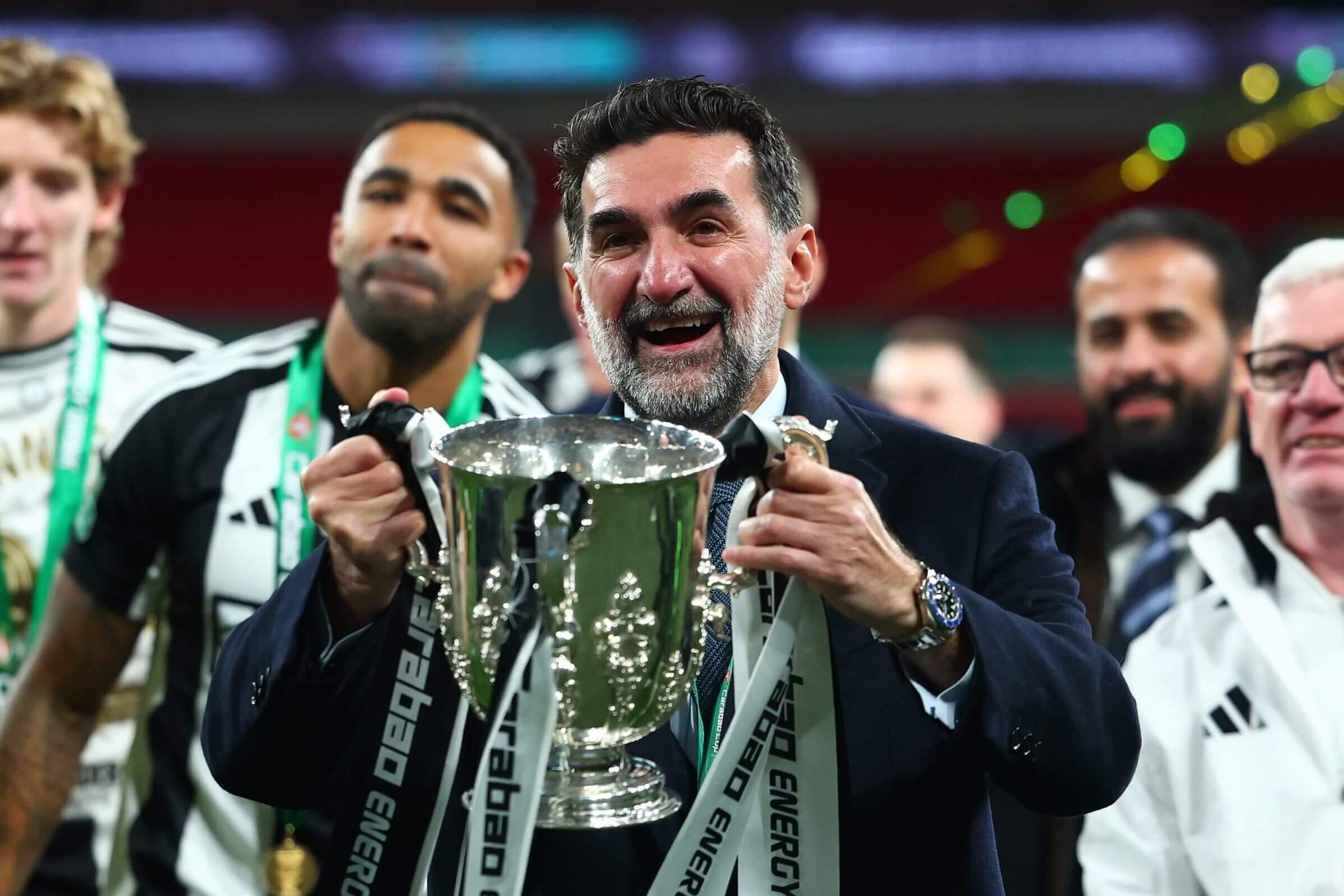
Yasir Al-Rumayyan celebrates after the Carabao Cup final against Liverpool (Chris Brunskill/Fantasista/Getty Images)
Caulkin: No. Internally and externally, there have been bouts of frustration about the interminable pace of big-ticket infrastructure projects, like the stadium and a new training ground. Even some senior figures have previously questioned whether PIF is scaling back its commitment. And it feeds into that idea of progress.
Waugh: Accusations of ‘absenteeism’ are dismissed as unfair by those at Newcastle, who insist this is simply how PIF operates. Thankfully, Newcastle are not in the same ludicrous position as last summer, when they had neither a sporting director nor an active chief executive. PIF should never have let that unacceptable and highly damaging situation unfold.
But, in David Hopkinson and Ross Wilson, they now have a CEO and sporting director working in tandem. Hopkinson is building a more professional executive structure, commercial revenue has increased fivefold post-takeover to £120.2million ($162.2m), the current training ground is undergoing (another) £30m extension, and a site has been identified for the construction of a new one at Woolsington, near Newcastle Airport (though it is yet to be announced).
Caulkin: Hopkinson has shaken things up; dynamism was badly needed, there has been far more communication with supporters (and the media), and it is reassuring to think Newcastle will enter a(nother) vital transfer window this summer with the people and plan to tackle it. But Hopkinson’s ambition for Newcastle to be in the “debate about being the top club in the world” by 2030 also puts huge pressure on the team. And how do you reconcile that goal with selling your best players?
Waugh: Hyper-ambition has been there from the start, but statements of grandeur require action. A PIF delegation, including Al-Rumayyan, will be on Tyneside next week for a series of departmental meetings and it is essential that news emerges from that regarding either the stadium and/or training ground to provide tangible evidence of advancement.
Head coach
Caulkin: These meetings are annual practice at Newcastle and, as usual, head coach Howe will be part of them. He is already involved in planning for the pre-season programme and summer recruitment but this will be his opportunity to give context for the team’s struggles this season and to make his case for what the future might look like, should he remain in charge. This has always been the club’s starting point, but it can’t be guaranteed.
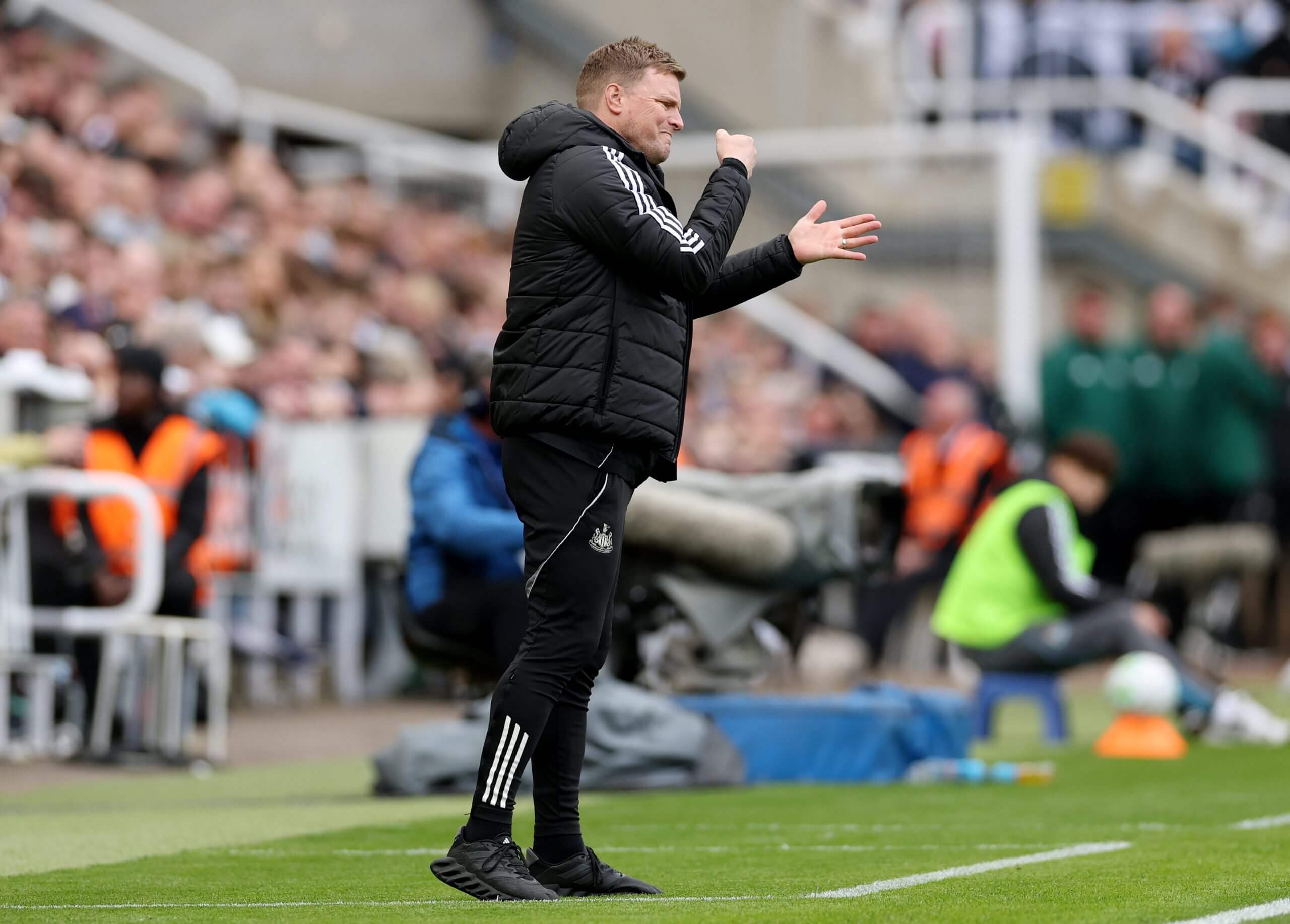
Howe is under pressure as a disappointing season nears its end (Stu Forster/Getty Images)
Waugh: No, not when form has been so woeful — it is five defeats in six league games at St James’, the most corrosive of which was a second derby defeat of the season to Sunderland. The manner of that loss, with Newcastle succumbing late after leading for most of the match, felt like the same old story.
Newcastle have dropped 25 points from winning positions and, if last month’s three-week break for an international window and the FA Cup quarter-finals was supposed to bring about a reset, Howe’s side have meekly folded twice in similar fashion in their two outings since the games resumed. Isak’s summer defection was ruinous, but Newcastle’s own business has also proven detrimental. The combined £119million spent on new front men Nick Woltemade and (especially) Yoane Wissa is increasingly looking like a colossal waste of money.
Caulkin: Howe will have a say in what happens next, too. He is conscious that he stayed a season too long at Bournemouth, who were relegated from the Premier League under him in that final 2019-20 campaign. He is very self-analytical but, if anything, his recent mood has been more determined rather than less.
He also knows that if he loses the support of players or fans, it becomes a tipping point. He is an all-in manager and he needs that attitude to be returned. Without such mutual commitment, it just won’t work, particularly when so much needs to be done in this year’s summer window.
Waugh: It feels like we’re close to that tipping point. Newcastle cannot continue losing games in the same manner and keep sliding down the table without consequence. Performances, as an absolute minimum, have to improve immediately, while a discernible game plan is required so fans can feel there is something to keep believing in.
Already, discontent inside the ground at home matches has risen, with boos following the Sunderland and Bournemouth defeats, even if all-out mutiny has yet to arrive. Although the hierarchy insist they “ignore the noise”, Howe’s success has been built on unity with the supporters. He needs their buy-in.
Caulkin: Newcastle’s strong preference has always been that Howe will be in the dugout again next season. His achievements speak for themselves, and he has been a truly transformative manager over the past four and a half years. But that starting point feels like a fair distance away. These final five games are important.
Waugh: Howe’s fate divides opinion among supporters because he is rightly lauded for what he has accomplished. Nobody, inside the club or across the fanbase, wants him to fail. But Newcastle must be dispassionate with their decision-making; they have to have full faith in Howe overseeing a rebuild. If the hierarchy have any doubt, it is difficult to see how he can continue. But any such decision would need to be taken in a dignified and respectful way.
Players/squad
Caulkin: We are surely approaching the end of this version of Newcastle. Isak is long gone, Kieran Trippier has announced he will leave, Fabian Schar is likely to follow, and this is before we get to the top players being circled by other clubs.
They have been brilliant — warriors and stalwarts — but Newcastle have an ageing side; one which, before last summer’s splurge, had not been strengthened for too long. Draining confidence plays a part, but they look so tired. The squad needs energy, competition, youth, quality.
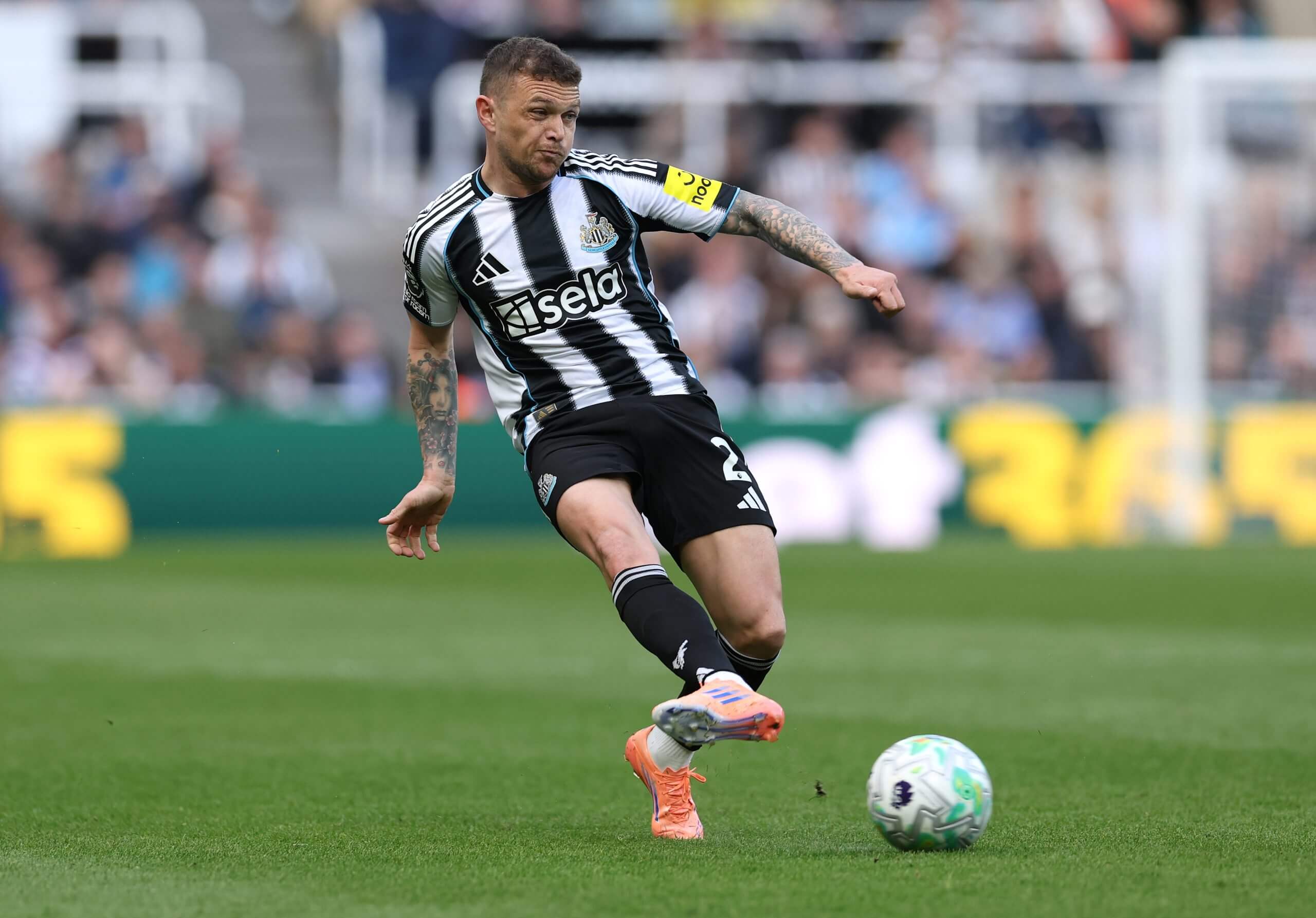
Trippier has announced he is leaving Newcastle in the summer (Stu Forster/Getty Images)
Waugh: Without doubt. So much of the focus has understandably centred upon the after-effects of what Newcastle did do last summer, rather than what they didn’t do.
A significant squad overhaul is anticipated in the coming months. Just about every position is being reviewed, even if not all of them will be acted upon this summer. A new goalkeeper is paramount, full-backs (plural) are required, a younger centre-half is being sought, a midfielder will be needed should Sandro Tonali depart, wingers are wanted and, despite the outlay on Woltemade and Wissa 12 months earlier, a striker is desired (which may see one of those expensive signings leave after one season).
The sobering reality is that Newcastle are likely to lose key players and replace them with promising youngsters, who may take time to realise their potential.
Regardless, the club need to have a clear blueprint, act early and stick to it, rather than be too “reactive”, as Howe acknowledged they became last year following a series of setbacks (some self-inflicted, others out of their control).
Caulkin: There was a general acknowledgement that this would become a transitional season once Isak left just before the summer window closed, but it now feels more like a decline. Newcastle have had relative success in knockout competitions — reaching the semi-finals of the Carabao Cup and last 16 of the Champions League — but the current team is like a jigsaw with pieces missing.
Waugh: Bruno Guimaraes’ 12-game injury absence undoubtedly exacerbated Newcastle’s dip in form but, as integral as their Brazilian captain is, his unavailability cannot mask wider shortcomings.
The collective on-field spirit, which had been so strong, has certainly appeared to wane. Some experienced players perhaps staying beyond their optimum can explain away part of Newcastle’s increasingly diminishing returns, but it does not excuse the inconsistency of some star performers. Anthony Gordon, Tonali and Tino Livramento continue to be linked with moves away, yet few fans would argue any have regularly produced their best form over a long period.
Why this is happening is harder to pinpoint. Did Isak set a precedent, and have they started to think about their next move? Or, as some supporters increasingly suggest, have they simply stopped listening to Howe?
Caulkin: While we’re in the realm of existential questions, to what extent has finally winning a trophy last season altered Newcastle’s identity? Do players lack a clearly defined goal after ending that long wait for silverware? Has their Carabao Cup triumph taken away that edge? Do we now expect too much of them? We typically think of Howe’s Newcastle as hard-running b*****ds, but recently there has been a character-deficit.
Fanbase
Waugh: Those esoteric issues do not only affect players. Supporters feel it more than anyone. The previous objectives under Howe were easily identifiable: survive, improve, qualify for the Champions League, end that trophy drought. But with Newcastle’s hierarchy declaring that the club are going to be competing for the Premier League title by the end of the decade while the team are floundering in the bottom half of the table, many fans feel there is a disconnect between what they’re hearing and seeing.
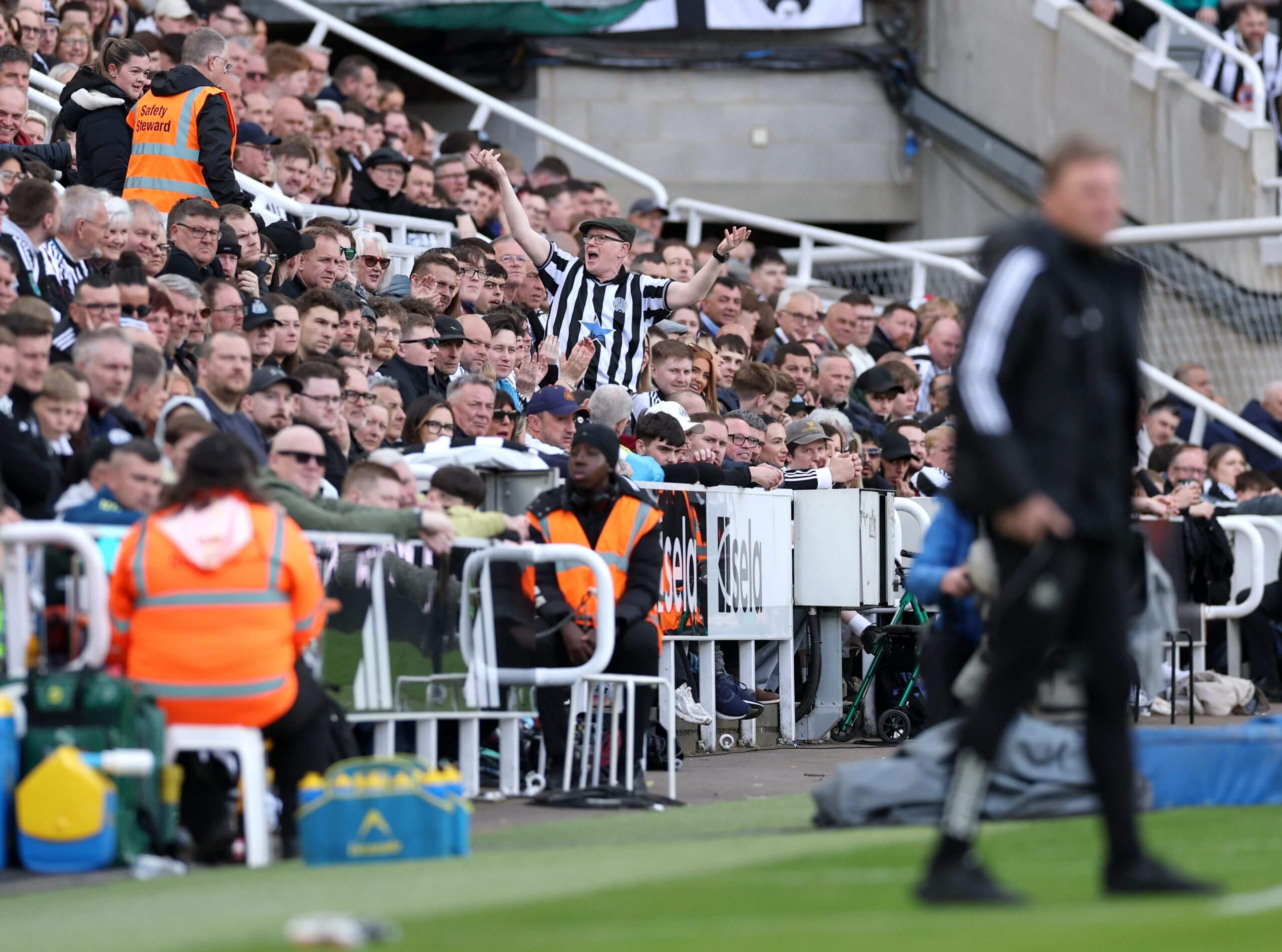
Newcastle fans want to see evidence of further progress under Howe (Stu Forster/Getty Images)
Caulkin: This disconnect has always been there post-takeover. The club have talked big, but only the team have delivered big. Yes, the commercial and marketing arms have improved drastically, but there has been destabilising change at the top which has fractured relationships and stunted improvement.
If part of the on-pitch problem has been what happens to a team who can no longer be considered upstart underdogs then, off it, there is confusion. Matchday supporters are being asked to stomach rising ticket costs as the price for success, and that can only cause discontent when the team then fail. In both those Sunderland games, Howe’s players were like strangers. Disconnect was suddenly everywhere.
Waugh: For the most part, St James’ has felt different in 2025-26 from other seasons under Howe, and Newcastle’s previously imperious home form has subsequently collapsed. The change in atmosphere has been commented upon by people inside the club. Yet fans cannot be blamed for that. Partly, game fatigue must have played a role, given the volume of matches across all competitions. Newcastle have also laboured through many games, especially in the Premier League, and supporters have been given little to respond to, as they did when Howe’s side were at their full-throttle best.
Caulkin: In one sense, nothing has changed from a year ago. Newcastle still aspire to be the biggest, most successful club in the world, but how they get there no longer feels so obvious. Who and what they are right now isn’t easy to judge, aside from going backwards.