
Remember that time you broke your leg? Of course you do. Nobody forgets a broken leg. They tell the story, if the occasion arises, for the rest of their lives. How it happened, why it happened, the pain, the treatment, the recovery. That broken leg was a big deal.
For you. Not for the hospital. A conservative reckoning, but by the time you take into account the intensive care unit, the cardiac department, cancer wards, the unfortunate inhabitants of the morgue, even some of the other travellers hurried through accident and emergency, your broken leg wouldn’t put you in the top 100 most ill patients in that hospital, on that day. But, for you, it was a huge event. One might even say, given the time off work, the many difficulties and inconveniences big and small, a disastrous one.
As language is contextual it is not, of course, a real disaster. Not a natural catastrophe, not even a sizable human one. But if you end up with a limb shorter than the other, like my grandad, or can never play padel again, that broken leg may seem disastrous, to you. And that’s why it felt rather judgmental for Mark Pougatch to call out his fellow broadcasters for catastrophising events on the football field at the weekend. “Football reporters should never ever use the word disaster in relation to giving a goal away,” he wrote on social media. “We’ve just marked the Hillsborough tragedy. Check your language. Do much better.”
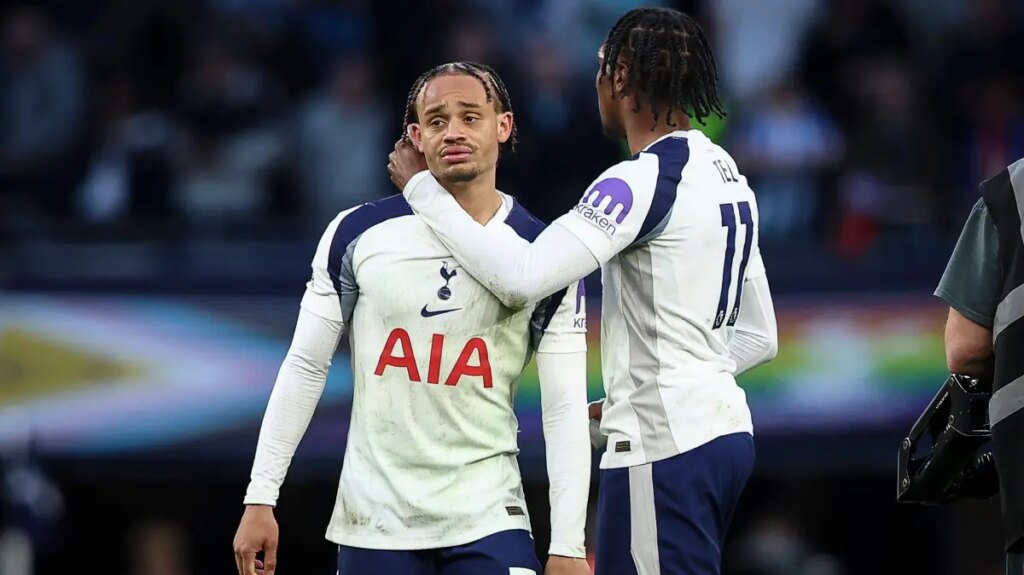
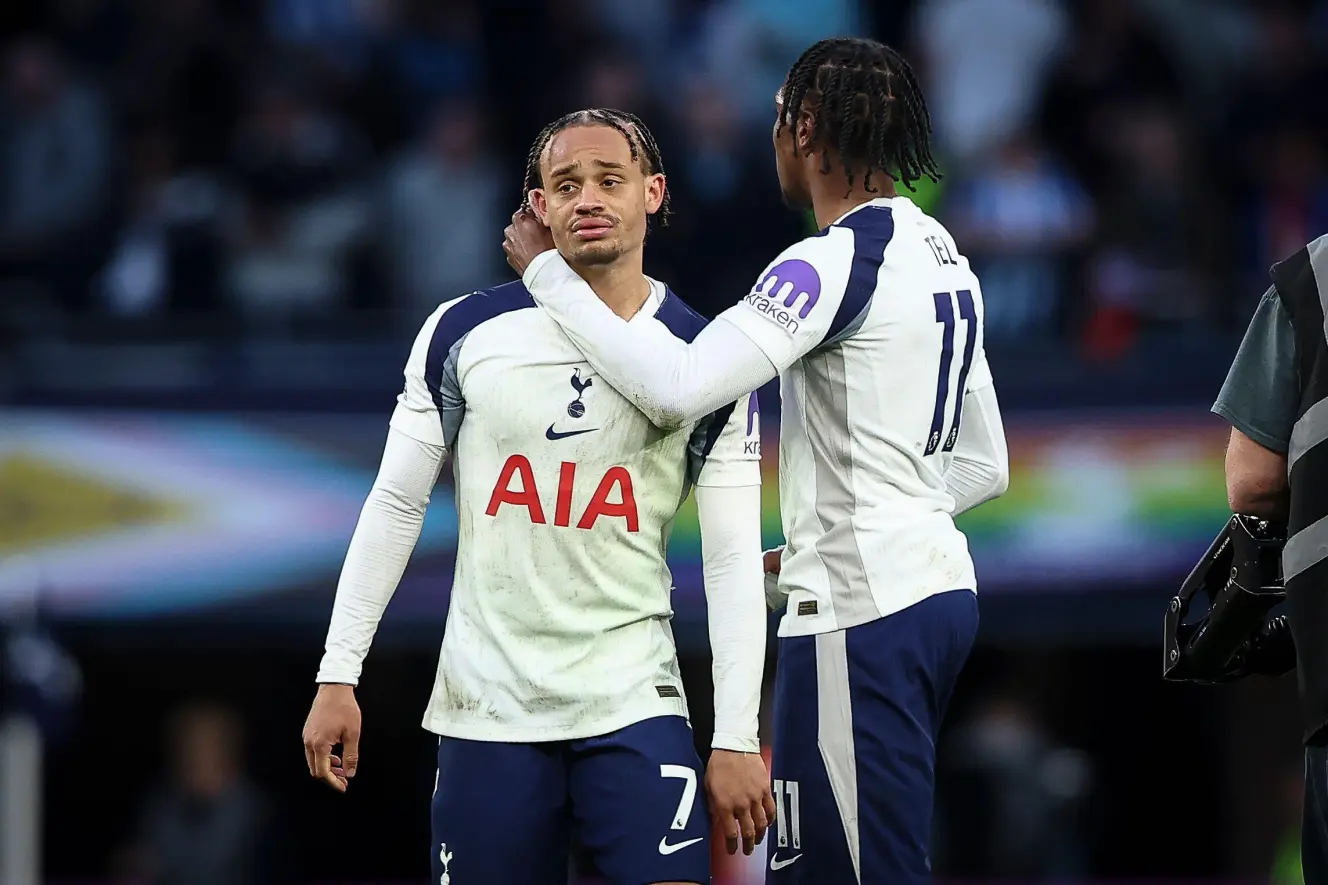 Xavi Simons, left, and Mathys Tel after Tottenham’s 2-2 draw against Brighton on SaturdayIan Stephen/Every Second Media/alamy
We all know what he means. “Liverpool have had no luck this season,” I wrote in the match report of the second leg Champions League defeat by Paris Saint-Germain. “Some of it has been truly tragic, some just the misfortune that can affect any football club, and it is right to watch our language around a match played the night before the 37th anniversary of the Hillsborough disaster.” Yet, at most clubs most weeks, a late goal given up in haphazard fashion could legitimately be described as disastrous. Certainly it could be classed as disastrous defending, calamitous or catastrophic. Nobody is saying it is equivalent to war, famine or the death of innocents. It’s just a disaster in a sporting sense. Hillsborough took place at sport, but it wasn’t about sport. It was about incompetence and official irresponsibility, and human misfortune, in some cases fate, the thousand tiny determinations that put an individual in the wrong place at the wrong time. Then there’s the match. That’s different.
Of course, we need to be careful about language. Discussing Liverpool’s rotten luck this season there needs to be a very delicate segue from the very real tragedy of Diogo Jota’s death, to the misfortune of injuries to key players or the loss of Trent Alexander-Arnold and its impact on Mohamed Salah. Yet all are factors. Listing them, in turn, does not afford equal billing. Just as Tottenham Hotspur getting relegated would not be a disaster to compare with the fire at Grenfell Tower. For a club of Tottenham’s status and ambition, however, in pure sporting or commercial terms, it most definitely would be a disaster.
And that was what his fellow commentators or reporters were reflecting, when they attracted Pougatch’s censure: the second Brighton & Hove Albion equaliser on Saturday that kept Tottenham in the bottom three. Now I have a different take on that goal, which can be read elsewhere in the column, but I can see how to many that appeared a disaster to concede. Indeed, if Tottenham are relegated by one point or two that may be seen as the moment it happened. And I love our language, its subtlety and complexity; and I also love that we all get, and understand it, most of the time.
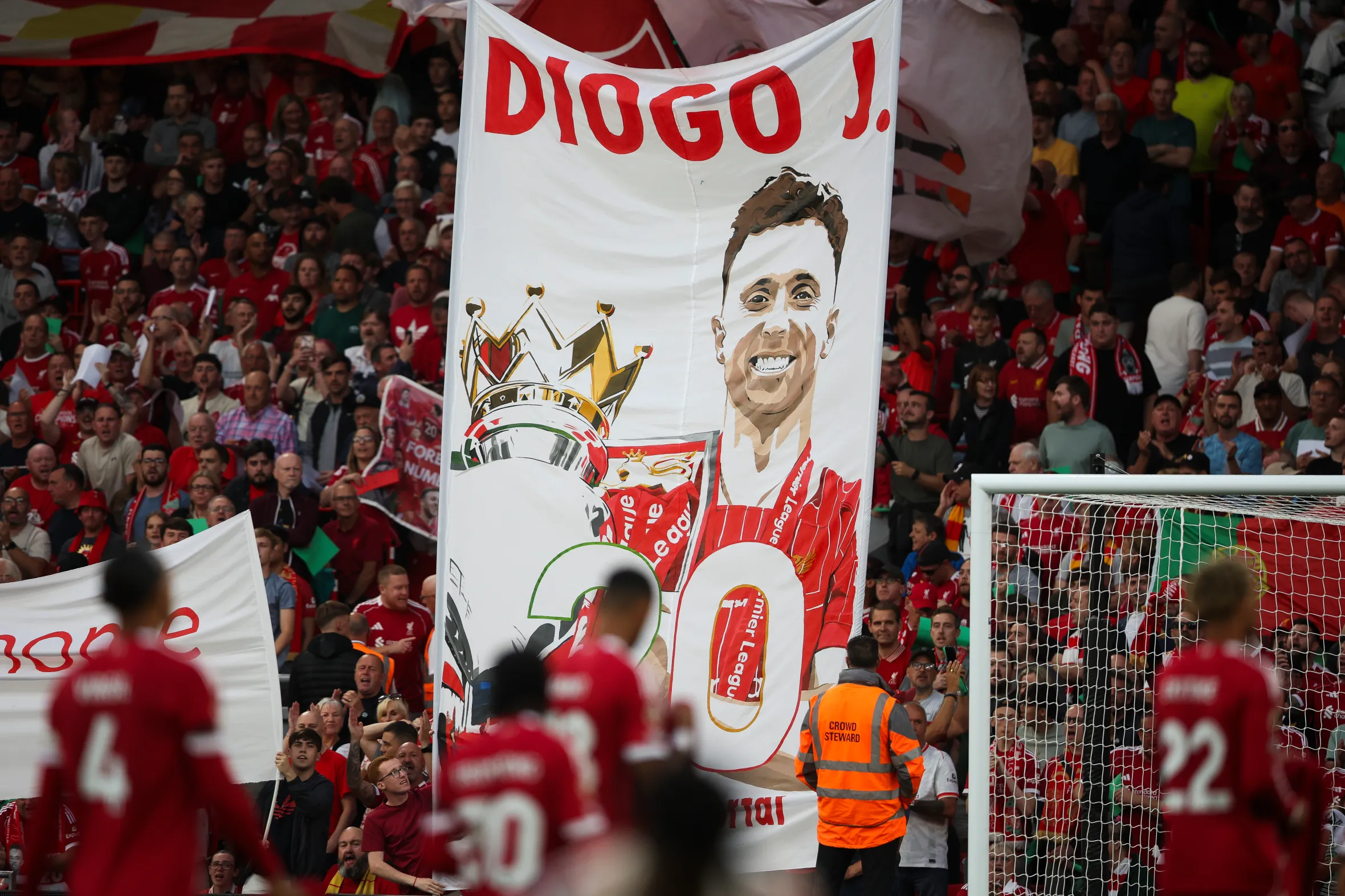 Tottenham getting relegated would not be a disaster to compare with, for example, Jota’s death, but it would still be a disaster for SpursTimes PHOTOGRAPHER Bradley Ormesher
So what is happening in Yemen is a disaster, and the fire at Grenfell was a disaster, and Palestine’s a disaster, but it’s also a disaster if you drop your car keys down the drain by accident at midnight, or slip on the ice and break a hip. It’s just a different type of disaster. And it was disastrous defending from the Tottenham centre half Kevin Danso to gift that goal to Brighton. But what would surely be another disaster is if we police language so ferociously that we become tongue tied; because then nothing of worth ever gets said. For commentators in particular, that’s disastrous.
So much for West Ham’s ‘good’ old days before Brady
A few months back, when West Ham United were in even more trouble than they are now, the club’s former player Julian Dicks gave an interview on the growing crisis. “They killed the club,” he said of the present regime. “I believe leaving Upton Park killed the club. For what reason? They haven’t produced. They said Champions League and all this. Nowhere near it. I think they’re taking the piss.”
No doubt Dicks will be one of those celebrating, then, that Baroness Brady is stepping down from her position of vice-chair. With the bulk of the late David Gold’s shares being sold by his family to Daniel Kretinsky, that’s two down, one to go from the ownership and administration.
Yet Dicks went on to discuss what the club was like during his playing days, that golden age at Upton Park, where West Ham did not win a single major trophy after 1980, during their last 36 years of residency. Amid tales of drinking a bottle of Jack Daniel’s the day before matches, and a pre-match Mars bar washed down with a can of Coke, was the story of his rehabilitation from a serious knee injury. He lived in Billericay, with the doctor in Harley Street, and his injury meant he couldn’t drive in his leg brace. The club had a taxi account, so Dicks used it: £280 return.
The next day he was challenged by Billy Bonds, the manager, and told in future he should get the train. And that was West Ham in the good old days. Three members of the 1966 World Cup winning team, including the captain, the guy the manager regarded as the most visionary midfielder of his generation and the striker who scored the only winning final hat-trick in history, all playing for a team that finished 12th, 14th, ninth, 12th, 16th and 12th, between 1962 and 1968. But, that’s right, Brady killed this once-great club.
Nike walks headfirst into Parkrun gaffe
The beauty of Parkrun is that’s all it is. A run in a park; or a jog, a walk, even an amble if you’re not feeling greatly motivated. That’s why it should be immune to commercial imperatives, gender politics, the outside pressures that impact the modern world of sport.
 Nine-year-old Lily Janmohamed has set a potential 5k world record for her ageSWNS
Nike have backed down, having displayed a crass slogan around the event. “You didn’t come all this way for a walk in the park,” it read. But, as Parkrun swiftly pointed out, that’s exactly what some do, and they are very welcome. They meet other people who may not be up to running but want a brisk walk, and that creates a community that no longer needs the confines of organisation. Maybe a walker becomes a jogger. The point is, it doesn’t matter. This is the grassiest of grassroots, which is why all talk of times and victories is also misplaced. Parkrun is the outdoor equivalent of those ten treadmills side by side at your local council gym. Go against the clock if you wish, but it’s your clock, your time, your distance that is the measure; or should walkers be judged on those too?
There is a nine-year-old, Lily Janmohamed, who has been causing a stir at Battersea Parkrun in London, doing five kilometres in 19 minutes and 45 seconds. Records in Parkrun are a murky area because of self-declaration and gender issues but Lily is getting faster and tearing past lots of adults and, for now, that alone should be enough. It’s a fun run, and she’s nine. She can join a club, take running seriously and a world of sex-testing and intense competition awaits, but the park is really not the place for any of that. For now, as a footwear manufacturer advised in simpler times: just do it.
Brighton equaliser may be blessing in disguise for De Zerbi
Tottenham got lucky with that late equaliser on Saturday. Imagine if it hadn’t gone in; the false sense of security could have proved ruinous.
Had Brighton not scored a second, Tottenham would have won 2-1 and no doubt imagined that level of performance would keep them in the Premier League. Not a chance. Tottenham were still poor in Roberto De Zerbi’s first home game. Their passing was sloppy, the forwards toothless, their midfield surrendered control for long periods. The only reason they scored was because the Brighton goalkeeper Bart Verbruggen had an ordinary game and the defender Jan Paul van Hecke kept getting caught in possession. Most noticeably for Tottenham’s second goal, but also the first. If Van Hecke had cleared efficiently, Tottenham would not have scored. The execution on both occasions was good, but Brighton invited the danger, Tottenham did not create it.
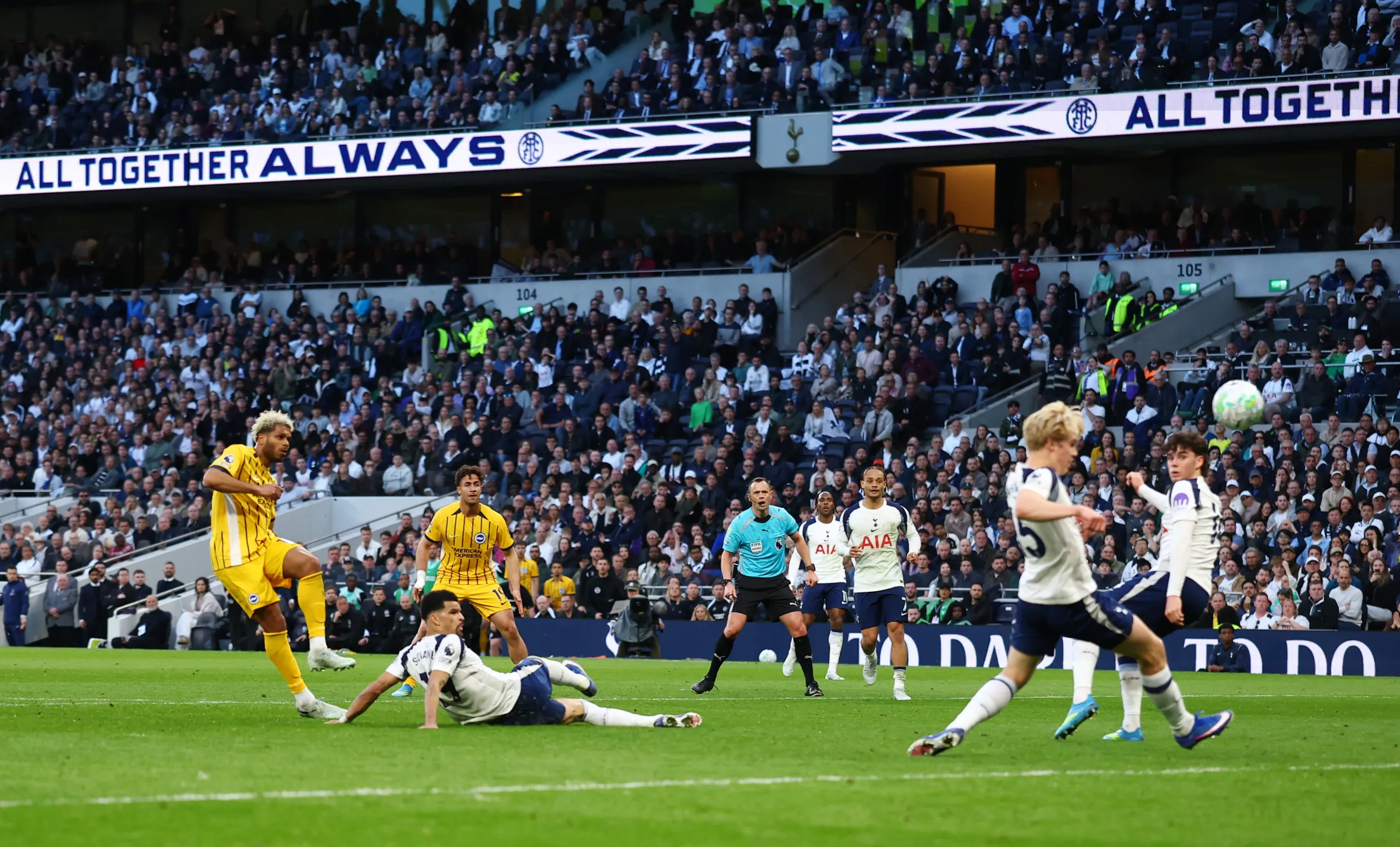 Had Rutter not scored, Spurs would have been lulled into a false sense of securityMatthew Childs/Reuters
Yet scorelines impair vision. So, suddenly, when 1-0 and 2-1 up, commentators and observers began seeing a display that wasn’t truly there from Tottenham. They were doing well, they had turned a corner, this was the impact De Zerbi had made. It shouldn’t have taken Georginio Rutter’s equaliser to disavow them of this fantasy. Keep playing like that and Tottenham will go down. Fortunately, Brighton’s second should act like a wake-up call, so the new head coach won’t have to shake them out of slumber all on his own.
History repeating?
Times reader Barry Borman has pointed out that if Wolverhampton Wanderers, Burnley and Tottenham Hotspur are relegated in that order, it is the same order that they won the league title in 1958-59, 1959-60 and 1960-61. Bad news for Ipswich Town, Everton and Liverpool next season, it would seem.
Football regulator’s rising costs
As has been stated on these pages more than once, politicians only have ideas to make football clubs poorer. So no surprise that the Premier League is finding it hard to get details of the cost of the new independent regulator. The projection by the previous government was £10million, but that will no doubt rise with the appointment of the Boston Consulting Group to the project. One of the world’s highest-profile management consultancies, in 2020 BCG charged £10million for 40 people to work on the Covid test and trace scheme across four months. By October that year, BCG had been paid £18.3million for government work related to the pandemic. The Premier League will foot the regulatory bill from the start of season 2027-28, with BCG conducting research linked to the State of the Game report, a forensic examination of football’s finances, unlikely to be greatly aided by its costs. Just don’t say you weren’t warned.