
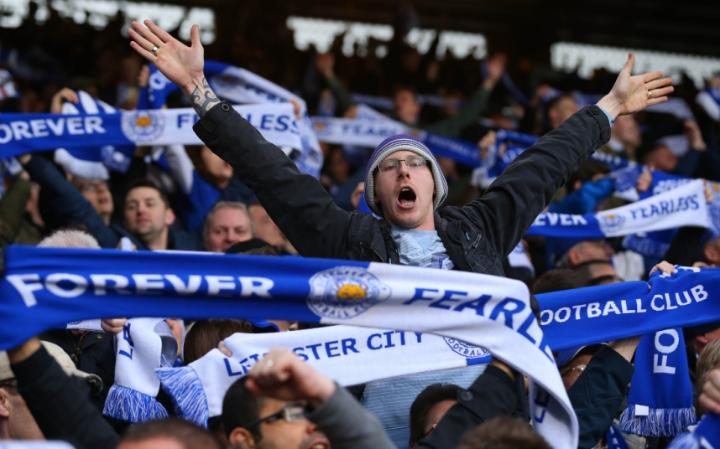
IF LEICESTER City find themselves in League One in the 2026-27 season, just 10 years after their phenomenal Premier League title win, it will bring to an end a remarkable cycle that still confounds the experts. It’s a popular belief that big clubs will never drop out of the top flight and Leicester, for a while became a “big” club by winning that title in 2016, reaching the last eight of the Champions League a year later and winning the FA Cup in 2021.
They have, of course, been in League One before, but that was before the club moved up a gear and enjoyed the benefits of a new kind of ownership. Leicester should not be languishing at the bottom end of the Championship, but sadly, they are there on merit. And let’s not forget that it was actually just seven years after winning the Premier under Claudio Ranieri that they were relegated from the top flight in 2023.
The commentators love this type of story, the dramatic slump of a former Premier League champion club. But there are usually underlying reasons behind a sudden, or even gradual, fall from grace.
The most sudden collapse has to be Manchester City’s case of “heroes to zeroes” that still takes some explaining. The club won the league title in 1936-37 with a team that included Irish inside forward Peter Doherty and English internationals Frank Swift, Eric Brook, Fred Tilson, Sam Barkas and Jack Bray. They ended the season with a 22-game unbeaten run to finish three points in front of Charlton Athletic. City’s first title-winners were, bizarrely, relegated in 1937-38 despite being the top scorers in the first division with 80 goals (three more than champions Arsenal). They ended the campaign one off the bottom of the table but were just 16 points worse off than the Gunners.
Everton experienced the mixed emotions of the “rise and fall” at the start of the 1930s. In 1928, they won the Football League championship scoring 102 goals in 42 games. Dixie Dean, their legendary centre forward, helped himself to 60. A year later Everton slumped to 18th, securing 38 points, just 14 less than league champions Sheffield Wednesday. Dean, who missed 13 league games, scored “only” 26 goals, which may explain why the team underperformed. In 1929-30, things got worse and Everton went down with Dean’s tally dropping to 23. Everton returned at the first attempt and were champions again in 1931-32 and FA Cup winners a year later.
Ipswich Town were not so fortunate after they stunned English football by winning the title in 1961-62. It was always unlikely that the Suffolk side would maintain their momentum, especially when Alf Ramsey left the club, and they had a workmanlike team that was moulded by their manager to suit his system. In 1963-64, with former Newcastle United centre forward Jackie Milburn in charge, they were relegated, conceding 121 goals. They had to endure some humiliating defeats, such as 10-1 at Fulham, 9-1 at Stoke City, 7-2 at home to Manchester United and 6-0 drubbings at Bolton Wanderers, Arsenal and Liverpool. Ipswich took four years to return, winning the second division in 1967-68.
Manchester United were shockingly relegated seven years after giving Matt Busby his last title in 1967 (six years after being crowned European Cup winners in 1968). United’s downward trajectory was attributable to a number of factors, notably its squad of ageing stars, the wayward behaviour of George Best and the poor succession planning after Busby’s retirement. Similarly, Aston Villa, after winning the league in 1981 and European Cup in 1982, found themselves in the old second division in 1987.
In the Premier League era, Blackburn Rovers suffered relegation in 1999, four seasons after Jack Walker had bankrolled his home town club and transformed them into champions. They could not maintain their momentum, although they returned to the Premier League in 2001 before another slump a decade later that saw them fall into League One in 2017.
Leicester’s own success coincided with the arrival of a Thai-led consortium called Asian Football Investments, owned by the King Power group’s Vichai Srivaddhanaprabha, who later died in a helicopter crash outside the club’s stadium. Under the King Power regime, Leicester were promoted to the Premier League in 2014 after an absence of 10 years, during which they also dropped as far as League One. Claudio Ranieri was appointed manager in 2015 and he presided over a team that had been built around a series of shrewd acquisitions in the transfer market, such as N’Golo Kanté from Caen for just £ 5.6 million, Riyah Mahrez from Le Havre for less than half a million pounds, Danny Simpson from Queens Park Rangers for £ 2 million and free transfers Marc Albrighton. Their leading scorer was Jamie Vardy, who had been signed from Fleetwood Town for £ 1 million in 2012.
Ranieri’s success was a major surprise but Leicester were worthy champions, winning the title by 10 points. They lost just three times, twice to Arsenal and once at Liverpool. Ranieri was, rather harshly, dismissed the following season as they struggled to live up to their triumph. But they enjoyed a successful run in the Champions League, finishing top of a group that included Club Brugge, Porto and FC Copenhagen. They beat Sevilla in the round of 16 before going out to Atlético Madrid in the quarter-finals.
At the same time, the club became adept at turning a profit on players, with Chelsea especially keen to pay top dollar for their talent. Kanté, Danny Drinkwater, Ben Chilwell, Wesley Fofana and Kiernan Dewsbury-Hall all moved to Stamford Bridge, earning Leicester £ 217 million. Manchester United picked up Harry Maguire for £ 80 million and Tottenham Hotspur paid £ 40 million for James Maddison. However, the big deals started to dry up, although in 2024, they still made a profit on player sales of almost £ 72 million. But Leicester’s income suffered from two relegations from the Premier League in 2023 and 2025, falling from £ 205 million in 2023 to £ 105 million in 2024. In the recently published accounts for the most recent relegation season, the club generated £ 186 million. Leicester also ran into a series of PSR (Profit & Sustainability Rules) problems and were penalised by a six-point deduction in February 2026 which has clearly contributed to their current predicament.
In 2024-25, Leicester made a pre-tax loss of £ 71 million, bringing their total losses over the past seven years to around £ 400 million. The club also suffered badly from the effects of the pandemic, but the root of the club’s problems seems to be the period after the title win in which they spent heavily in the transfer market. Much now depends on the owners, who have pumped in just under half a billion pounds. How long the owners will continue to provide that kind of support remains to be seen, but there are many Leicester fans who believe a change of ownership is long overdue.
Leicester have three games left in the Championship and even three wins may not save them. Their fixtures are not easy, either – two home games against sixth-placed Hull City and second-placed Millwall and a last day game against fellow strugglers Blackburn Rovers at Ewood Park. It may be all over before May 2.