
Since ‘The Anthony Backhouse Show’ on Saturday, the most prevalent emotion that I have felt is anger.
There would be an alternative timeline in the vast multiverse where we had beaten Ipswich on Saturday, stood seven points behind Hull City in the table and still had faint hopes of a play-off place to cling on to.
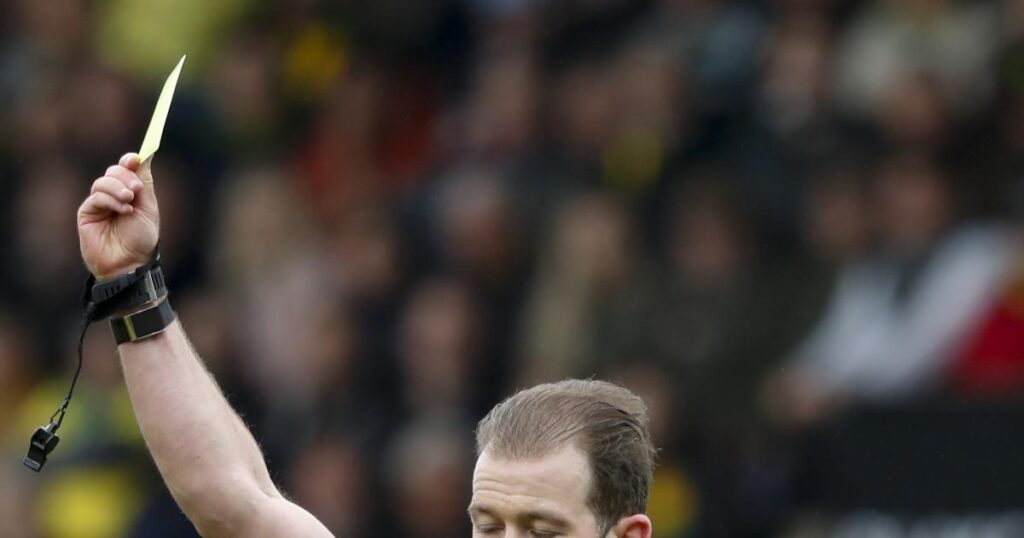
However, somewhere in the world, a butterfly flapped its wings and Anthony Backhouse was selected as the referee for the East Anglian derby. Make no mistake, he was the difference between Norwich City winning or losing this game. It was quite simply the most baffling refereeing performance that I have ever seen.
The penalty decision was ridiculous, anyone can see that. To add insult to injury, we were on the break, four against two, before the referee turned around, pointed at the spot and bemused thousands of people.
In addition to this, both Leif Davis and Marcelino Nunez should certainly have received second yellow cards and been given their marching orders. But neither of Nunez’s dangerous and petty tackles was deemed yellow-card worthy, whilst the rule of not kicking the ball away seemed not to apply to Davis on the day.
But the most ludicrous decision might have been appointing Backhouse to this game in the first place, considering that the club engaged in legal action against the FA following a four-match retrospective ban given to Kenny McLean just last year. The incident was in relation to Backhouse allegedly communicating to players that McLean made ‘minimal contact’ in a challenge on QPR midfielder Kieran Morgan. Backhouse later admitted that, actually, he did not see the incident, resulting in the FA being able to impose a retrospective punishment.
Angus Gunn was also fined due to an incident in the same game, where he had criticised Backhouse for not giving a foul on him during the build-up to QPR’s second goal. Given that history and context, you might think it wise of PGMOL (who are funded by the EFL and FA) not to appoint a referee with such historical controversy to a derby.
While the Backhouse debacle may feel like a personal vendetta against us, it is merely the latest chapter in a season defined by officiating inconsistency that has frequently tilted toward Ipswich, the club with by far the most penalties awarded this term. This “luck” isn’t just a bitter rival’s theory; it is a recurring theme of the current campaign.
From the dubious Lyndon Dykes handball that gifted them a point at Birmingham on the opening fixture, to Azor Matusiwa’s miraculous escape from a red card during the replayed fixture at Blackburn (which should never have been replayed, in my opinion), Ipswich have repeatedly been the primary beneficiaries of a Championship officiating standard in total freefall.
In order to move on, we must first focus on the fact that Ipswich may either transition from a fortuitous, arrogant side to Premier League whipping boys, or experience the disappointment of missing out on promotion altogether. Either is fine by me.
For Norwich City, however, the fallout from this derby should be viewed as a turning point.
Philippe Clement now finds himself in a position of rare freedom. With the pressure lifted, the remaining fixtures offer a perfect playground for the Belgian to experiment.
Whilst this becomes the third season out of the last four where the outcomes have come early and the promotion chase has ultimately fallen short, the underlying numbers tell a far more promising story. The transformation from a side facing certain doom in November to a top-10 outfit by April is a testament to the Clement Effect.
I’ll be entering this closing chapter of the season not with a sense of resignation, but with a calculated, hungry optimism, fully aware that the foundations laid in these final weeks are the very blocks upon which next year’s promotion chase will be built. OTBC!