

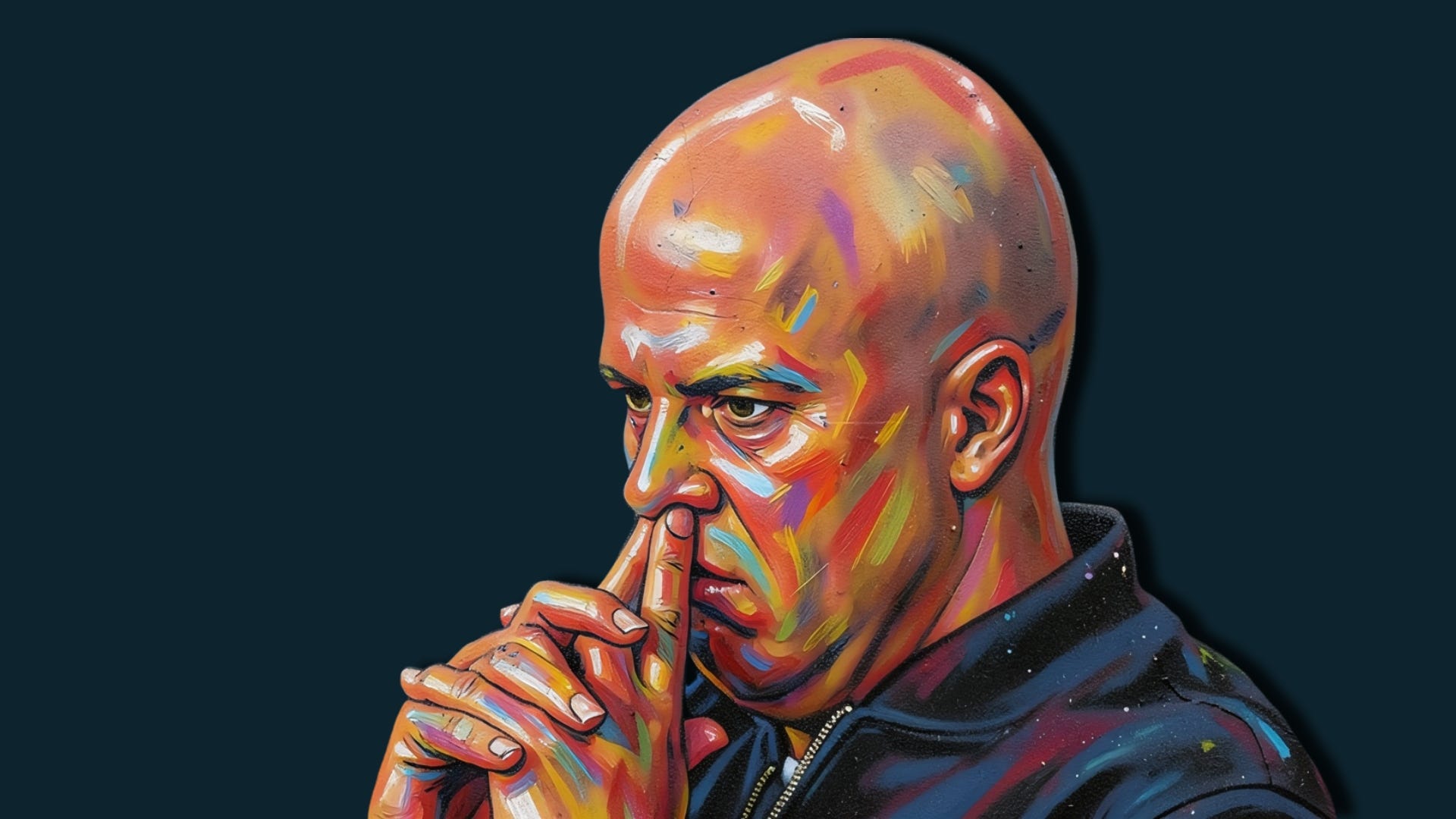
Watching Liverpool on Tuesday night was an exercise in trying to control my temper. Not because I was particularly bothered about whether the Anfield club succeeded in beating Paris Saint-Germain to reach the semi-finals of the Champions and how that seemed increasingly unlikely as the match unfolded, but more so because of Arne Slot’s tactics. Liverpool are just a complete mess.
As someone who covers the Bundesliga quite extensively, none of it made sense. Florian Wirtz continues to be a supportive figure to Liverpool’s main attacking threats, rather than occupying that role himself. Dominik Szoboszlai seems to be tasked with being the Swiss army knife in Slot’s system, whether that be as a No.8 or a right-back. And, despite the aforementioned playmaking No.10s at his disposal, Slot seems to prefer Ryan Gravenberch as the midfielder who makes late runs and tries to link up with the striker. The less said about Jeremie Frimpong being played as a traditional right-back and being asked to do some defending, the better.
None of it really made much sense. Which is, largely, how much of Liverpool’s season has gone. Slot may have been an excellent head coach last season, but he now seems to be a manager who is simply failing to find solutions to the problems that lay before him at Anfield. Where he did so well to continue the impressive form of the squad he inherited from Jürgen Klopp, he now looks at complete odds with the team he’s been given this season. And, without making too many excuses for the Dutchman, it certainly seems as though he had little say in who joined and left the club last summer but was nonetheless expected to fit all these square pegs into round holes.
Whether Slot survives to take another stab at it next season remains to be seen, but irrespective of which manager is in the Anfield dugout after the summer, it seems as though the club may have found itself in this mess by building a new squad without a huge amount of consideration for who their actual manager is. While Liverpool are by no means the only Premier League club to trip up in this regard, it’s a clear departure from the traditional style of English clubs building a squad in tandem with their manager’s input. And it clearly isn’t working.
What makes that so interesting is the fact that a number of England’s biggest clubs have faltered in recent years because they’ve made the same mistake. Manchester United may have humoured Erik Ten Hag with a few signings from the Eredivisie, but the club clearly put little thought into how Ruben Amorim was going to work his tactics around the squad he inherited. And Chelsea, who now look set to miss out on the Champions League next season, have shown absolutely no regard for buying players or building squads that align with their ideal head coach on the sideline.
However, none of these clubs have struggled with this issue more than Tottenham Hotspur. As this excellent ESPN article from Ryan O’Hanlon earlier this week revealed, the North London club are now facing the very real threat of relegation because they ignored some rather obvious metrics and statistics to instead build a squad of players that have “a combo of endurance, explosiveness and speed” but, ultimately, can’t pass well enough to actually dominate and win games.
Now, as a keen admirer of sports statistics and analytics, I doubt O’Hanlon would argue that what Tottenham really need is to ditch their scouting and recruitment department and bring in Harry Redknapp to fix things. Nor do I. But I struggle to believe that Spurs would be in this mess had they sought out greater input from Thomas Frank, Ange Postecoglou, Antonio Conte or Nuno Espírito Santo in the last four or five years, as they spent over €1 billion on new players. A manager needs to be part of the squad-planning process. Not a separate contractor tasked with making the most of what he’s handed.
Perhaps in an attempt to modernise an old manager-led system, Premier League clubs have gone a little too far in their streamlining of the scouting and recruitment process. Maybe a bit of friction along the way – such as a manager having a “feel” for certain players or relying on unfashionable talents to fill the cracks in his squad – isn’t actually a bad thing. And proof of that can most likely be found at the top of the Premier League table.
While Manchester City and Arsenal have undoubtedly spent unprecedented amounts of money by their own historic standards to get to where they are today, and each relies on the best scouting and recruitment teams in the business, both clubs are also entirely tethered to the managers who pick the teams each week. I don’t think Pep Guardiola or Mikel Arteta are out scouting players through the summer off-season or spend their evenings thumbing through WyScout reports, but I do think they have a significant influence over which players do and do not end up at their clubs. And, as such, their squads reflect their own coaching styles and tactics.
Maybe, as more and more Premier League clubs look to utilise the transfer window to scoop up young players to sell for profits and in return the league gets crammed full of the kind of cookie-cutter, template players that have led Spurs to disarray, smarter clubs will instead turn against the grain and return to a system that gives managers the freedom and authority to buy players based on what they perceived to be the strengths and weaknesses of their own squads. Nobody is expecting a return to Ferguson or Wenger-esque control of England’s biggest clubs. But perhaps too many clubs are overlooking the importance of managers at their own peril.