
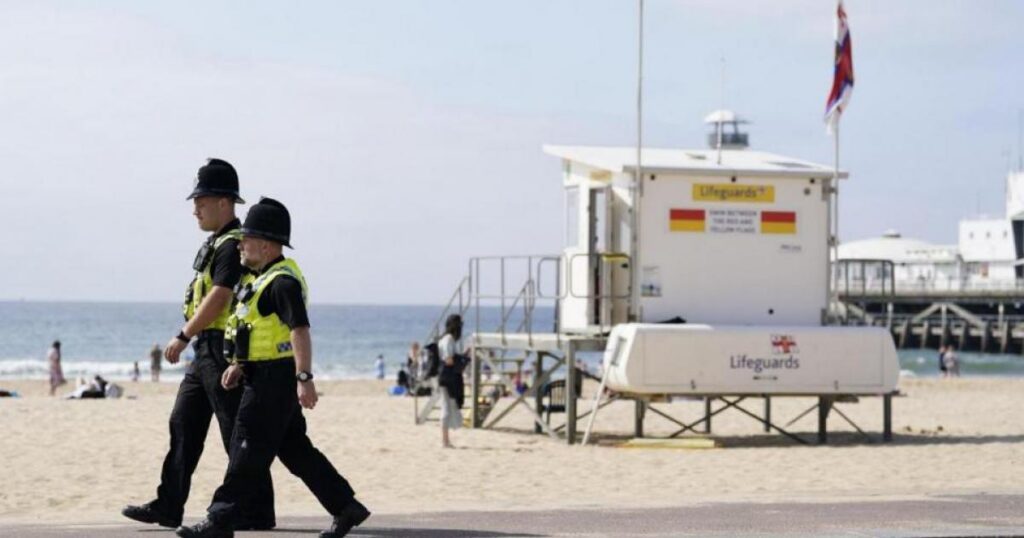
It comes as the government announces new guidance and training for councils to re-vamp streets to make them safer for women and girls.
Recent polling by YouGov found 73 per cent of females in the South West would be more likely to choose walking over other transport if routes were safer.
Poor lighting, personal safety fears and antisocial behaviour mean almost nine in 10 women nationally feel unsafe walking at night, according to polls.
While seven in 10 women say they have changed their route to avoid walking after dark.
MP for Bournemouth West, Jessica Toale, said she is “really pleased” the government is taking the issue more seriously.
Jessica Toale (Image: NQ)
She added that female residents have signalled lighting in the town centre as a key area that needs improving.
“Women’s safety is a shared responsibility, and this new guidance will ensure we all play a role,” she said.
BCP Council said it has already upgraded more than 200 bus shelters with CCTV since 2024, and plans are in place to improve key areas such as better lighting at Poole Bus Station.
Councillor Andy Hadley, BCP Council cabinet member with responsibility for highways maintenance and sustainable transport, said there are more than 2,000 CCTV cameras across BCP, including 135 in Bournemouth town centre.
“There is no place in our communities for violence against women and girls, and we are committed to making sure everyone feels safe on our streets and on public transport across Bournemouth, Christchurch and Poole,” he said.
Cllr Andy Hadley (Image: BCP Council)
Cllr Hadley added that the council’s work to provide safe and convenient travel has resulted in increased annual funding from the government.
The council said it has introduced Transport Safety officers to patrol buses and transport hubs to tackle anti-social behaviour.
Passengers can also report anti-social behaviour by texting ‘BCP’ to 81018.
Detective Superintendent Neil Wright, Dorset Police’s lead for violence against women and girls (VAWG), said the force is “committed” to the safety of women and girls, and are constantly looking at ways to improve.
He said through partnership with local agencies, safe spaces have been created as well as community guardianship schemes.
It has also resulted in more CCTV and enhanced visible policing presence around the night-time economy.
BCP Council CCTV control room (Image: Newsquest)
“Our aims is that all members of our communities feel safe, but if they do become victims of crime we want them to have the confidence to report to us in the knowledge that they will be fully supported and we will take robust action against the perpetrators,” said DS Wright.
Dorset Police and Crime Commissioner David Sidwick also emphasised the importance of partnership working.
“No single agency can address the scale or complexity of this issue alone,” he said.
David Sidwick, the Dorset Police and Crime Commissioner. (Image: David Sidwick PCC)
“Working together with Dorset Police and the local authorities in Dorset, we share intelligence, align priorities, and deliver a co-ordinated response that better protects victims and holds perpetrators to account.
“This collective approach ensures that prevention, early intervention, and support services are not only joined-up, but truly centred around the needs of women and girls in our communities.”
Mr Sidwick said he is ‘heartened’ that Active Travel have placed importance on ensuring the environment where females travel, feels and looks safe.
“Cutting back foliage, ensuring street lighting is working and designating safe routes may seem small, but makes a big difference and should be prioritised,” he said.
“Tackling VAWG is a key part of my Police and Crime Plan and involves working in lockstep with key agencies and expert commissioned services to ensure women and girls can feel safe in Dorset.”
Safer Streets funding was previously used for projects across Dorset including new CCTV, creation of the women’s safety charter Unity Promise, consent training in schools and universities and further funding for the Pineapple Project which installs ‘community guardians’ to support females.
“While enforcement is a key element in effectively tackling VAWG, there is tremendous value in education, early intervention and prevention, which is why I have been working and am willing to work with any group that wants to make Dorset a safer place for women and girls,” said Mr Sidwick.
“Their safety is and remains a key priority for all partners across the county and I will do all I can to ensure improvements continue.”