
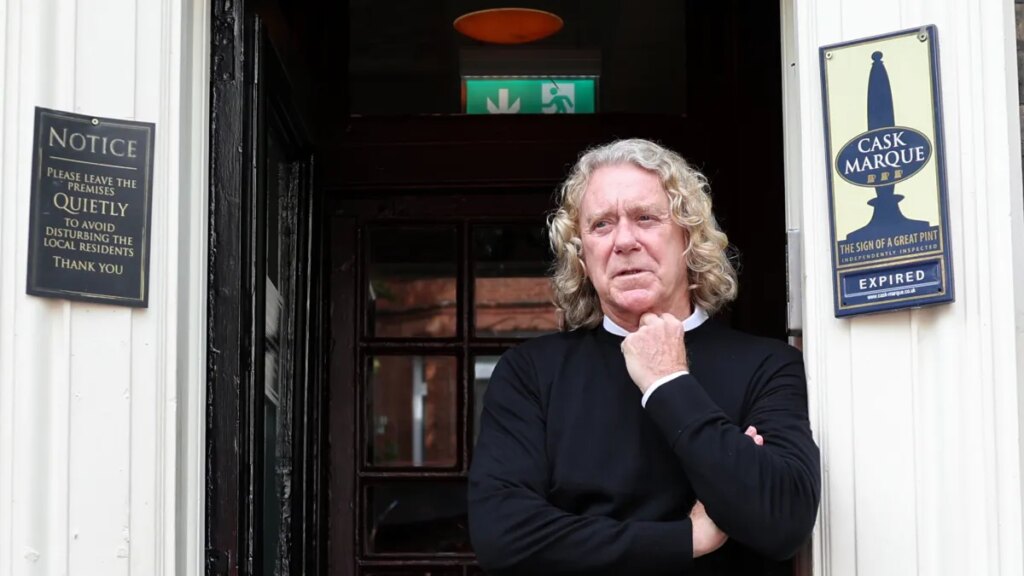
One of football’s great injustices will be rectified on Thursday evening when Tony Woodcock walks onto the pitch before the second leg of Nottingham Forest’s Europa League quarter-final against Porto.
After a long and frustrating wait lasting 46 years the former Forest striker will receive his European Cup winner’s medal and finally establish himself as a back-to-back winner of the competition in 1979 and 1980.
Woodcock treasured his medal from the first final after defeating Malmo in Munich but was denied his second in spite of playing four of the nine matches before Forest beat Hamburg in the 1980 final in Madrid. Heck, he even scored in the away leg against Osters, of Sweden, in the first round and the home leg against Romanians Arges Pitesti in the second round.
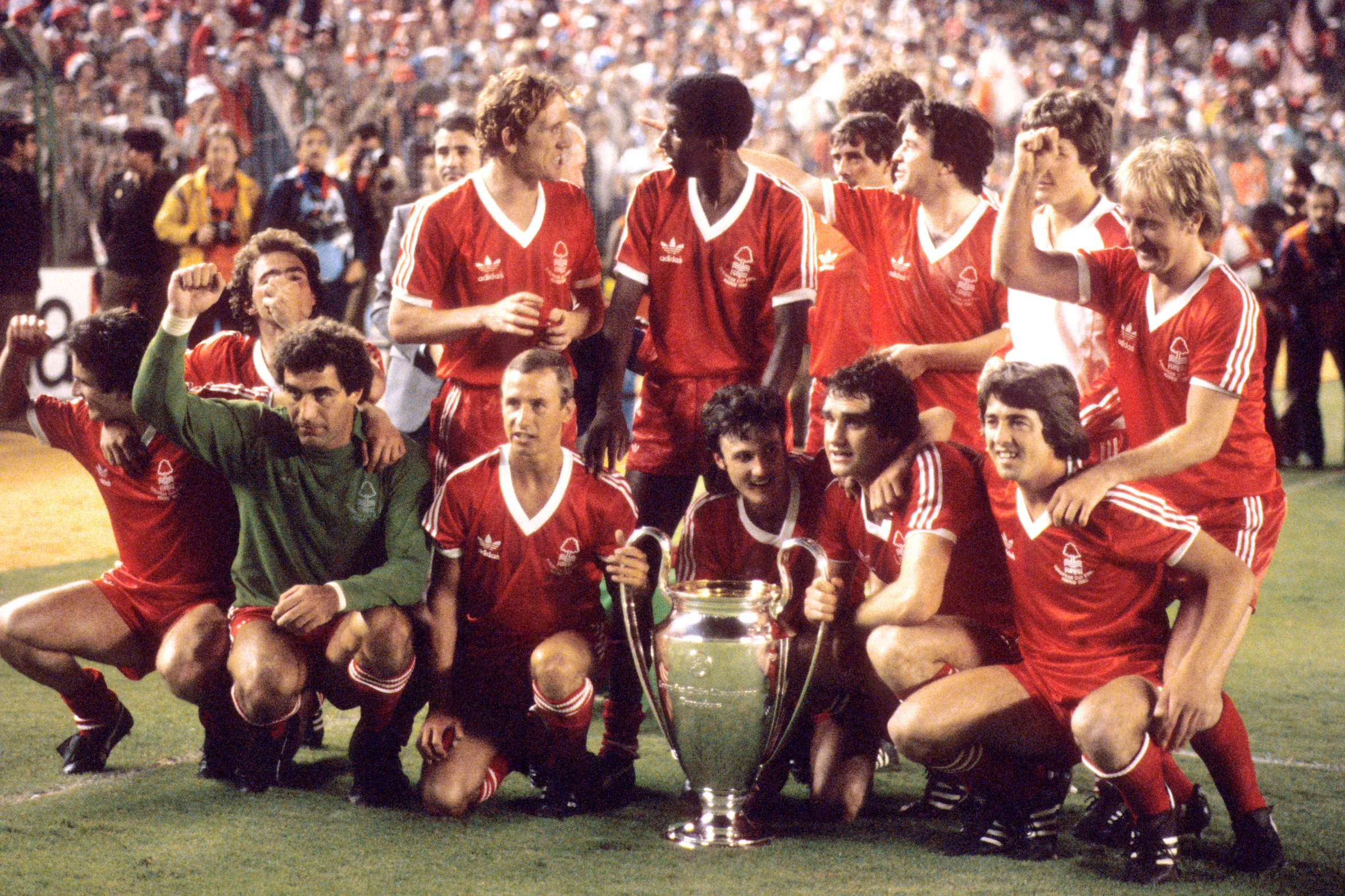 The Forest team, without Woodcock, celebrate retaining the European Cup in MadridPeter Robinson/EMPICS SPORT/PA
There were plenty of clues that being honoured would not come easy. It all began when Nottingham-born Woodcock was at Heathrow after a pre-season friendly and a porter placed a piece of paper in his jacket pocket and told him to call the number, which belonged to a Belgian football agent, that evening. So began Woodcock’s desire to play abroad. Not that Brian Clough, his manager, was keen on the idea. But Woodcock’s contract was up for renewal and when Clough said Woodcock was asking for too much money, that made it easier for the centre forward to begin negotiations with Cologne.
Clough was livid and refused to acknowledge a deal was imminent even when the club’s representatives turned up at the City Ground to negotiate the fine print.
“The general manager and the president of Cologne travelled to Nottingham and they wouldn’t let them into the ground,” Woodcock tells me at his home in Hampstead. “They had to sit in the car park outside. So I go out to the car park, I said I’m really sorry about this and they went back to Germany.”
It did not deter the Bundesliga club and Woodcock agreed terms only for Clough to try to convince him to stay when it was too late. Still, the two clubs played a friendly as part of the deal and Woodcock left in November 1980 having played in four games of Forest’s defence of the European Cup. Not that there was much gratitude.
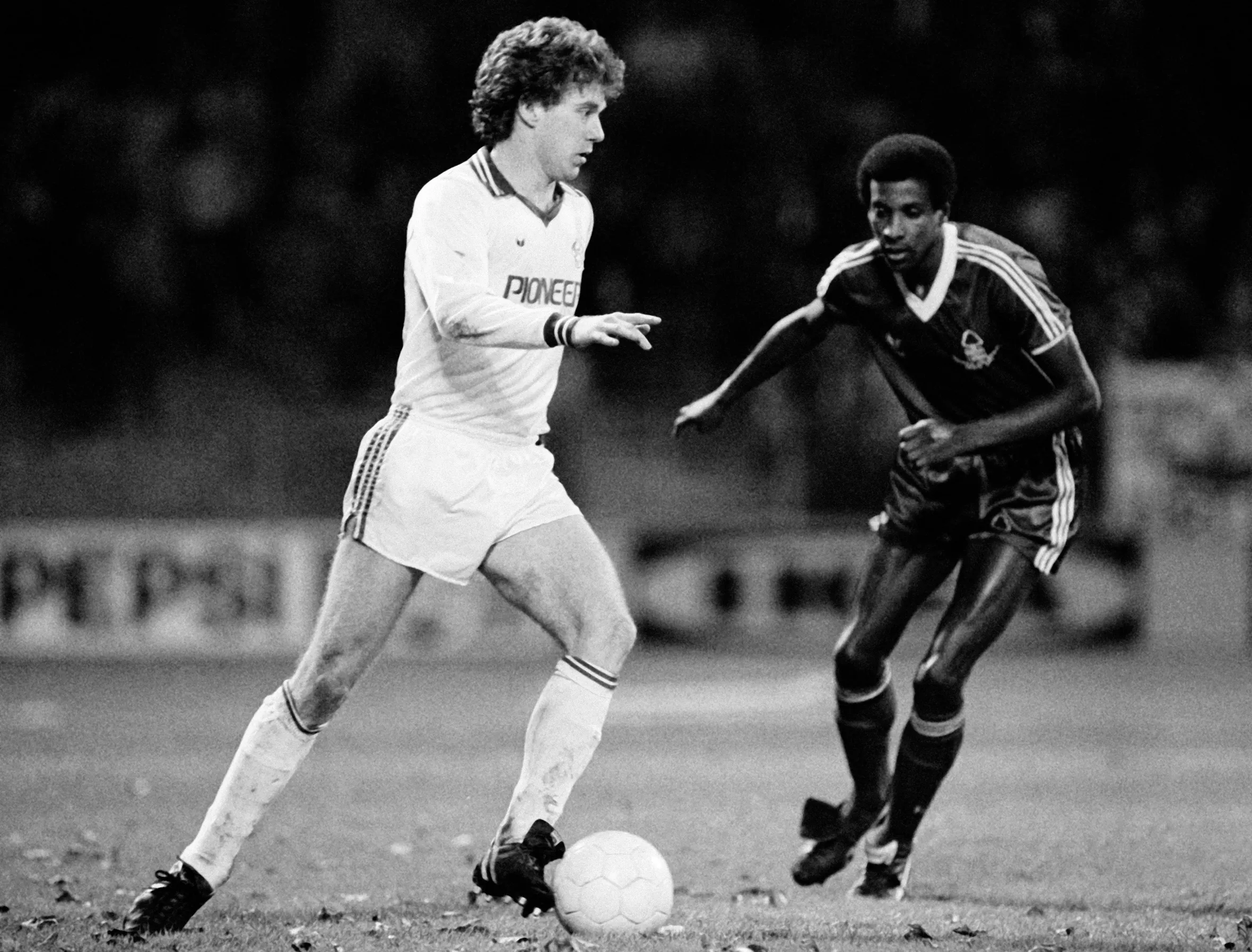 Woodcock, left, takes on Viv Anderson and Forest in a friendly at the Müngersdorfer Stadium in Cologne in December 1979Bob Thomas Sports Photography/Getty
Peter Taylor, Clough’s assistant, had to be at Heathrow as Woodcock left the country so he could sign some papers at an airport hotel. There was no handshake, no hug, no thanks for being part of the club’s incredible history.
“After the papers were signed,” Woodcock recalls, “Taylor looked at me and said, well, ‘You can f*** off now.’
“I was a local boy, who brought some money to the club, I had to fight my way to get in the team. They weren’t very happy that I’d gone. [It was a] ‘you don’t do this to us, we’ll show you,’ sort of thing.”
Too late in the day Clough realised that if Woodcock was to leave there would be a bigger transfer fee if an English club — and Manchester United were interested — bought him. So Clough felt Woodcock was short-changing Forest even though his sale generated pure profit.
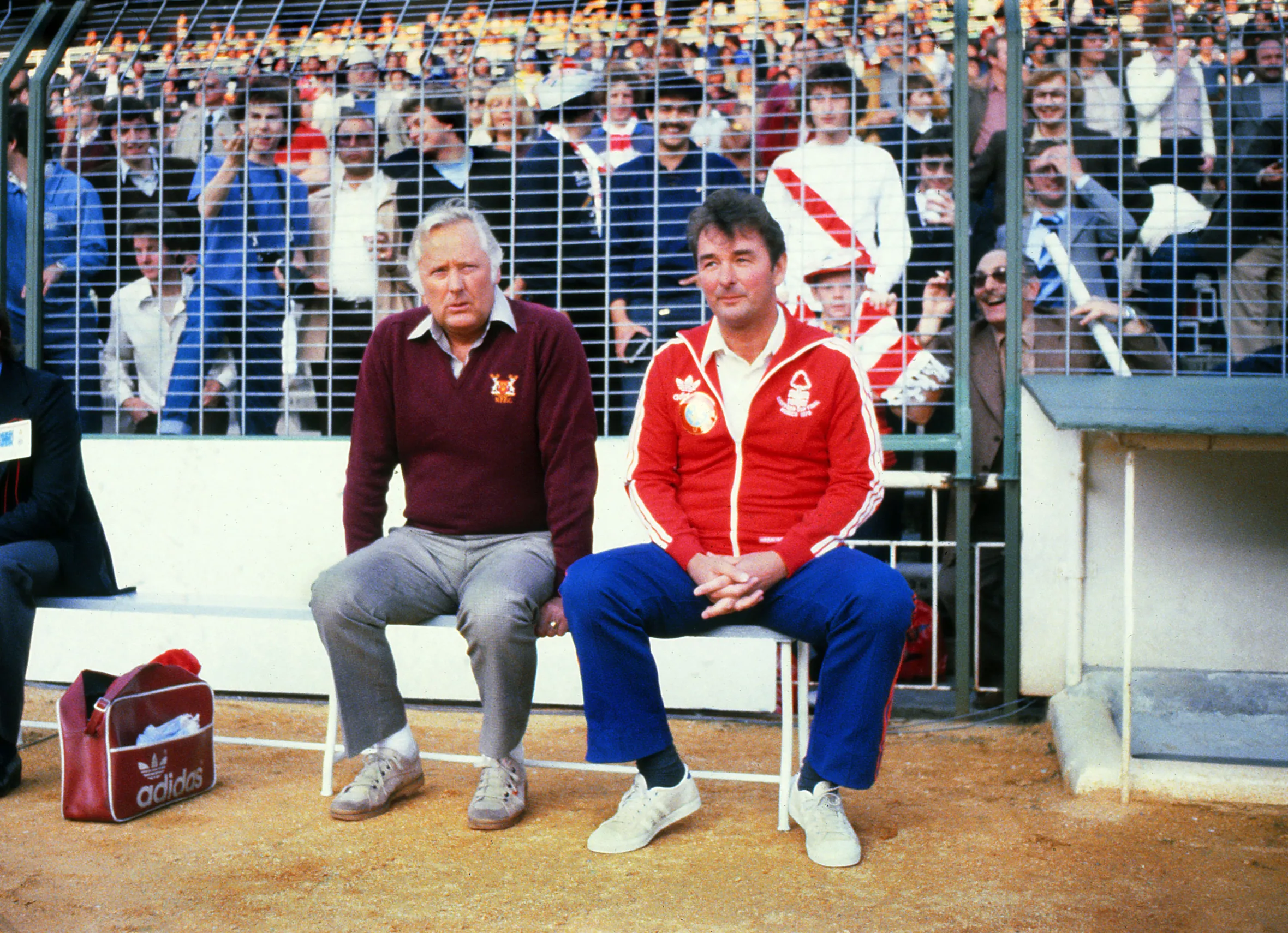 Clough, right, and Taylor, watching on at the 1980 final at the Bernabéu, were not happy to lose Woodcock and weren’t afraid to make that clearShutterstock Editorial
So incensed was Clough that he denied Woodcock a send-off from the fans in his final game at the City Ground.
“He pulls me off at half-time and says, ‘I don’t want you being celebrated here, get off.’ I’m a local boy, born and bred on the outskirts of Nottingham, who didn’t cost them anything, who is moving abroad, and they didn’t like it.”
Having successfully integrated at Cologne after a £600,000 German record transfer, Woodcock watched from afar as Forest reached their second successive European Cup final. Perhaps he should not have been surprised but, even as a player who had helped them to the summit, he was not invited to the match.
After Forest’s win Woodcock’s agent tried calling the club to find out when he would receive his winner’s medal but Clough, quite simply, would not cooperate. “He wouldn’t answer any telephone calls, wouldn’t answer any letters, wouldn’t do anything. And so now I’ve just got to carry on playing football.”
That it might be tricky getting him to do the right thing should, again, not have been a shock because after the 1979 ceremony Clough had asked the players to hand over their medals to him.
“We said, ‘We’re hanging on to them. No, we’ve won these, we’ve got these.’”
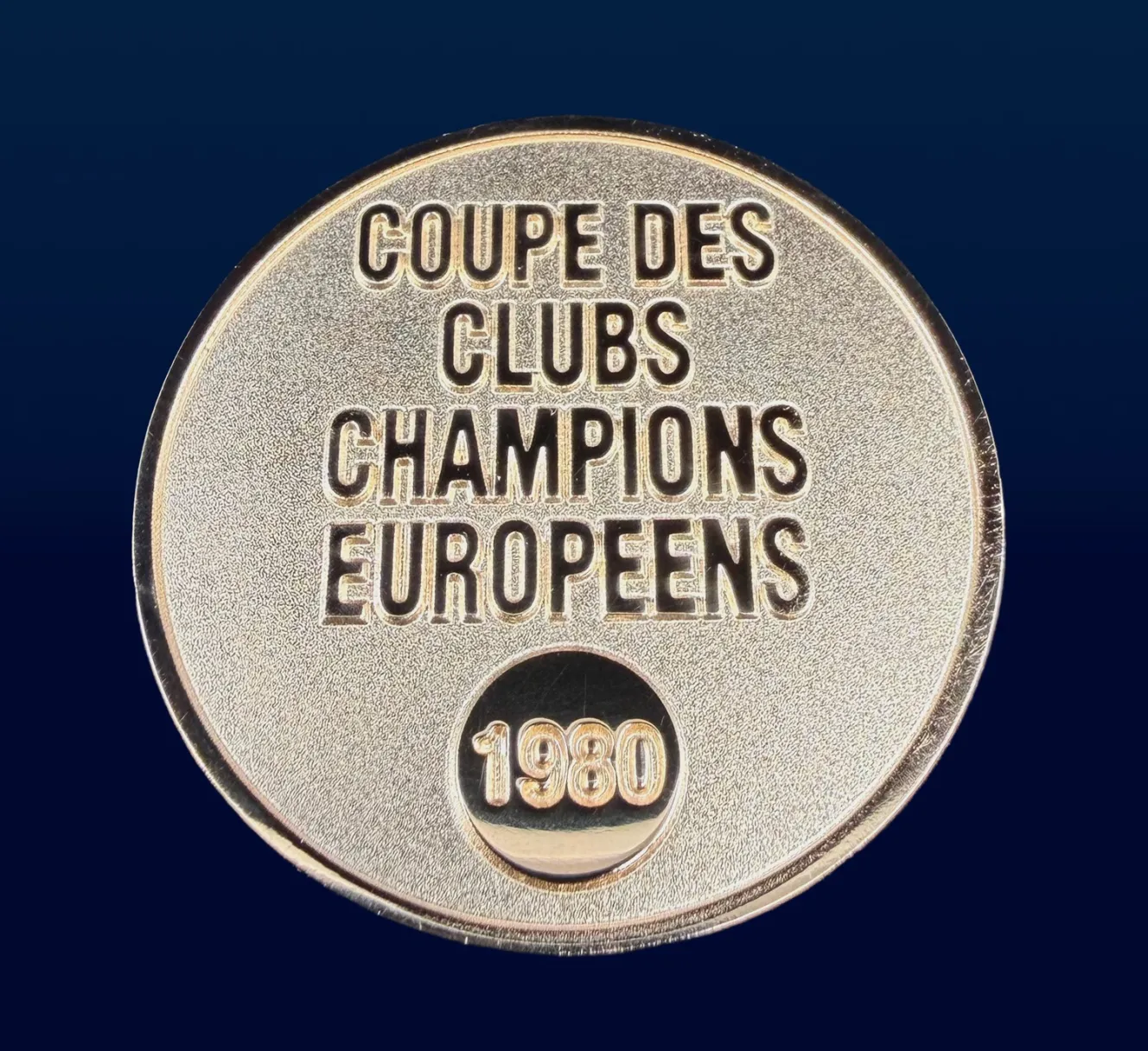 A replica of the medal given to the 1980 winners has been produced for Woodcock — the company used O’Neill’s to make a mould
Gradually over the intervening years Woodcock realised he did not want to be airbrushed from history, to not be part of the Forest fairytale.
“I had given up on it in the early days because we thought nothing’s going to happen. But then suddenly you get older and wiser and think, good God, you had a big part to play in that and you deserve it, because of the games I played. So I thought I’ll get back on to it. I don’t like them saying he’s not a European Cup winner.”
It has been an 18-month process, held up by costs and insurance and finding a player keen to lend his 1980 medal to provide a mould so that a new one could be forged. Martin O’Neill stepped up to the plate and Uefa used a Swiss company to create a replica. Debbie Hewitt, the chairwoman of the FA, suggested that Woodcock be presented with his medal at Wembley before an England game.
But it made more sense to him to receive it in front of the Forest fans and so he recruited the help of Jonny Owen, who made the documentary I Believe in Miracles about the two European Cup triumphs, to smooth the path to Thursday’s ceremony. It helped enormously that owner Evangelos Marinakis bought the club partly because of a fascination with its “Miracle Men” history.
Always unpredictable, when Woodcock returned to England to play for Arsenal, Clough sought him out to kiss him, but it would have been a lot simpler and much more respectful had he brought his former striker’s medal along too.
There is one final twist to the whole saga. Woodcock’s medal was shipped via Eindhoven to the East Midlands but went missing. Fortunately, Awardness, the Swiss company who made the replica, has told him not to panic and that they can forge another in time for Thursday’s presentation.