
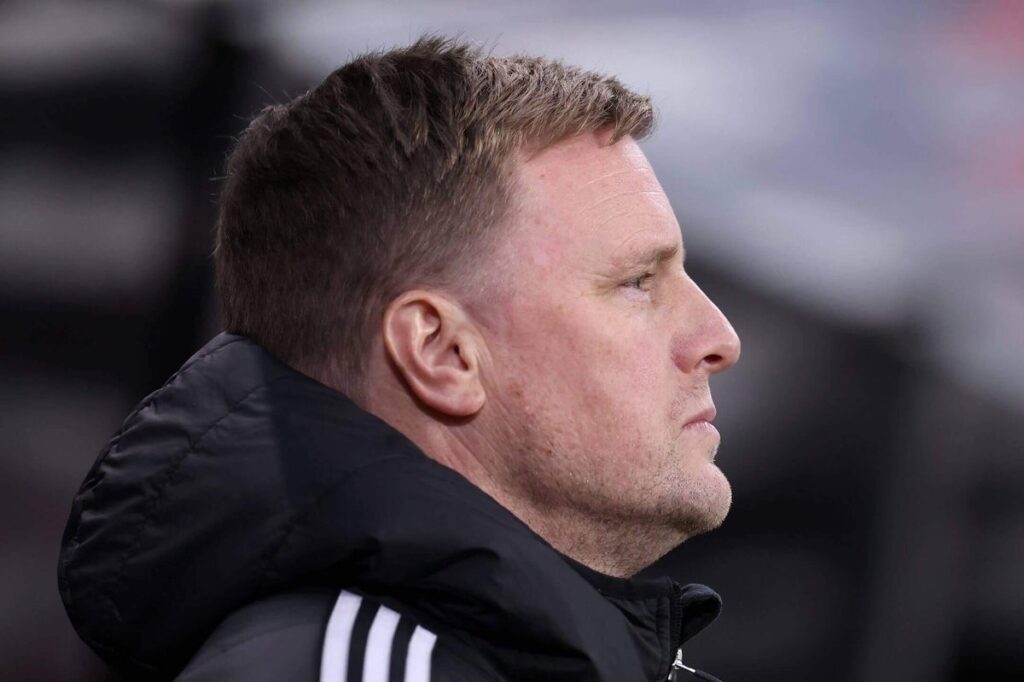
In the spring of 2019, Eddie Howe found it difficult to drive to work.
It wasn’t injury, it wasn’t mechanical trouble and it certainly wasn’t traffic because his home was only a couple of miles away from Bournemouth’s training ground. Yet, as he stood in front of his car each morning, keys in hand, there was a flicker of hesitation. He no longer felt a pull toward the club he had rebuilt from top to bottom and lifted through the divisions. In its place was a nudge in the opposite direction.
Without it being a conscious, fully-fledged notion, Howe’s brain and body were sending him a message: time to go. It was the first time he had faced this during his second managerial stint at Bournemouth, where he had also spent the majority of his playing career. But as the days ticked by, those inklings solidified. After four years in the Premier League, an ageing team was beginning to creak. Bigger than that: what more could he do there?
When Howe informed Bournemouth of his thinking, he was met with shock. He was asked to give them one more year and then see how things stood. Wracked by guilt over Lloyd Kelly, the centre-half he had just signed from Bristol City, Howe relented. He was all-in again, notwithstanding his nagging premonition. But at the end of the following season, Bournemouth were relegated and, a little later, Howe was gone. There could be only a tinge of regret.
This is a story Howe has told frequently, to family, friends and colleagues. From conversations The Athletic has had with those around the club and people close to the head coach – who in all cases, unless otherwise noted, asked to be kept anonymous to protect relationships – the way he explains it is that Bournemouth taught him a lot, right up to the end. As a man and a head coach, he is highly analytical, someone who attempts to separate himself from the emotion of matches, to rise above the forces of illogic that can sway decision-making. In his line of work — particularly at an emotional, unwieldy club such as Newcastle United — this is not always easy.
On the face of it, there are some similarities between Bournemouth seven years ago and Newcastle now. Until last summer’s late and desperate splurge, Howe’s pool of starting players was getting older and had in effect been left untouched for consecutive transfer windows. Howe has been in position since November 2021, saved the team from almost certain demotion, has twice led them into the Champions League and helped end their 70-year wait for domestic silverware.
But now, the club are hemmed in by financial restrictions, the team are 12th in the Premier League and there is an element of grumpiness creeping into the fanbase. This came to the fore after Newcastle’s previous match – a dismal 2-1 home defeat to Sunderland, their local rivals. It would be understandable if Howe was again questioning what more there was to be done at St James’ Park. Or, to put it in historical terms, if he was standing on his driveway each morning, holding his car key, and pausing for a second.
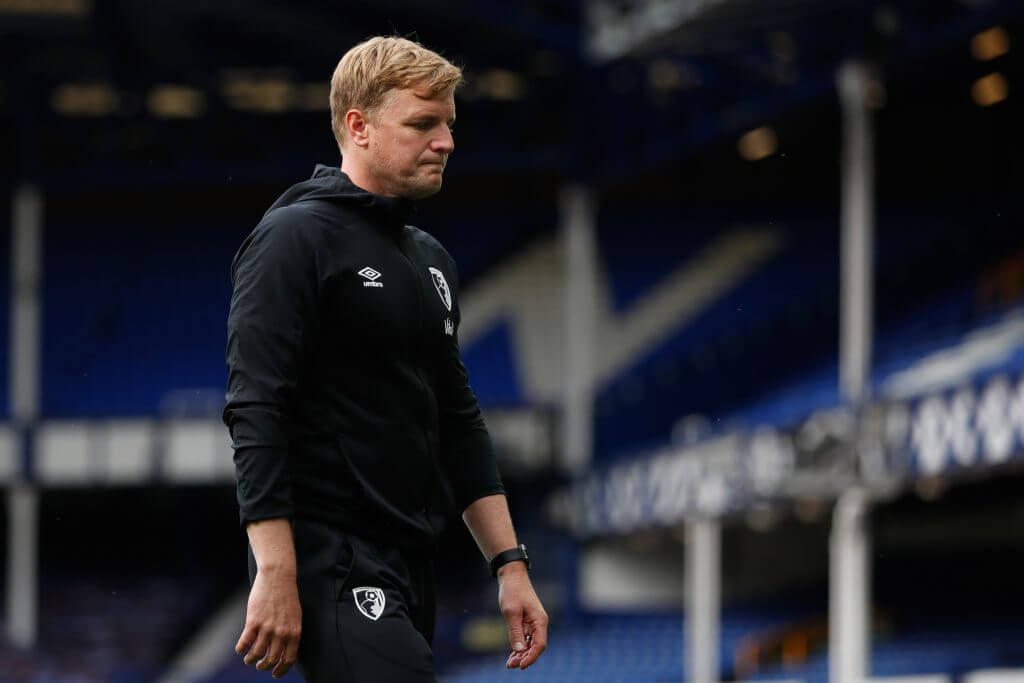
Howe during his final season at Bournemouth (Clive Brunskill/POOL/AFP via Getty Images)
According to multiple figures at Newcastle, this is not the case. A confessed “recluse”, Howe has kept himself out of the spotlight since that Sunderland game, focusing on work and divorcing himself from the noise on Tyneside and thereby avoiding hasty conclusions. If anything, they have found Howe to be more determined and resolute during the international break, not less.
Yet the next few weeks still feel like a moment for Howe, his team and this version of the Newcastle project. At the tail end of an epic, draining season, there are seven games left, all in the Premier League, with no other distractions. Can they finish strong? Is qualifying for Europe still within reach? Can they build some momentum and construct a launchpad for the summer, which looks set to bring a squad reset as well as considerable interest in their leading players?
These issues are hiding in plain sight, because Howe discussed them publicly a couple of months ago, the last time Newcastle’s form dipped markedly. “I’ve got to feel the players are playing for me,” he told reporters. And: “That’s the key question I’ve always got to ask myself: Am I the right person to take the team and the club forward?” At Crystal Palace on Sunday, answers will begin to take shape.
People with knowledge of Newcastle’s position say their starting point is that Howe will be their head coach next season. This is worth emphasising, given the fallout from the Sunderland game — when some fans jeered and gesticulated at staff and players on their dejected lap of appreciation afterwards — and the lack of clarity provided by David Hopkinson, the chief executive, when he was asked about Howe’s position during a recent press briefing about Newcastle’s financial results.
“I don’t have a stance on his future,” Hopkinson said. When it was put to him that Howe’s role might be assessed in the summer, he replied: “I would not frame it that way. We are not looking to make a change at the moment.” This hardly felt definitive, while Hopkinson’s remark that Newcastle “are focused on the seven matches we have remaining” prompted headlines that Howe was effectively fighting for his job, something the club pushed back strongly on.
People with knowledge of the matter have told The Athletic that Hopkinson spoke to Howe in the immediate aftermath of the briefing to explain what he said and meant, which was to avoid the kind of public vote of confidence that often pre-empts a managerial change and that Howe didn’t need that kind of endorsement. Howe has accepted that and moved on; he has a sound relationship with Hopkinson and Ross Wilson, the sporting director.
It is these relationships that Newcastle see as an opportunity, certainly compared with legacy “Big Six” clubs such as Tottenham Hotspur, Manchester United, Chelsea or Liverpool who are confronting or have recently gone through upheaval in the dugout and, to a greater or lesser extent, suffered because of it.
At a live event with Pod on the Tyne, the independent Newcastle podcast, in January, Hopkinson said: “We look really good relative to some of our rivals who are fighting each other within their own houses and blowing up publicly. You don’t always notice when something’s quiet. Right now, we’re really quiet, and that, to me, is a huge competitive advantage, that we’re steady.” He talked about him, Wilson and Howe being a “wonderful hydra”.
Right now, Newcastle feels a bit less quiet, but the intent remains the same; “alignment” is a word that Hopkinson has used a lot since his appointment in September.
This is not to say that Howe has a free pass from the club, or that everything is sweetness and light. Hopkinson’s stated ambition that Newcastle should be “in the debate about being the top club in the world” by 2030, as he has told reporters, is an attempt to make every department strain for success because “if it’s not time-bound, it’s fantasy”. Yet there is also an argument that it piles pressure on the one part of the club that has consistently delivered post-takeover.
After last summer’s traumatic sale of Alexander Isak to Liverpool, Newcastle were weakened. The upcoming transfer window also threatens to be fraught, with players such as Sandro Tonali, Anthony Gordon and Tino Livramento all being monitored by big clubs, who can offer far higher salaries. Getting better while selling key assets, should this happen, would not be a straightforward proposition.
If this is a challenge Howe is willing to run with — and there has been no indication otherwise — then he remains Newcastle’s “man”, as a more effusive Hopkinson described him in a February radio interview. Yet there is also a recognition among sources around Newcastle that credit in the bank, something Howe had a surfeit of a year ago, has been chipped away by Newcastle’s struggle in the Premier League, two damaging losses to Sunderland and so on. It is self-evident.
Here, context is important; it is not Howe’s fault Isak left, nor that there was no sporting director or chief executive in place at the time to manage the Sweden international’s £125million sale more effectively. Europe is still new, and injuries have hampered the team. On the other hand, football is unforgiving, and Newcastle are now a club where winning is expected, and for all the mitigation, it falls on Howe to get a tune out of his team, transitional or not. Losing matches spreads disquiet and becomes unsustainable. Lose the dressing-room, and it is game over. This is true everywhere.
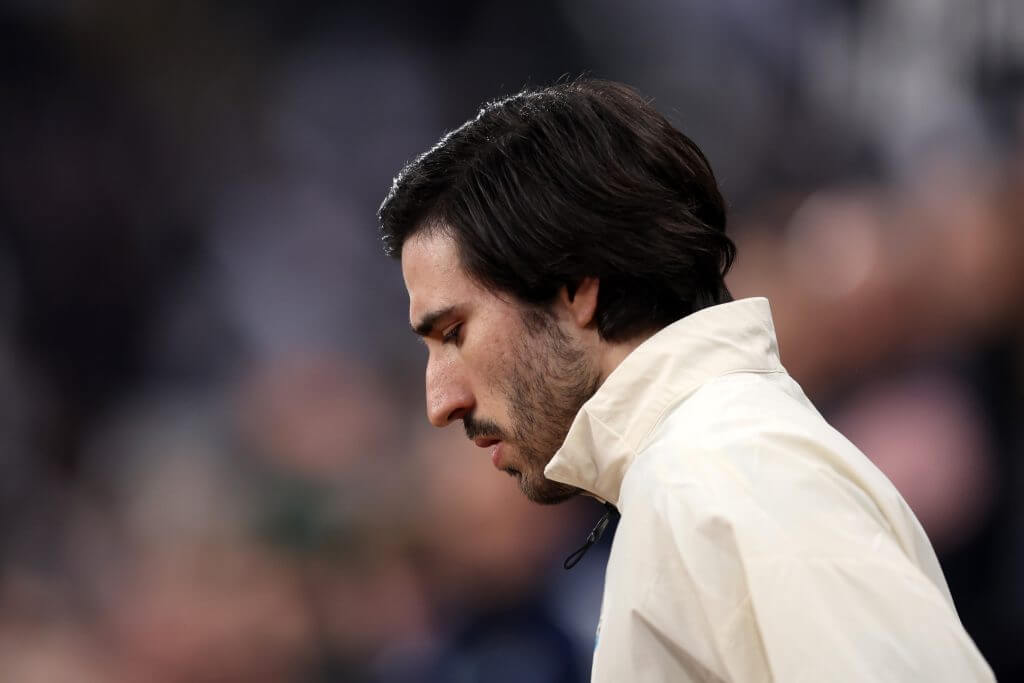
Sandro Tonali will be of interest to clubs in the summer (George Wood/Getty Images)
To rephrase all this, Howe has some work to do to reach the starting point of next season, which is where Newcastle’s run-in becomes important. Until February, the team were competing on four fronts — they reached the semi-final of the Carabao Cup and qualified for the Champions League’s round of 16 for the first time — but four is now one, allowing Howe proper time on the training pitch with a full(ish) squad of players, a luxury he has not enjoyed since late August. It needs to count.
It reads like a contradiction, but reaching the start means ending with conviction.
In July 2024, there was a spasm of uncertainty about Howe’s position. At Newcastle’s pre-season training camp at the Adidas headquarters in Herzogenaurach, Germany, he sat down with journalists to discuss a chaotic summer that had seen the club sell Elliot Anderson and Yankuba Minteh to balance the books, brought the departure of Amanda Staveley, a close ally, as co-owner and the arrival of the brusque Paul Mitchell as sporting director.
The interview coincided with a vacancy for the England job and many of the questions were framed around it. Yet for Howe it was an irrelevance. “As long as I am happy, feel supported, feel free to work in the way I want to work, I have not thought of anything else other than Newcastle,” he said. “I absolutely love the club. I love the supporters. I love where I am at in my career. There is no better place for me to be.”
In essence, Howe’s views have not altered. Newcastle have been at their best since their Saudi-led takeover in 2021 when the team has played like their crowd sounds, with ferocity at velocity, when players and coaches and fans have melded together. Churn in executive positions has not helped anybody, but when the basics have been right, when pitch and stands have been unified, they have been a formidable prospect.
Sources close to Howe say he is adamant he remains in a good place with his players, even if Sunderland and Barcelona — they went out of the Champions League after losing 8-3 on aggregate to the Spanish club — and the league table offer a different narrative. He might have lost some fans, but his name is routinely sung at matches, and while these things can never be definitive, it does not feel like a tipping point has been reached for the manager who changed everything at Newcastle. Win again, and the noise dies away.
When Howe finally left Bournemouth by mutual consent, he said in a statement: “I have always ensured that every decision I have ever made as manager has been in the best interests of the club and its supporters, and this is no different.” Those words might sound standard or glib, but it is something he passionately believes. He wants to make a positive difference, to give everything and be given back.
The last lesson he learned at Bournemouth was that when that equation changes, it is time to go.