
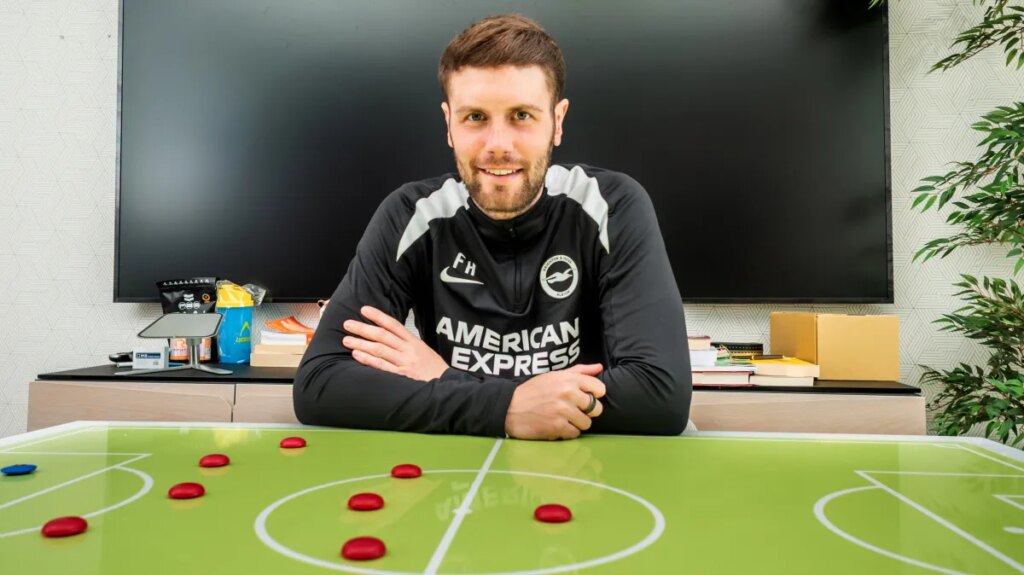
Some managers sink when results are poor. They cling to their strict philosophies and hope the board sees strength in adversity. But slowly the faith ebbs and they are gone.
And then there is the manager who suffers a run of one win in 13, who is booed by his own supporters, but conjures a spectacular U-turn of four wins from five in the Premier League and enjoys the best relationship with the fan base of his tenure.
Perhaps oddly, the shift in mood at Brighton & Hove Albion came with a game lost, against Arsenal, in early March. Pre-match, Fabian Hürzeler had spoken of how Mikel Arteta’s team waste time and the fans hung on his every word, jeering each time Declan Rice took a long leisurely walk to tee up a set piece.
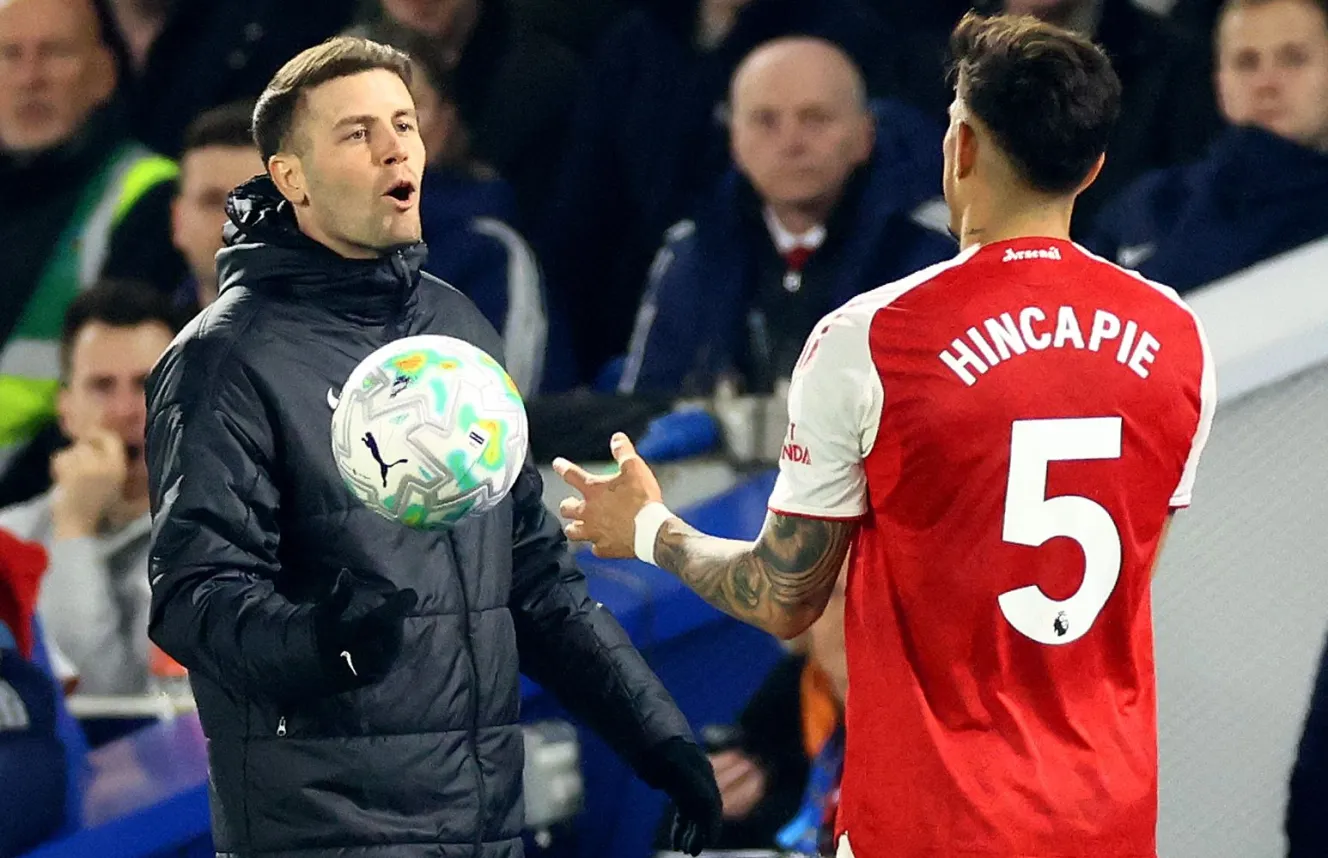 Hürzeler rallied Brighton supporters when he accused Arsenal of time-wasting before the sides met in MarchShutterstock Editoria
Suddenly the same fans who had shown their displeasure towards the German in the defeat by Crystal Palace a month previously were as one with their manager. It felt significant.
“I 100 per cent agree,” Hürzeler says. “After the Arsenal game I went home and I was thinking about this, because I really felt a connection.
“I compare it a little bit with maybe a relationship towards a girlfriend, wife, husband, friendship. I always have the feeling when we have an argument, a fight about something, something didn’t go the right way, and then you are able to speak to each other in a quite honest way and can share your emotions, afterwards there’s a feeling of being more connected.
“The fans were quite open with sharing their emotions, with being not happy with what I was producing for them, and that’s their right to do, but then afterwards we kept trying to push for each other, and then something was built.
“Although we lost and I’m a really bad loser, you could feel it, but I went home and said there was something between the team, me and the supporters, and there was an energy in the stadium I never felt before, there was an atmosphere I never felt before.”
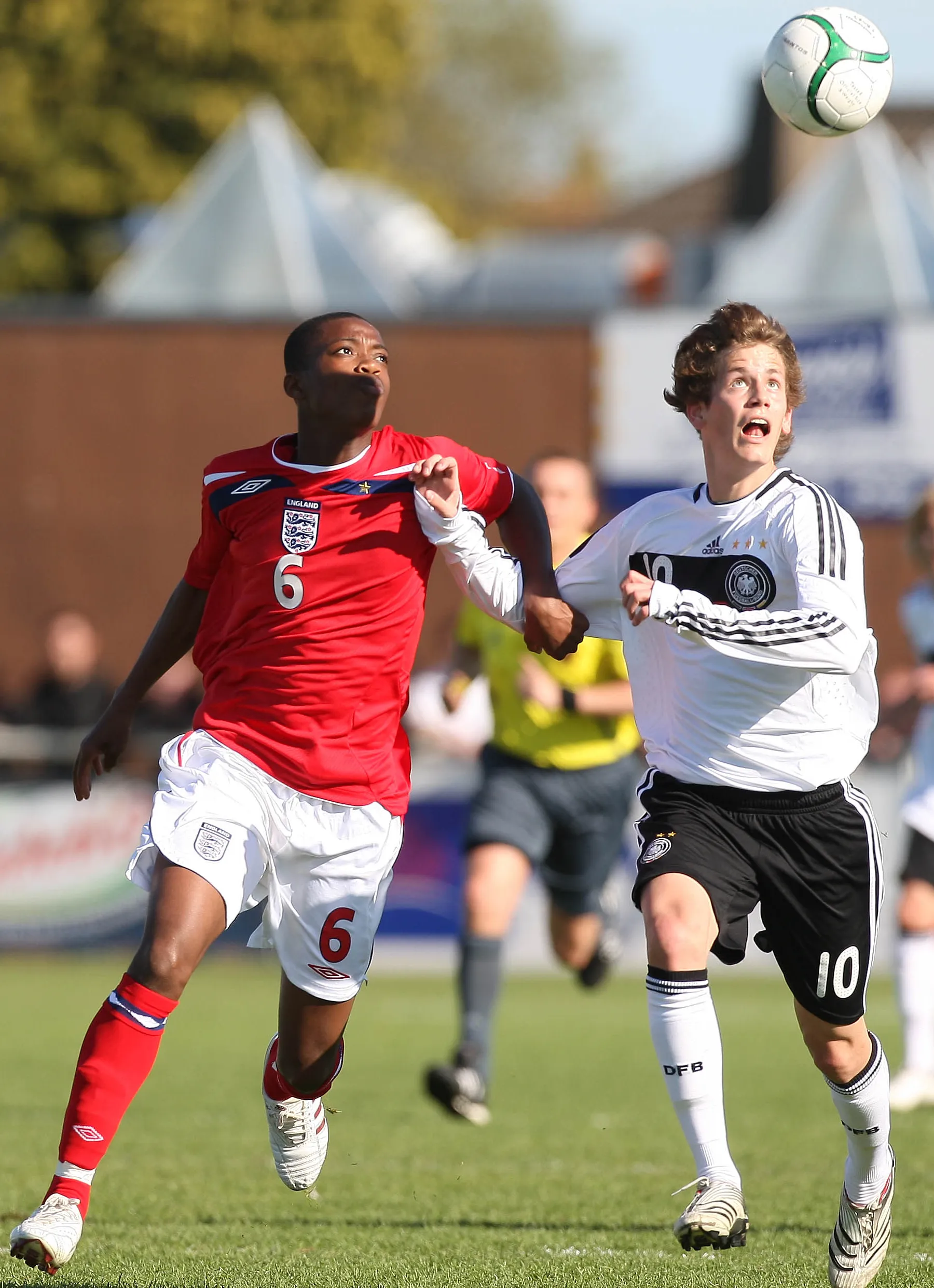 Hürzeler, pictured challenging Nathaniel Chalobah in an under-16 international, spent most of his playing days in Germany’s lower tiersPierre Minier/Getty
This was consolidated when Brighton won against Sunderland at the Stadium of Light and then, in the last game before the international break, he celebrated with the fans at the final whistle after defeating Liverpool. The key to turning results around is, for Hürzeler, to emanate positivity.
“The first 24 hours after the game are terrible for me,” he says. “I’m struggling when we lose. I think, what did I do wrong? How could I prepare the team better? Were my subs right? Was the tactic right? You think about everything.
“But then, after 24 hours, I try to move forwards. But for me it’s always clear, when I’m in front of the group, when I’m seeing a player, when I see a staff member, then I need to make sure that I bring an energy towards them.”
It helps that this is a view shared by Tony Bloom, Brighton’s chairman, and Paul Barber, the chief executive.
“They are role models regarding how to behave after a run of defeats, but also how to behave when you have six wins in a row,” Hürzeler says. “Paul would never call me and say, ‘Oh brilliant job, it’s unbelievable, we are flying,’ he will always be very rational.”
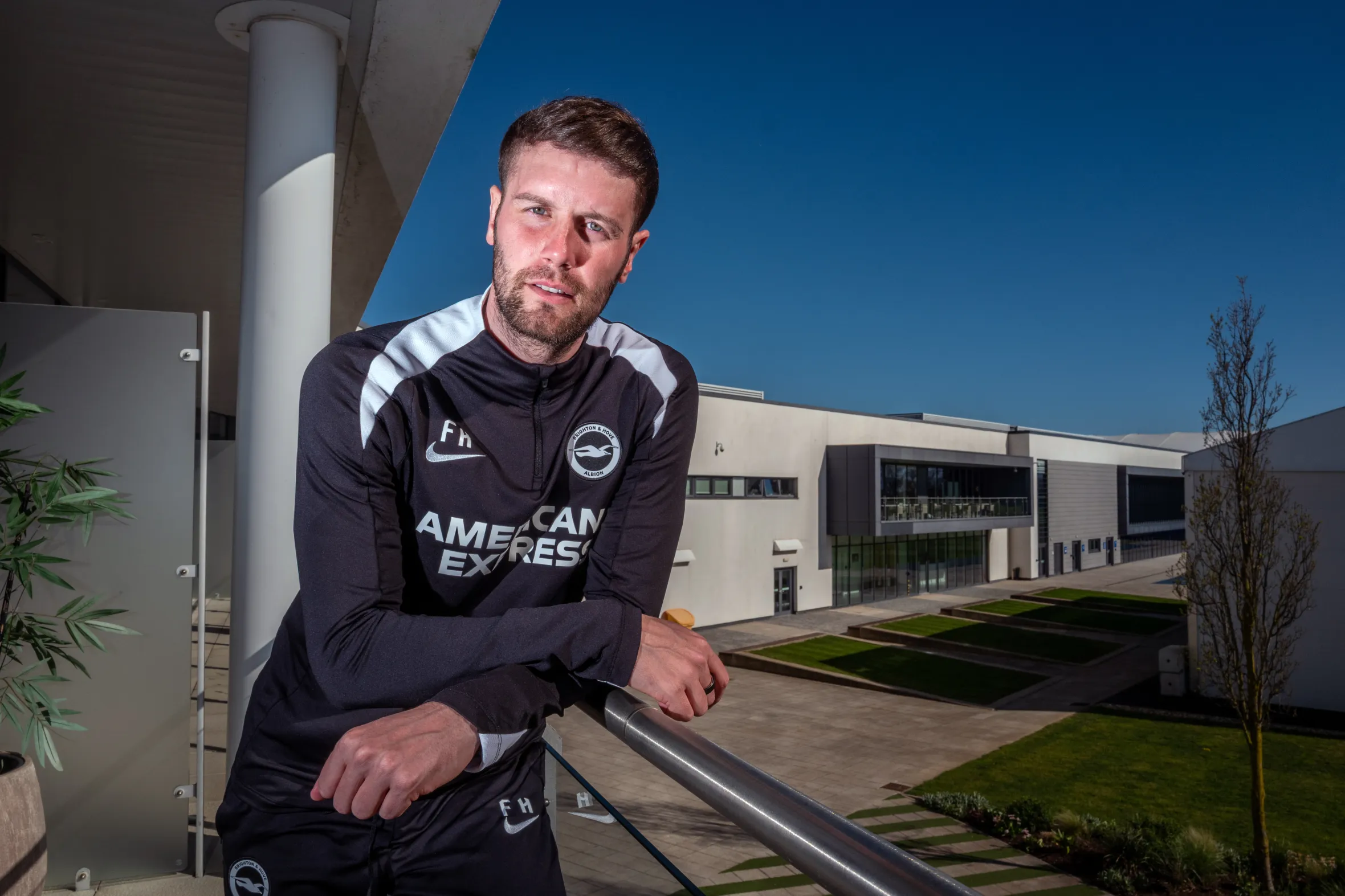 Hürzeler exudes positivity, and believes it is OK to make mistakes at this stage of his careerAndrew Hasson for The Times
Hürzeler will go down as one of the most intriguing appointments ever made in the Premier League. He arrived at Brighton aged just 31, becoming the youngest ever permanent manager in the division. He shrugs when I remind him of the furore it caused.
“I can’t change my age, the only thing is I’m getting older,” he jokes. “The most important thing is that I can be myself, so I don’t have to come into this building and play a role. The thing I would say is, don’t try to be older or try to act older than you are, because everyone will recognise it.
“It’s normal to make mistakes at my age, so you have to also put your ego [to one side] and say, ‘Right guys, that’s a mistake I made, it shouldn’t happen.’ But I have to keep improving as well. I demand from the players to keep improving, so I have to be a role model regarding this.
“It’s not a thing of age, it’s a thing of collaboration, it’s a thing of how you work together, it’s a thing of quality.”
The Times previews the 2026 World Cup
Does he even subconsciously talk differently to players who are older than him?
“No, I don’t try to do this. Of course, one thing is clear, you can’t treat everyone the same. You have to treat everyone individually. You can’t treat James Milner [aged 40] the same as a young Yankuba Minteh [aged 21]. You can’t do this.
“Every coach who says, ‘I treat every player the same,’ that’s not possible for me. So every player has to be treated individually regarding their nationality, their culture, their background, their age, regarding everything.”
One of Brighton’s older players is the 35-year-old Danny Welbeck. Hürzeler says he is sure that Thomas Tuchel will make the right call about who to take to the World Cup, but should the England head coach take note of Hürzeler’s appraisal, he surely will seriously consider making room for the striker.
“Besides being a great goalscorer, Danny’s attitude is unbelievable. His skill — and it’s a skill for me — of bringing people together is incredible. I call him the social leader.
 Hürzeler hails Welbeck’s influence on the training pitch and his connection with the squadPaul Childs/Reuters
“He’s a great connector between the different ages, between the different cultures, and therefore you can’t replace him. Because for every team, no matter if it’s for England or for Brighton, you always need these kind of players, who connect people, who need to make sure the right dynamic is in the team.
“Let’s say it’s a game after the [World Cup] quarter-finals and there are some frustrated players because they’re not involved, and then the next day there’s training for these players who didn’t play.
“I’m 100 per cent sure that Danny makes sure that no one is there to make a bad environment, to make a bad mood, and I think that’s something you need to have in every team in the world.”
Hürzeler has German, Swiss and American citizenship and believes all three nations could do well at the World Cup. We discuss the Brighton winger Kaoru Mitoma’s beautiful goal against England at Wembley and Hürzeler’s admiration for how Japan play, but he notes that they may struggle at set pieces this summer.
We also talk about Arteta’s curious Arsenal training session in which his players balanced pens between their hands while simultaneously controlling a ball with their feet.
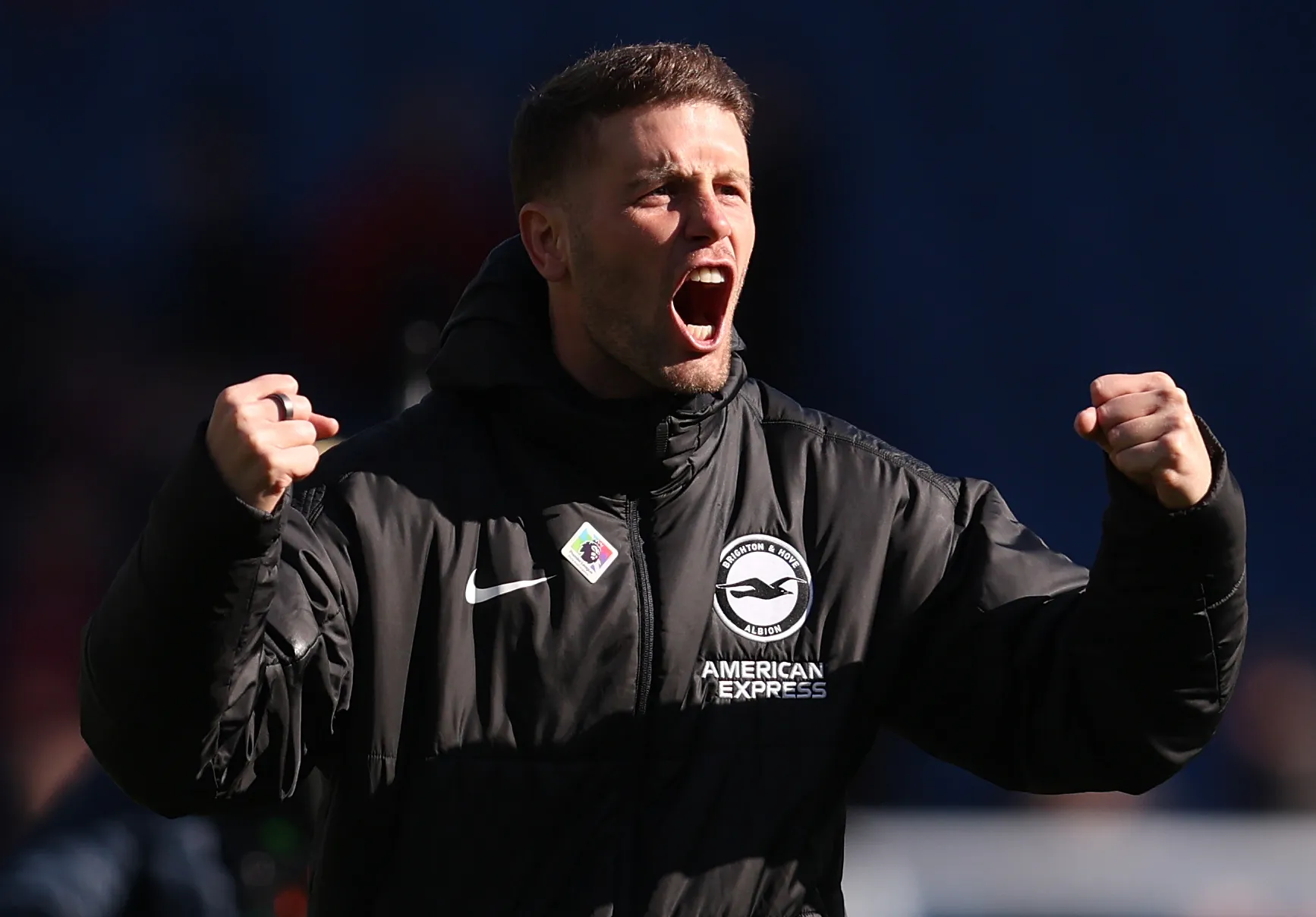 After a difficult run of form at the start of the year, Hürzeler enjoys the moment after beating Liverpool last time outCharlotte Wilson/Getty
The Brighton head coach likes to keep team meetings engaging, playing music as the players arrive. Humour is encouraged, although he says he is no good at telling jokes. At a recent meeting he displayed drawings of the players by local schoolchildren.
Unusually for a Premier League club, Hürzeler is in regular contact with Dario Vidosic, the widely respected manager of Brighton’s women’s team. After their Women’s FA Cup victory over Arsenal on Saturday, Hürzeler invited Vidosic to spend three days with the men’s side to provide ideas and inspiration.
In turn, he watches as many other sports as possible and finds himself immediately becoming emotionally entrenched. Hürzeler went behind the scenes at the Austrian Grand Prix with a Formula 1 team last season — their staff will soon do the same at the Brighton training ground.
“There’s always things you can take from other kinds of sports, not regarding tactics, but regarding leadership, regarding building an environment, building the right culture. I was with Harlequins a few weeks ago, where there is an incredible environment.”
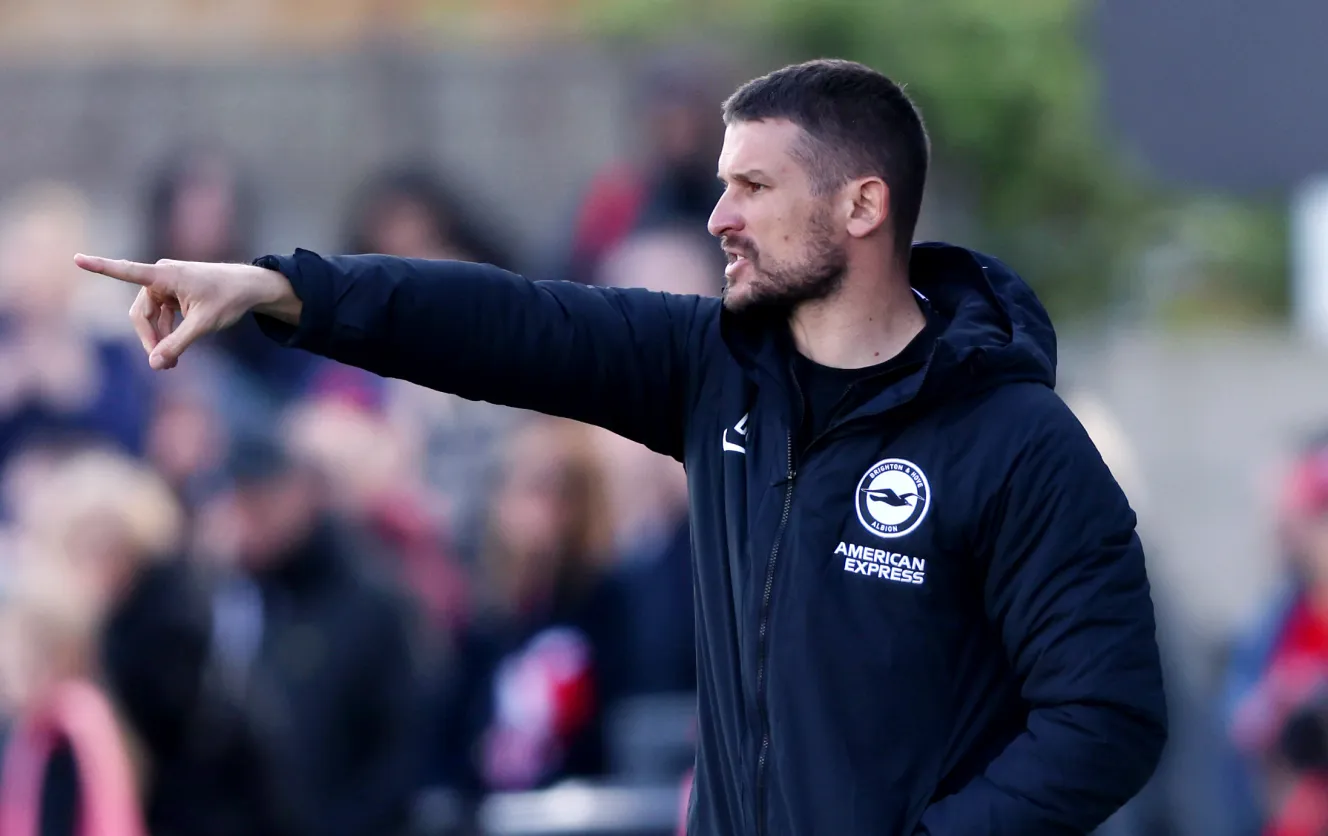 Hürzeler values collaborating with Vidosic, the head coach of Brighton’s women’s teamPaul Harding/Getty
Hürzeler will serve the first of a two-match touchline suspension away to Burnley on Saturday and accepts that he needs to improve his disciplinary record.
“I forget who I am sometimes and I’m too emotional,” he says. “I need to understand who I am during a game and try not to overreact.”
Apart from his age, there were gasps at Hürzeler’s appointment because his coaching career had been spent away from the spotlight in the lower divisions in Germany. One month after winning promotion to the Bundesliga with St Pauli in May 2024, he was catapulted into the Premier League. This surely was a whirlwind; it would be the pivotal scene in a film of his life. He does not blink.
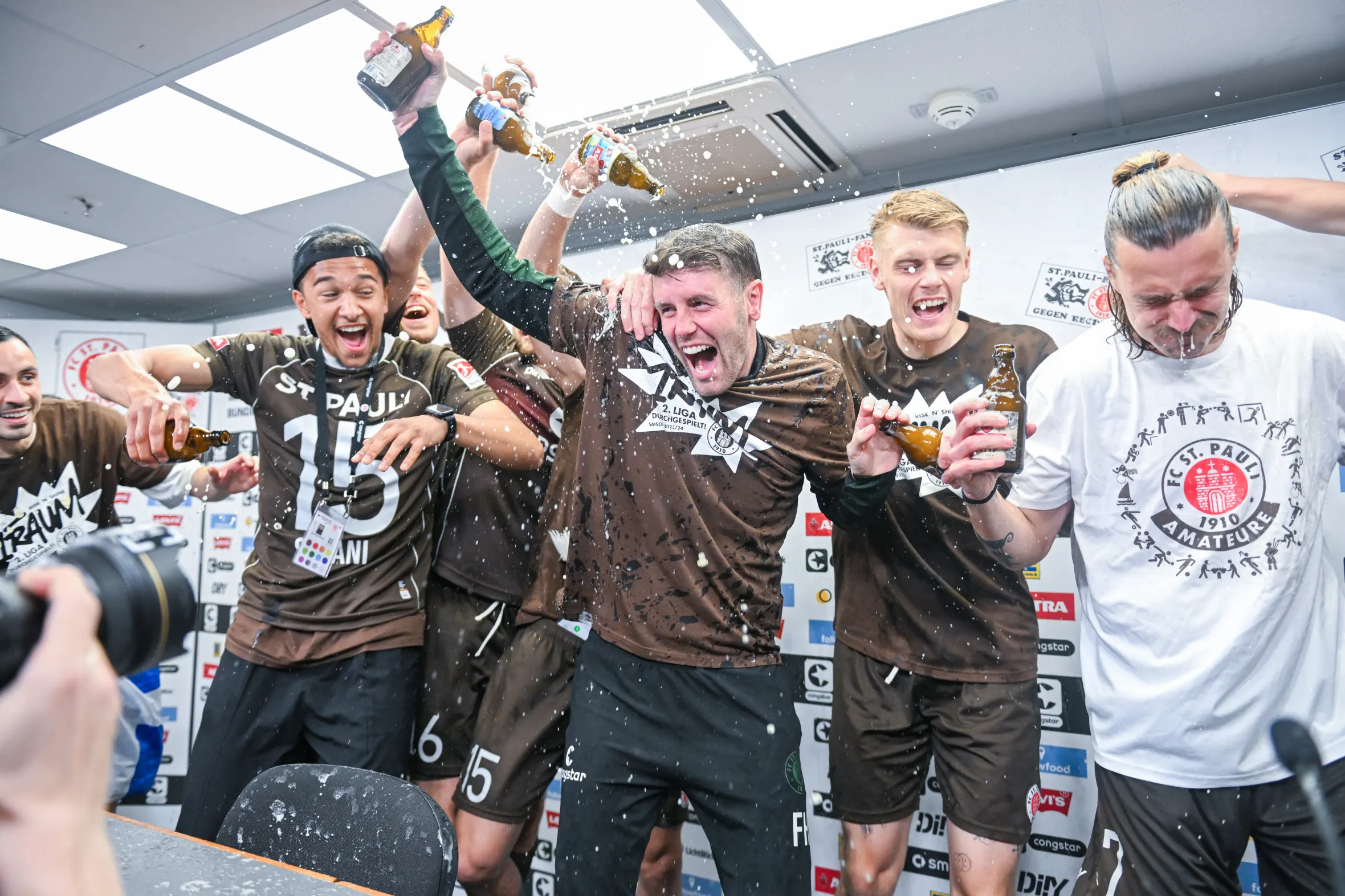 Hürzeler describes his decision to leave St Pauli as one of the hardest decisions of his lifeAction Press/Shutterstock
“What is logical in the football world? For me, not a lot of things are logical. So therefore, when someone asks me these questions, I always say, because it’s the truth, I didn’t have the time to think about this. I didn’t have time to look back and say, ‘Oh, that’s my journey.’
“I know that I’m in a privileged position, but I also know that I really worked hard for it. And I also know that I really sacrificed a lot of things in my life. And therefore the people outside see this incredible journey, see how fast it can go from one place to another place. But on the other side, they don’t see all the sacrifice. They don’t see all the hard work, all the moments I needed to suffer.”
He had spent four years building a team capable of promotion and says “it was one of the hardest decisions I made, and needed to make, in my life”. But he also knew in that moment he could push for more, and to stay would have been to relax into his comfort zone.
“We achieved something outstanding,” he says. “I will never forget lifting the trophy, I think there were 100,000 fans in the city. I still have goosebumps talking about this, but on the other side, you need to go on. You need to make a decision that is best for yourself and where you feel the most challenged.”
If Hürzeler fancies a complete change of career, he could work for the Brighton tourist board.
“The first thing I love about Brighton is the sea,” he says. “When I came home yesterday it was 7.30, the sun was still out there, and then it turned to 8.30 and 9.00, and I watched outside of my flat, and I see the padel court, I see the tennis court, I see the people playing. I see the young kids in the skate park, I see the people playing beach volleyball.
“It’s just amazing to see this lively city, and how they bring this joy and this fun on the streets. And I think that’s something Brighton is standing for. I see a lot of similarities to Hamburg, where I lived before. There is the LGBTQ movement, it is multicultural.
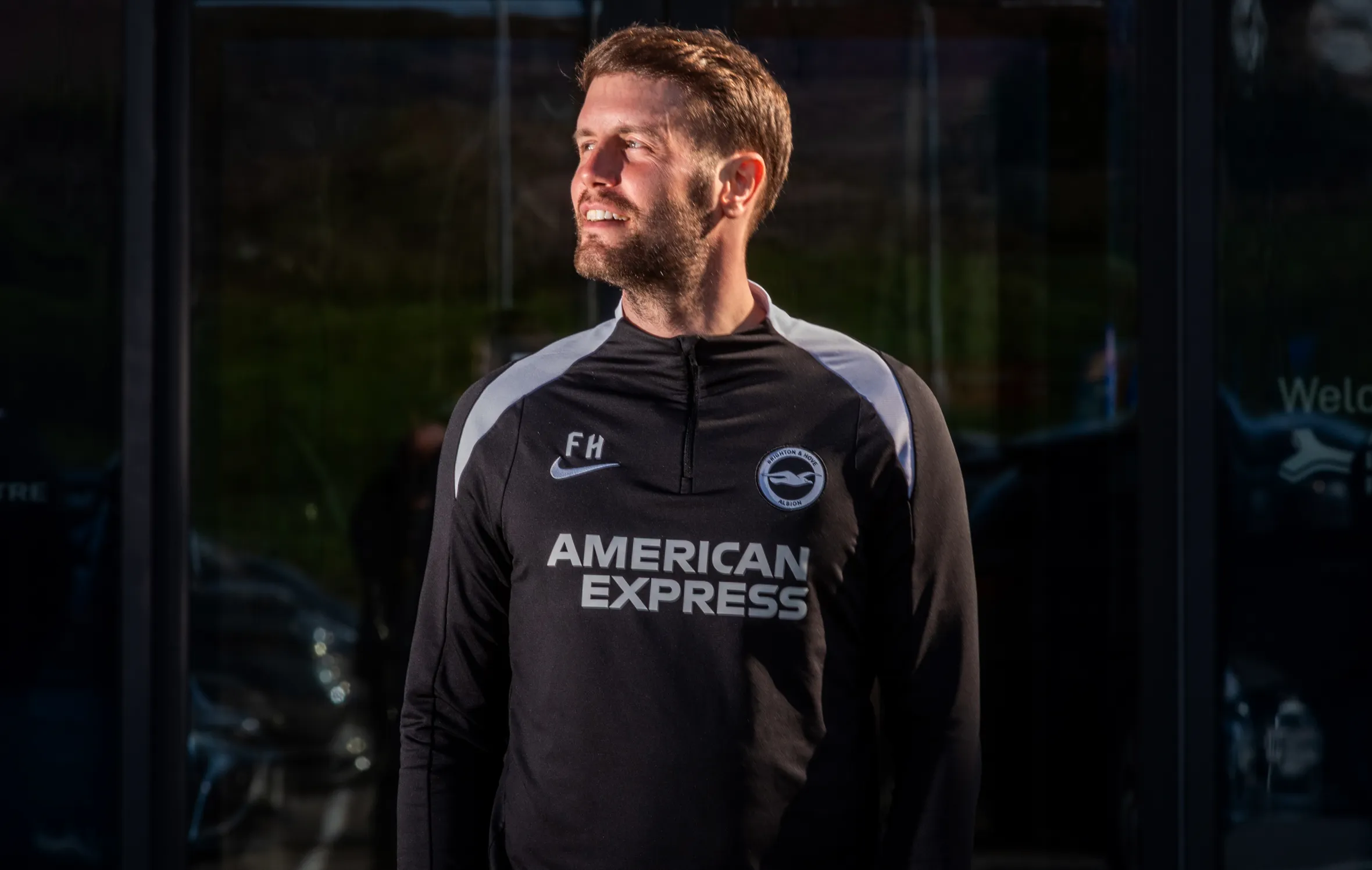 Hürzeler says he is an “open-minded” person and feels very welcome in BrightonAndrew Hasson for The Times
“I like to be on Church Street, where you have the Italian, you have the Turkish, you have the Greek restaurant. You have all the different nationalities there. It feels like everyone is welcome, everyone is connected. That’s what I really enjoy, because I’m also an open-minded person.
“I want to discover new things, and I think it’s a great city to do it. It’s about the people. The people make it so nice to live here, because they’re respectful. They feel really open-minded and connected. And then it’s about the opportunities you have here, and this multicultural togetherness.”
He has just the one, ever-so-small gripe, which is that when it is windy, his windows feel flimsy.
“I have the feeling I am in the storm,” he smiles, and with that he returns to his office wanting to know, slightly aghast, exactly how much sugar is in the cookies I brought along.