
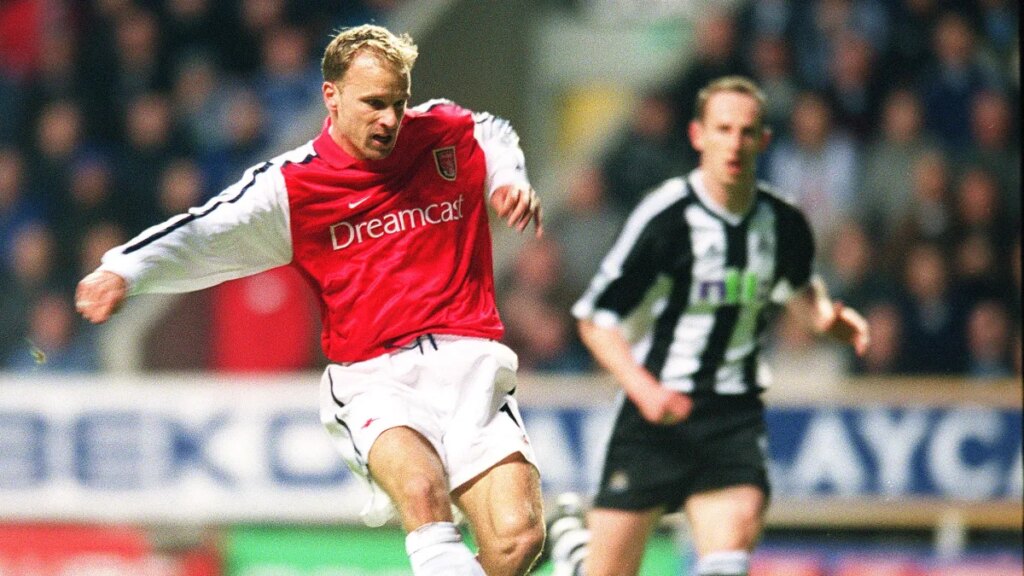
A wondrous thing happened this week: the Premier League put highlights of every match in the competition’s history, from its inaugural season in 1992-93, in videos no shorter than eight minutes, on its website. Any game in the English top flight from the past 33 years can now be relived online. With one click you can transport yourself back to a time when the shirts were shiny, billowing, emblazoned with the logos of breweries and photocopier companies, and able to be ripped off and whirled about in moments of celebration with total impunity. You can watch David Beckham floating the ball over Neil Sullivan, Dennis Bergkamp balletically bamboozling Nikos Dabizas, Alan Shearer wheeling away with one arm aloft.
But as the vaults are opened, a void is opening. We now know that Mohamed Salah’s career in English football has just seven top-flight games left to run, and that has implications for a league which, for all its plausible claims to world domination, is suddenly looking a little light on individual attacking star power.
For example, it is a startling fact that, once we subtract Salah, there is not a single active player among the Premier League’s all-time top 25 goalscorers. Erling Haaland, whose tally of 107 goals ranks him joint 30th, will get there soon enough, perhaps even before the end of the season. But below him, the next active players on the list are Callum Wilson, Chris Wood and Danny Welbeck.
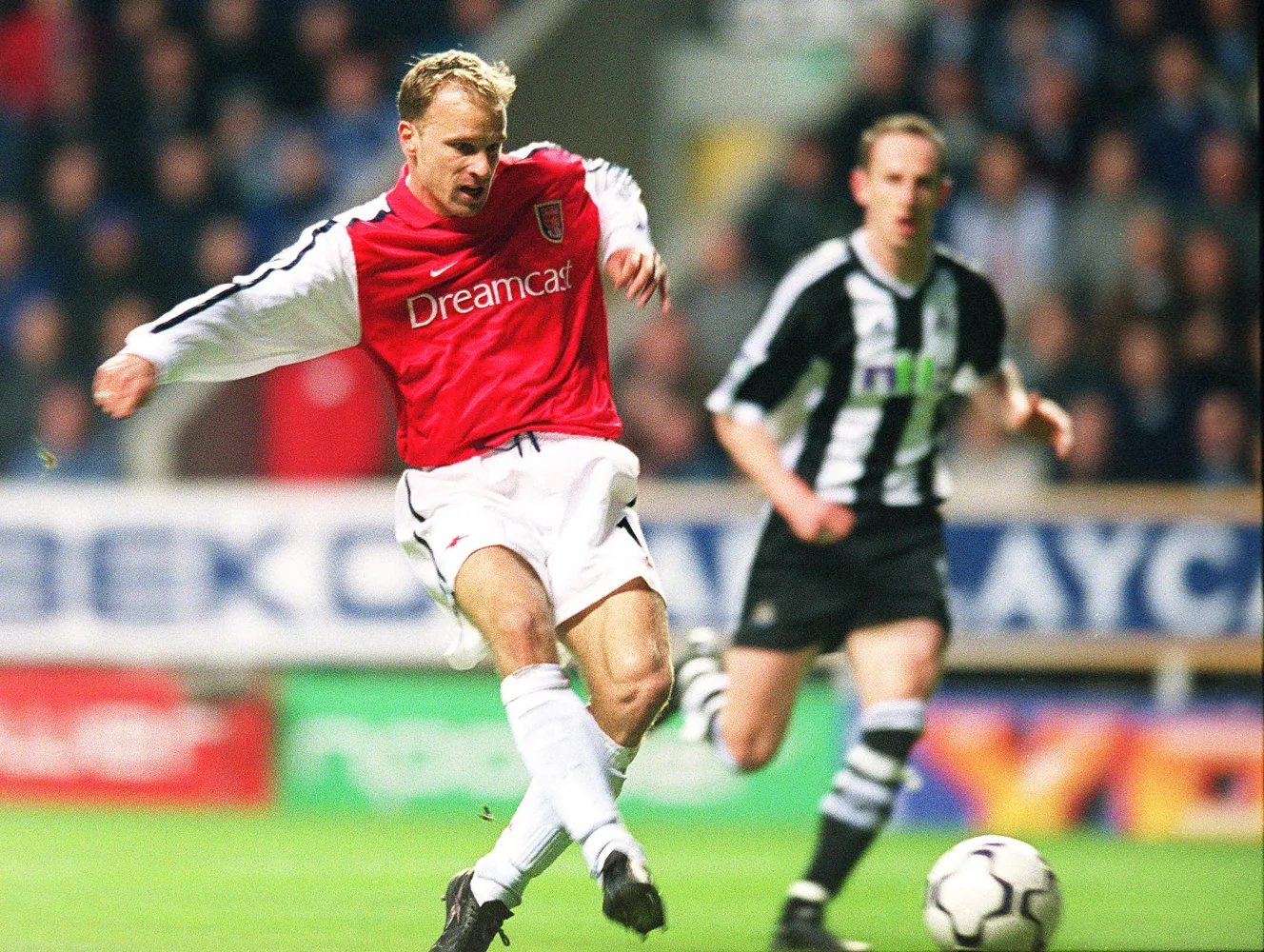 The moments of sublimity produced by aesthetes like Bergkamp belong to a bygone age Stuart MacFarlane/Getty
In terms of assists, it is a similar story. Salah’s exit will leave James Milner, should he continue for another season, as the leading active player (tenth in the Premier League era), though in truth he and Ashley Young (next on the list, in 14th) have ceased to be goal creators. Bruno Fernandes, 19th and rising, is the standout current player, with Andrew Robertson the only other one in the top 30. Clearly, this is a rather different landscape from the one in which Shearer, Bergkamp, Thierry Henry and Ryan Giggs — or latterly Wayne Rooney, Sergio Agüero, Harry Kane and David Silva — once coexisted.
An interesting paradox has emerged. In one sense the Premier League has never been stronger — the Opta power rankings have eight Premier League teams ranked among the world’s top 15 at present, with Brighton & Hove Albion on a par with Borussia Dortmund, Brentford with AC Milan, Fulham with Juventus. In terms of across-the-board technical quality, you only need dip into that trove of highlights from the 1990s and 2000s to appreciate that the level has risen significantly. Goals per game have fallen slightly in the past two seasons, but this season’s figure of 2.73 is still higher than in all but one year of the 2000s, and higher than La Liga or Serie A.
And yet it feels as though the supply of world-class attackers, once bountiful, is drying up. Since the summer of 2023 the league that has a supposedly insuperable financial stranglehold on club football has lost Kane, Kevin De Bruyne, Son Heung-min, Trent Alexander-Arnold, Michael Olise and now Salah.
Those who seemed likeliest to step up to fill the vacuum created by those departures have regressed. In the past two editions of the Ballon d’Or, Salah has been the leading Premier League attacker. The only other one to rank in the top 20 last season was Cole Palmer, but since the start of 2025 Palmer has six non-penalty goals and three assists in the league: hardly superstar numbers. The season before that, Haaland finished fifth, Phil Foden 11th and Martin Odegaard 19th. Foden, of course, is mired in an even deeper slump than Palmer, so much so that he is unlikely to make a 26-man England squad for the World Cup.
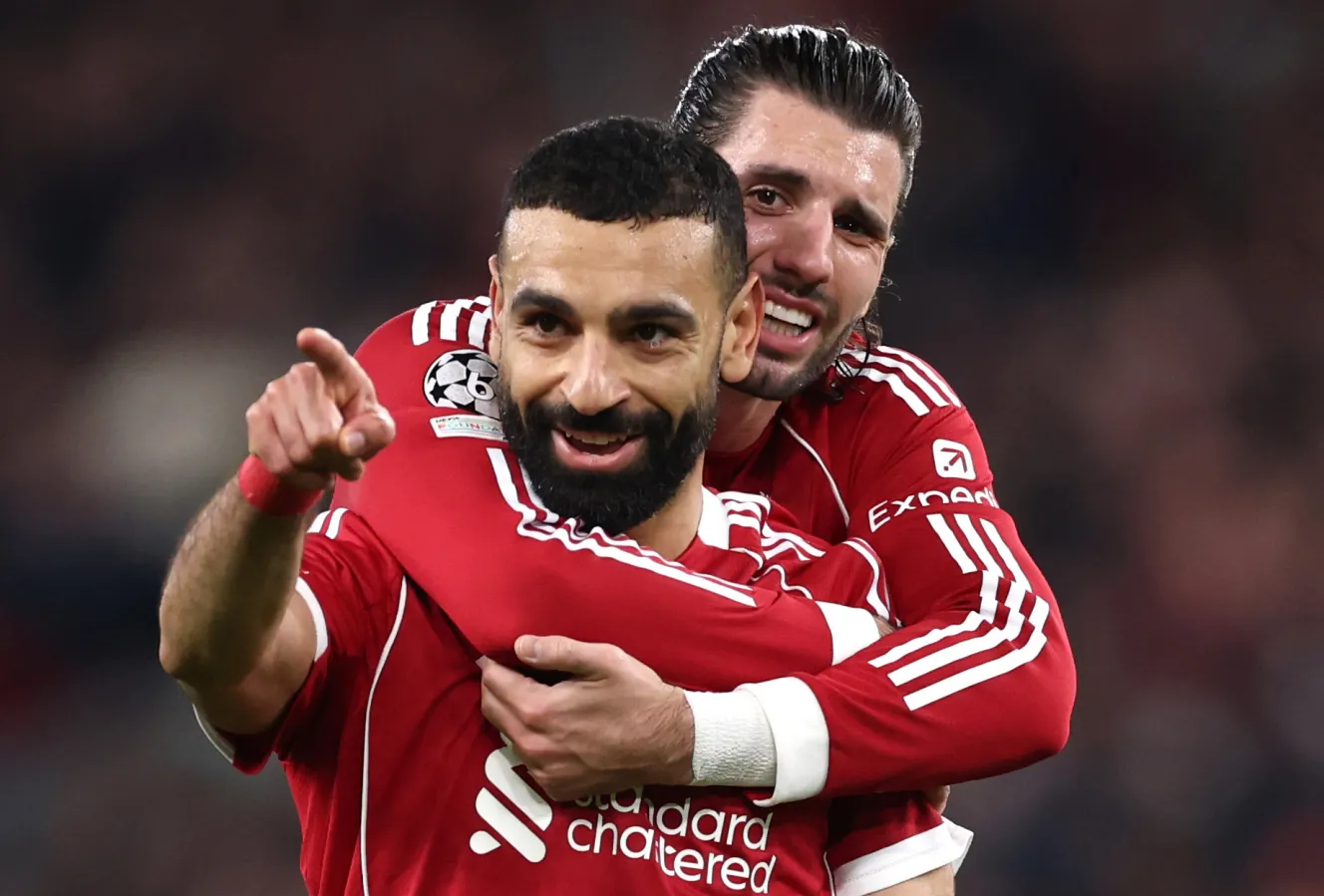 Salah’s imminent Anfield exit will only deepen the creative void in English footballAlex Pantling/UEFA/Getty
So we have this strange reality: a league that is by universal consent the world’s best, yet seems oddly denuded of the world’s best attacking players. There are some obvious reasons for this. One is that some of the areas in which the Premier League truly excels are collective organisation out of possession and coach-led tactical preparation. Anthony Barry, the England assistant coach, said in November that he felt English top-flight football had become “stuck” because “everybody has so much information now … they know how to set up — mid-blocks, deep-blocks”.
Such is the effectiveness of these intensively worked defensive tactics, the “information” that exists on each attacking player as a wealth of data and footage, that it is not easy to be a Foden or a Palmer these days. The Premier League is now almost a coaching industrial complex, and the players who emerge as its best scorers and creators will inevitably attract a proportionately large effort to demystify and disrupt them.
And then you add to that the sheer skill and athleticism of defenders, which is what Arne Slot was talking about when he said last month that winger — probably the position that has produced the most superstars in 21st-century football — had become the hardest position to play, “because there are so limited spaces and the players you face are so good … there are ten big athletes who are really fast defending in and around the box”.
It is also true, of course, that football goes in cycles. Great players move on and new idols rise, but not always in perfect synchrony. There have always been lulls and interregnums. It’s not hard to identify the Premier League attackers who could, potentially, make a giant leap. Florian Wirtz, Hugo Ekitike, Estêvão, Rayan Cherki and Benjamin Sesko are all in their first season and showing signs of understanding the assignment. Jérémy Doku and Amad Diallo maybe just need one of those Ousmane Dembélé seasons where everything clicks. Bukayo Saka could probably do with a rest more than anything else: it’s hard to see when he’ll get one, but he too could come again.
But equally, none of them are there right now. A look at this year’s player of the year odds is quite clarifying. This is an award that goes almost by default to an attacking player, having done so in 18 of the past 20 seasons. This season the bookmakers consider the favourite to be Declan Rice, who, for all his significant evolution as a scorer and creator, is probably still best described as a “two-way” player: as much a defender as an attacker. Gabriel, the Arsenal centre back, is the third-favourite, sandwiched by Fernandes and Haaland (who won’t win, but whose levels are shown by the fact that he is even vaguely in contention after a season where he hasn’t been at his best).
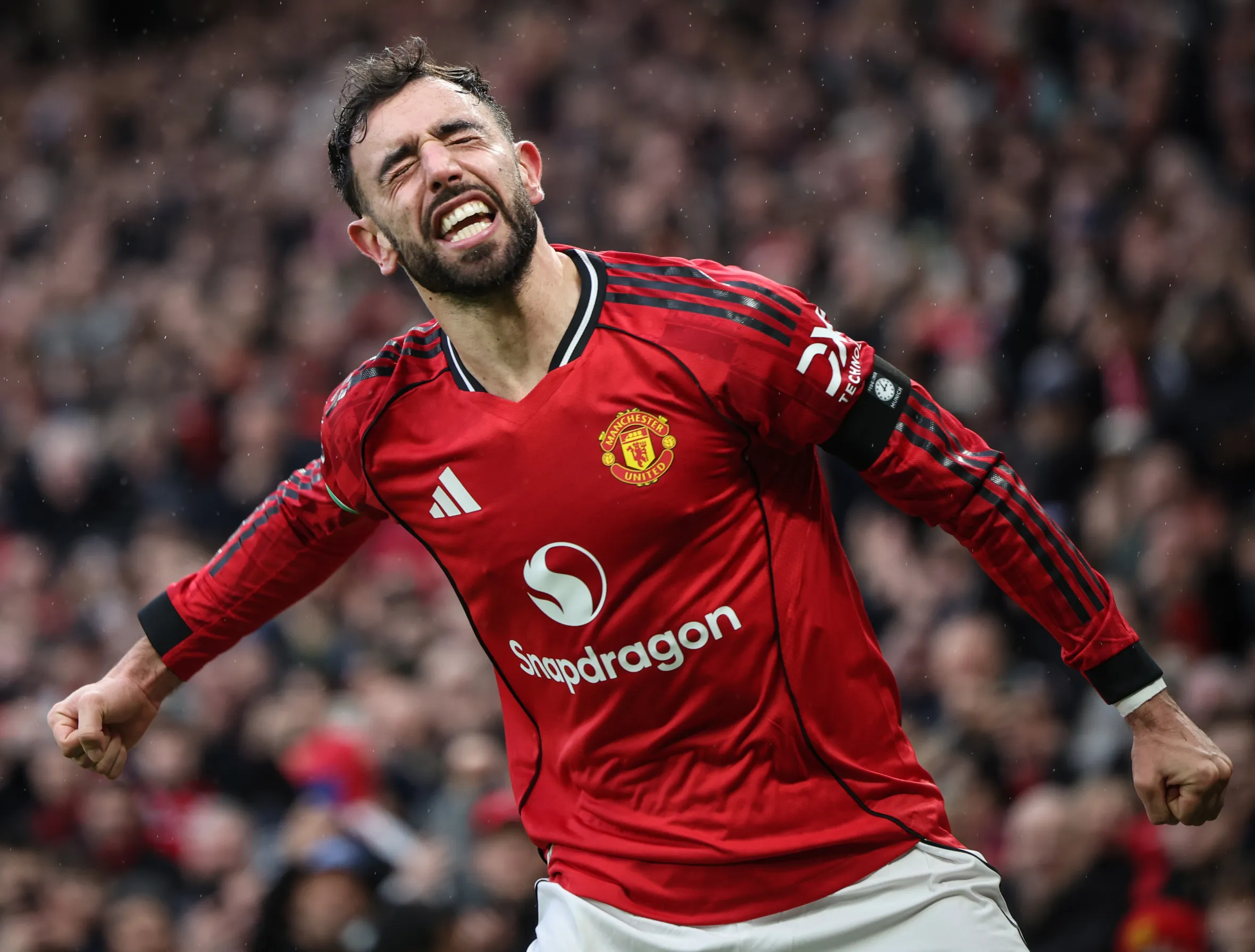 In an era where collective organisation is valued above all, Fernandes stands out TIMES PHOTOGRAPHER BRADLEY ORMESHER
Fernandes and Haaland are, post Salah, the two real A-listers left. Which is interesting in itself, because they are probably the two players in the league who have borne the most scrutiny for their individualistic tendencies, the idea that their natural mode of playing sits problematically with the rhythms and systems of an optimally functioning team. And yet those two just keep chugging along, scoring and creating, and making their own weather, while the system players, the likes of Foden and Palmer and Odegaard, seem more susceptible to being buffeted by vagaries of form and formation.
Perhaps the Premier League is just in a more collectivist, starless era where the overall level of the product is higher, but fewer players truly rise above their peers. There was a time when the best footballers in the league could take the breath away with a touch or a turn — that still happens, of course, but I’m not sure it happens as often now that we have become almost inured to technical brilliance.
If that is the case, what we might be losing is not so much anything to do with the entertainment quality of the games themselves, but rather the sort of mainstream, transcendent appeal that is the preserve of truly stellar attacking players. Henry’s magnetism was such that he appeared in two adverts whose backing songs subsequently reached No1, and he helped to propel “va va voom” into the pages of the Oxford English Dictionary. In the wake of Salah’s announcement, many people recalled the Stanford University study, published in 2019, which found that anti-Muslim hate crimes on Merseyside fell sharply in the years after his arrival.
The Premier League’s rise to cultural hegemony, its primacy in the national and global zeitgeist, was built on big, billboard stars, players who could not only capture the imagination but the conversation too. For all the abundant talent with which our top flight is graced, those sort of figures feel oddly thin on the ground.