
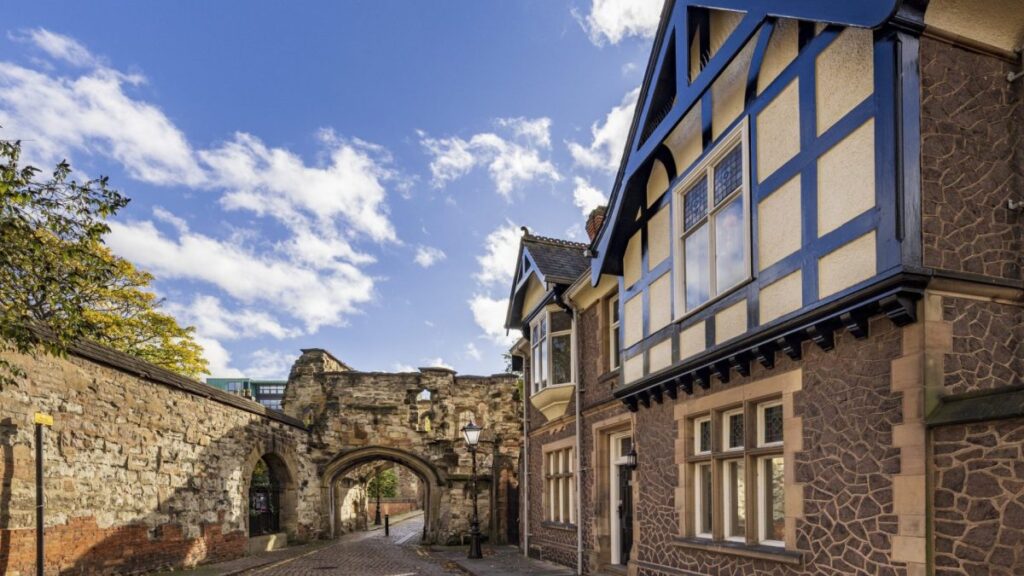
Think of Roman Britain, and you might picture Hadrian’s Wall, Bath’s bathhouses or maybe York or London’s Roman past. Leicester is unlikely to top the list, even if this Midlands city is one of Britain’s oldest Roman settlements.
The Romans founded Leicester in 47AD – around the same time as London, and years before Bath (approximately 60AD) or York (71AD) – but much of this history was buried beneath its industrial Victorian sprawl. Now, with the newly revamped Jewry Wall Museum shining a light on Leicester’s Roman past, I set off to discover the city’s hidden history, and enjoy some excellent curry along the way.
New FeatureIn ShortQuick Stories. Same trusted journalism.
Take a stroll through Leicester’s concrete city centre today and you’d be forgiven for not realising you’re walking on Roman roads. Near the banks of the River Soar, however – in the shadow of an Anglo-Saxon church and brutalist 1960s-style architecture – you’ll find a rare nine-metre-tall remnant of Rome’s four century rule.
The Jewry Wall has stood here since the 2nd century AD. Victorian antiquarians speculated it might be a Roman temple or a section of the Roman walls that once ringed Leicester. In the 1930s, pioneering archaeologist Kathleen Kenyon excavated its foundations, concluding it was part of a large and lavish Roman bathhouse.
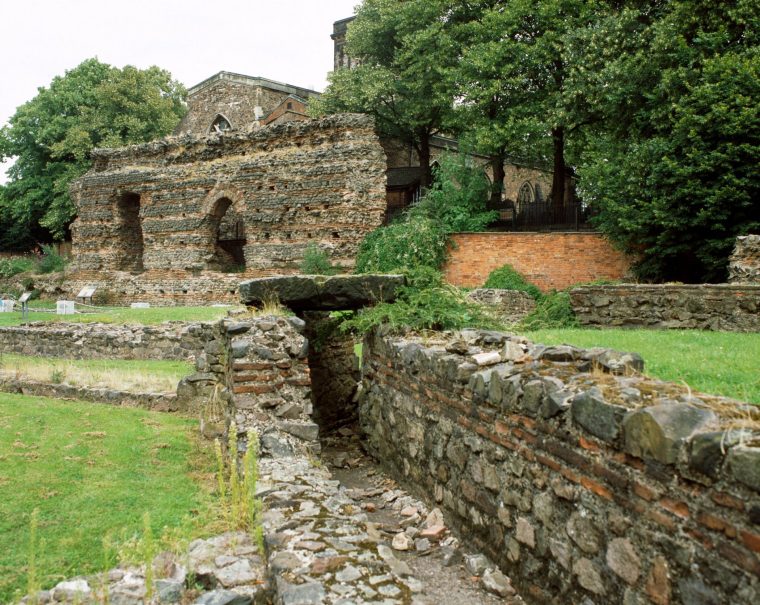 The Jewry Wall was built about 160 AD (Photo: English Heritage)
A museum opened on the site in the 1960s, but closed in 2017. Not wanting to lose these remarkable Roman remains, the city funded an expensive revamp. After years of delay, the long-awaited Jewry Wall Museum (entry £12.50) finally reopened in July 2025, offering an interactive Roman experience in the heart of Leicester – or Ratae Corieltauvorum, as it was named, when it sat at the intersection of two great Roman roads, the Fosse Way and Watling Street.
Inside, curators have pieced together a stunning Roman mosaic discovered beneath Leicester’s now-defunct Central Railway Station. Entertaining videos, maps and games tell the story of Roman Leicester, and a wealth of Roman era artefacts found locally – from pottery and mosaics to milestones and sandals – have all found a new home here. The highlight, though, is the bathhouse itself. Or its remains, which sit in the gardens as a lasting symbol of Leicester’s rich Roman past. On the way out, I read an inscription on a Roman gravestone now preserved in the museum: “Bathing, wine and love make life worth living”. Not much has changed in 2,000 years.
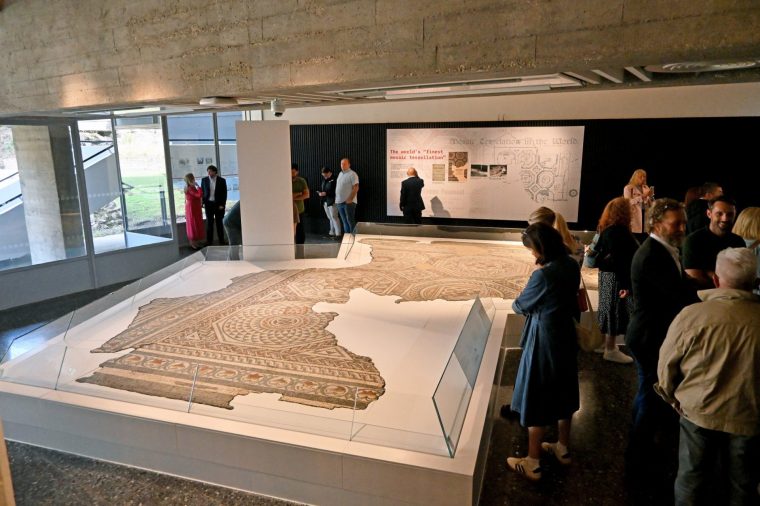 A Roman mosaic on display at the Jewry Wall Museum (Photo: Matt Short Photography/Visit Leicester)
In Leicester’s old medieval quarter, a short walk from the magnificent, 13th-century timber-framed Guildhall (entrance free), I take a quick break in Cocoa Amore, an independent chocolate shop run by Leicester’s very own Willy Wonka, Pete Gardner. “We’re right in the middle of the country,” he says, when I ask what draws people to the city, as he serves me an artisanal hot chocolate. “It’s easy to get here. Affordable. The people are nice, and of course, we’ve got King Richard III.”
Richard III was killed at the Battle of Bosworth Field, a few miles outside Leicester, in 1485. He was buried by Henry Tudor, the usurper, here in Leicester, but the grave was thought lost for centuries. Then, in 2012, archaeologists dramatically rediscovered the remains of the king under a car park in the city centre. At the King Richard III Visitor’s Centre (entry £12.50) you can see the grave itself and learn about the forensic effort to find him.
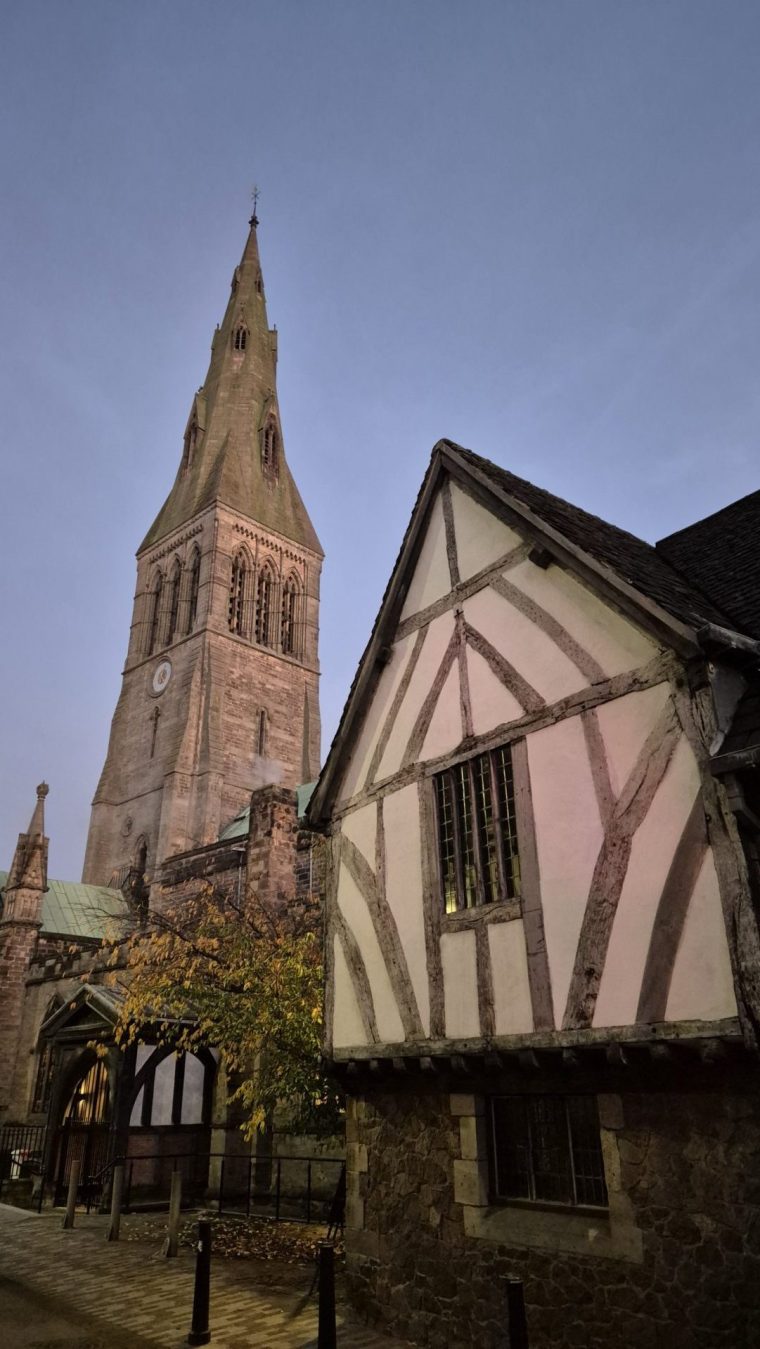 Leicester Guildhall sits in the shadow of the Cathedral (Photo: Visit Leicester)
The historic find put Leicester back on the map, with a steady increase in tourist numbers ever since. According to Leicester City Council, 32.04 million people visited the city and wider county in 2024, a 2.4% increase on the previous year. The king is now entombed in the Norman cathedral opposite the visitor’s centre (Leicester Cathedral, entrance free), where the Dean of Leicester, the Very Revd Karen Rooms, offers an intriguing summary of modern Leicester.
Leicester, she tells me, is the United Kingdom’s first plural city, meaning a majority of minorities live here. There are Sikhs, Muslims, Hindus, Somalians, Eastern Europeans, Asian-Ugandans, white Brits – the list goes on. “So, Leicester Cathedral,” she says, “is a cathedral for everyone, regardless of race or religion.”
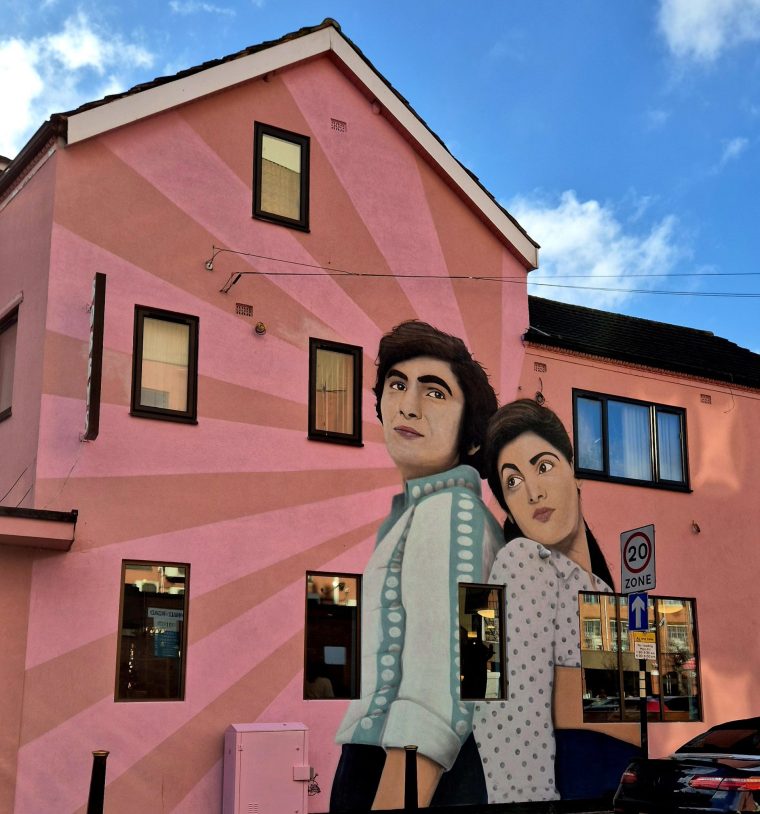 Bollywood street art on Leicester’s ‘Golden Mile’ (Photo: Visit Leicester)
This exponential level of multiculturalism is best experienced in the food. I start with a pint of porter at the Blue Boar near Leicester Cathedral. A quintessentially English pub, legend has it Richard III spent his last night here before the Battle of Bosworth Field. In the 700-year-old open market, I find samosa sellers and a Polish deli, plus enough Red Leicester cheese and Melton Mowbray Pork Pies to satisfy even the most traditional English tastes.
Leicester is England’s curry capital, however, and at Varanasi, I enjoy a sumptuous fine-dining dinner of king prawns, mango salsa, paneer tikka masala and coconut panacotta (mains from £14). It’s all served in the medieval centre of Leicester, right along the Fosse Way, where Roman legions once marched.
The highlight, though, comes the next day, on Belgrave Road, known as the “Golden Mile” for its high concentration of South Asian shops and restaurants. Mirch Masala, a 30-year-old vegetarian restaurant run by Leicester locals Nisha and Pradeep Popat, serves a Gujarati-inspired afternoon tea. As I consume endless masala chai and chilli paneer (mains from £6.99), Nisha tells me how she – like so many of Leicester’s citizens – found refuge here as a child in the 1970s, when dictator Idi Amin expelled Uganda’s Asian population.
At the time, Belgrave Road’s Victorian terraces lay derelict. The city had scheduled the area for demolition, but the Asian community transformed it into a whirl of sari shops, desi pubs and curry houses. It’s a multicultural thread that even Leicester’s ancient Romans, people drawn from across a vast and diverse empire, may have found familiar.
How to do it
Travel from London St Pancras to Leicester with East Midlands Railway from £15.90 one way.
The Belmont Hotel, a grand Victorian building on Leicester’s historic New Walk, has doubles from £79, including breakfast.
Richard Collett was a guest of Visit Leicester.