
There are three things you should know about Pep Guardiola’s latest tactical tweak.
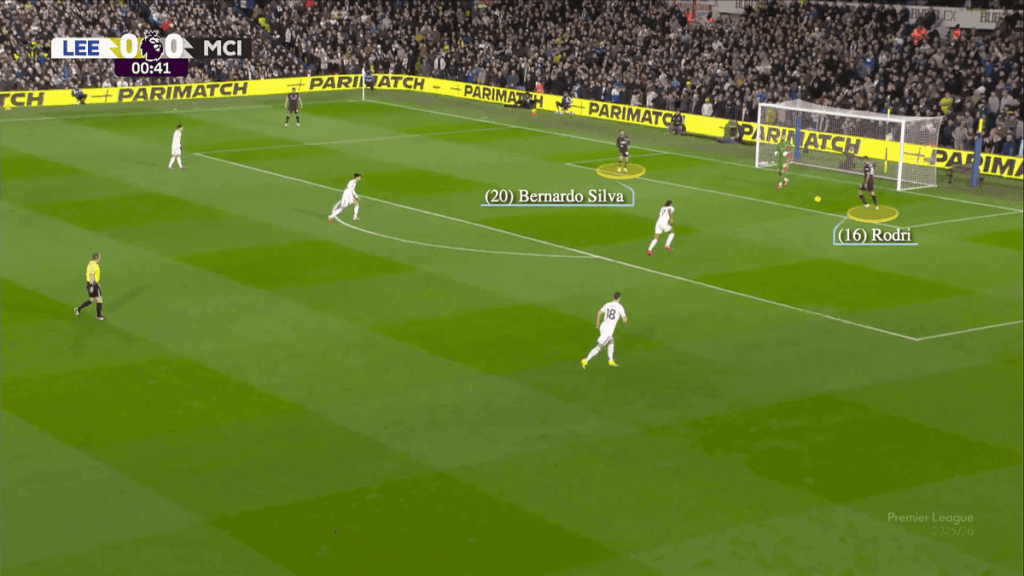
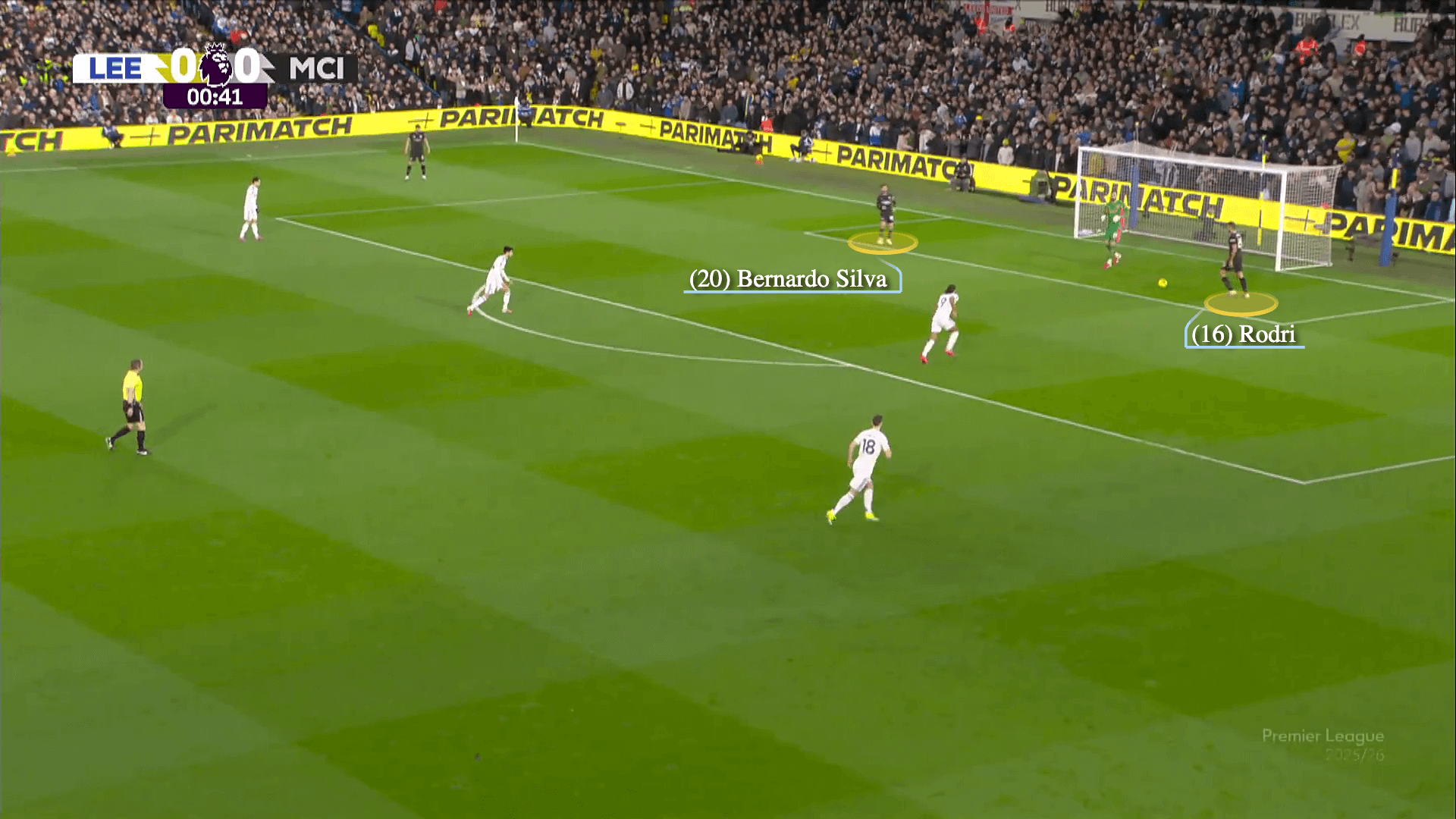
First, what it is and why they did it: in the 1-0 win at Leeds United on Saturday, Guardiola asked his two holding midfielders, Bernardo Silva and Rodri, to start the play from goal kicks, positioning them on the corners of the six-yard box, to help Manchester City play through the home side’s intense pressure.
The second thing is that it is the latest evidence, and perhaps the clearest, that the Manchester City manager is trying to beat the Premier League man-to-man craze by doing things his own way.
The third is that it did not necessarily work — but it is still interesting for what it represents.
Just when it seemed that City were conforming with the super-direct and physical Premier League era, after a few months of counter-attack goals, Gianluigi Donnarumma saves and long balls to Erling Haaland, Guardiola is making it clear that this is not a case of, ‘If you can’t beat them, join them’. Guardiola is still trying to beat them, but he is trying to do it on his terms.
“Still, I have a dream, to play and play and play more than we are playing sometimes, even if with man-marking that is difficult,” he said on Friday, when asked about the importance of going long to Haaland.
Every couple of weeks, he says something like this. “I never, ever in my life and will never, ever say that we cannot play better from behind or try not to do it, never ever, because I. Just. Love it,” he said six weeks ago.
In between the two, he said this: “Still I believe, one good action (between) the goalkeeper and central defender, you create a chance. People don’t believe in that at all anymore… I will fight until the last day as a manager for that concept.
“Even now it’s man-marking, even now it’s more direct, even if there are more transitions, but a good pass is a good pass.
“Still, I believe truly that the biggest success in a team depends on that simple action.”
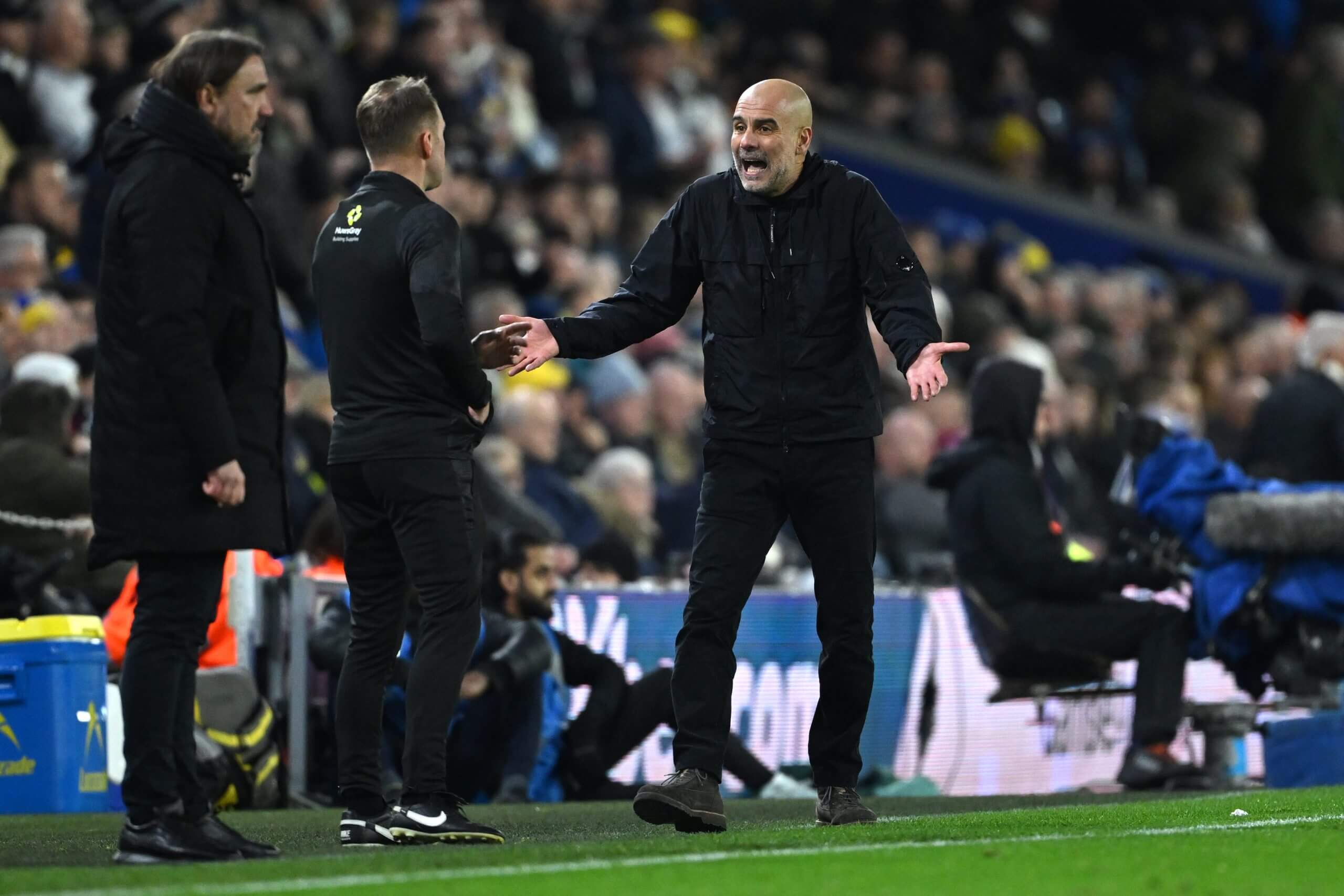
Almost 10 years on from his arrival in England, Guardiola is still innovating (Shaun Botterill/Getty Images)
If you are not yet convinced about his intentions, consider this from a Bernardo interview last month: “I know Pep, and I know that his ideas don’t change much.”
They are talking like this because the Premier League is heavily leaning into a direct, duels-based approach. When it was put to Guardiola that Mikel Arteta has said that any game plans from two, three years ago can be thrown in the bin, because man-to-man marking means there are no more pockets or spaces like there used to be, the City boss insisted, “the spaces are there”.
Newcastle United winger Anthony Gordon gave perhaps the best explanation of what is happening when he asked why English clubs have done so well in the Champions League this season.
“In the Premier League, it’s become more physical than I’ve ever known it to be,” he said. “There is not much control, it’s a running game, and sometimes it’s about duels: who wins the duels, wins the game. The Champions League is a bit more of an older style of game; it’s a bit more football-based.”
Guardiola is still looking for that football-based approach as much as possible. He is happy to use Haaland (who was missing against Leeds) as an out ball, and it would be stupid not to. A very effective way of beating a man-to-man press is to play over the top of it, and Haaland can be excellent when battling with centre-backs.
But if City have been doing that quite a lot this season, it is because they have not been good enough at trying anything more intricate, not because Guardiola always wants them to go long.
He has said on several occasions that their build-up is not good enough, largely because of the number of new players they have, and on Friday, he talked about City’s need to “find an alternative” to the long ball and to be more “unpredictable” in their build-up.
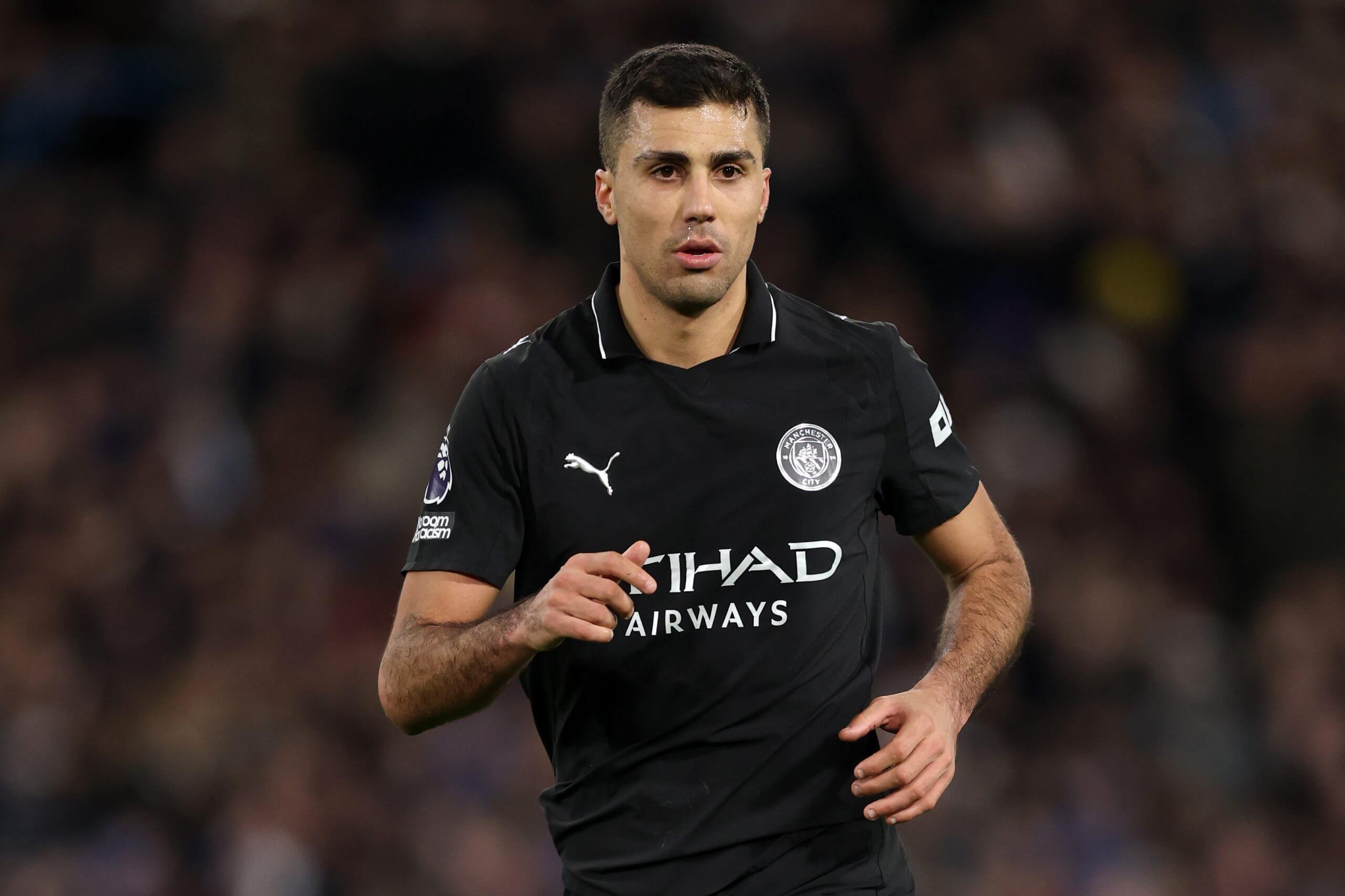
Rodri was deployed in a different role at goal kicks, but did it work? (Justin Setterfield/Getty Images)
Little over 24 hours later, he deployed Bernardo and Rodri in positions they had never been asked to take up before.
Right from the first minute, when City had a goal kick, they used it as an opportunity to get their two calmest, press-resistant midfielders on the ball. The centre-backs, who would normally be in those positions inside the box, were stationed wide, where you may expect full-backs to be. The full-backs themselves were much higher up the pitch.
Knowing that Leeds would press aggressively and that the Elland Road atmosphere would play a part, Guardiola did not want to go long and risk an end-to-end game, and therefore asked his most secure players to help get City up the pitch.
The idea was that, by breaking through the press, City could either force Leeds back into their own box and establish control, or attack through the lines quickly, generating those ‘false counter-attack’ situations, just in a safer way than lumping it up front. Given Haaland was injured, the long ball would have been even riskier to a less able target man.
The first and third attempts were actually very promising. In the first minute, City managed to get to the halfway line and string some passes together, though a loose one did give Leeds an opportunity to pounce and force City back.
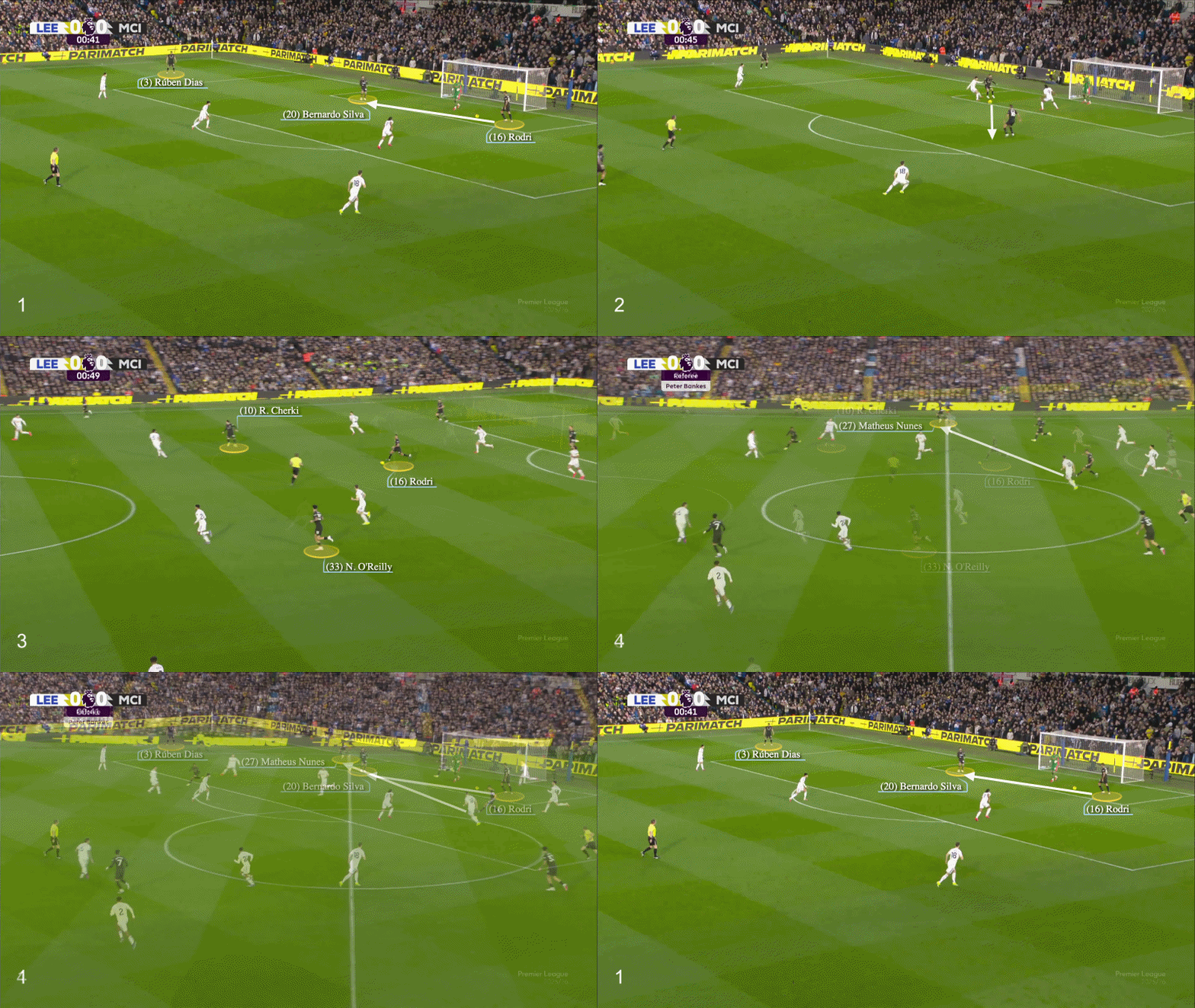
The third attempt was almost nearly a perfect example of what Guardiola wanted. Rodri and Bernardo (with early help from Donnarumma), helped sucker in the Leeds players, played around them, carried the ball up the pitch and exchanged passes.
That got them to the halfway line, where Rodri played a through ball for Antoine Semenyo. He was offside and shot over anyway, but the plan was perfectly executed.

City stuck at it, even as Leeds began to wise up. The next three attempts saw the ball lost near the City goal, and Leeds were the team in the ascendancy overall. Sensing danger, City went long to Semenyo in the 22nd minute and, a few minutes later, they went long again.
Eventually, they managed to push Leeds back into their own half after a foul on Semenyo allowed them some breathing space. From then on, it was their careful passing and acuity in duels and second balls that saw them wrest control of the game, not intricate build-up patterns.
After the match, Guardiola praised his two midfielders for their use of the ball and how they make it difficult for teams using man-marking by being comfortable enough in possession to take many touches despite pressure from the opposition and also the crowd.
“With him and Bernardo, we make the ball go right-left, right-left. With man-marking or pressing it’s so difficult (for opponents) to defend that way, because normally with man-marking it’s pass, pass, pass, one touch, one touch, it’s easier for (opponents), but if you can play every player three or four touches, it’s more difficult for them, and Rodri… what a player right, in that situation.”
It was telling that after some early success by trying to play through the pressure, City actually established control by playing longer and winning tackles.
Still, it is the biggest indicator that Guardiola is going to fight to tame the modern Premier League by doing things his way, and, given few expect him to be around for much longer than one additional season at the most, that ideology could shape how his final months at City pan out.
Will his determination to stick to his principles, despite the risky nature of doing so against high-pressing, man-marking teams, turn out to be folly?
Does he abandon those ideas and fully embrace the long ball to put City back at the top?
Or does he bend English football to his will one last time?