
Share
Nimbys are railing against a sensible renovation of Britain’s busiest train station
Blockers are protesting a new high-rise building in the City of London
Could it be that Network Rail has defeated a group of influential London Nimbys?
This week’s edition of Nimby Watch comes to you from the busiest railway station in the country. Want to have a guess where we are before you dive in?
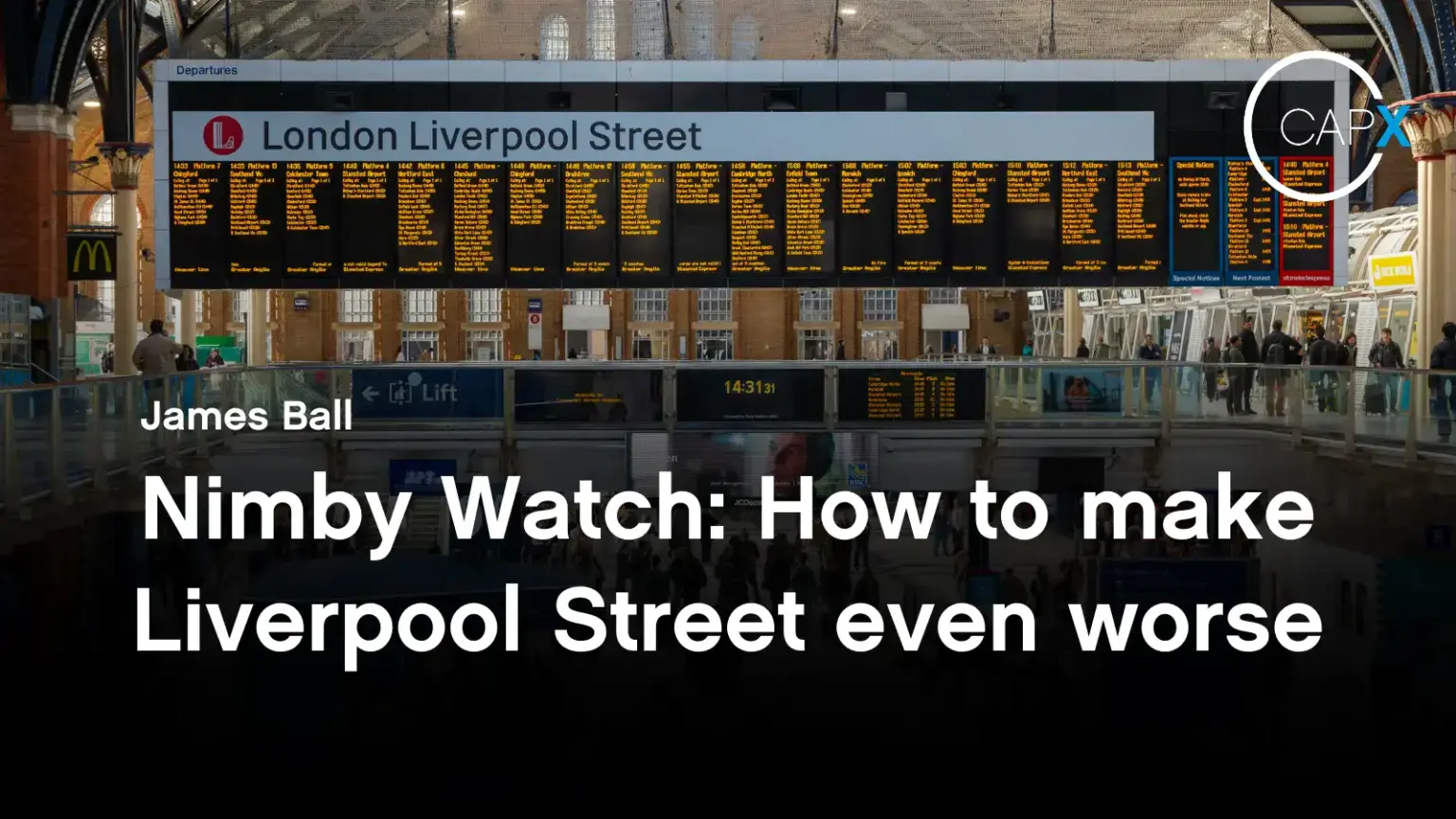
Okay then, where are you taking us this week – anywhere nice? We, my friend, are going to Liverpool Street Station, in the City of London. It’s a Grade II listed building, and since the introduction of the Elizabeth Line, it’s also by quite some margin the busiest train station in the country – with 98 million exits and entrances last year (Waterloo was second, with 70 million).
Oh, really, you shouldn’t have. In that I’d prefer you hadn’t. Liverpool Street Station is… pretty horrible, to be honest. Most right-thinking people – and certainly almost anyone who has to use the station regularly would agree with you, I suspect. Liverpool Street was last overhauled in the 1990s, and it shows. The Bishopsgate entrance in particular looks, in the words of one social media user, like a ‘1995 Out Of Town Sainsbury’s canopy’.
You can’t say that! It’s Grade II listed! In my defence, it wasn’t technically me that said it. The same user also referred to ‘the absolutely minging proto-High Tech shopping concourse above the platforms’, so he’s pulling no punches. But let’s be clear: he’s right. The station is ugly, and it’s dated.
But as you say, it’s Grade II listed. But for one of the oldest and most significant train stations in London, Grade II is not very much. It’s not even managed to get the little * upgrade. Even the few remaining older bits of this station are not particularly noteworthy – to most of us, at least.
That ‘to most of us’ sounds ominous. Yes, the station has some fairly fanatical defenders, in the form of the 20th century society and the Liverpool Street Station Campaign, helmed by none other than actor Griff Rhys Jones. They have fought a years-long battle against renovation works to the station, which would involve a mostly sympathetic restoration of the main hall – preserving its most worthy historical features. This will come at the cost of demolishing a few of its lesser buildings, and putting a… high-rise office building on top of it.
Were you just trying to slip a skyscraper past us unnoticed there? I can see why people might find a skyscraper objectionable, y’know. I wasn’t trying to sneak anything past anyone! I emphasised it with an ellipsis, and everything. The 20th Century Society has released photos showing how the new building will ruin sightlines and change some of the historic views in the area.
Well, it is after all in the sleepy, low-rise neighbourhood of… *checks notes*… the City of London. Hang on, are people objecting to a new office building in the City? Yes, they are. And the sightlines they’ve chosen have been picked very carefully indeed, to hide all the other new, much taller buildings that surround Liverpool Street.
The reality is that building a new office building at the same time as the station renovations just makes sense: it densifies what is now an oddly low-rise and thus underused bit of real estate, and it provides the revenue to support the rest of the renovations. Without it, the whole scheme struggles to make any kind of financial sense. That’s just reality when you’re working in the heart of the City, on a very complex project in a very busy station.
The 20th Century Society and its allies claim otherwise. They say they’ve got a much better and cheaper plan all worked out, if only the bastards at Network Rail would stop ignoring it for no reason. Well, they would say that, wouldn’t they?
I’m going to need a bit more than that. Well, essentially designs go through several phases. The early drafts of a design tend to just take in the basics of the geography, the site, and so on, and come up with some initial costings. Then people go and do more work, and discover all the problems – you don’t actually own the land you need for that design, this bit of the roof wouldn’t work, the foundations would need redoing on this area, and so on – it takes months (or years) and all adds cost and complexity.
The result is that a new, shiny plan will always look cheaper than one that’s been road tested for a few years. It never stays that way. Among the problems that Network Rail identified with the 20th Century Society’s plan after even just a quick look was that it relied on land Network Rail doesn’t actually own. And land in the City of London is not cheap.
I assume we’re headed for years of gridlock, then? Good news! We’ve already had years of gridlock, and hopefully it’s now over. Last month, the City of London finally approved Network Rail’s plans, so the redevelopment can finally – in theory – get started. And it’s just as well, as passenger numbers are forecast to grow to 158 million in the next few decades.
Probably could have done with getting started sooner, then, really. That we could. But agonising as it was, at least Network Rail managed to pull out a win, even if it was in extra time.
– the best pieces from CapX and across the web.
CapX depends on the generosity of its readers. If you value what we do, please consider making a donation.
Columns are the author’s own opinion and do not necessarily reflect the views of CapX.