
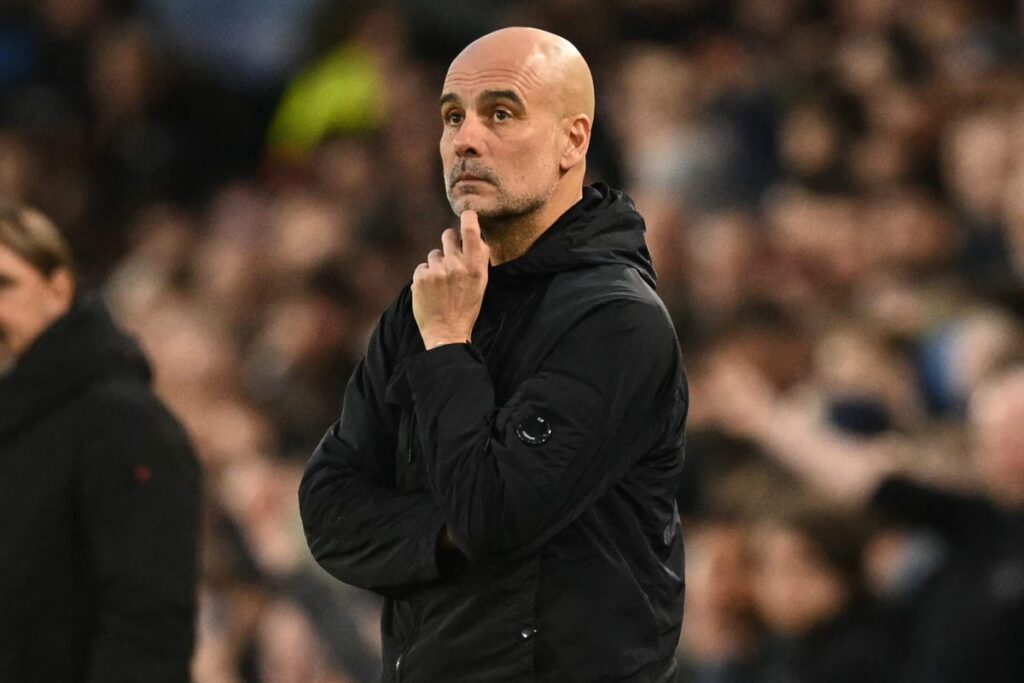
Countless players have commented over the years on how Pep Guardiola tells them exactly how a match will play out before a ball has even been kicked, but this might have been the first time he has told the public.
In his Friday press conference, discussing the importance of having Erling Haaland as an ‘out’ ball when teams press high against Manchester City, he talked about how his team would need to be much better at avoiding becoming overly dependent on that option, explained how Leeds would set up and, ultimately, how his team would try to cope at Elland Road 24 hours later.
It took a lot of character and scrapping for loose balls to get City over the line in the gritty 1-0 victory, but their general approach — and that of Leeds — was laid out for all to see the night before it happened.
Guardiola, of course, knew that Haaland would not be available for this game but what he said about his side needing to be better in possession applies whether the Norwegian is in the team or not. The option to go long is always going to be far less effective without him.
“Yeah, it’s really important, but we have to try to use it as little as possible, even with man-marking,” he said. Again, that is true of all their matches, but it was evident in the first 30 minutes against Leeds that City really stuck at their attempts to play out with short passes, almost refusing to play long.
“We have to make an alternative,” Guardiola continued, on the subject of being direct. “Every three days doing that for a striker like Erling is unsustainable. We have to make alternatives to try… still, I have a dream, to play and play and play more than we are playing sometimes, even if with man-marking that is difficult.”
He is saying that man-marking makes it very difficult for his side to play through the press, and while the Premier League is shifting away from that approach, he is still wedded to the idea of playing out with short passes, and that was glaringly obvious in the first 30 minutes.
City even deployed a new tactic in trying to help them achieve that aim, stationing midfielders Bernardo Silva and Rodri on either side of the six-yard box, pushing the centre-backs out wide and the full-backs higher.
Leeds kept pushing, and kept winning the ball back, but for a good half-hour, City kept trying regardless, spurning the opportunity to go long to Antoine Semenyo, who looks a capable target man, but is no Haaland (nobody is).
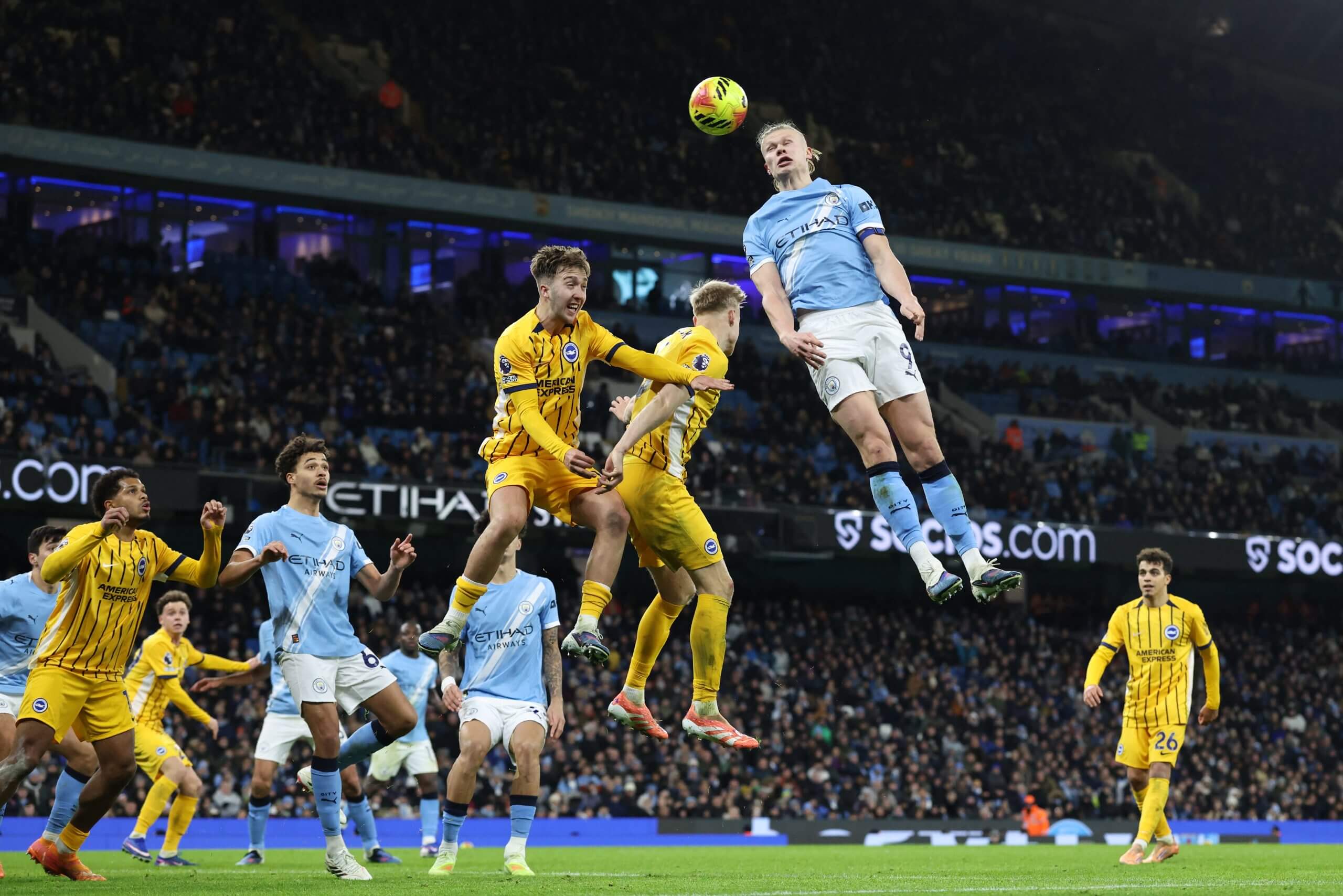
Few players can match Haaland’s aerial ability (Darren Staples / AFP via Getty Images)
Guardiola also explained on Friday how Leeds would play and what City would need to do to combat it. Highlighting that teams previously would allow his side to have one more defender or midfielder in the build-up, enabling City to work an overload and play out from the back more easily, that is no longer on the table due to the rise of man-to-man marking — as The Athletic’s Ahmed Walid highlighted this week.
“Tomorrow is the same at Elland Road, man-marking, and it happened when we played Newcastle, I saw a few clips of Nottingham Forest with the new manager, always it happened against Liverpool, so that is a reality,” Guardiola said.
“An alternative when that happens is you have to play quicker (more direct) up front. If you win that ball, it’s a chance. We have four or five or six incredible chances against Newcastle (last Saturday) where we missed the last pass, when we can run. When the team is brave to go one-against-one, if you can make some combinations to win that (long) ball, you can run.”
It is a great option and one that City use, but Guardiola has, at least, two issues with it. Firstly, it is harder without Haaland.
Secondly, those long balls come with risk, and Guardiola does not like that at the best of times. This season, especially in the second half of matches since the turn of the year, they have struggled to cope with end-to-end games. Heading to Yorkshire, Guardiola wanted a different approach.
“Saying that, it is not easy, because a two-metre pass is safer than 30 metres,” he said. “But always we try to find the way to not just use Erling or the striker in that position, we have to have more variation and be unpredictable in our game, to drop them and after that make another type of game, because in that moment when they drop, after it’s like this, no?”
When Guardiola talks about ‘dropping’ teams, he means pushing them back into their own box and controlling the game from there. It is something that City have struggled with when other teams press them aggressively, and has said that playing out from the back is the best way to do this.
He also highlighted how many Premier League teams, including Leeds, press very high — something that is relatively new — but combine that with defending very deep — which teams have been doing forever.
“They defend so high, man-to-man — and after, so, so deep in the box. There are no middle blocks or there is not a process to do it, from many, many teams, but we are working on it.”
This was exactly how Leeds played. If and when City did get up the pitch, what they tried to do at every opportunity was play those short, two-metre passes, stroking the ball around from one side of the pitch to the other as Leeds sat in, extremely compact and ready for chances to counter-attack.
Ironically, as Leeds mounted the pressure, City felt they had to try something else, and a good, old-fashioned long ball to Semenyo after around 30 minutes was followed by a period of possession that brought the game back under control for the rest of the first half and much of the second.
After the match, Guardiola said it was reminiscent of his old City sides, which is quite the seal of approval given his previous insistence that the new players need time to gel. He also mentioned how they did not drop in the second half due to his players’ efforts, and he praised the importance of Rodri and Bernardo Silva for manoeuvring the ball despite the pressure they were under — essentially allowing City to play the Guardiola way, even in this new league-wide dynamic.
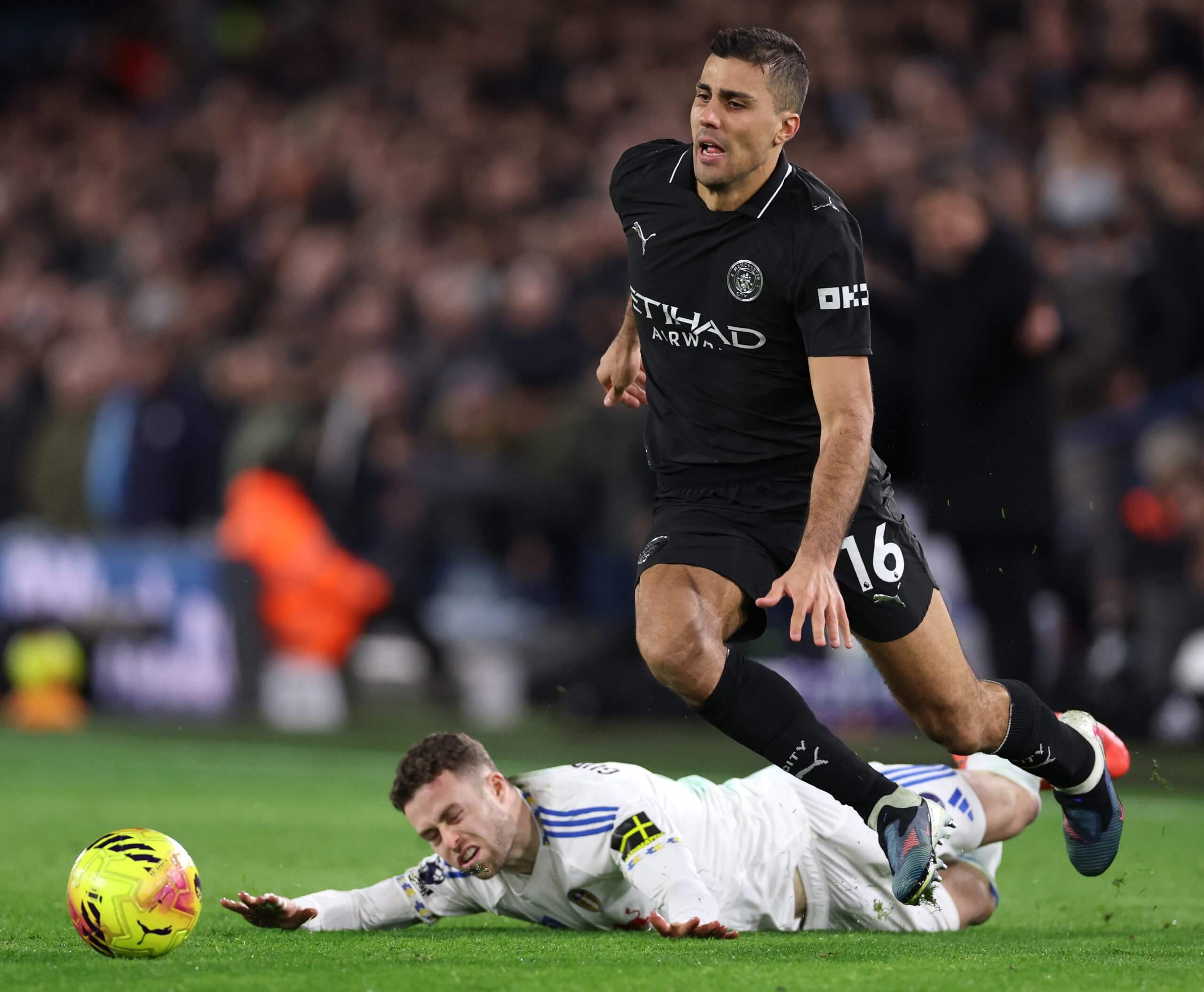
Guardiola praised Rodri for his work on the ball (Justin Setterfield/Getty Images)
“(Leeds) started really well in Elland Road, they are always so intense, and after that we made what we have been good at for the last decade we have been together, which is a thousand-million passes, makes the vibe, the crowd a little bit more calm, make them (Leeds) run and run through our passes.”
Of Rodri and Bernardo, he added: “They make these actions with the ball, right-left, right-left. With man-marking or pressing it’s so difficult (for opponents) to defend that way, because normally with man-marking it’s pass, pass, pass, one touch, one touch, it’s easier for (opponents), but if you can play every player three or four touches it’s more difficult for them, and Rodri… what a player right, in that situation.”
This was not so much the blueprint for how to play against Leeds at Elland Road as it was the blueprint for many of City’s matches from now until the end of the season. From the opposition’s approach to how his own side try to combat it, Guardiola laid it all out.
How successfully the players put it into practice will determine how many trophies City win, but a fascinating subplot proves to be how well their manager can bend the modern game to his will all over again.