

Manchester United (NYSE:MANU) has dismissed manager Ruben Amorim after a brief and costly tenure. Michael Carrick has been appointed interim manager, with early shifts in team performance under his leadership. The club reports a profitability turnaround driven by cost cutting, following recent financial challenges.
Manchester United, listed on the NYSE under ticker MANU, is both a football club and a global sports and entertainment brand. The club operates across matchday, media, and commercial revenue streams. All of these are closely linked to on pitch performance and participation in elite competitions such as the Champions League. Recent management changes sit alongside a broader focus on cost discipline as the club responds to industry wide scrutiny on spending and profitability.
For investors, the combination of a new interim manager and a move toward improved profitability adds fresh variables to the story. Future results will likely depend on how on field performance, cost controls, and European qualification targets interact with commercial momentum and supporter sentiment.
Stay updated on the most important news stories for Manchester United by adding it to your watchlist or portfolio. Alternatively, explore our Community to discover new perspectives on Manchester United.
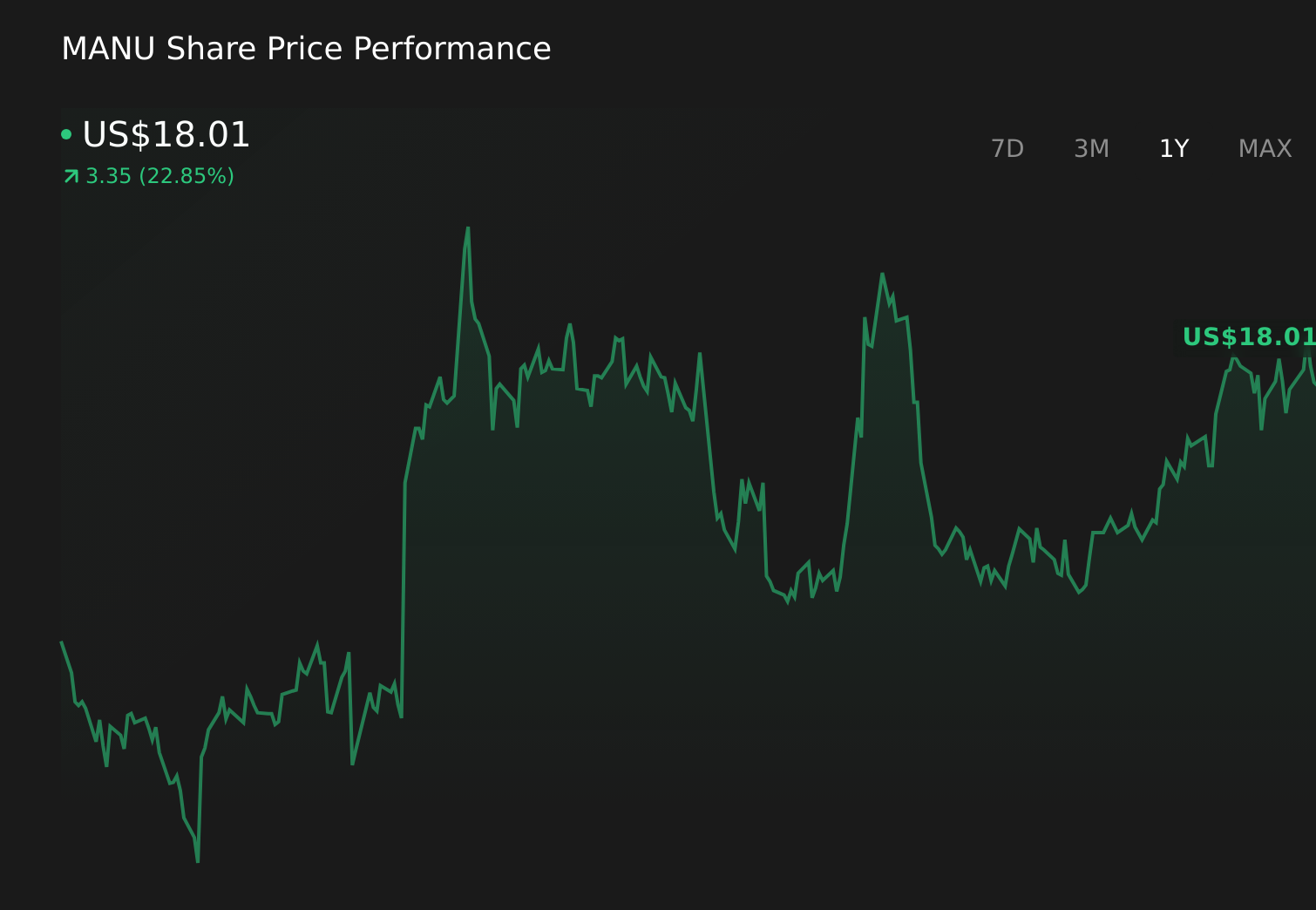 NYSE:MANU 1-Year Stock Price Chart
The managerial change comes at a time when Manchester United has reported a profitability improvement that is heavily linked to cost control rather than revenue growth. Amorim’s exit, potentially costing up to £16 million, sits in contrast to this tighter cost focus and will likely be scrutinised as a one off hit to earnings quality. At the same time, Carrick’s appointment coincides with improved on pitch results and a stronger position in the race for Champions League qualification, which is central to future broadcasting and matchday revenue. For you as an investor, the key question is whether this leadership reshuffle supports a more disciplined footballing strategy that aligns with the group’s current emphasis on expense reduction and margin repair, or whether it signals ongoing instability that could feed through to both costs and revenue volatility.
The Risks and Rewards Investors Should Consider ⚠️ Manager turnover and a costly payout to Amorim could signal governance or decision making issues that affect long term planning. ⚠️ Analysts have flagged that the club has less than one year of cash runway, which can limit flexibility if results or financing conditions weaken. 🎁 Earnings have grown 9.2% per year over the past 5 years, suggesting the business has previously converted its brand strength into profit growth. 🎁 Management reiterated full year revenue guidance of £640 million to £660 million, which indicates confidence in the current operational plan despite recent disruption. What To Watch Going Forward
From here, you may want to watch three things in particular. First, whether Carrick’s interim spell translates into sustained qualification for elite European competitions, because that is closely tied to higher margin broadcasting and commercial deals. Second, how the one off cost of dismissing Amorim is treated in reported figures and whether further restructuring charges appear. Third, any updates on cash, debt levels, and guidance at future earnings releases, to see if the current profitability improvement is maintained without eroding the on pitch product that underpins Manchester United’s global brand.
To ensure you’re always in the loop on how the latest news impacts the investment narrative for Manchester United, head to the
community page for Manchester United to never miss an update on the top community narratives.
This article by Simply Wall St is general in nature. We provide commentary based on historical data
and analyst forecasts only using an unbiased methodology and our articles are not intended to be financial advice. It does not constitute a recommendation to buy or sell any stock, and does not take account of your objectives, or your
financial situation. We aim to bring you long-term focused analysis driven by fundamental data.
Note that our analysis may not factor in the latest price-sensitive company announcements or qualitative material.
Simply Wall St has no position in any stocks mentioned.
New: Manage All Your Stock Portfolios in One Place
We’ve created the ultimate portfolio companion for stock investors, and it’s free.
• Connect an unlimited number of Portfolios and see your total in one currency
• Be alerted to new Warning Signs or Risks via email or mobile
• Track the Fair Value of your stocks
Have feedback on this article? Concerned about the content? Get in touch with us directly. Alternatively, email editorial-team@simplywallst.com