
Among Bad Bunny’s biggest hits are Tranquilo (Stay Calm), and Estamos Bien (We’re Fine), which may be a fair summary of the Puerto Rican rapper’s concern for Tottenham Hotspur getting relegated.
Bad Bunny’s two concerts at the Tottenham Hotspur Stadium, on June 27 and 28, both sold out within minutes last year and his two nights under the lights in N17 will no doubt be a booming success, regardless of whether Spurs are playing Manchester City or Lincoln City next season.
But if the star names will still be drawn to the stage at Tottenham’s £1billion home — Gorillaz, BTS and System of a Down are all booked in this summer — few of the world’s premium football acts will be as keen if Spurs drop to the Championship.
Tottenham’s commercial success — turbocharged by the likes of Beyoncé, P!nk, Anthony Joshua and Tyson Fury in the past — is certainly nothing to be sniffed at. In fact the club’s commercial revenue alone would give them a hefty safety net, given it stood at £276.9million in their latest accounts, which is nearly four times the total revenue of even the richest clubs in the Championship. In 2022-23 Norwich City had the highest revenue in the second tier, at £76million.
Those sorts of numbers are why Tottenham even being in sight of the bottom three is such an indictment of the club’s decision-making in recent years and why many inside the game still refuse to take seriously the idea of Spurs falling out of the Premier League. “People are laughing about it, but it’s a joke, no one I’ve spoken to really thinks Spurs are going down,” said one experienced director, who has worked in both the Championship and Premier League.
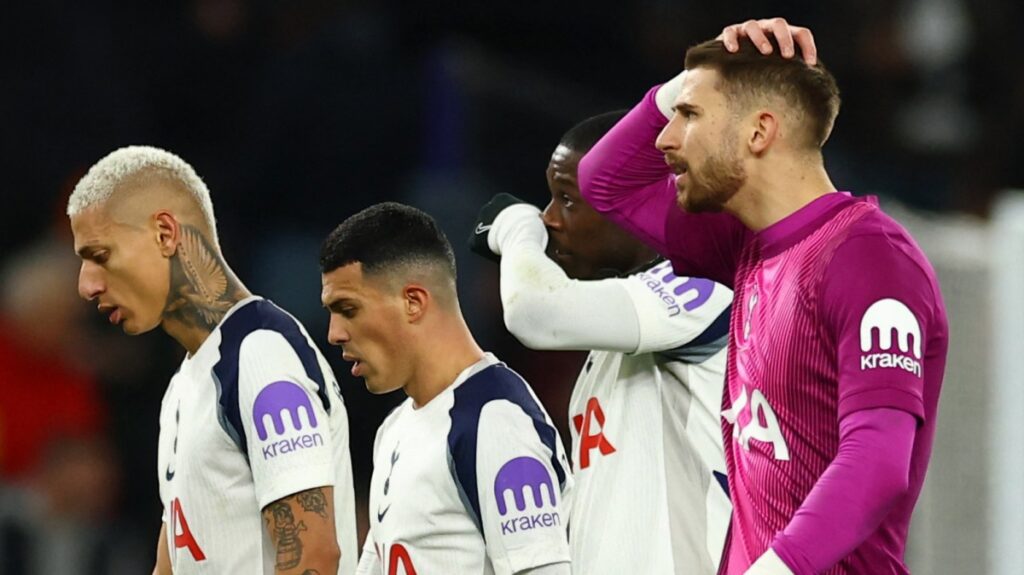
Yet Tottenham have been sliding closer and closer. At the end of December they were 11 points clear of the relegation zone; at the end of January, eight points above; and now, before the game away to Fulham on Sunday, only four points separate Spurs from West Ham United in 18th.
For now the belief that Tottenham will survive has spared the club what will be an avalanche of interest in even their most settled players. One agent of a senior member of the Spurs squad said this week it was still “quiet” around potential departures, but they admitted that the vultures will soon circle if the situation does not improve.

The 62,850-seat Tottenham Hotspur Stadium will hold less appeal for headline acts if the club go down
DAVID KLEIN/REUTERS
Noise and speculation could hurt Tottenham more than their rivals in the final weeks, given their squad features 19 senior internationals. Three or four — Cristian Romero, Micky van de Ven and Pedro Porro among them — would be of interest to Europe’s premier teams, while few would expect the likes of Guglielmo Vicario, Xavi Simons, Mohammed Kudus, Rodrigo Bentancur and Dominic Solanke to stay in the Championship.
The futures of James Maddison and Dejan Kulusevski would be complicated by long-term injuries, but João Palhinha and Randal Kolo Muani would easily find other clubs, given they are only at Spurs on loan.

Tudor has 11 matches to turn around Spurs’ fortunes
CHLOE KNOTT/TOTTENHAM HOTSPUR FC/SHUTTERSTOCK
Tottenham are not believed to have inserted relegation exit clauses into their players’ contracts — nobody expected such a scenario to occur — or even “escape clauses”, which some players at lower-placed teams have included in deals to allow them to go out on loan.
In theory, Spurs could therefore try to hold on to their best players in the hope of a swift return, but there is risk in that approach. Emotionally, players are less motivated if they want to leave and, financially, their value can quickly evaporate. A Championship player is less attractive to buyers than a Premier League one.
“I was told when I arrived the players would be kept, only to find they all had ways to leave,” one executive at a club recently relegated from the top flight said. “The only ones left were the players who had nowhere to go.”
Newcastle United’s immediate return after winning the Championship in 2017 under Rafa Benítez would offer a possible template for Tottenham to follow. Instead of downsizing, Newcastle took the “gamble”, according to the club’s managing director at the time, Lee Charnley, of increasing the club’s wage bill from £74.7million in the Premier League to £112.2million in the Championship, to retain some of their top talents.
Moussa Sissoko and Georginio Wijnaldum were sold to Tottenham and Liverpool respectively, but Newcastle also spent more than £50million on 12 new players, with the club making an operating loss of £90.9million in the Championship, down from a profit of £900,000 the previous year in the top flight.
Tottenham’s latest wage bill, according to Deloitte, was £248.6million, which may be modest in comparison with the Premier League’s “big six” but which would make them a behemoth in the second tier, where the average is closer to £40million.
More broadly, Tottenham could expect their revenue to drop by about 30 per cent, considering the significant reductions in television income without the Premier League or Champions League (assuming they don’t win the tournament and qualify again), as well as prize money and match-day income. According to Deloitte, Tottenham’s total revenue last season was €672.6million, which made them the ninth-richest club in the world and would make them the wealthiest Premier League club ever to go down.
Among clubs closest in size, Leeds United’s turnover dropped by about a third, from £189.7million to £127.6million, when they were relegated to the Championship in 2023, as did Newcastle’s (£125.8million to £85.7million) when they went down in 2016. Both clubs experienced an increase in gate receipts, though, with Newcastle’s average attendance rising from 49,754 to 51,108 in the Championship. That could happen to Spurs, where dreary performances have coincided with empty seats this season, especially in the first phase of the Champions League.

Many fans blame Enic, which holds the largest shareholding in Spurs, for the club’s struggles
CATHERINE IVILL/GETTY IMAGES
Tottenham could turn to a group of younger players, with Archie Gray (19), Lucas Bergvall (20) and Wilson Odobert (21) already established in the first team, while Jun’ai Byfield (17), Dane Scarlett (21), Mikey Moore (18), Luca Williams-Barnett (17) and James Wilson (18) have all been in match-day squads this season. The 19-year-old defender Luka Vuskovic is highly rated, although the Croat has perhaps shone too brightly out on loan at Hamburg this season. He may now be too good for the club that loaned him out so that he would get better.
There are also some misconceptions about the Championship being a fertile breeding ground for youngsters. The academy director of a well-respected club relegated from the Premier League in recent years found the Championship to be a division of “fear football”, where every team believes they have a chance of promotion and therefore adopts a more “cautious approach” when it comes to unproven teenagers.
Leeds (2023-24), Newcastle (2016-17) and Aston Villa (2016-17) all gave fewer opportunities to players aged 21 or younger after going down. This season, despite there being four extra clubs in the second tier, more teenagers have played at least ten minutes in the Premier League (14) than they have in the Championship (12).
And, with Igor Tudor only in interim charge until the summer, who would be Tottenham’s permanent head coach? Roberto De Zerbi and Andoni Iraola would both have better offers, in the Premier League or abroad, while even the most nostalgic Spurs supporters would sympathise if Mauricio Pochettino took a more pragmatic view of a possible fairytale revival in the Championship. Tottenham have considered Kieran McKenna before, who came through at Spurs after working under Pochettino as coach of the under-18s. But if Tottenham go down, Ipswich Town may be the higher team, given they are now fourth and chasing promotion to the Premier League.
That uncertainty at the top of the club would perhaps be Tottenham’s greatest concern as a Championship team, more than the chunk of revenue lost and the inevitable churn of players. History suggests clubs able to preserve some continuity of leadership and approach are the ones who fare better in the fall from the Premier League, as opposed to those who try desperately to adjust their straps mid-air. In that sense, Spurs would hold unprecedented advantages — but total upheaval would not be one of them.
Fulham v Tottenham Hotspur
Sunday, 2pm
TV Sky Sports Plus