
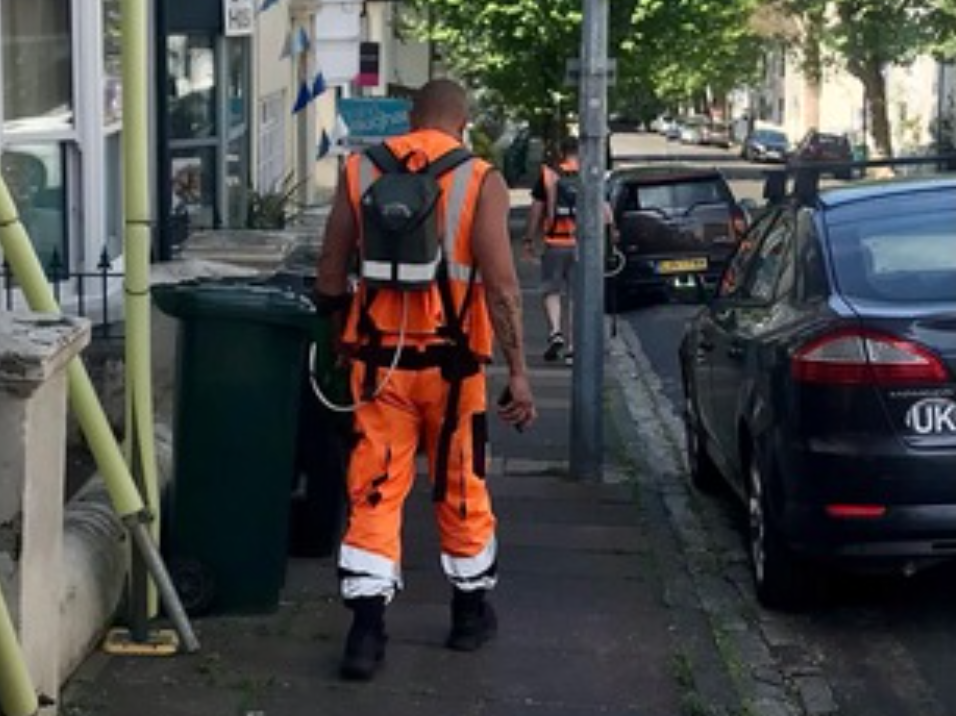
Streets where residents do not wish to have weedkiller sprayed on unwanted plants will be given longer this year to apply for an opt-out.
Last year, Brighton and Hove City Council offered people a chance to opt out from having glyphosate weedkiller – sold commercially as Roundup – used in their streets if they set up a manual weeding group.
But residents in several streets such as Harrington Villas, Hertford Road and Warleigh Road applied to opt out and had started weeding – then saw council contractors in high-vis gear treating the weeds.
Labour councillor Tim Rowkins, the council’s cabinet member for net zero and environmental services, said: “Last year, there were some instances where residents had applied but either not been successful or missed the deadline and, as such, those streets remained in the council’s management programme.
“In addition, we are aware that there were a couple of incidents where operatives began treating an opted-out street by mistake but stopped once they had realised.
“We’re determined that won’t happen this year and will be putting the appropriate measures in place.
“Last year’s pilot was the first year we have introduced this scheme and we have looked at what worked well and what can be improved.
“One of the changes we’ve made for this year’s programme is we have built in a longer period between the opt‑out application window closing and the start of the programme.
“This will make sure our contractor has the full and final list of approved opt‑out streets before work begins, preventing the issue from happening again.
“We received a lot of positive feedback from those streets which took part last year – residents told us they valued meeting neighbours, working as a team and taking pride in their local environment.
“I’d like to thank everyone who took part for looking after their street.
“The opt-out application window is open until (Sunday) 29 March and we’d be delighted to see new streets sign up.”
This coming summer will be the third since the council went back to using weedkiller, having stopped deploying chemicals to control pavement weeds, with cross-party support, in 2019.
But after five years without herbicide, there were claims that the streets were being rewilded and complaints about unsafe, uneven and obstructed pavements where vegetation became dangerously slippery when wet.
In 2024, the council started using a “controlled droplet” method to deploy glyphosate rather than the previous technique of wide spraying from the back of quad-bikes, covering all pavements.
The new method targets growing vegetation rather than the wider area.
This year, the council is looking to reduce the number of times when weeds are treated from three to two.
Last summer, the council identified 900 streets that did not need treatment in addition to the 40 streets that opted out.
To be considered for the opt-out scheme, the council said that each street would need
• to be within an existing 20mph zone to ensure the work is manageable and safe
• to have a lead volunteer who can co‑ordinate neighbours and act as the main contact
• to complete at least three rounds of weeding from early May to late September
Councillor Rowkins said: “Following feedback from participants last year, we’ve made changes to the scheme and adjusted it to make it available to more streets.
“We’re really keen to build on it this year and enable more people to take part – it is a great way for neighbours to join together and do something positive together as a community.”
The council will supply tools if needed and collect waste sacks. Streets will be checked to ensure weed growth is kept to an acceptable level.
To opt out, click here by Sunday 29 March.