
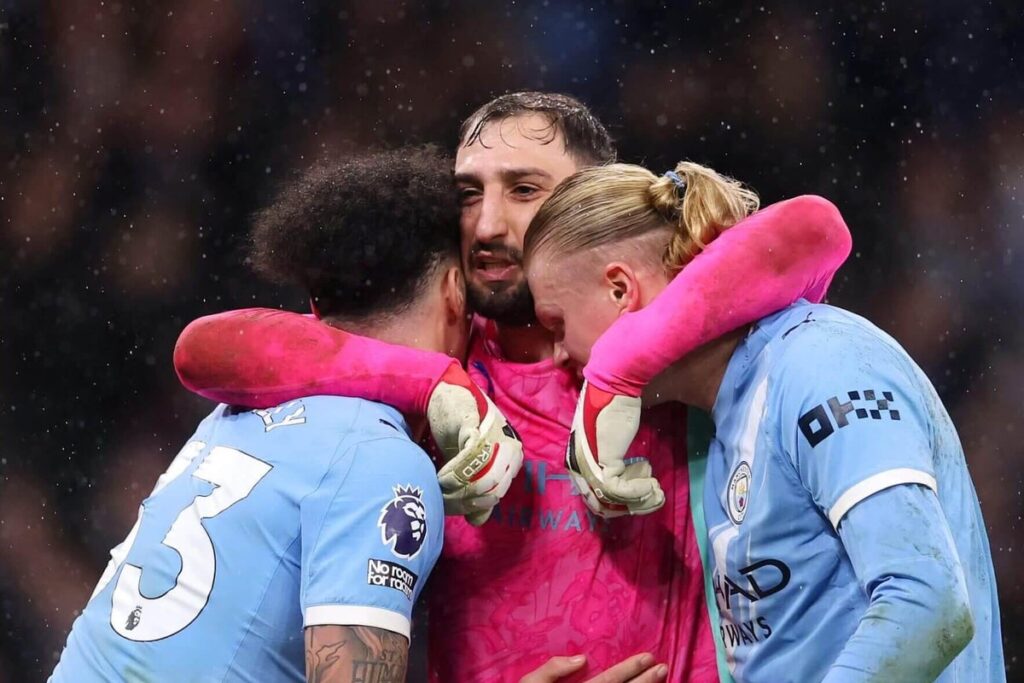
Having learnt nothing from crowning Arsenal champions in January, the football public now expect Manchester City to win the Premier League title this season.
It is understandable, of course. There is a strange desire to call these things months and months in advance, assuming that everything else will play out exactly like the last result did, and then you have got recent history. In this case, the fact that Arsenal have let leads at the top of the table slip, and that City always ‘go on a run’.
So City’s battling 2-1 victory against Newcastle United felt like a huge night in the title race, before Sunday’s North London derby, given Arsenal’s recent slip-ups and the momentum that City have put together from their dramatic win at Anfield three weeks ago.
Pep Guardiola, though, is not so sure. “I promise you, I’m honest with you, many things are going to happen!” he said after the match. “I have the feeling we are not going to win all the games, I don’t know about Arsenal. I have the feeling we are not going to win all the games, this is my feeling.”
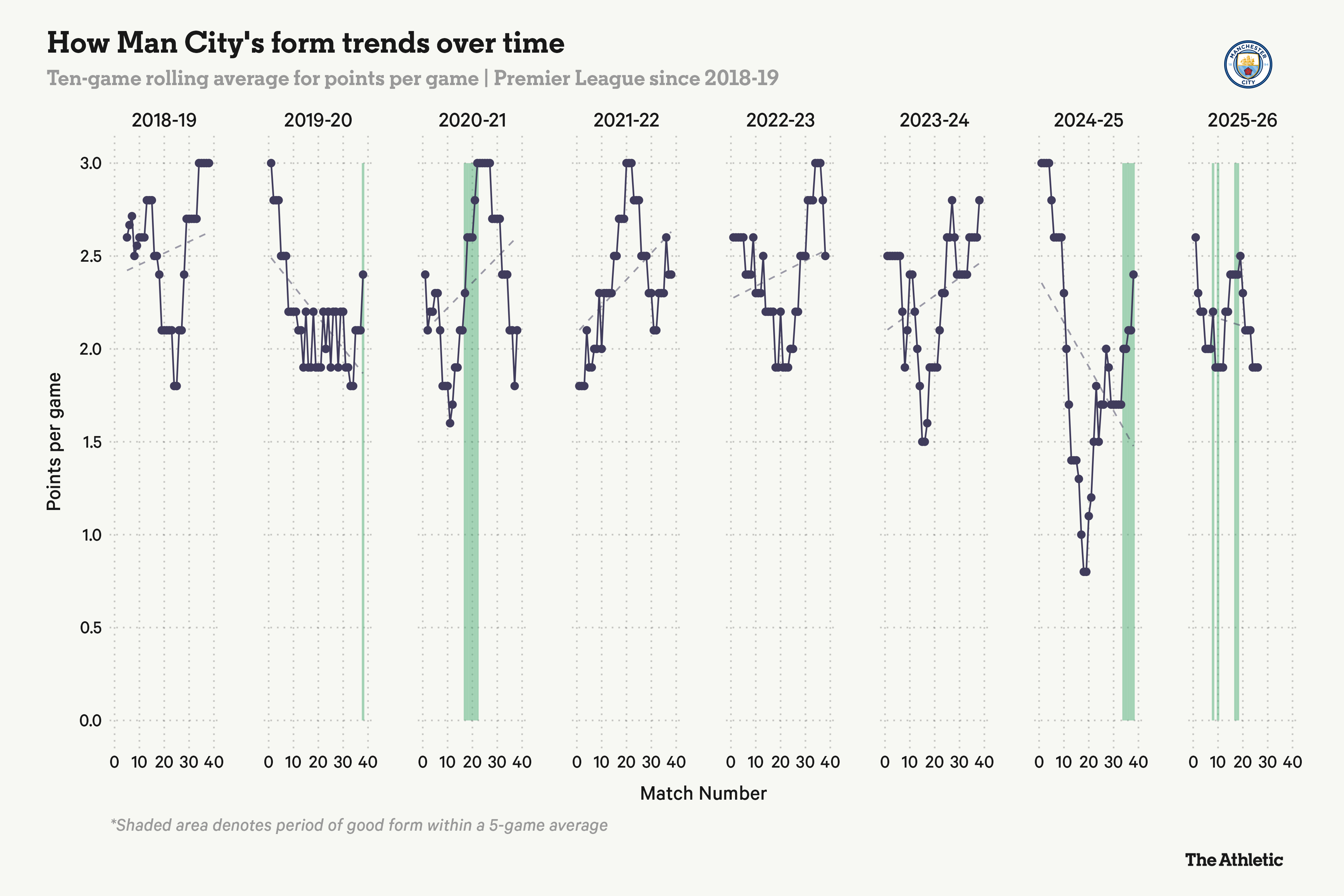
It is natural for people to expect City to go on a run because that is what City do. Even last season, when they essentially forgot how to play football during the winter, they put things back together well enough to see them comfortably into the top four and indeed the FA Cup final.
In the previous four seasons they went on runs to win the title, every single year. In 2023 and 2024, they overhauled Arsenal thanks to streaks of wins in the spring. The year before that they did it to Liverpool, a race that went to the final day. The year before that they won 24 games in a row in all competitions.
At the risk of labouring the point, in 2019 they won all of their final 14 league matches to pip Liverpool, again on the final day. The season before that they had won 18 games in a row, setting a new Premier League record. That was in the first part of the season, but it is fair to say that, no matter when it happens, City know how to ‘go on a run’.
But do this City?
“When we have 60 or 70 per cent new players, we don’t have what we had in the past,” Guardiola said less than a fortnight ago. “After the second or third season we had done it, we were able to do it, but now we have to prove it. I don’t know if we are able to win three, four, five, six games in a row. I don’t know. I don’t know.”
The narrative was slightly different then — City were still cast as unlikely challengers and we were all uncertain whether this new team would have the mettle to go all the way. Now, due to Arsenal’s faltering form and the growing evidence that City are starting to click, the assumption is that things will play out exactly like the old days.
Speaking to TNT Sport after the Newcastle game, Guardiola returned to the theme when asked if he feels the team is equipped for the title race. “Seventy percent of the players never played in that situation and I don’t play so they have to live it.
“They know and we know that every game until the rest of the season will be like this, especially at home.”
How both title challengers are viewed has changed completely in the space of a few weeks, but City’s situation remains true — they are a new and young team in transition, and that was evident even on Saturday, as they struggled to kill off Newcastle like they would have done in the past, by keeping the ball. Had they taken their chances things would have been a lot calmer, but that is something they have struggled to do in second halves so far in 2026, making their problems in possession more worrisome.
And it really should be stressed, whether we are doubting City or predicting another title, that this is a very new team indeed, where the players who have steered City through previous title challenges expertly are now in the minority.
Ederson, Kyle Walker, Manuel Akanji, Ilkay Gundogan, Jack Grealish and Kevin De Bruyne have all left since the start of last year, representing a pretty significant ‘brain drain’. City’s squad now consists of 11 senior players who have signed since January 2025, while Matheus Nunes has converted to right-back in that time and Nico O’Reilly has emerged from the academy as a left-back (and is now thriving in a more natural midfield role).
There are 10 players in the squad who have won major trophies with City before, and four of them are in the captaincy group: Rodri, Bernardo Silva, Ruben Dias, and Erling Haaland were specifically chosen by Guardiola as captains last summer, representing a change in approach given the manager had always left it up to a vote in previous years.
Phil Foden, Josko Gvardiol, Rico Lewis, Nathan Ake, John Stones and Mateo Kovacic make up the rest, though their influence varies wildly this season — Kovacic has not played at all, for example, with Stones suffering from injury set-backs and Lewis and Ake in back-up roles.
So it is a very new squad and it is also young. In the dark days of last season, Guardiola remarked on how City were “an old team”, citing De Bruyne, Gundogan and Kovacic. Within a month he had fielded a much more rejuvenated side; the team that lost 2-0 to Liverpool last February was, at that point, the joint-youngest XI of Guardiola’s tenure, at 25 years and 68 days.
He reverted to the old heads in the run-in as City prioritised sterile control to get over the line, but that was a temporary measure and following a summer rebuild, City fielded an even younger starting XI in the away defeat at Brighton at the very start of this season, 24 years and 326 days. Having added slightly more experience in January — Antoine Semenyo is 26, Marc Guehi 25 — the average age of the total squad is now 25 years old, the fourth youngest in the league.
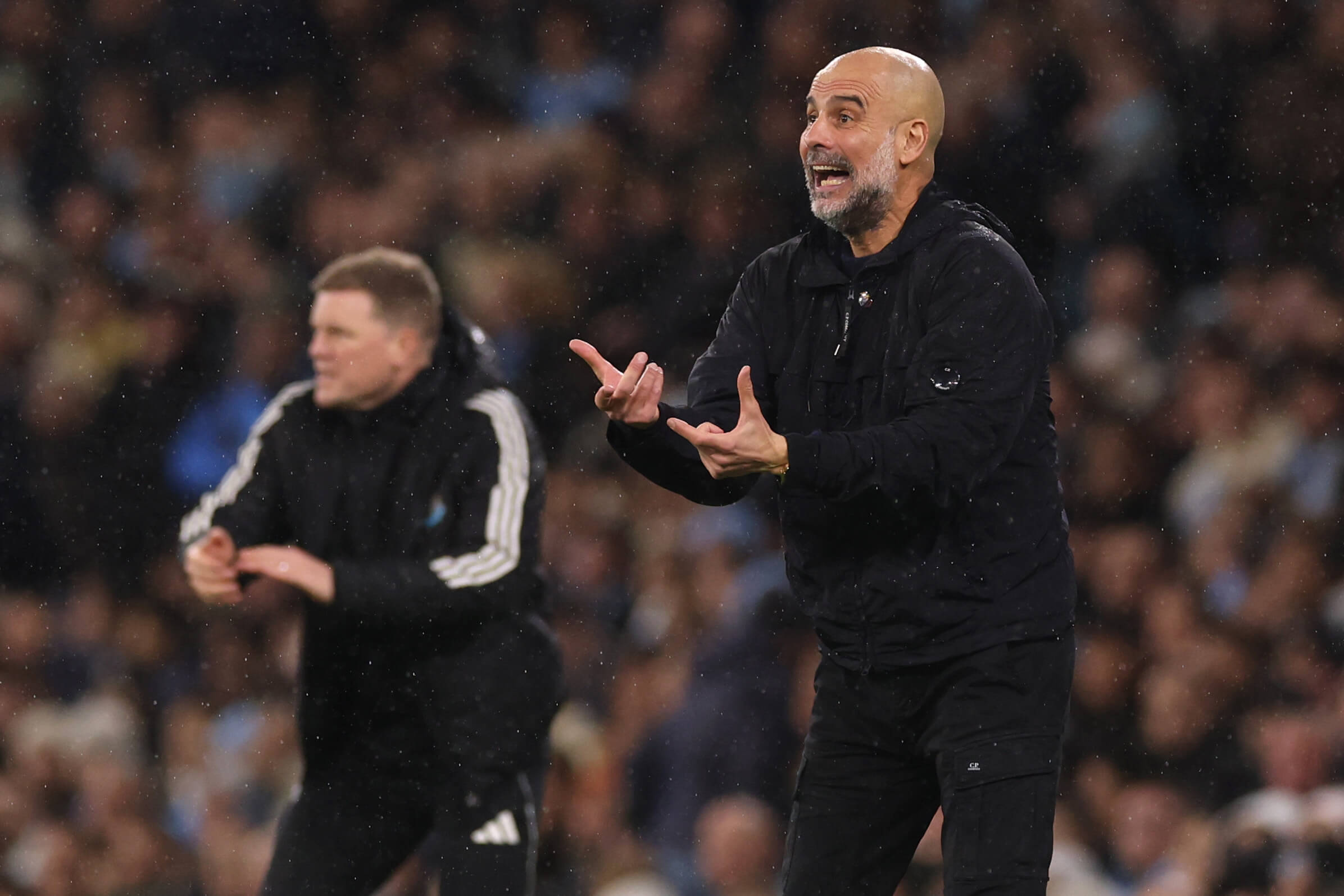
Guardiola expects City will not win every game (Photo: Carl Recine/Getty Images)
“They have done really good things, I have that feeling for many many months,” Guardiola said in the same press conference where he admitted he is not sure if the team can win several matches in a row, “but (we are) not consistent enough to control many aspects to win the games.”
That, seemingly, is the main reason why he cannot be so sure that this side has what it takes to follow its predecessors. The main specific football reason, for Guardiola, seems to be their inability to play well in second halves, which he puts down to problems playing out from the back.
“We don’t have time to train, first, and because there are 70 percent new players,” he said, explaining why that is.
Again, that was evident against Newcastle and although City dug in to get the result — with Gianluigi Donnarumma making his importance clear with another vital save — it does suggest that long winning runs will be harder to come by if they cannot keep opponents at arm’s length by stringing some passes together.
On Friday, Guardiola still seemed unsure about how much the influence of City’s proven winners can have on their new team-mates.
“The experience maybe can help, but I don’t know, on the pitch, how the new ones are going to react,” he said on Friday.
Later, he revisited the theme. “I’ve said many times, when you (win) Premier Leagues and Champions Leagues, you don’t win 5-0 every weekend. No, this is a fairy tale, it’s fine, but all the people are like, ‘how good was Man City’? When Man City was good, we won a lot of games, 1-0, 0-1, playing rubbish, playing not good. But the personality was there, how we handled those moments, how we dealt with that, it comes from them, and that’s why we had success.”
With Arsenal setting the pace this season, it looked as though City would not have time to gel quickly enough to win another title this season, but the Gunners’ struggles has opened the door.
“Perfect game? No. Ideal game? No,” that was Guardiola’s take on their victory over Newcastle. “But we were a team. A team we have to be.”
It may be that City do win the title, and it may be that the old DNA kicks in and they actually do win most of, if not all, of their remaining games. But this is a very different side and there are likely to be plenty more twists and turns before the season is out.