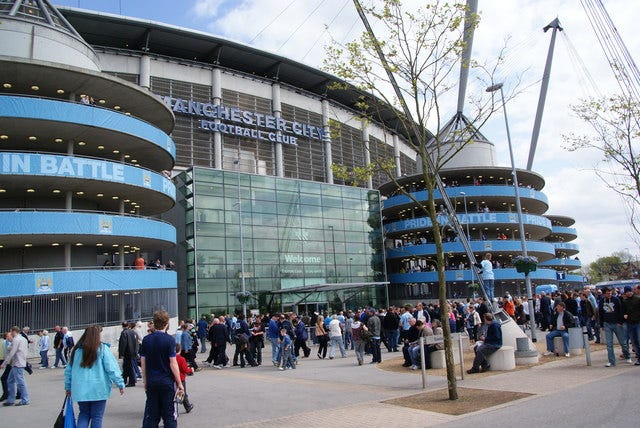
By now you’ll have heard the phrase “multi-club” thrown around. Manchester City have it. Red Bull perfected it. Chelsea are trying (and failing) to weaponise it. So the question is simple: Should Newcastle do the same?
First things first: what is a multi-club model? In plain English: One ownership group controls or partners with more than one football club. Usually One main club (us) and one or two smaller clubs in other countries. Players can be bought young, developed elsewhere then either sold for profit or brought into the first team later. That’s it. No conspiracy. No cheat code.
Why Newcastle would even consider it? Here’s the key thing we all understand: Newcastle’s problem isn’t money – it’s the rules. You can’t lose more than a set amount of money over a rolling period even if the owners are rich. In future, your spending will be tied to your revenue, so while the ambition has grown fast, the squad budget can’t. A multi-club setup helps smooth that problem, not smash through it.
The upside (the bits that help us).
1. Fewer panic transfer windows. Right now, Newcastle have to be careful. One bad summer means forced sales the following year. One missed European run means less to spend. A small multi-club setup gives some breathing room because players can develop off the books until they’re ready.
2. Better use of young signings. Instead of buying a £15m lad and sitting him on the bench or loaning him to a random Championship side, you get guaranteed playing minutes, a clear role and proper development that’s better for the player and the club.
3. Selling smarter, not desperate. If a player doesn’t quite make it you sell him from the development club to a real market, at a real price that protects Newcastle from “sell cheap because we must” summers.
4. Long-term squad stability. This model doesn’t create stars overnight. What it does is reduce boom-and-bust cycles, keep the squad competitive year after year, and stop us ripping things up every two seasons. That matters if you want to stay in the top six, not just visit it.
The downsides, and they matter, because let’s be honest this isn’t risk-free.
1. Regulators will watch us like hawks. Newcastle don’t get the benefit of the doubt. Every move is scrutinised more than Brighton, Brentford and even Chelsea at times. A sloppy multi-club setup would bring investigations, rule changes and headlines we don’t need .
2. Most fans hate “feeder club” vibes. Newcastle supporters value identity, graft, and players who belong here. If it ever feels like we’re just one club in a network there will be backlash and rightly so.
3. It doesn’t win trophies quickly. This is important. A multi-club model does not guarantee top four, does not replace elite signings and does not fix short-term problems. It’s plumbing, not fireworks.
So what would the right version look like? Not a City Group empire. Not a Chelsea warehouse. Something much quieter. The sensible Newcastle approach would be:
One European development club (Portugal or Belgium)
One South American partnership (minority stake, not control)
Maximum 5–8 players across the whole system
No shared badges, sponsors, or kits
No obvious “feeder” language
Boring is good. Boring keeps you safe.
How this would actually work over 5 years This is the important bit, how fans would experience it. In the first 2 years you’d barely notice it. Two young players bought who play abroad and nobody forces into the first team.
Year 3 one player comes back, a squad player, not a saviour. If he’s good enough, he stays. If not, he’s sold later.
Years 4–5 the pattern repeats with one pipeline player per season, max. The squad evolves steadily with less chaos and fewer fires to put out. No conveyor belt. No “loan army”. No gimmicks.
The multi club system works well for Wingers, Central midfielders, Centre-backs (who need time to mature) but it doesn’t work well for Goalkeepers & Strikers (minutes and confidence are too fragile) or Full-backs (PL adaptation is brutal) so don’t expect a parade of wonderkids every summer.
The biggest misconception: this is not about bending the rules. It’s about making better decisions earlier with less pressure. Newcastle’s recent success has been built on good judgement and this model protects that judgement when things get harder.
Final verdict. A multi-club model:
✔️ Helps Newcastle stay competitive
✔️ Reduces PSR/SCR effects
✔️ Makes squad planning calmer and smarter
❌ Does not guarantee silverware
❌ Must be done quietly and carefully
❌ Will fail if it becomes greedy or flashy
If Newcastle do this slowly, modestly, and cleanly, it’s a strength. If they chase what others are doing it becomes a problem. The difference won’t be ambition. It’ll be discipline.
Chris Waite