
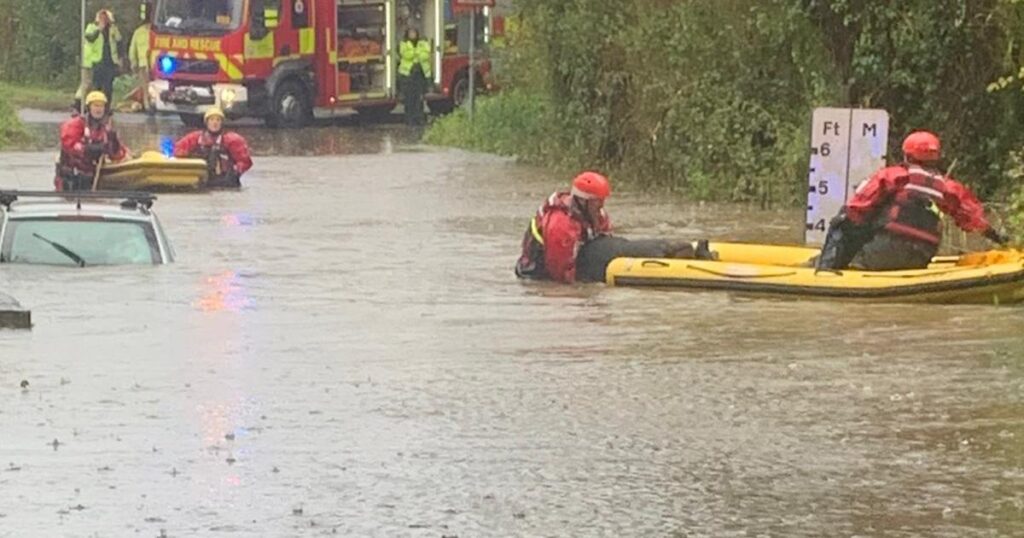
Firefighters are increasingly being called to help people trapped in vehicles stranded in floodwaters, as heavier rainfall creates more dangerous conditions on roads across Hampshire.
The Hampshire and Isle of Wight Fire and Rescue Service attended 20 flooding incidents across the two counties in January 2026, compared with just two the previous year and ten in January 2024.
In total, crews dealt with 24 flooding and water-related incidents last month, including four outside the county.
Phil Foxton, group manager for specialist capabilities at HIWFRS, said he was “not surprised by the data” following what has become the service’s highest recorded month for flood-related incidents.
Hampshire and Isle of Wight Fire and Rescue Service’s group manager, Phil Foxton (Image: Submitted)
He said: “There has obviously been a significant rise in incidents, and if you look at the trends, everything is heading in that direction.
“This January 2026 has been the highest on record, and the last two calendar years have also been significantly higher than anything we’ve previously experienced.”
Phil said climate-related incidents were becoming more frequent, with larger volumes of rain falling in shorter periods of time.
He said: “We are seeing heavier rainfall, more sewer overflows, more floodwater on the roads, and greater volumes of rain falling in shorter periods of time.”
Storm Chandra tore through Hampshire on Tuesday, January 27, bringing severe flooding and widespread disruption.
null (Image: Hampshire Fire and Rescue)
Phil said the fire service’s water rescue capability had become increasingly important.
He said: “Across the county, we have well-qualified water rescue teams. It’s always been a capability we’ve had, but it has become much more prevalent recently as the risk has increased.
“Our response capability remains the same, but we are having to use it more often.”
Phil urged people to avoid driving through floodwater.
He said: “People need to pay attention to warning signs. If you come across a flooded road, we strongly advise you do not drive through it.
“Floodwater can damage cars and may hide hazards beneath the surface. It can cause vehicles to stall, leaving people stranded in water, and if the water is fast-moving, it can make getting out of the vehicle dangerous.”
Widespread flooding across Hampshire (Image: HIWFRS)
He also warned of the risk of cold-related injuries.
“Floodwater is generally very cold, and if someone becomes trapped and water enters the car, there is a risk of cold related injury,” he said.
“If you become trapped in a vehicle in floodwater, call 999. Unless you absolutely have to, stay in the vehicle and do not attempt to move through the floodwater without assistance.”
Phil added: “If these weather conditions continue and if people’s driving habits don’t change, I’d expect the level of incidents to remain in line with what we’ve seen in recent months and years.”