
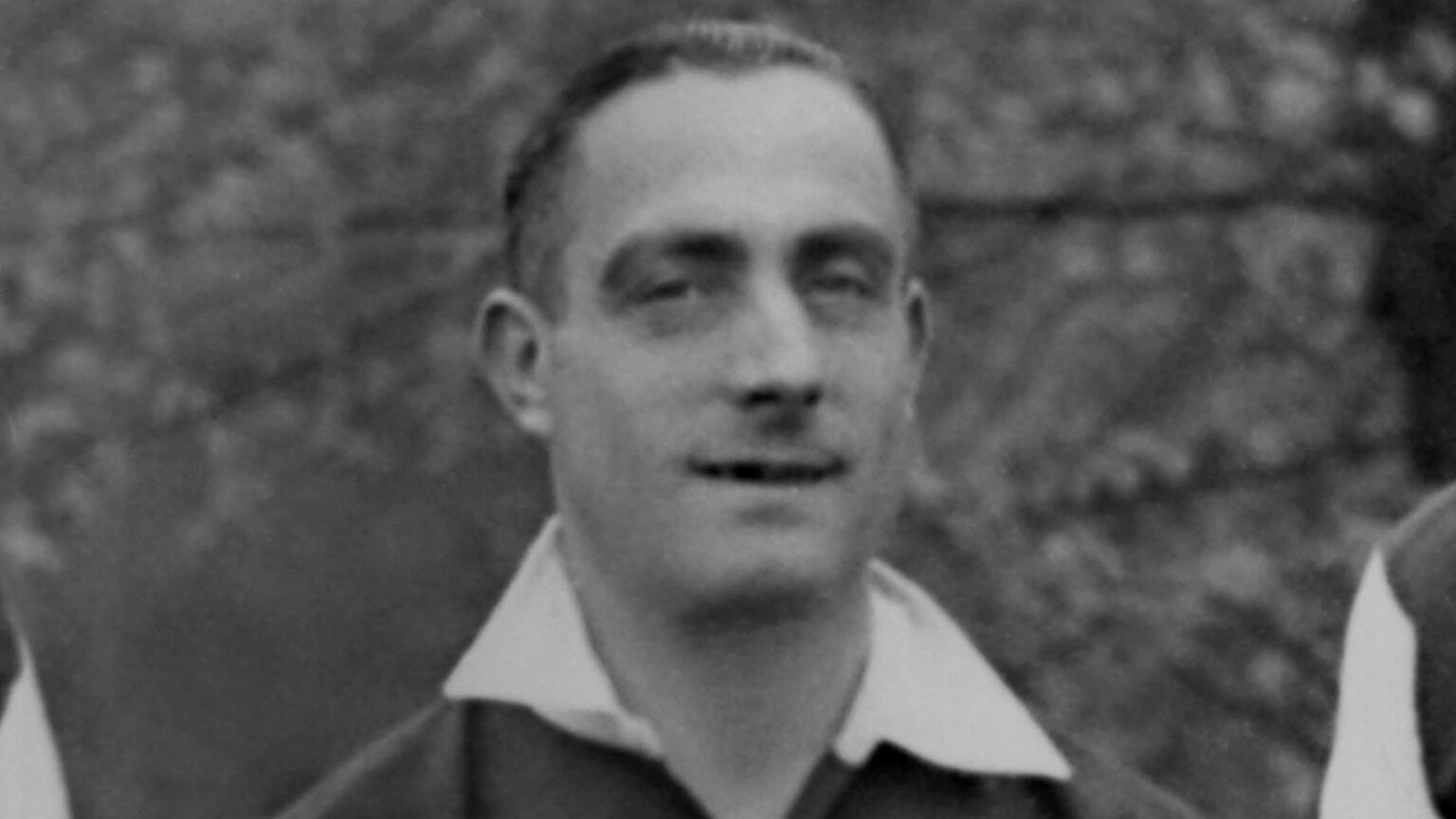
In his era, they simply didn’t come any tougher than ferocious left-half Wilf Copping, whose five-year spell with Arsenal between 1934 and 1939 was sandwiched between two stints with Leeds United.
A former miner, who still completed the occasional shift down the pit as a player, the Yorkshire-born Copping had already been identified as a potential signing by Herbert Chapman before the latter’s death in January 1934.
His successor George Allison used the scouting network constructed by Chapman to monitor players whom Chapman had previously earmarked, and our defence needed rebuilding, especially after Bob John’s departure.
In came Jack Crayston from Bradford Park Avenue, and the granite-hewn Copping. Nicknamed “Beauty and the Beast,” they proved a potent and reliable pair of full-backs throughout the rest of the 1930s.
Copping’s home debut saw us demolish Liverpool 8-1, and he was an ever-present in his first season until suffering a serious knee injury in the third-last match of the season against Everton. Copping soldiered on and remained on the pitch to ensure Arsenal won the game 2–0 to complete a hat-trick of league titles.
In the dressing room, teammates recalled a quiet man, albeit with a feisty side if provoked. The charismatic Ted Drake, who also arrived in 1934, made the mistake of being a little too chatty around Wilf. “He kept on ignoring me, so I tapped him on the shoulder. Big mistake!” Drake told me in 1992. “He grabbed me by the collar and shouted: ‘I want quiet! Is that clear?’ You could say I got the message.”
Copping was around 5’8” and was built like a middleweight boxer. His face was instantly recognisable, with his trademark piercing stare and crooked grimace, due to his jaw being twice broken as a Leeds player, while on matchdays he would often play unshaven, which entirely suited his ‘Iron Man’ nickname. On the pitch, Copping deployed his famous ‘shoulder charge’ and, when necessary, two-footed lunge, in an era when football was far more contact-based. “First man into a tackle never gets hurt,” was Copping’s motto.
Ironically, his most famous match in N5 was not in an Arsenal shirt. It came during the infamous ‘Battle of Highbury’ when England – featuring seven Gunners – beat world champions Italy 3-2. In a typically combative mood, Copping more than stood his ground against the Italians and was named man of the match. “By the end of the match, Wilf was virtually playing the Italians on his own,” recalled Drake, who scored England’s third goal.
Copping would win 20 caps for his country, added a further First Division medal in 1938 and won plaudits for his composed passing in the 1936 FA Cup final win over Sheffield United. However, in 1939 Copping requested a transfer. A stunned Tom Whittaker asked him if he hadn’t enjoyed his time at Highbury. “Oh sure Tom,” came the response, “but I feel that war is coming, and I want to get my family back up north before I join the army.” Copping signed once more on the dotted line for Leeds.
Once the conflict began, Copping reached the rank of sergeant major in the army, later became the most demanding of trainers at Southend United, and ran many training courses for aspiring managers and coaches. “No one ever pulled the wool over Sergeant Major Copping’s eyes,” said former Southend player Andy Halliday, in a fitting tribute to a man who was inducted into the Football League’s 100 Legends list during their centenary year in 1998.
Read more How Leeds City changed Arsenal history forever
Copyright 2026 The Arsenal Football Club Limited. Permission to use quotations from this article is granted subject to appropriate credit being given to www.arsenal.com as the source.