
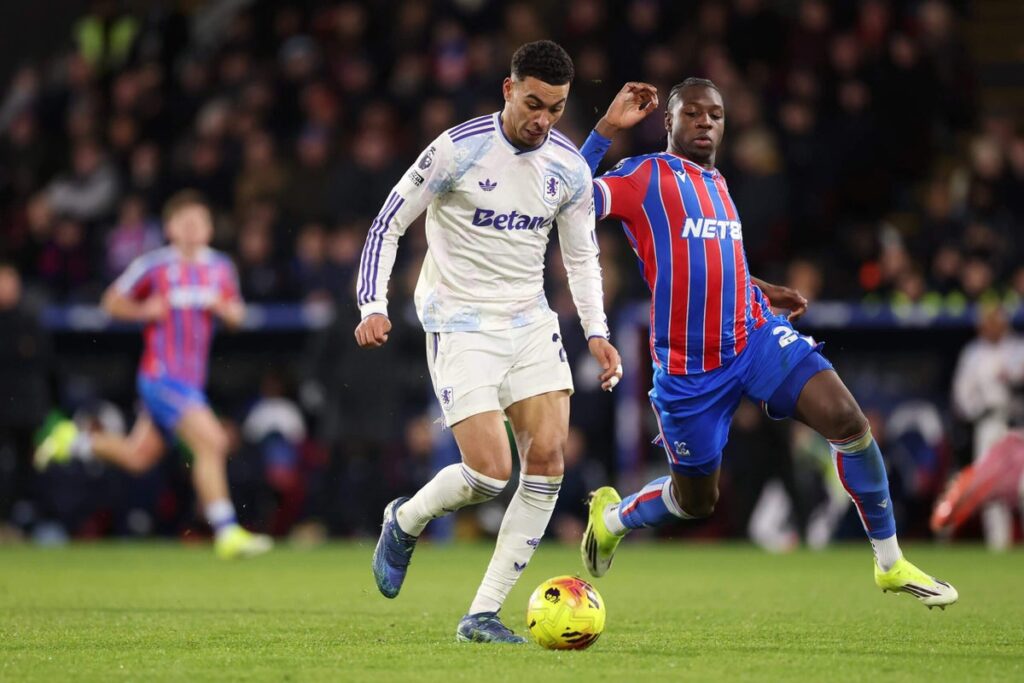
There seemed to be an added respect woven into the handshake between Unai Emery and Oliver Glasner at full time. Like two Grandmasters battling for victory in a game of chess, both accepted the stalemate.
Their fortunes might have switched from the start of the season, but this was a clash between two very astute coaches with European pedigree — and their tactical approaches arguably cancelled each other out on the night.
Emery will have been acutely aware of the record he had against Glasner. Wednesday evening’s goalless draw at Selhurst Park made it seven meetings that he has failed to beat him across all competitions, and the Austrian is the manager he has faced the most in his career without winning.
Oliver Glasner loves playing Aston Villa.
Crystal Palace’s results against Unai Emery’s side since Glasner took over in February 2024:
✅ 5-0 (Premier League, May 2024)
✅ 2-1 (League Cup, October 2024)
🤝 2-2 (Premier League, November 2024)
✅ 4-1 (Premier League, February… pic.twitter.com/CHE4UATxsU
— The Athletic | Football (@TheAthleticFC) January 7, 2026
There were moments within the game that you would be forgiven for thinking that the referee had called a halt to proceedings, with the 22 players standing like statues when Villa were in possession.
Just like their teams, neither manager was willing to give their opposite number an inch.
This is an increasingly common sight in modern football, but it was testament to the respect these two men have for one another.
Villa will often use their build-up to attract the opposition onto them, pull their shape apart, and create space — but Palace were not willing to take the bait.
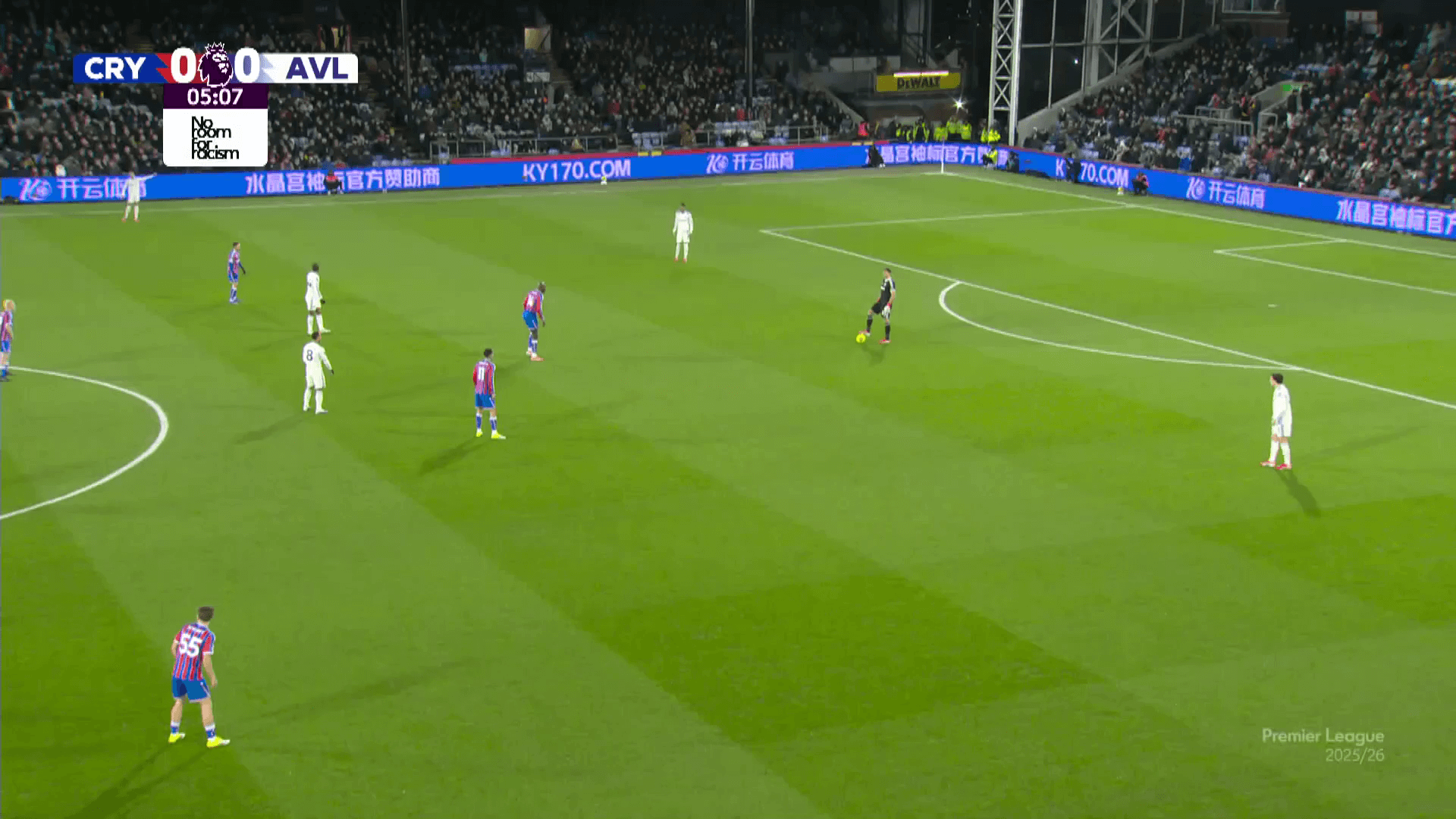
Glasner said before and after the game that he knew Emery wanted the Palace No 6s (midfielders) to jump forward and exploit the space, repeatedly highlighting the importance of his side “controlling the pocket” where Villa’s John McGinn and Morgan Rogers like to operate.
Villa returned to a 4-2-3-1 shape in south London, with Manchester United loanee Jadon Sancho’s second start under Emery on the right side of attack doing little to inspire. Ollie Watkins needed bodies around him against a stubborn back-three defence, and while the England striker did have two good opportunities in the first half — and directed a header onto the post in the second half — he was often crowded out, with little space to find.
Incidentally, Watkins’ second chance was after Rogers found space behind Palace’s midfield, as Glasner had warned, threading the ball to his front man, whose left-footed shot was blocked.
At times, the ball was not moved quickly enough to disrupt Palace’s shape, but credit must go to Glasner’s side for a disciplined out-of-possession approach. So too for Emery, who identified the building threat from Palace’s right flank, with Rogers often dropping into the defensive line to form a back five and track the runs of new signing Brennan Johnson.
“Today we can be happy with the point, and then we must analyse the match. We could (have) won more than we could (have) lost,” Emery said after the game. “We controlled the first half very well, we didn’t concede much from a transition or set piece. They had one chance in transition, and we were dominating.
“Second half, we started in the same form, but we lost 15, 20 minutes because they were pushing, going higher in the press, and they had two or three actions in our box — one or two good chances. But we finished the last 15 minutes well, pushing, dominating, creating chances with Morgan (Rogers) and Emiliano (Buendia) — and Watkins hit the post. We had some corners, and we were close to winning.”
A respectable draw away from home should be met with a pragmatic degree of positivity, but there is evidence to suggest that this result might occur again if Villa’s underlying numbers are anything to go by.
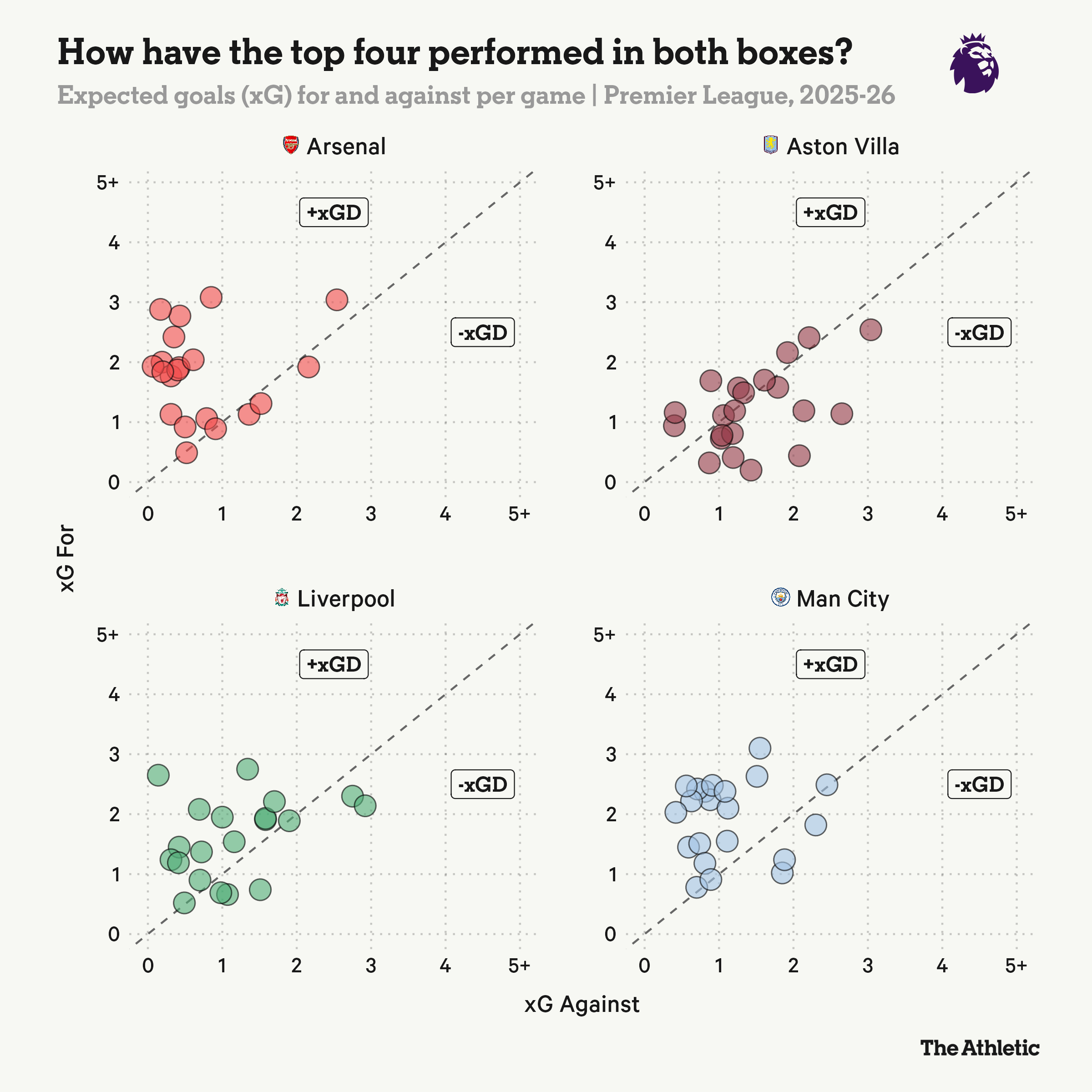
Some fans might not take too kindly to the discussion of expected goals (xG), but looking at the quality of chances created and conceded can be a useful barometer of a team’s fortunes in both penalty areas. As a metric, it can even provide a better prediction of future scorelines than actual goals.
A single shot is not very insightful, a single game is barely much better, but aggregate that chance quality in both boxes throughout a season, and it can become a helpful tool.
The graphic below maps each game’s xG for and against among those clubs in the top four. Put simply, circles above the dotted line show matches where the team has created higher-quality chances than their opponents, giving them a greater likelihood of victory — and vice versa below the dotted line.
The most dominant sides will frequently play games that see them above the dotted line — as shown by Arsenal and Manchester City in particular. Villa have often hovered close to the line this season, meaning results in their fixtures can often hinge on smaller margins.
Late winners are incredible, but draws like the one at Selhurst Park last night are more likely if you look at the underlying picture that has been drawn across the season.
After such an incredible winning run (11 in a row across November and December), Emery’s side would still be in a good position to ride the wave of statistical variance if it continues. Sometimes you might see an unlikely shot fly into the top corner. Sometimes those higher-quality efforts can nick off a defender and go over the crossbar, as was the case with Rogers’ swivelling left-footed strike in the second half against Palace.
The great news for Villa is that they have already secured an excellent place in the table, with a buffer between themselves and those teams outside the Champions League qualification places. They are there on merit, and Emery was keen to emphasise the wider character within the squad.
“This is the mentality. You can win, draw, or lose, but we are building the team with our tactical structure,” he said. “Defensively, every player was ready and had a huge commitment to defend like we planned. And offensively, we were playing with good positioning. I am really happy, and so proud of how we played the match.”
Given the context of the game and the opposition manager, Emery would have accepted a point away from home if offered it before this game. In the end, he shook hands on it.